
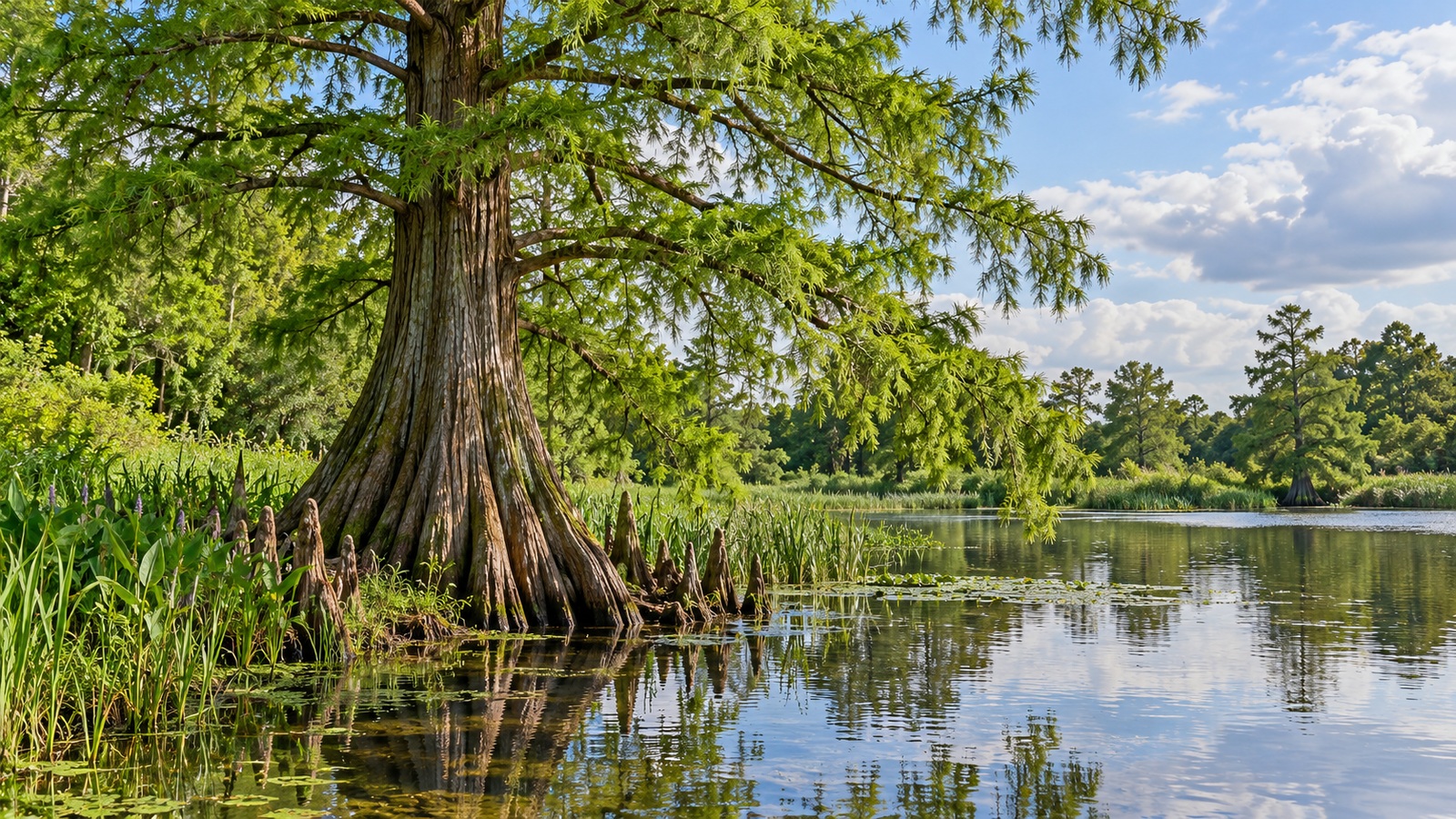
Match a Tree to the Water Pattern Beneath the Site
A low corner that stays moist after rain is different from a riverside area submerged for weeks, yet both may be described as a wet planting site. That difference matters when choosing a deciduous tree. Roots need conditions the species can tolerate, and flooding stress depends on duration, depth, season, soil, and the age of the tree. Begin by understanding how water moves through the property before selecting a species from a wet-soil list. River birch, bald cypress, swamp white oak, and other regionally suitable candidates each have strengths and limitations, but none can be assigned to every damp place without further assessment. Also consider the tree's mature canopy, root space, and relationship with buildings and infrastructure. A well-chosen tree can become a valuable part of a wet landscape. It should be selected for the conditions that actually occur, rather than expected to solve a drainage problem simply by using more water as it grows.
A: No, compare depth, duration, season, drainage, and intervals of drying before assuming those sites need the same wet-tolerant species.
A: Yes, moist conditions and persistent oxygen-poor saturation differ, so a tree's moisture preference does not establish unlimited waterlogging tolerance.
A: New roots, establishment, tree age, and the severity of the flood can change the response despite shared species identity.
A: No, bald cypress is a deciduous conifer that sheds needles, leaving a different seasonal outline during the dormant period.
A: Allow for possible ground projections that could interfere with the intended route or complicate regular mowing beneath the tree.
A: No, reserve space for its substantial mature tree form and canopy rather than assigning it a shrub-sized residential planting role.
A: Evaluate regional suitability, the measured water pattern, mature dimensions, and how the surrounding landscape will be used over time.
A: No, follow appropriate root-flare and planting-depth guidance because flood tolerance does not justify burying the new tree too deeply.
A: Flood-related root stress and other effects can appear later in the crown even after the visible surface water has disappeared.
A: No, investigate chronic drainage separately and select a tree suited to the conditions that the planting area will actually provide.
Describe the Wetness Before Looking for a Tree
Observe the site during and after several rain events if practical. Record whether water stands above the soil, how long it remains, and whether the ground dries between events. Note seasonal differences, such as a high winter water table followed by a dry summer. Look for the source: runoff from paving, a compacted depression, nearby stream flooding, or another pattern. These observations help a local professional interpret the site. A single photograph of a puddle rarely supplies enough information for reliable long-term tree selection.
Distinguish moist soil from prolonged oxygen-poor saturation. Excess water can limit root function even when the tree's trunk is not visibly submerged. A species tolerant of occasional inundation may still struggle in a continuously waterlogged planting hole. Soil texture and compaction influence how quickly water moves and how much air remains around roots. Use appropriate soil and site assessment where the cause is unclear. A useful planting recommendation should respond to that pattern rather than treating the word wet as a complete diagnosis.
Consider whether the situation has changed recently. Construction, altered grading, or blocked drainage can create new stress for an established landscape and may require attention before any tree is added. Do not excavate, fill, or redirect water in regulated or shared drainage areas without checking applicable requirements. Seek qualified advice when flooding threatens structures, utilities, or public routes. Tree planting can complement a suitable landscape plan, but it does not replace assessment of a significant water-management problem.
Understand Flood Tolerance as a Range of Responses
Flood tolerance depends on more than the species name. Tree age, health, soil conditions, water temperature, timing, and the length of inundation can all affect the result. A mature tree adapted to a floodplain may withstand conditions that a newly installed young tree cannot yet handle. Floodwater can also carry sediment or other material that changes the root environment. Use regional guidance describing the relevant situation, and avoid interpreting tolerance as an unlimited guarantee of survival under any depth or duration of water.
Consider River Birch for Appropriate Moist Ground
River birch, Betula nigra, is associated with moist streamside and bottomland settings and can be a candidate for suitable wet landscapes. Its peeling bark provides ornamental value as well as a distinctive trunk character. Match the tree to local climate, soil conditions, and mature space rather than selecting it only for its association with water. It becomes a substantial tree, especially in multi-stem form. A small nursery clump can eventually occupy far more canopy width than a narrow residential bed allows.
Assess the intended planting position for both wet and dry periods. A location that floods briefly and then becomes severely dry may create different challenges from consistently moist suitable soil. Check regional advice about soil chemistry and common local problems before purchase. Provide establishment care even if the mature species is associated with wet habitats. River birch can be attractive in the right setting, but its identity should begin the evaluation rather than end it.
Give Bald Cypress the Space Its Mature Form Deserves
Bald cypress, Taxodium distichum, is a deciduous conifer, so it loses its needles despite having a conifer-like appearance. It is a familiar candidate for suitable wet conditions and can develop a distinctive flared trunk. Local climate and soil fit still require checking, and the mature tree needs substantial space. Do not buy it as a compact shrub because a young specimen has a narrow outline. Its long-term role is a significant landscape tree, with a canopy and root environment planned accordingly.
The woody projections called knees can develop under some conditions and may affect how the surrounding ground is used. Their presence and extent are not predictable as a uniform feature in every garden. Consider the potential relationship with mowing, paths, and close planting before installing the tree in a tight maintained lawn area. A broad naturalistic setting may accommodate the species more comfortably than a confined paved courtyard. The tree's distinctive character is easiest to enjoy where its mature features do not become obstacles.
Do not assume wet-site adaptation means a newly planted bald cypress needs no monitoring. Establishment quality, planting depth, and changing moisture conditions still matter. Follow reliable local guidance for nursery stock and site preparation. If the location experiences severe flooding or prolonged complete submergence of young plants, obtain advice specific to that risk. A tolerance ranking describes a useful relative trait, but the conditions faced by the installed tree determine whether it can become established successfully.
Evaluate Swamp White Oak and Other Regional Candidates
Swamp white oak, Quercus bicolor, can be useful in appropriate moist or periodically wet landscapes and offers a broad deciduous canopy. Confirm local climate suitability, soil requirements, and the form expected at maturity. Its eventual scale makes it a candidate for a generous site rather than a small corner selected merely because water collects there. Acorns and fallen leaves also become part of the relationship with nearby paths and garden use. Consider the whole tree over time, including its ecological and structural value.
Other species may suit your region better, but they need the same deliberate assessment. Floodplain associations can identify candidates such as certain willows, cottonwoods, or sycamores, yet rapid growth and tolerance do not automatically make them good choices beside buildings or utilities. Mature size, branch behavior, roots, litter, and local pest concerns influence placement.
Ask a local extension service or qualified arborist to narrow the list for the actual water pattern and available space. A regional shortlist is more useful than a nationwide ranking detached from the property. Check whether a proposed tree is appropriate for the site's ecological context.
A locally native species can offer useful habitat value when it matches the location, but a native label does not resolve every soil or flooding constraint. Avoid invasive choices and verify any restrictions affecting planting near waterways or wetlands. Responsible selection combines species identity with hydrology, landscape use, and local requirements. The aim is a tree that belongs in the setting, rather than simply a plant able to survive one of its difficulties.
Plan Canopy and Root Space Alongside the Water
Map the developed canopy against buildings, overhead services, paths, and neighboring property. Underground infrastructure deserves appropriate clearance and verification before digging. Wet sites are often low areas where drainage routes must remain open, so avoid blocking them with a planting arrangement or imported fill.
Think about access for future inspection and professional work as well as the current nursery plant. Mature dimensions are part of wet-site suitability because a tolerant tree still needs physical room to grow safely and usefully.
Decide how the ground beneath the tree will be managed. A mulched or naturalistic area may suit some species and root features better than close mowing. Avoid repeatedly compacting damp soil with vehicles or heavy foot traffic. Existing plants and surrounding land use can influence the available rooting environment, so look beyond the size of the planting hole. A tree integrates with the larger landscape over many years. Its placement should support healthy growth without turning the wet area into a recurring conflict with ordinary property use.
Plant Correctly Without Creating a Hidden Basin
Follow appropriate guidance for the selected nursery stock, exposing and positioning the root flare correctly and preparing roots as needed. Do not plant deeply in the hope that a water-tolerant tree will compensate for poor installation. A hole in compacted ground can collect water differently from the surrounding soil, so assess the broader site before proceeding. Avoid improvised drainage fixes or excessive amendments that create another localized problem. Qualified local advice is especially useful where soil and water behavior are uncertain.
Provide mulch appropriately while keeping it away from the trunk. Assess moisture during establishment rather than assuming the wet location always provides what the new roots need. A root ball can behave differently from surrounding soil, and dry periods may follow flooding. Water decisions should reflect actual conditions and reliable species guidance.
Staking, if needed, should suit the site and be inspected to prevent damage. Good installation protects the opportunity for a tolerant species to establish; it cannot guarantee survival in conditions beyond that species' capacity. Keep the initial care plan realistic for the property's water pattern. If access becomes impossible during flood events, prepare monitoring and follow-up arrangements before planting.
Avoid unnecessary disturbance while the soil is saturated. Record significant inundation and changes in the tree's appearance so a professional can interpret later symptoms more accurately. A photograph taken only after leaves decline may conceal the earlier event that affected roots. Establishment is easier to understand when the site's history remains available.
Watch for Delayed Stress After High Water
A tree may show effects of excess water after the obvious flooding has ended. Leaf decline, poor growth, or branch dieback can have several causes, so use the water history as context rather than assuming a single diagnosis. Seek qualified assessment for a valuable or potentially hazardous tree.
Do not automatically fertilize a stressed specimen or prune large amounts to balance damaged roots. The appropriate response depends on the condition and cause, and additional interventions can complicate recovery.
Continue observing the root area as well as the crown. Sediment deposits, erosion, changed ground levels, or exposed roots can alter the situation after a flood. Avoid piling material against the trunk or removing soil casually from around roots. Significant changes may need professional evaluation and coordination with relevant site authorities. A tree's ongoing safety and health depend on more than whether its leaves remain green immediately after high water. Follow-up care should respond to the actual changes the event produced.
Choose a Long-Term Landscape Role Rather Than a Drainage Promise
Trees use water, but planting one should not be presented as a guaranteed method for drying a chronically flooded yard. Root growth and water use vary with species, size, season, and weather, while the source of excess water may continue. Address significant drainage issues through appropriate assessment before depending on a tree to solve them. The planting decision can then focus on a species that fits the remaining conditions. That approach protects both the tree and the wider property from unrealistic expectations.
A suitable wet-site tree can supply shade, bark interest, seasonal foliage, and habitat as it matures. River birch, bald cypress, swamp white oak, and other regional candidates deserve consideration when their full requirements match the site. Describe the water pattern, allow mature space, plant correctly, and monitor changing conditions. Those steps turn a damp-area label into a useful landscape decision. The result is more likely to be a healthy lasting tree when tolerance is understood realistically and the site's water-management needs remain part of the plan.
Assess the Water Pattern With Regional Advice
Consult Iowa State’s wet-soil tree guidance alongside local site assessment. Compare garden-care supplies through Garden Product Reviews.


