
Choose a Tree for the Months After Its Flowers Fade
A deciduous tree can remain an important garden feature after its leaves fall. Bark catches winter light, branches form a silhouette against the sky, buds signal the approaching season, and fruit or seed can add another layer of interest. The strongest year-round choice is therefore not always the tree with the most dramatic spring flowers or brightest autumn photograph. Look at the whole cycle and decide which features will matter from the places where you actually see the yard. A paperbark maple may reward a close winter view, a serviceberry can connect flowers with fruit and fall foliage, and a suitable crabapple may carry a changing display across several seasons. Each still needs the right climate, soil, and mature space. Year-round interest means a sequence of useful appearances and relationships, rather than constant bloom. Choosing for that sequence can make one well-placed tree feel valuable through the ordinary quieter months as well as its brief peak display.
A: Yes, bark, branching, buds, and sometimes retained fruit can keep a deciduous tree visually useful after leaf fall.
A: Choose winter features and a mature outline that remain visible from the window against the yard's actual background.
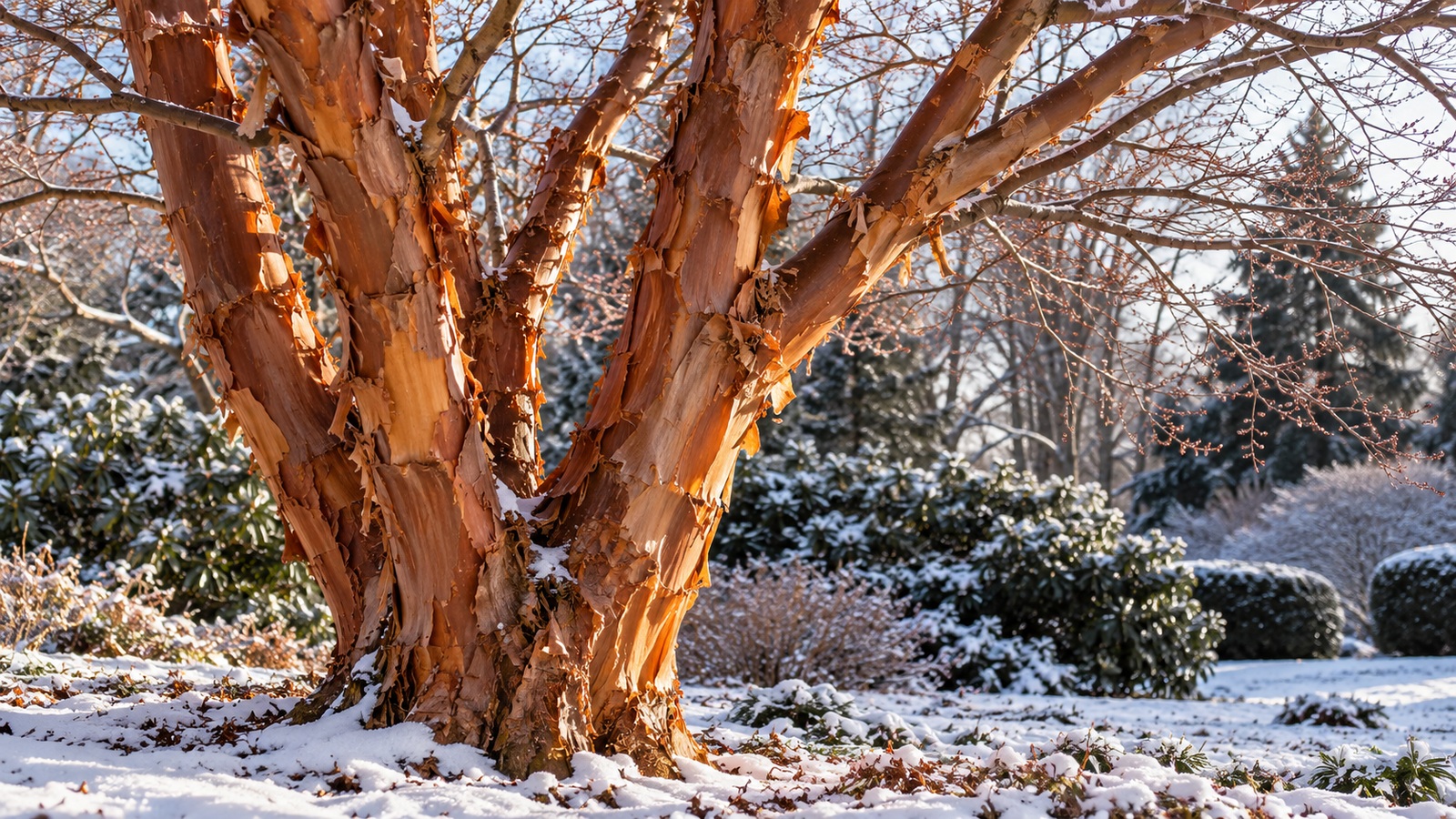
A: Its cinnamon-colored peeling bark and branching provide detail that can be appreciated from a suitable close winter viewpoint.
A: No, species and named selections differ, so confirm the plant before planning its mature space.
A: No, fruit retention varies with cultivar and conditions, so investigate the particular crabapple selection.
A: A cultivar's local disease performance affects its health and ability to provide flowers, foliage, fruit, and winter structure.
A: Consider fruit drop, bird activity, cleanup, and how the household uses the paved route or nearby seating area.
A: No, the developing canopy changes summer shade, while expanding roots can increase competition within the planting below.
A: Leave the peeling bark intact and protect the trunk from equipment or other damage that would diminish this feature.
A: Young specimens need time to develop mature bark, canopy structure, and flowering presence, which may emerge over several years.
Map the Views You Use Through the Whole Year
Start with the places from which the tree will be seen: a kitchen window, the approach to the house, a garden seat, or the route to the door. A close view can reveal bark and buds, while a distant view depends more on canopy shape and larger color changes. Winter viewing may happen mostly from indoors, so include those positions even if summer design centers on the patio. The tree's ornamental features become useful when they are visible from ordinary life rather than hidden behind another planting.
Consider the background and available light. Pale bark can stand out against darker foliage, while fine branches may disappear against a busy neighboring roofline. Low seasonal sun can illuminate peeling bark or reveal a silhouette differently from summer light. Do not choose a species solely because it looks dramatic in a carefully staged photograph. Judge how its actual features will read in your yard and at the distance from which you are most likely to enjoy them.
Think in Seasonal Transitions Rather Than Four Separate Displays
A tree changes gradually through budding, flowering, leaf expansion, fruit development, autumn color, and dormancy. Some stages may be brief, while bark and branching remain visible for months. Identify which transitions you would like to notice and compare candidates accordingly. A tree with a modest flower display can still contribute strongly if its winter structure is valuable. The aim is a meaningful sequence, not a demand that every plant provide a spectacular feature in every calendar quarter.
Flowering and color timing vary with climate, weather, age, and the individual selection. Do not assume that a photograph labeled spring or autumn describes the precise week when your tree will look the same. Look for locally grown examples or regional records when possible. A sequence that complements existing trees may add more value than another species that peaks at exactly the same time. Consider what the yard currently lacks and choose a tree whose reliable local contribution fills that role.
Include ecological relationships in the seasonal assessment where they matter to you. Flowers may support insects, fruit can attract birds, and the canopy may provide shelter or shade. Those roles depend on the identified species and setting, rather than a broad ornamental label. Keep them compatible with the tree's location and the household's use of the yard. A useful tree can be visually attractive and ecologically relevant, but neither benefit excuses planting it where its mature form will cause a persistent conflict.
Let Paperbark Maple Carry a Close Winter View
Paperbark maple, Acer griseum, is known for cinnamon-colored peeling bark that can remain compelling after the canopy becomes bare. Its branching and seasonal foliage add to that character, making it a candidate where a closer year-round view is available. Check climate suitability, growing conditions, and mature dimensions before purchase. The bark is a living feature of the tree, so enjoy it without pulling strips away to improve the display. A suitable position lets light and background reveal its texture naturally.
Use Serviceberry for Flowers, Fruit, and Fall Color
Serviceberries, Amelanchier species and hybrids, can combine spring flowers, later fruit, autumn foliage, and a useful branching outline. Exact identity matters because size, form, range, and growing requirements differ among selections. Some develop as small trees or multi-stemmed plants rather than a broad shade-tree canopy. Choose the form that fits the role you want in the yard. A locally appropriate serviceberry may provide a seasonal sequence in a relatively modest landscape space, but it still needs room for its mature width.
Place the tree where its changing details can be noticed. A flowering display near an approach route may also offer a good view of developing fruit and autumn leaves later in the year. Consider fruit drop and bird activity near paving, seating, or parked vehicles. These features can be welcome parts of the garden, but their practical effects deserve planning. Avoid assigning the tree to a location where the feature you value becomes a regular cleanup complaint.
Check regional guidance for site conditions and common health concerns. A serviceberry should not be selected for ornamental sequence while ignoring root-zone moisture or soil fit. Learn the appropriate pruning approach for its form and avoid repeatedly removing the growth that creates the desired flowering display. If edible fruit is part of the plan, verify the exact plant and use reliable food guidance rather than treating an unidentified ornamental berry as suitable for consumption. Accurate identity supports both enjoyment and sound care.
Choose Crabapples by the Named Selection's Full Behavior
Flowering crabapples can supply spring blossom, summer foliage, fruit, and a winter outline, but cultivars differ substantially. Some retain fruit into winter while others drop it earlier, and disease resistance varies. Compare the named selection's local performance instead of assuming all crabapples offer the same seasonal value. A reliable regional recommendation can help identify appropriate choices for the climate and common disease pressures. Flower color alone should not determine a purchase that will occupy the yard for many years.
Review mature dimensions, branching form, and fruit behavior against the intended position. A compact cultivar may fit a smaller role, while a broader tree needs a generous canopy area. Persistent fruit can be attractive and useful to wildlife, but it should not be promised uniformly across every season or weather pattern. Consider cleanup near routes and how the bare branches will appear against the background. The best selection combines the ornamental features you want with a manageable relationship to the site.
Assess Bark and Branching in Other Locally Suitable Trees
Trees with peeling, patterned, or strongly textured bark may carry a quieter garden through winter. River birch is one familiar example for appropriate sites, with bark character that becomes more prominent after leaf fall. Other regions have different suitable species. Check the tree's full growing requirements and scale before choosing it for one trunk feature. A bark-focused selection still needs healthy roots, appropriate climate, and enough room for the canopy it will eventually develop.
Branching form can be as valuable as unusual bark. A graceful open outline, strong layered structure, or well-proportioned crown can make an ordinary deciduous tree look deliberate through dormancy. Inspect mature examples rather than trying to infer the final shape from tightly packed nursery stock. Avoid choosing a tree whose natural form must be repeatedly altered to fit the site. Healthy structure gives the yard a lasting visual framework and makes seasonal changes easier to appreciate.
Use locally appropriate native candidates when their form and requirements match the design. Their seasonal relationships may add value beyond a decorative display, especially where habitat is a priority. A native range does not make a large tree suitable for a small bed or guarantee performance in damaged soil. Compare candidates against the same criteria used for any ornamental tree. Year-round interest becomes strongest when the plant belongs comfortably in the site and can mature without continual corrective work.
Allow the Mature Tree to Work With the Yard
Map mature height and canopy spread against buildings, overhead services, neighboring property, and other trees. Give roots a suitable environment and check underground infrastructure before digging. A small flowering specimen at purchase may become a much larger landscape feature. Position it so the desired view remains possible as the canopy develops. A tree chosen to frame a window should not be installed where its normal mature growth blocks every view or requires repeated severe cutting.
Think about the garden beneath the future canopy. Summer shade may change what can grow there, and root competition can affect existing beds. Deciduous leaf fall allows a different seasonal light pattern but also creates material that needs an appropriate management plan. Mulched areas can protect roots and simplify care when designed correctly. The tree's contribution is not separate from the ground around it. A successful long-term layout allows both canopy and understory to develop in a way the household can enjoy and maintain.
Support the Features Through Healthy Establishment and Care
Plant using reliable guidance for the selected nursery stock, with appropriate root preparation, depth, watering, and mulch kept clear of the trunk. Follow regional pruning advice and preserve sound structure rather than forcing an ornamental outline prematurely. Avoid damaging bark with equipment or decorative attachments. Flowers, foliage, and winter form all depend on the tree remaining healthy. A promising species in the wrong root environment will not deliver the seasonal sequence pictured in the catalog. Keep installation and care records with the full plant name. They help explain later changes in growth and make future advice more specific when the tree needs attention.
Build a Balanced Seasonal Composition Over Time
One tree does not need to provide every feature the garden lacks. Pair its dominant contribution with suitable surrounding plants or open space so the composition remains readable. A bark-focused tree may benefit from a quieter background, while a flowering tree may need lower planting that does not compete at the same visual scale. Preserve enough room for the tree's developed form. Filling every gap while it is young can create crowding that hides the very features you selected it to show.
Observe the tree through several seasons before deciding it has failed to provide the expected interest. Young specimens may not yet have mature bark character, substantial branching, or a full flower display. Weather can also influence color and fruit retention from year to year. Compare growth and health with realistic local expectations, and refine companions or viewpoints when useful. Patience is part of tree design because many of the strongest features become more convincing as the plant develops.
Choose a seasonal sequence you want to live with rather than a collection of peak photographs. Paperbark maple, serviceberry, crabapple, and other suitable deciduous trees can offer different combinations of bark, branches, flowers, fruit, and foliage. Match those features to real views, adequate mature space, and regional growing conditions. The yard can then remain engaging when bloom has passed and leaves have fallen. A well-placed healthy tree rewards attention throughout the year precisely because its changes become part of the garden's ordinary life.
Compare Mature Seasonal Features Before Selecting
Explore the Arnold Arboretum’s paperbark maple profile and regional tree guidance. Find practical care supplies through Garden Product Reviews.


