
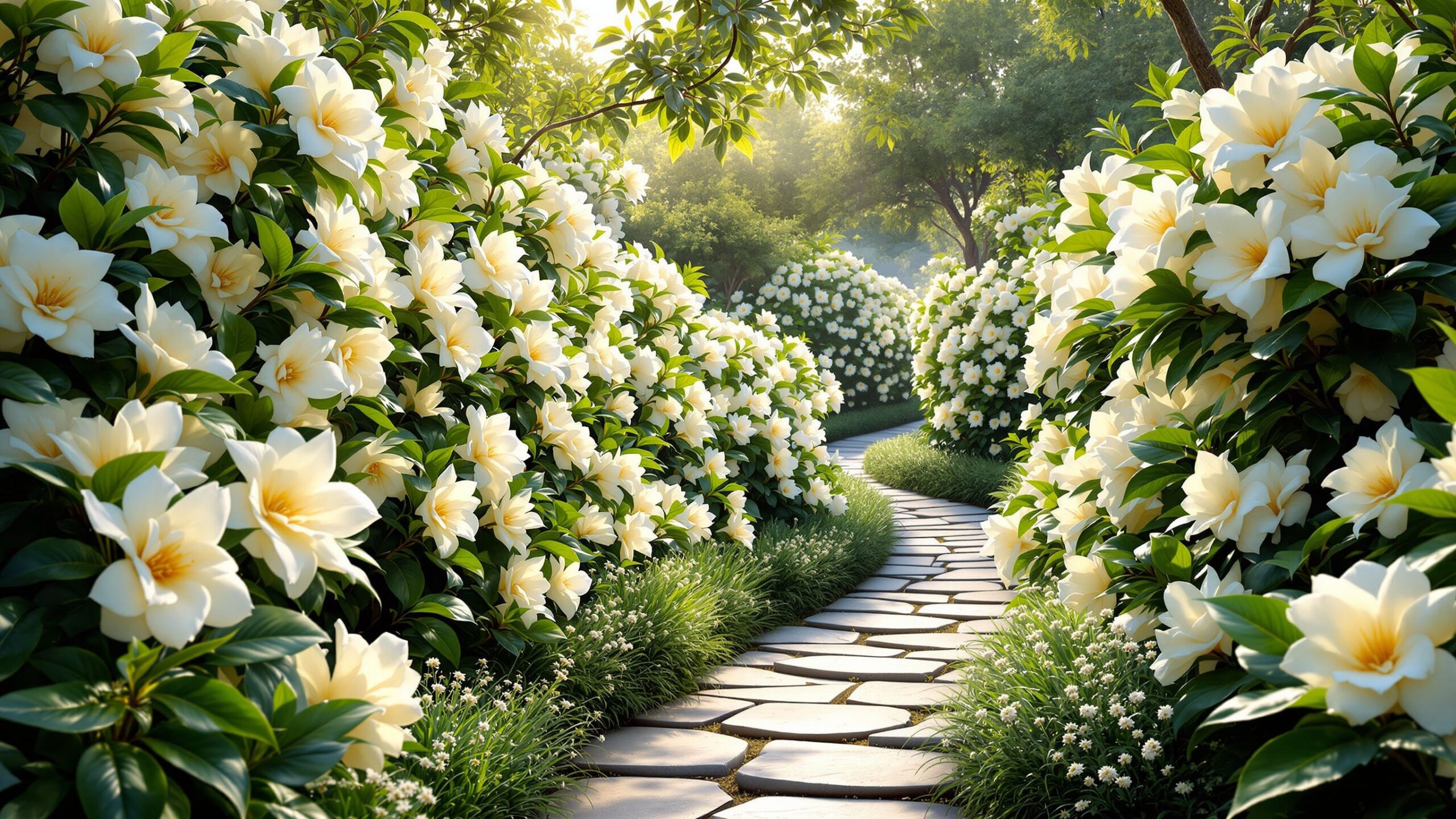
Gardenias are among the most elegant flowering shrubs in the gardening world, admired for their velvety white blooms, glossy evergreen foliage, and rich, unforgettable fragrance. These timeless plants have become symbols of beauty, purity, and sophistication, making them favorites in gardens, patios, and landscapes across warm and temperate climates. Their flowers often resemble perfectly formed roses with creamy white petals that gradually develop soft ivory tones as they mature. Native to tropical and subtropical regions of Asia, Africa, and the Pacific Islands, gardenias naturally thrive in warm, humid environments where acidic soil, filtered sunlight, and consistent moisture support healthy growth. Today, gardeners around the world cultivate gardenias for their ornamental beauty, intoxicating scent, and ability to transform ordinary outdoor spaces into peaceful garden retreats. Whether grown as foundation shrubs, flowering hedges, patio specimens, or container plants, gardenias remain among the most cherished flowering shrubs available.
A: Most bloom from late spring through summer, depending on the variety.
A: They prefer morning sun with afternoon shade in hot climates.
A: Acidic, fertile, well-draining soil rich in organic matter.
A: Keep the soil consistently moist but never waterlogged.
A: This often results from nutrient deficiencies, alkaline soil, or overwatering.
A: Yes, they thrive in containers with proper drainage and acidic potting mix.
A: Yes, prune lightly immediately after flowering.
A: Yes, they are among the most fragrant flowering shrubs.
A: Gardenias are generally considered non-toxic to cats and dogs, though eating large amounts may cause mild stomach upset.
A: They require a little extra care but reward gardeners with beautiful foliage and highly fragrant blooms.
The History of Gardenias
Gardenias have a fascinating history that stretches back hundreds of years. Native species were first discovered throughout China, Japan, Taiwan, Vietnam, and parts of Africa, where they grew naturally in forests and subtropical landscapes. For centuries, these fragrant flowers were admired in Asian gardens and often symbolized peace, love, refinement, and purity. During the eighteenth century, European botanists introduced gardenias to Western horticulture, where they quickly became prized ornamental plants in estates, botanical gardens, and conservatories. The genus was named in honor of Scottish-American botanist Dr. Alexander Garden, whose contributions to botanical science helped expand knowledge of numerous plant species. Through decades of careful breeding, horticulturists developed cultivars with larger blooms, stronger fragrances, improved cold tolerance, and more compact growth habits. Today, gardenias continue to be treasured around the world as one of the most luxurious flowering shrubs available to gardeners.
Types of Gardenias
Gardenias are available in a wide range of varieties suited to different landscapes and growing conditions. Traditional gardenias develop into medium-sized evergreen shrubs that produce large, highly fragrant double flowers throughout late spring and summer. Dwarf varieties remain compact, making them excellent choices for containers, borders, foundation plantings, and smaller gardens. Some cultivars produce single blossoms that highlight elegant golden centers, while others feature densely layered petals that resemble miniature roses. Certain varieties bloom repeatedly throughout the growing season, extending the display well beyond spring. There are also cold-hardy selections capable of tolerating lower temperatures than older varieties, allowing gardeners in cooler regions to successfully grow these beautiful shrubs. With so many cultivars available, nearly every gardener can find a gardenia perfectly suited to their landscape.
Why Gardenias Are So Popular
Gardenias have remained popular for generations because few flowering shrubs offer the same combination of beauty and fragrance. Their creamy white blossoms create a striking contrast against deep green, glossy leaves, making every bloom stand out dramatically within the landscape. Perhaps their greatest appeal is their sweet perfume, which fills the surrounding air with one of the most recognizable floral fragrances in the gardening world. Gardenias also maintain attractive evergreen foliage throughout the year, providing structure and visual interest long after flowering has ended. Their elegant appearance complements both formal and informal gardens, while their flowers are frequently used in weddings, bouquets, corsages, and floral arrangements. Their timeless charm continues to make them one of the most desired ornamental shrubs for home landscapes.
Choosing the Best Planting Location
Selecting the right planting location is one of the most important factors for growing healthy gardenias. These shrubs prefer bright morning sunlight followed by protection from the intense heat of the afternoon. Too much direct sunlight can scorch leaves and shorten flower life, while excessive shade often reduces blooming and slows growth. Gardenias thrive in locations with excellent air circulation while remaining sheltered from harsh winter winds and drying conditions. They perform exceptionally well near patios, porches, walkways, and outdoor seating areas where their incredible fragrance can be fully appreciated. Choosing a location that closely resembles their natural woodland habitat greatly increases the likelihood of healthy growth and abundant flowering.
Soil Requirements
Healthy soil is essential for successful gardenia cultivation. Gardenias require loose, fertile, well-drained soil with a slightly acidic pH generally ranging between 5.0 and 6.5. Poor drainage is one of the leading causes of gardenia decline because their roots are highly sensitive to standing water. Organic matter such as compost, pine bark, leaf mold, and aged mulch helps improve both drainage and moisture retention while encouraging beneficial soil organisms. Alkaline soils frequently cause nutrient deficiencies that result in yellowing leaves and poor flowering, making soil testing worthwhile before planting. Raised beds or amended planting areas provide excellent growing conditions where native soil is heavy or poorly drained.
Planting Gardenias
Proper planting techniques help gardenias establish quickly and remain healthy for many years. Dig a planting hole approximately twice as wide as the root ball while keeping the depth equal to the original container level. Position the shrub slightly above the surrounding soil to improve drainage and reduce the likelihood of root diseases. Carefully backfill with nutrient-rich amended soil, gently firming it without excessive compaction. Water thoroughly after planting to settle the soil around the roots and eliminate air pockets. Applying several inches of organic mulch helps maintain even soil moisture, regulate root temperatures, suppress weeds, and slowly enrich the soil as it decomposes. Newly planted gardenias benefit from regular watering during their first growing season while establishing strong root systems.
Watering and Fertilizing
Gardenias perform best when the soil remains consistently moist but never waterlogged. Their shallow root systems require dependable moisture, particularly during hot summer weather and while flower buds are developing. Deep watering once or twice each week during dry periods usually provides better results than frequent shallow watering. Fertilizer should be applied using products formulated specifically for acid-loving plants during the active growing season. Feeding in early spring and again after flowering supports vigorous foliage growth and encourages continued blooming. Organic materials such as compost, cottonseed meal, and pine needle mulch provide slow-release nutrients while naturally maintaining acidic soil conditions. Avoid overfertilizing, as excessive nutrients may reduce flowering and damage sensitive roots.
Blooming Season and Flower Fragrance
Gardenias are celebrated primarily for their extraordinary flowers and unforgettable fragrance. Depending on the variety and climate, blooming typically begins during late spring and continues through summer, with some cultivars producing additional flowers into early autumn. Their blossoms open as creamy white flowers with thick, velvety petals arranged in elegant spirals that closely resemble roses. As blooms mature, they gradually develop soft ivory or pale cream tones while continuing to release their sweet perfume. The fragrance is especially noticeable during warm evenings, making gardenias ideal additions near patios, decks, windows, and garden pathways. Their flowers also attract bees, butterflies, and other beneficial pollinators while adding elegance to fresh floral arrangements.
Pruning and Seasonal Care
Gardenias require only light pruning to maintain an attractive shape and encourage healthy growth. The ideal time to prune is immediately after flowering since next year’s flower buds begin developing shortly afterward. Removing spent blooms and lightly trimming long branches helps maintain a compact, balanced appearance while encouraging fresh growth. Dead, damaged, or diseased stems should be removed whenever they are noticed to improve air circulation and reduce disease risk. Seasonal care includes maintaining fresh mulch, monitoring soil moisture, inspecting for insects, and protecting shrubs from freezing temperatures in colder climates. With consistent maintenance, gardenias continue producing healthy foliage and abundant fragrant blooms year after year.
Common Problems and Solutions
Although gardenias are rewarding plants, they can occasionally present challenges if their growing conditions are not ideal. Yellow leaves often indicate nutrient deficiencies, improper soil pH, poor drainage, or inconsistent watering. Flower buds may drop before opening due to sudden temperature changes, drought stress, or insufficient humidity. Brown leaf edges frequently result from underwatering, excessive fertilizer, or environmental stress. Root rot remains one of the most serious problems and almost always develops in overly wet soil. Pests such as aphids, whiteflies, spider mites, and scale insects may occasionally appear but are usually manageable with regular monitoring and prompt treatment. Providing proper sunlight, acidic soil, consistent moisture, and good drainage prevents the vast majority of common gardenia problems.
Gardenias in Landscape Design
Gardenias are prized by landscape designers for their elegance, fragrance, and year-round beauty. They serve as exceptional specimen shrubs near entrances, patios, courtyards, and outdoor seating areas where their perfume can be enjoyed daily. Mass plantings create luxurious flowering hedges, while dwarf varieties soften foundation beds and brighten mixed borders. Gardenias pair beautifully with camellias, azaleas, hydrangeas, magnolias, hostas, ferns, and other shade-loving shrubs and perennials. Their glossy evergreen foliage provides an attractive backdrop for seasonal flowers throughout the year while maintaining structure during winter months. Whether incorporated into formal gardens, Southern landscapes, cottage gardens, or tropical-inspired designs, gardenias consistently elevate the beauty of any outdoor space.
Interesting Facts About Gardenias
Gardenias are famous for producing one of the strongest and most recognizable floral fragrances in the plant world. Their blossoms are frequently used in perfumes, lotions, candles, soaps, and essential oils because of their rich, sweet scent. In many cultures, gardenias symbolize purity, trust, love, hope, and new beginnings, making them popular flowers for weddings and celebrations. Some mature gardenia shrubs can bloom continuously for decades when provided with proper care and favorable growing conditions. Their glossy evergreen foliage remains attractive throughout every season, ensuring year-round landscape value even when flowers are not present. Gardenias continue to rank among the most admired ornamental shrubs thanks to their combination of luxurious blooms, evergreen beauty, and unforgettable fragrance.
Conclusion
Gardenias have earned their reputation as one of the world’s most treasured flowering shrubs through their remarkable beauty, intoxicating fragrance, and timeless elegance. Their creamy white blossoms, glossy evergreen foliage, and graceful growth habit bring sophistication to gardens of every style and size. By providing acidic soil, consistent moisture, filtered sunlight, and regular seasonal care, gardeners can enjoy healthy gardenias that reward them with spectacular blooms year after year. Whether planted as fragrant foundation shrubs, elegant hedges, patio accents, or container specimens, gardenias remain a symbol of classic garden beauty and continue captivating gardeners with their unforgettable charm and luxurious floral displays.
Garden Product Reviews
Step into Mossy Streets’ Garden Product Reviews — your go-to guide for the best tools, gear, gifts, books, and garden gadgets rooted in nature. From blooming backyard beauties to lush indoor jungles, from heirloom seeds to high-tech composters, we dig into top-rated products for green thumbs, beginners, educators, and plant lovers alike. Whether you’re planting, pruning, decorating, or simply enjoying your green space, we’ve unearthed the best so you can grow, bloom, and thrive — all in one vibrant place!


