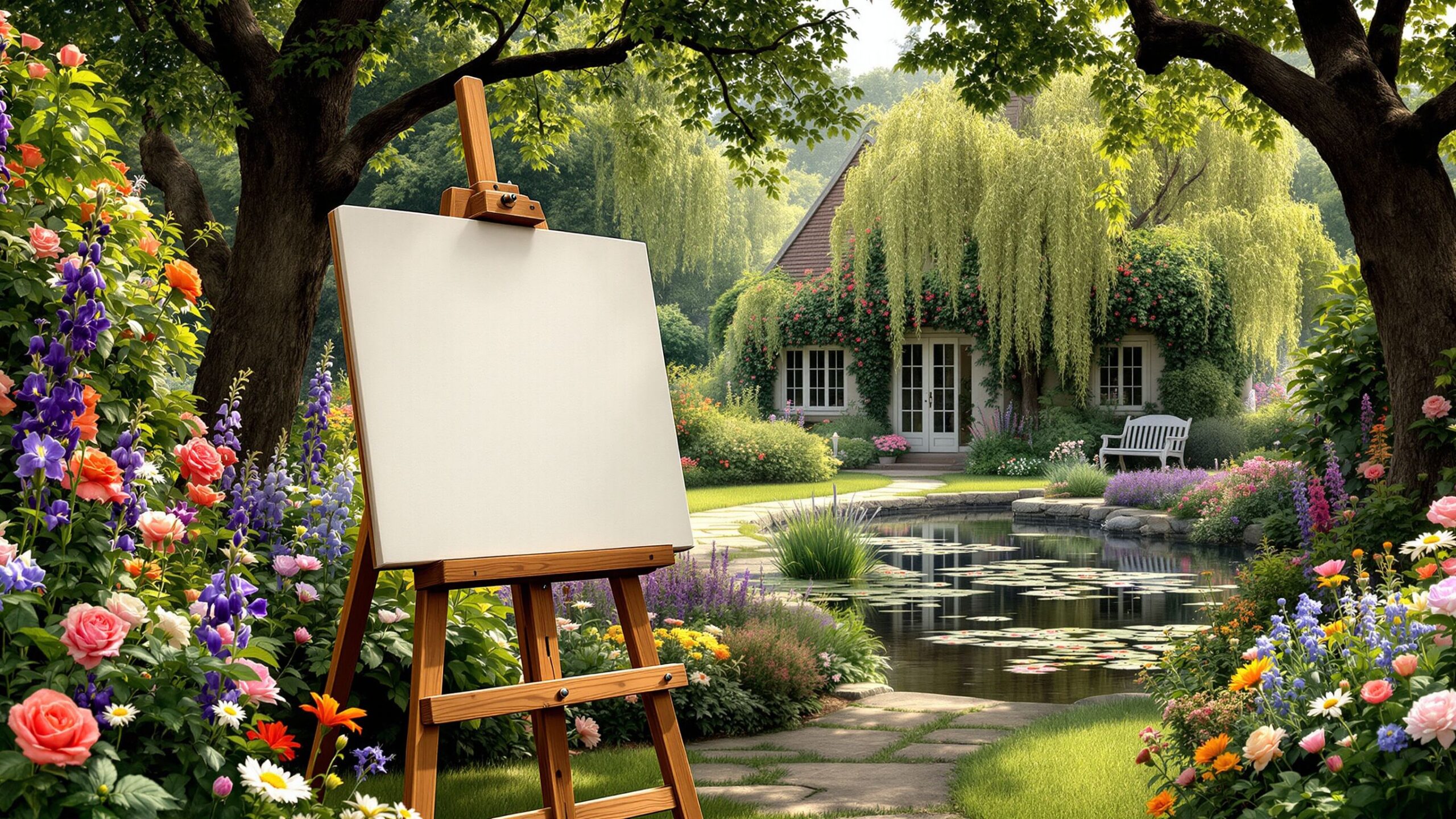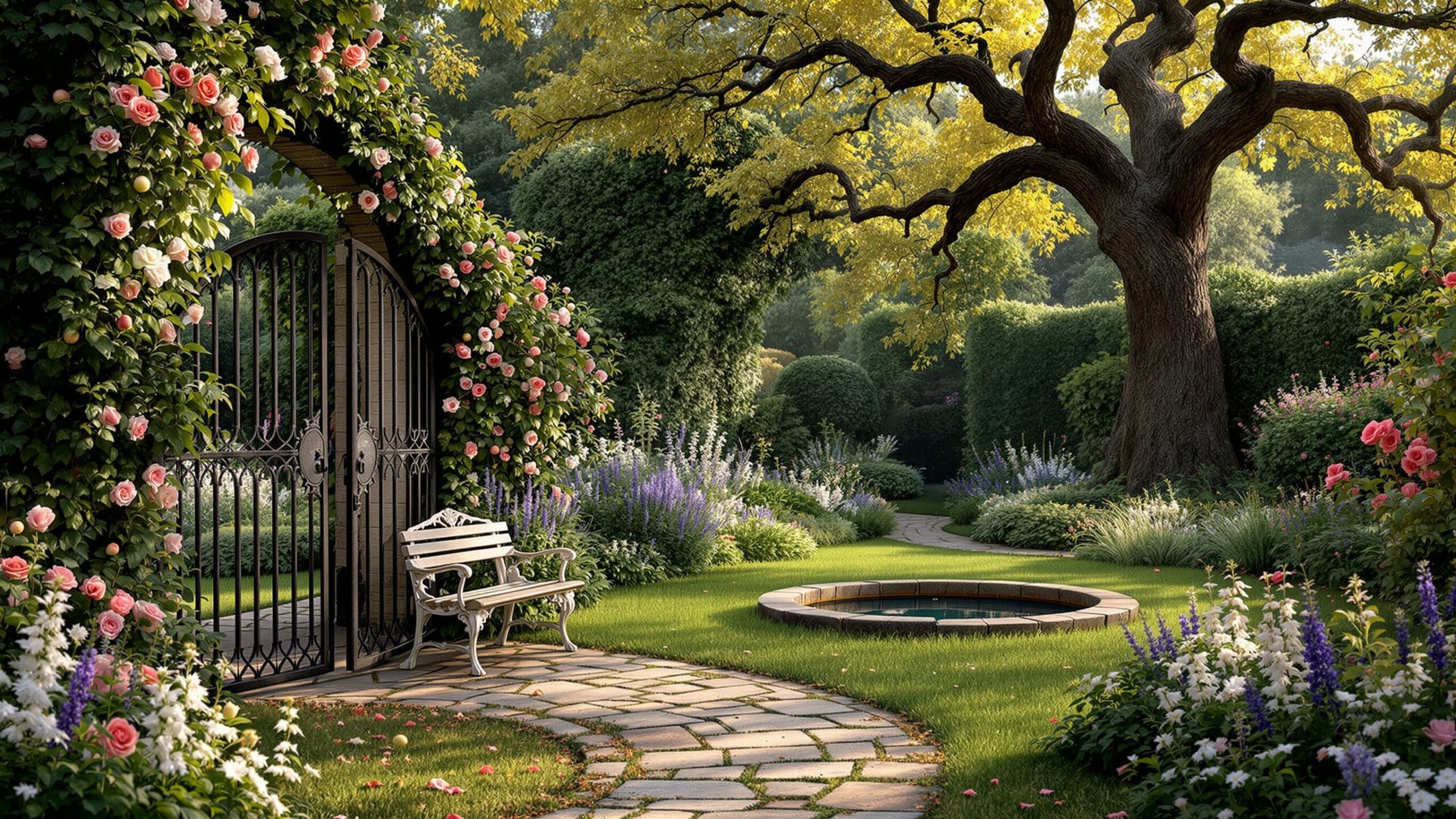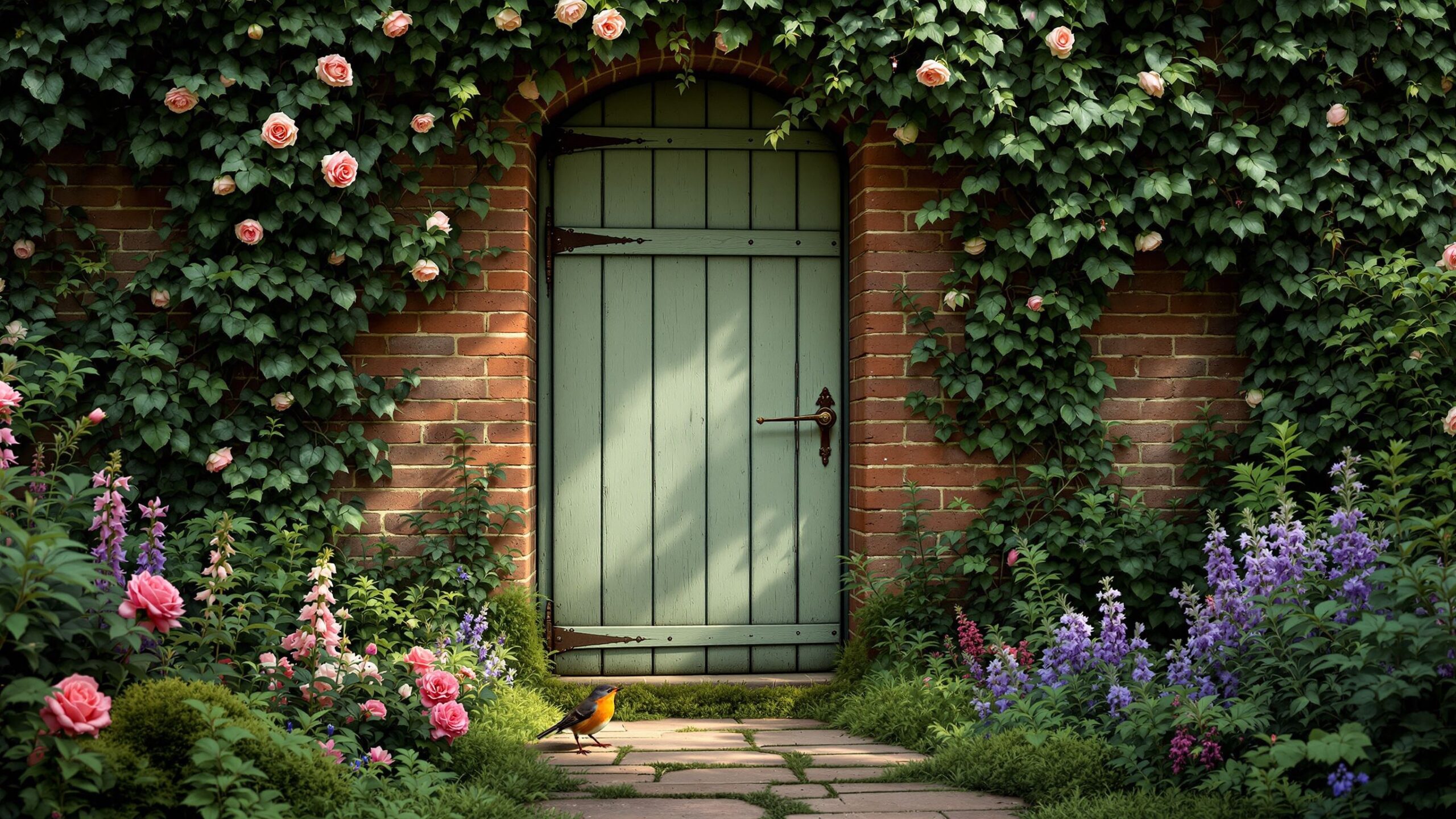
There are fictional places we remember long after we have forgotten the details of the stories surrounding them. The hidden garden at the heart of Frances Hodgson Burnett’s The Secret Garden is one of them. Behind an ivy-covered wall and a locked door lies a neglected world of tangled roses, bare branches, forgotten flower beds, and possibilities waiting to return to life. To generations of readers, the garden has become much more than the setting of a children’s novel. It represents mystery, friendship, discovery, renewal, childhood freedom, and the remarkable ability of nature to transform both a landscape and the people who enter it. Published in book form in 1911 after serialization, The Secret Garden has remained one of Burnett’s most enduring works. Its central image is irresistibly simple: somewhere beyond an old wall is a garden that has been locked away for years, and a child has discovered the key. More than a century later, that idea continues to inspire readers, filmmakers, gardeners, landscape designers, and anyone who has ever wondered what might be hidden behind a mysterious garden gate.
A: Frances Hodgson Burnett, an English-American novelist and playwright, wrote the classic children's story.
A: Mary Lennox is the central character, although Colin Craven and Dickon Sowerby become equally important to the story's transformation.
A: Archibald Craven ordered it closed after the death of his wife, who had loved the garden.
A: She discovers clues around the estate, including a buried key and the hidden doorway concealed behind ivy.
A: It symbolizes rebirth, healing, friendship, hope, growth, and the possibility of beginning again.
A: Outdoor life changes the children's physical activity, relationships, confidence, curiosity, and outlook on the world.
A: The manor is fictional, although Burnett drew inspiration from English landscapes, houses, and gardens she knew.
A: The exact garden in the novel is fictional, but Burnett's own love of gardening and experiences with real English gardens influenced her descriptions.
A: Its combination of mystery, friendship, nature, emotional transformation, and the fantasy of discovering a hidden garden continues to appeal to new generations.
A: Create an enclosed space with climbing plants, winding paths, fragrant flowers, a hidden entrance, wildlife, and a secluded place to sit and enjoy the garden privately.
Who Was Frances Hodgson Burnett?
Frances Hodgson Burnett was born in Manchester, England, in 1849 and later moved with her family to the United States. She became a successful novelist and playwright, producing works for both children and adults. Among her best-known books are Little Lord Fauntleroy, A Little Princess, and The Secret Garden. Her life moved between Britain and America, and gardens became deeply important to her personally as well as creatively. Burnett was not simply an author who happened to choose a garden as a convenient setting. She developed genuine enthusiasm for flowers, outdoor spaces, gardening, and the emotional experiences landscapes could create. That connection helps explain why the garden in her famous novel feels so central to the story rather than functioning as decorative scenery.
The Story of The Secret Garden
At the beginning of The Secret Garden, young Mary Lennox is living in India. After losing her parents, she is sent to England to live with her uncle, Archibald Craven, at the enormous and mysterious Misselthwaite Manor in Yorkshire. Mary arrives unhappy, lonely, and accustomed to being cared for by servants. The manor feels equally gloomy. It contains countless rooms, secrets, absent family members, and an atmosphere shaped by grief. Then Mary begins exploring outdoors. She hears about a garden that belonged to her uncle’s late wife and was locked after her death. The door has remained hidden, and the key has been buried. The mystery immediately gives Mary something she has previously lacked: a purpose.
The Locked Door That Changed Everything
Few elements of The Secret Garden are more memorable than the hidden door. A wall already suggests separation, but a locked garden creates something even more powerful. It makes readers want to know what lies beyond it. The garden is inaccessible not because it is dangerous but because it is connected to grief. Archibald Craven ordered it closed after his wife’s death, turning a once-living landscape into a physical representation of something emotionally unbearable. When Mary eventually finds the key and discovers the concealed entrance, she is not simply opening a door into another part of the estate. She is reopening a part of the family’s history.
Why Secret Gardens Fascinate Us
The idea of a secret garden appeals to a nearly universal sense of curiosity. A normal flower bed can be admired immediately. A hidden garden has to be discovered. Walls, hedges, gates, tunnels, arches, and concealed paths prevent us from seeing everything at once, which makes the landscape feel larger and more mysterious. The same principle is used by landscape designers today. Gardens become more interesting when they contain partial views and destinations that are not immediately visible. Burnett understood the emotional power of this instinct perfectly. The garden’s beauty matters, but its secrecy makes readers desperate to enter it.
The Robin and the Discovery of the Garden
One of the story’s most charming elements is the robin that helps guide Mary toward the hidden garden. The bird becomes part of the relationship between Mary and the natural world. Instead of receiving all her answers from adults, she begins observing animals, soil, plants, weather, and the landscape itself. The robin adds a fairy-tale quality without transforming the novel completely into fantasy. Nature seems to be communicating with Mary, encouraging her curiosity and drawing her deeper into the mystery.
The Buried Key
The discovery of the key is another reason the story has such enduring imaginative power. Keys naturally suggest secrets, forbidden places, and access to something previously unreachable. A buried key makes the idea even more intriguing because it implies that the past has literally been covered over and forgotten. Mary finding it becomes symbolic of uncovering something that the adults around her have tried to leave behind. For gardeners and designers inspired by the novel, old keys, weathered gates, partially concealed entrances, and antique-looking doors have become visual shorthand for the romantic secret-garden aesthetic.
What Mary Finds Behind the Wall
When Mary first enters the garden, she does not discover a perfectly maintained paradise. That detail is essential. The garden has been neglected for approximately a decade. Plants have grown without regular care, roses appear tangled, and Mary is initially unsure what remains alive. Instead of being disappointed, she becomes fascinated by the possibility of revival. She begins clearing away dead growth and looking for signs of emerging plants. The garden’s imperfection gives Mary something to do. If she had discovered a flawless landscape, there would have been nothing for her to restore and far less reason for her to become emotionally invested in it.
The Garden as a Symbol of Renewal
The most important theme surrounding the secret garden is renewal. The garden has been shut away following tragedy, just as several characters have emotionally withdrawn from life. As the plants begin returning, the people caring for them change as well. Mary becomes healthier, more active, curious, and connected to others. Colin, initially convinced of his own weakness and isolation, gradually begins spending time outdoors and developing confidence. The garden’s seasonal awakening mirrors their personal transformations. Burnett makes growth visible through plants because gardens provide a perfect metaphor: what appears lifeless may simply be waiting for the right season and the right care.
Mary Lennox and the Transforming Power of Gardening
Mary’s transformation is one of the strongest reasons the novel continues to resonate. At the beginning, she is isolated and unpleasant partly because she has experienced little genuine affection or independence. At Misselthwaite, the outdoors begins changing her routine. She walks, digs, observes, asks questions, and takes responsibility for something living. Gardening gives her agency. She is no longer simply a child transported from one adult-controlled environment to another. The secret garden becomes a project that belongs to her and her friends.
Dickon and the Natural World
Dickon Sowerby represents a very different relationship with nature. He is comfortable outdoors, knowledgeable about animals and plants, and portrayed as having an almost instinctive connection with living things. Where Mary must learn to notice nature, Dickon already seems completely at home within it. His presence helps transform the garden from Mary’s private mystery into a shared space of friendship and cooperation. He also embodies one of the novel’s central ideas: understanding nature requires attention rather than domination.
Colin Craven and the Garden
Colin is one of the most important characters in understanding what the garden represents. He has spent much of his life indoors, convinced that he is seriously fragile and expecting catastrophe. His world has become restricted by fear, secrecy, and the anxieties of adults around him. When Mary introduces him to the garden, his environment changes dramatically. Outdoors, he becomes part of a world filled with movement, growth, sunlight, animals, and changing seasons. The garden gives him something larger than himself to observe and participate in.
The Garden and the Changing Seasons
Seasonal change is fundamental to The Secret Garden. The garden is especially powerful because Mary discovers it during a period when much of its potential is still hidden. Shoots emerge. Buds form. Plants that looked dead reveal themselves to be alive. Spring becomes part of the story’s emotional structure. Burnett uses the natural progression from winter toward spring to reinforce themes of awakening and possibility. Readers do not simply hear that the characters are changing; they watch the landscape change alongside them.
Roses at the Heart of the Secret Garden
Roses are among the plants most strongly associated with the garden and with the memory of Colin’s mother. Their presence contributes beauty, romance, history, and emotional meaning. Roses are especially appropriate because established varieties can persist and return after periods of neglect if the underlying plants remain alive. Their climbing habit also makes them perfect for a walled garden, where branches can spread across brick and stone. Modern secret-garden designs frequently use climbing or rambling roses for exactly this reason.
Why the Walled Garden Is So Important
A wall changes the psychology of a garden. It creates a clear boundary between ordinary life and the world inside. Historically, walled gardens served practical purposes, including protection from animals and weather and the creation of favorable microclimates. In literature, however, walls also suggest privacy, protection, exclusion, and mystery. Burnett’s garden works because it feels completely separate from the surrounding estate. Once the children pass through the hidden entrance, they enter a space where different possibilities seem available.
Misselthwaite Manor and the Yorkshire Setting
The imposing Misselthwaite Manor provides an important contrast with the garden. Indoors, Mary encounters corridors, closed rooms, secrets, restrictions, and the emotional consequences of grief. Outdoors, she discovers movement and possibility. The Yorkshire landscape itself also contributes strongly to the atmosphere. The moor, changing weather, wind, animals, and broad open spaces make the natural world feel immense compared with the enclosed manor. The secret garden sits between these extremes. It is protected by walls but alive with nature.
Was The Secret Garden Based on a Real Place?
Readers have long been fascinated by the possibility that Burnett’s fictional garden was inspired by real landscapes. One important influence was Great Maytham Hall in Kent, where Burnett lived for a period. The property included a walled garden, and Burnett’s experiences there are often connected with the development of ideas that eventually appeared in The Secret Garden. Her broader love of gardening and experiences in English landscapes also shaped the novel. Misselthwaite Manor itself is fictional, so there is no single real garden that perfectly matches the one described in the book. Instead, Burnett transformed personal experience, imagination, horticultural enthusiasm, and English garden traditions into something new.
Great Maytham Hall and Burnett’s Own Secret Garden
Burnett’s connection with Great Maytham Hall is particularly fascinating because she encountered an old walled garden there and worked to restore it. The parallels with Mary’s discovery are difficult to miss. Burnett also developed a relationship with a robin while gardening, another detail that resonates strongly with the novel. Real experience did not simply get copied into fiction, but it provided material Burnett could transform. This makes The Secret Garden especially compelling for gardeners because some of its most magical elements emerged from genuine encounters with plants, walls, birds, and restoration.
Frances Hodgson Burnett as a Gardener
Burnett’s gardening interests extended beyond Great Maytham Hall. At different homes, she created and enjoyed flower-filled landscapes, particularly roses. Photographs and accounts of her life reveal an author who genuinely valued outdoor spaces. Gardening offered both beauty and personal enjoyment, and this affection appears throughout the novel. The descriptions of plants emerging, soil being worked, and children observing growth feel convincing because Burnett understood the pleasures of those experiences herself.
The English Garden Tradition Behind the Novel
The garden in Burnett’s story belongs to a broader tradition of English walled gardens, cottage planting, estate landscapes, and romantic garden imagery. Old estates often contained enclosed spaces separated by brick or stone walls. Some were kitchen gardens used to produce fruits, vegetables, herbs, and flowers for large households. Others became ornamental gardens. By Burnett’s era, romantic attitudes toward old architecture and abundant planting made weathered walls covered in roses especially appealing. The secret garden therefore feels magical while remaining grounded in recognizable English landscape traditions.
Why Children Love the Idea of a Garden Adults Cannot Enter
Part of the novel’s appeal comes from ownership. The children possess knowledge the adults do not fully control. They have discovered a place and created their own world inside it. Children’s literature frequently uses hidden rooms, treehouses, islands, forests, and secret clubs for the same reason. These spaces allow young characters to act independently. The secret garden is especially effective because it is simultaneously hidden and constructive. The children are not merely escaping adults; they are caring for something.
A Place for Friendship
The garden gradually becomes a shared project. Mary, Dickon, and Colin bring different personalities and experiences into the space, but caring for the garden gives them common purpose. They work, observe, experiment, and celebrate signs of growth together. The garden becomes meaningful partly because relationships develop within it. This is another reason real gardens can become so emotionally important. People remember who planted a tree with them, who taught them to grow tomatoes, or whose roses once grew beside a porch. Plants become attached to human stories.
The Meaning of “Magic” in The Secret Garden
The children frequently describe the forces they observe around them as “Magic.” Within the story, the term captures their wonder at growth, sunlight, nature, positive thinking, and the transformations occurring around them. Modern readers may interpret this language in different ways, but its literary function is powerful. The children experience ordinary natural processes as extraordinary because they are paying close attention. Seeds germinating, leaves opening, birds nesting, and bodies becoming stronger through activity feel magical when seen through their perspective.
Why The Secret Garden Still Feels Modern
Although the novel was written more than a century ago and reflects the attitudes and social assumptions of its period, several of its central ideas remain recognizable to contemporary readers. Children benefit from outdoor activity. Caring for living things can create purpose. Friendship changes people. Isolation can distort how individuals see themselves and the world. Natural environments can encourage curiosity and physical movement. Modern readers may understand these themes differently than Burnett did, but the emotional structure remains remarkably accessible.
The Secret Garden in Movies and Television
The enduring popularity of the novel has led to numerous stage, film, and television adaptations. Each production faces the same challenge: how should the secret garden look? Because readers create such vivid mental images while reading, filmmakers must turn an imagined landscape into something physical. Some versions emphasize wildness and mystery, while others create romantic gardens filled with roses, ancient trees, stone walls, and elaborate flowers. These adaptations have helped shape popular expectations of what a “secret garden” should look like.
How The Secret Garden Influenced Garden Style
The phrase “secret garden” now describes an entire landscape aesthetic extending far beyond the novel. Gardeners use it for enclosed patios, hidden seating areas, rose-covered courtyards, narrow pathways, and secluded corners surrounded by plants. The style usually emphasizes discovery rather than immediate visibility. A secret garden should feel as though it has been found rather than simply installed. Weathered materials, mature plants, climbing vines, old-fashioned flowers, and partially concealed entrances contribute to that illusion.
How to Create a Secret Garden at Home
You do not need a historic English estate or a ten-foot brick wall to create the feeling of a secret garden. The essential ingredient is enclosure. Tall shrubs, hedges, fencing, trellises, climbing plants, or even strategically positioned trees can separate one area from the rest of the yard. The entrance should reveal only part of what lies beyond. An arbor covered with climbing roses or clematis can create a threshold. A pathway can turn slightly before reaching the seating area so visitors cannot see everything immediately. The objective is not complete concealment but anticipation.
Start With a Hidden Entrance
The entrance is one of the most important parts of a secret-garden design. Consider an old-fashioned wooden gate, an iron gate softened by vines, an arbor surrounded by climbing flowers, or a narrow opening within a hedge. Avoid making the entire garden visible from the entrance. Position taller plants just beyond it so the path appears to continue somewhere unseen. Even on a small property, this simple technique can make the landscape feel more mysterious.
Use Climbing Roses for Instant Romance
Few plants create a literary English garden atmosphere as effectively as climbing and rambling roses. Train them over arches, fences, pergolas, trellises, or walls where appropriate. Choose varieties suited to your climate and the amount of sunlight available. Combine roses with clematis or other climbers to extend the flowering season. Mature vines soften hard architectural surfaces and help create the impression that the garden has existed much longer than it actually has.
Choose Old-Fashioned Flowers
A Secret Garden-inspired landscape should feel abundant rather than overly modern and minimal. Depending on climate, consider foxgloves, delphiniums, peonies, hollyhocks, lavender, violets, primroses, daisies, hydrangeas, campanula, irises, sweet peas, and other romantic flowering plants. Mix heights and textures so the planting appears layered. Allow selected plants to lean gently toward paths rather than keeping every border rigidly contained.
Create a Winding Path
Straight paths reveal destinations immediately. A gently curved path creates uncertainty. Use brick, natural stone, gravel, stepping stones, or another material appropriate to the house. Let low plants soften the edges. Position shrubs or taller perennials around curves so the next portion of the garden is not immediately visible. The pathway itself becomes part of the experience.
Add a Place to Sit
A secret garden should invite people to stay. Place a bench, small bistro table, stone seat, or comfortable chair where it is surrounded by plants but still has an attractive view. A bench beneath a rose-covered arbor can become the emotional center of the garden. The seating does not need to be expensive. In fact, slightly weathered materials often suit the atmosphere better than something that looks newly installed.
Make the Garden Feel Older Than It Is
Age contributes strongly to the romantic appeal of Burnett’s fictional garden. New gardens can gradually develop this quality through materials and plant choices rather than artificial distressing. Natural stone, brick, terracotta, iron, and wood tend to weather attractively. Moss may appear naturally in appropriate shaded conditions. Climbing plants gradually soften walls and fences. Allowing certain plants to self-seed can make flower beds appear less rigid. The most convincing approach is patience. Give the garden time to develop.
Include Fragrance
Burnett’s garden appeals to the imagination partly because readers can almost sense what it would feel like to enter it. A real secret garden should engage more than the eyes. Roses, lavender, sweet peas, dianthus, honeysuckle, herbs, and other fragrant plants can make walking through the space memorable. Position scented plants beside pathways and seating areas where visitors will naturally encounter them.
Welcome Birds and Wildlife
The robin is so important to Mary’s discovery that a Secret Garden-inspired landscape feels incomplete without wildlife. Bird-friendly shrubs, flowering plants, water sources, and reduced pesticide use can help create habitat. Pollinator-friendly flowers bring bees and butterflies, while trees and shrubs provide shelter for birds. The goal should not be to manufacture a perfectly controlled landscape but to create a garden in which other living things can participate.
Leave a Little Wildness
One of the easiest ways to ruin the secret-garden feeling is to make everything too perfect. The fictional garden is captivating because nature has continued growing while people were absent. A modern interpretation can capture some of that quality by allowing controlled looseness. Let a rose branch arch naturally over a path. Allow violets to appear between stepping stones where practical. Permit selected flowers to self-seed. Combine this softness with enough structure to prevent the garden from looking genuinely neglected.
Design for Discovery
Perhaps the most important lesson from The Secret Garden is that a landscape becomes more exciting when it cannot be understood immediately. Create layers. Place a beautiful object where only part of it can be seen through foliage. Hide a small fountain around a corner so visitors hear the water before seeing it. Position a bench at the end of a path. Grow flowers around a doorway. Gardens become memorable when they reward curiosity.
Why The Secret Garden Still Captivates Readers
More than a century after its publication, The Secret Garden continues to endure because its central fantasy is extraordinarily powerful. Somewhere there is a locked place waiting to be found. Inside it, something that appears forgotten is still alive. With attention, patience, friendship, and time, it can grow again. Readers do not need to be gardeners to understand that idea. The hidden landscape works simultaneously as a real place within the story and as a metaphor for everything the characters have stopped believing can change.
The Timeless Appeal of a Hidden Garden
The most beautiful thing about Burnett’s garden may be that it is not perfect when Mary discovers it. It needs someone. Branches must be examined, soil worked, plants protected, and life encouraged. The children do not simply receive paradise; they participate in bringing it back. That difference gives the story its emotional power. A perfect garden might have impressed Mary, but a forgotten garden gives her purpose.
A Story That Continues to Grow
Frances Hodgson Burnett could hardly have known how enduring her hidden garden would become. Generations of readers have searched imaginary walls for Mary’s door, pictured the buried key, followed the robin, and wondered what it would feel like to step into a forgotten garden for the first time. Gardeners have translated that fantasy into rose-covered gates, secluded benches, winding paths, flowering walls, and hidden corners of their own. The story survives because the garden represents something larger than horticulture. It suggests that places can recover, people can change, friendships can grow, and life can return to spaces that seemed closed forever. That is why The Secret Garden remains one of literature’s most unforgettable gardens. The door may be fictional, but the desire to discover what waits behind it is completely real.
Garden Product Reviews
Step into Mossy Streets’ Garden Product Reviews — your go-to guide for the best tools, gear, gifts, books, and garden gadgets rooted in nature. From blooming backyard beauties to lush indoor jungles, from heirloom seeds to high-tech composters, we dig into top-rated products for green thumbs, beginners, educators, and plant lovers alike. Whether you’re planting, pruning, decorating, or simply enjoying your green space, we’ve unearthed the best so you can grow, bloom, and thrive — all in one vibrant place!