
Give Trailing Stems a Deliberate Place on the Ground
A vine does not need a trellis to grow, but removing the structure changes where its stems go and how you will manage them. Some plants trail naturally over a bed or container edge, while others search for anything they can climb and may enter nearby shrubs or fences. That difference matters when you want a low covering layer instead of a vertical screen. Ornamental sweet potato vine, a suitable trailing nasturtium, or a nonclimbing clematis can offer useful effects in the right setting, yet they do not behave as identical substitutes. Choose the plant for the area it will occupy, the conditions at its roots, and the boundaries you can inspect. A planned horizontal spread can soften an open bed or retaining edge without requiring a freestanding framework. An unplanned spread can conceal desirable plants and create a difficult removal job. The goal is to replace the trellis with a clear growing role, not with an assumption that a vine on the ground needs no supervision.
A: Not necessarily; it may climb nearby plants or structures, so verify its attachment habit and inspect developing routes.
A: Not reliably in frost-prone climates, where its ornamental foliage usually leaves a coverage gap after the seasonal display ends.
A: Use planting stock intended and managed for food production instead of assuming an ornamental nursery purchase supplies a kitchen crop.
A: No, compact and trailing habits occupy different spaces, so select the variety according to the intended horizontal reach.
A: No, herbaceous integrifolia types and some related selections are nonclimbing or only partly climbing, requiring different design expectations.
A: No, assess the roots, slope, water movement, and off-season conditions instead of judging stability from the leafy surface alone.
A: It exposes unwanted stems early, allowing redirection before growth enters paths, drains, or desirable neighboring plant crowns.
A: Avoid accidental tree climbing that could obscure foliage and make both the vine and tree harder to maintain.
A: Define the temporary growing area and keep expanding stems from covering the young plants' crowns or productive leaves.
A: Assess the intended role, neighboring plant health, usable access, and seasonal care rather than measuring foliage spread alone.
Distinguish Trailing, Scrambling, and True Ground Coverage
Trailing stems extend outward and can drape over an edge when they find no upright structure. Scrambling growth moves through or over nearby plants, sometimes relying on them for support. Other vines use twining, tendrils, or clinging structures to climb anything suitable within reach. These behaviors determine what will happen when you plant without a trellis. A nursery description calling a plant a vine does not tell you whether it will remain politely horizontal. Verify the actual species or cultivar and its mature habit before assigning it a ground-level role.
Coverage is also more than a collection of long stems. A plant may spread across an area while leaving gaps between its leaves, or it may produce a dense seasonal surface that disappears after frost. Decide whether you need visual softness, temporary summer filling, or a lasting soil-covering layer. Each goal requires different expectations for spacing and seasonal care. A vine can contribute to the ground layer without being the best solution for every bare patch.
Use Ornamental Sweet Potato Vine for Seasonal Foliage
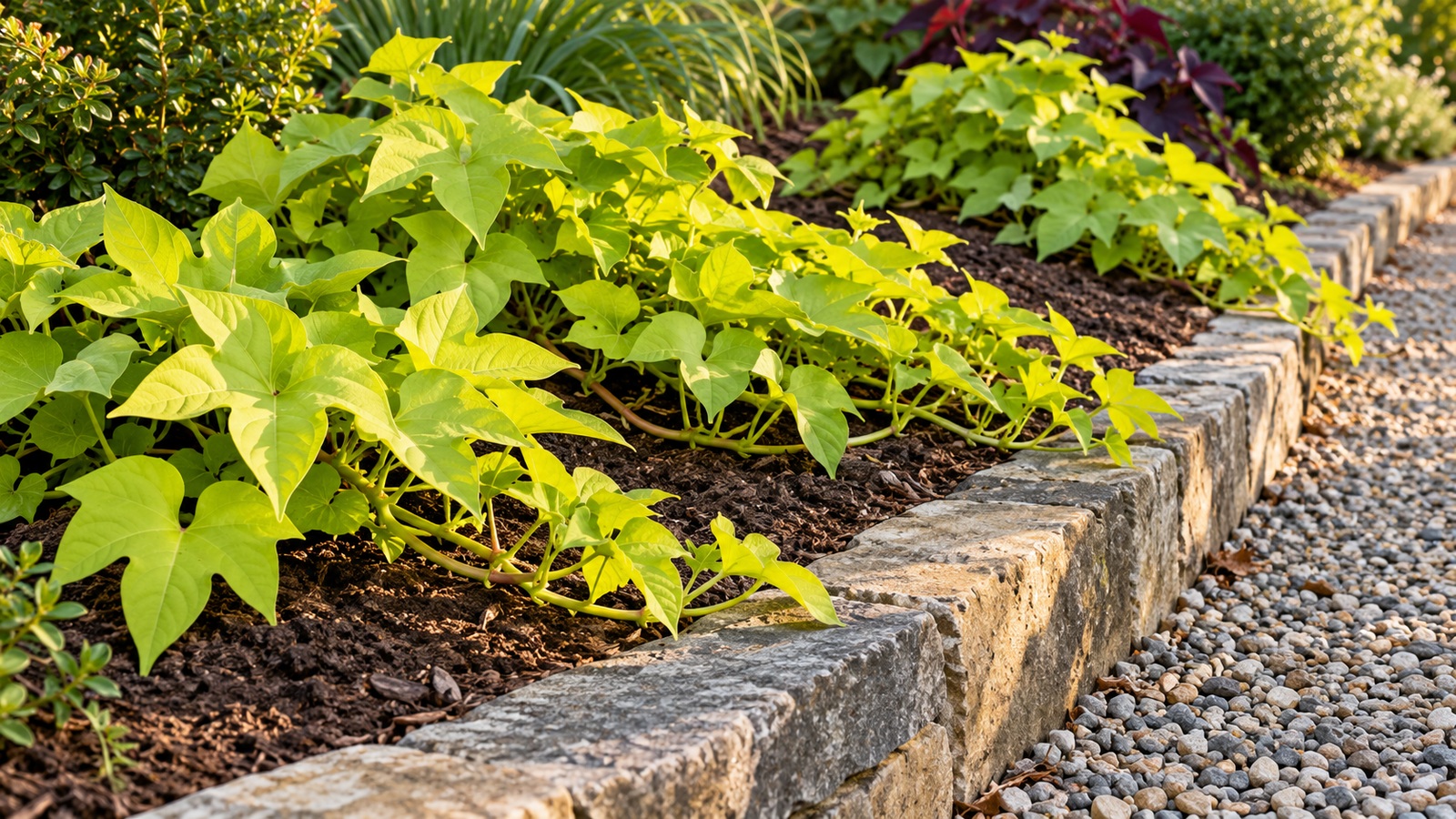
Ornamental sweet potato vine, Ipomoea batatas, is often grown for vigorous trailing foliage. Cultivars can have chartreuse, dark purple, or other leaf colors and different shapes and sizes. In suitable warm-season conditions, their stems can extend through an open bed or spill over a container or low edge. Select the actual cultivar for the available area rather than assuming that every plant sold under the common name remains compact. A strong color can make the entire ground layer a focal feature.
In frost-prone regions, this plant is commonly used as a seasonal ornamental rather than dependable winter coverage. Plan what happens to the bed after cold ends the display. Choose light, water, and drainage appropriate to the selected cultivar, and support establishment before expecting rapid filling. Vigorous growth can become inconvenient if stems reach a path or cover small neighboring plants. Leave room to redirect or trim suitable growth and keep the plant's base accessible.
Ornamental selections should be managed according to their intended ornamental role. Do not infer food suitability or nursery-treatment history merely from the species name shared with edible sweet potatoes. If you want a food crop, obtain identified stock intended for that use and follow appropriate crop guidance. Keeping those roles distinct avoids turning a foliage purchase into an uncertain kitchen harvest. The attractive leaves can earn their place in the garden without any claim that the ornamental planting also provides usable roots.
Let Trailing Nasturtiums Fill a Suitable Summer Patch
Trailing nasturtiums, Tropaeolum majus, can sprawl over the ground or drape from a suitable edge. Their round leaves and flowers create a different texture from sweet potato vine's foliage-first display. Choose a trailing selection rather than assuming that a compact bush variety will cover the same area. The expected stem length and vigor should fit the bed. Local climate and growing conditions determine the planting window and how long the display remains useful.
Keep the temporary spread away from small perennials that need light and space. A seasonal vine can make an empty bed look fuller, but it should not hide young permanent plants until they struggle beneath it. Observe the growth route and redirect stems early when practical. Leave a clear path for watering and inspection. A manageable patch is easier to enjoy than a large tangle that prevents you from reaching the plants it was meant to complement.
Choose Nonclimbing Clematis for a Different Horizontal Effect
Some clematis are nonclimbing or only partly climbing herbaceous plants rather than the familiar self-gripping climbers. Clematis integrifolia and related selections can provide a sprawling or supported border role, with cultivar differences in height and habit. They should not be expected to attach to a trellis in the same way as a leaf-stalk climber, nor to produce a tight evergreen mat. Confirm the selection and regional hardiness before buying. Its appeal may be flowers carried through a low informal grouping rather than complete soil coverage.
Use that habit deliberately in a mixed border where stems can remain visible and neighboring plants will not be smothered. A modest support or careful arrangement may still improve the display even when no trellis is needed. If you prefer stems to spread naturally, reserve a suitable area and keep access around the base. Follow the plant's own pruning and seasonal instructions. The absence of climbing attachment does not eliminate its need for appropriate site conditions or maintenance.
Observe the plant through a full season before expanding the arrangement. Some gardeners enjoy the informal interaction of stems and neighboring foliage, while others find that a distinct clump is easier to manage. Neither preference changes the plant's biology. Choose companions and spacing that allow the actual habit to work rather than repeatedly forcing it into a different shape. A nonclimbing clematis can be a useful low accent without serving as a universal ground-cover replacement.
Plan Boundaries Before the Stems Reach Them
Map the intended spread and identify what lies beyond it. Paths, lawn edges, small shrubs, drains, and neighboring property create different containment demands. A vine can move across a visible boundary and then become harder to remove from cracks or woody branches. Leave a maintenance margin that makes the growth easy to inspect. A low wall may provide an attractive draping edge, but it does not guarantee that stems will stay on the desired side. Decide how you will redirect or remove unwanted growth before the bed fills. A clear boundary is more useful than discovering late in the season that every neighboring surface has become a potential route.
Do Not Ask a Trailing Vine to Repair an Unstable Site
A sloping bed can look attractive with trailing foliage, but appearance alone does not establish erosion control. Roots, soil depth, drainage, slope steepness, and rainfall all affect stability. A temporary annual canopy may cover the surface during summer and leave it open later. Assess the actual problem before choosing a vine as the solution. Where runoff or erosion is significant, seek appropriate local advice and use a planting or structural plan designed for those conditions.
The root zone still needs suitable preparation even when the stems are meant to wander freely. Remove serious competitors, check drainage, and provide workable rooting space. Avoid planting into construction debris or a thin pocket simply because foliage might eventually hide it. Mulch suitable gaps without burying crowns or stems that need to remain clear. A healthy plant can provide the intended spread only when its base has conditions that support continued growth.
Keep Growth Away From Trees and Vulnerable Neighbors
Do not let a vigorous vine use nearby trees and shrubs as an accidental trellis. Stems can climb, tangle, or cover foliage, making the original ground-level design harder to control. Inspect the edges during active growth and remove unwanted routes while stems are young. A tree trunk is not simply an attractive support waiting to be clothed. The relationship can complicate tree inspection and care even when the vine is locally appropriate elsewhere.
Choose compatible neighbors by mature size and seasonal needs. Small slow-growing plants can disappear beneath vigorous annual leaves, while established shrubs may create more shade than the vine can tolerate. Leave each plant's crown visible enough to inspect. A mixed bed works better when horizontal growth has a defined corridor or patch. Random scrambling may look natural briefly but become difficult to manage once stems are interwoven.
Screen regional invasiveness before selecting familiar sprawling vines. English ivy, wintercreeper, and other aggressive climbers may be unsuitable where they escape or create serious control problems. Their ability to cover ground is not a reason to ignore that risk. Verify the botanical name and local guidance, including how the plant spreads and whether removal is practical. Choose an appropriate alternative rather than assuming that the absence of a trellis prevents an invasive vine from climbing or spreading beyond the garden.
Manage the Display Through Establishment and Seasonal Cleanup
Water new plants according to their requirements and actual soil moisture. The developing roots need attention before the visible spread becomes dense, and an apparently lush canopy can conceal a stressed base. Check for pests, damaged foliage, and competing weeds while the bed remains accessible. Redirect growth when it first approaches a path or valuable neighbor. Regular short visits make containment easier than waiting until the entire planting has become one connected tangle. Keep the inspection route usable as the leaves expand, and avoid gathering all stems into a pile simply to clear a narrow path temporarily. A more permanent adjustment to the growth boundary usually makes later care simpler. The arrangement should remain understandable enough that you can identify which plant owns each expanding stem.
Evaluate Whether Horizontal Growth Is Doing the Intended Job
Compare the developed planting with your original goal. If the aim was softening a low retaining edge, look at the drape and the amount of clear access that remains. If it was seasonal filling, check whether permanent plants stayed healthy beneath and beside it. A vine may grow vigorously without accomplishing the job you chose it for. Adjust the selection or layout based on that observation rather than judging success only by how much foliage appeared.
Plan end-of-season removal or pruning according to the plant. Annual stems can be cleared without tearing through the roots and framework of neighboring perennials, while a lasting herbaceous selection needs its own seasonal routine. Keep plant identities and any relevant nursery instructions available. If you intend to preserve tender material for another season, use appropriate guidance rather than improvising around a tangled bed. The horizontal display has a beginning and an ending that deserve as much thought as its summer peak.
Growing vines without a trellis works when the ground itself becomes a deliberately managed space. Choose a suitable trailing ornamental, a seasonal flowering spread, or an identified nonclimbing perennial for the effect you need. Protect neighbors, preserve access, and recognize that a foliage canopy is not proof of permanent soil stabilization or effortless care. A small successful patch can soften the garden while remaining easy to understand. That controlled relationship between growth and place is what makes the trellis-free approach useful.
Confirm the Growth Habit Before Letting Stems Spread
See University of Maryland Extension’s nasturtium guidance for a seasonal sprawling option. Compare bed-care supplies through Garden Product Reviews after planning boundaries and access.


