Few plants command attention quite like agave. Thick, powerful leaves radiate from a central growing point to create remarkably symmetrical rosettes that can look almost sculpted rather than grown. These dramatic forms have made agaves favorites in desert gardens, modern landscapes, succulent collections, rock gardens, and drought-conscious designs. Agave is an entire genus within the family Asparagaceae, with numerous species differing greatly in size, color, texture, cold tolerance, and growth habit. Many are native to Mexico, while others occur naturally in the southwestern United States, Central America, the Caribbean, and surrounding regions. Their thick succulent leaves store water, helping them survive dry periods, but successful cultivation still depends on strong light, excellent drainage, appropriate temperatures, and careful watering.
A: Water deeply and then allow the soil to dry thoroughly before watering again. Established outdoor plants may need very little supplemental water.
A: Most species prefer full sun or very bright light, although young or recently transplanted plants may benefit from gradual acclimation.
A: Use rocky, sandy, or gritty soil that drains quickly and does not stay soggy.
A: Yes. Smaller species are especially well suited to containers with excellent drainage.
A: Yellowing can result from excessive moisture, poor drainage, low light, cold damage, or natural aging of older leaves.
A: Many species do. The main rosette often dies after flowering, while pups or bulbils may survive and continue growing.
A: The easiest method is usually separating established pups from the parent plant and replanting them.
A: It depends on the species. Some are surprisingly cold hardy, while others can be badly damaged by frost.
A: Severely damaged or dead leaves can be carefully removed with clean tools, but healthy leaves should generally remain.
A: No. They are both succulents with rosette-shaped growth, but they belong to different plant groups and have different growth habits.
What Agave Plants Look Like
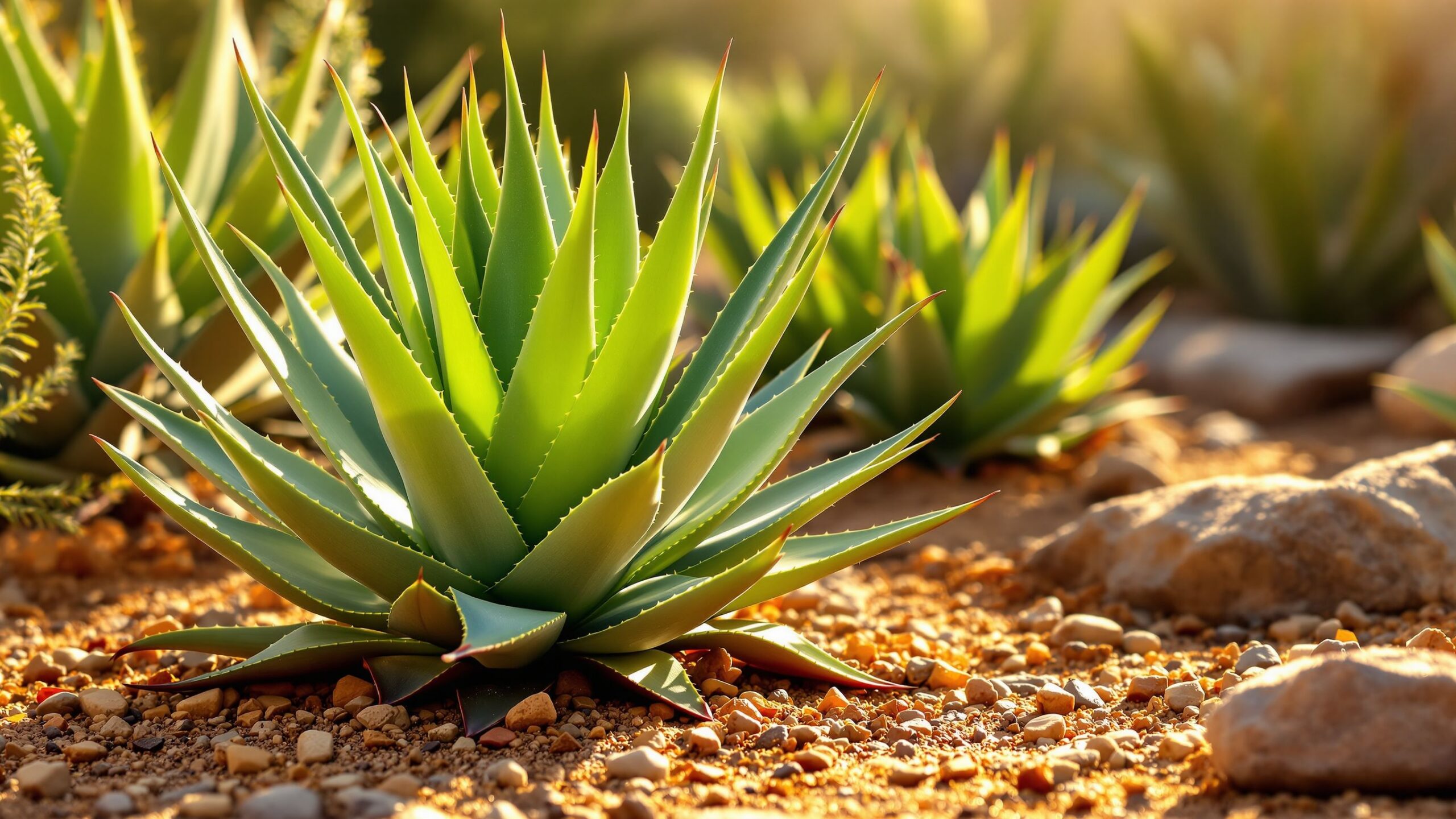
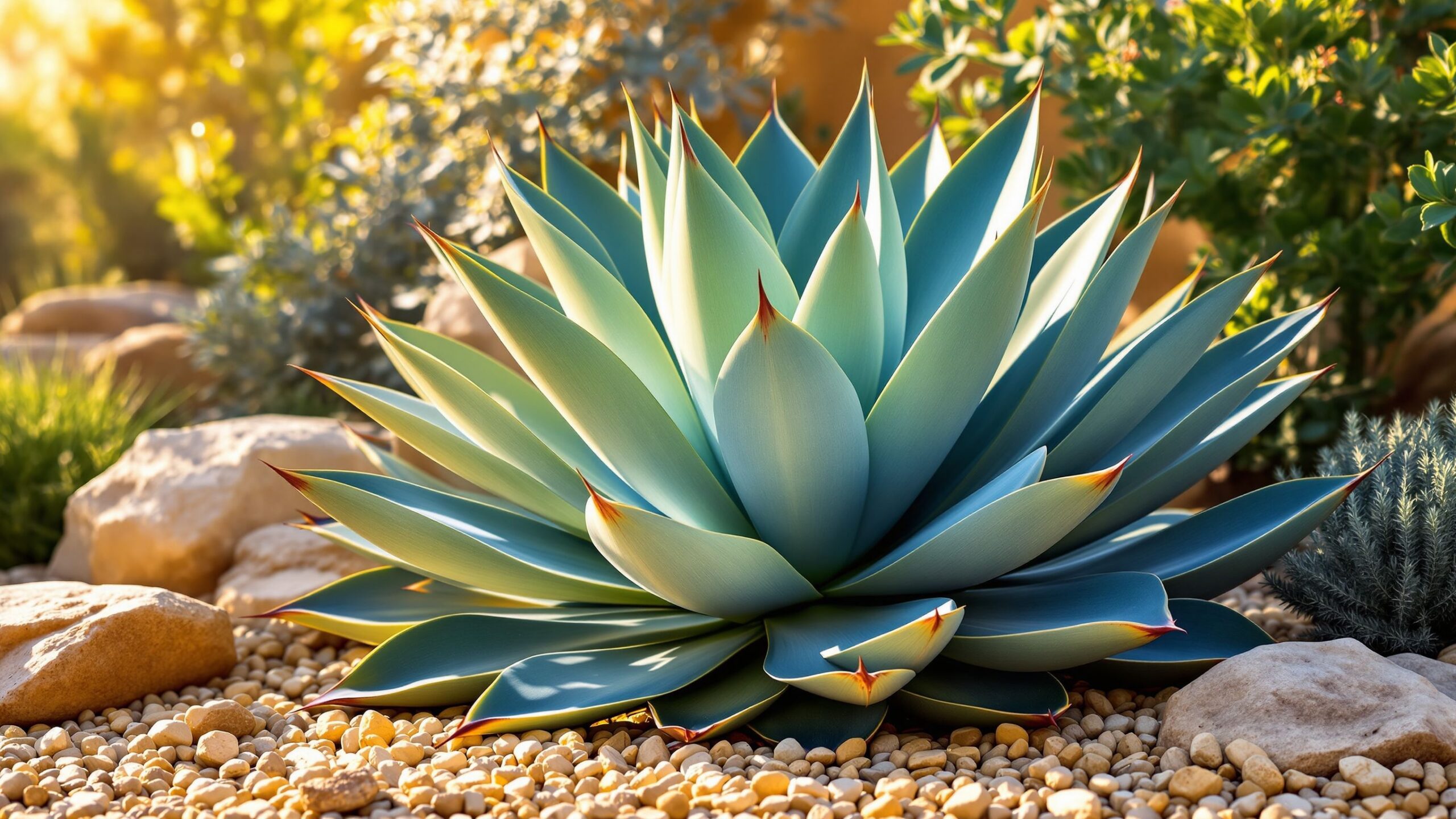
The classic agave grows as a rosette, with leaves emerging from a central point and spreading outward in a strong geometric pattern. Depending on the species or cultivar, foliage may be green, blue-green, gray, silver, striped, or variegated. Some agaves have broad, heavily armed leaves, while others are narrower and more graceful. Many develop teeth along the leaf margins and a sharp terminal spine at the tip, defensive structures that can discourage animals from feeding on their moisture-rich tissues.
Size varies enormously. Compact agaves can remain small enough for container collections, while large species may eventually form rosettes several feet across. Mature size should always be considered before planting near sidewalks, driveways, patios, doors, or other frequently used areas. A small nursery specimen can eventually become a formidable landscape plant.
Where Agave Comes From
Agaves are strongly associated with Mexico and the dry landscapes of the Americas, and Mexico contains extraordinary diversity within the genus. However, not every species comes from identical desert conditions. Natural habitats can include rocky slopes, grasslands, scrublands, dry forests, mountains, and high-elevation environments.
This diversity explains why there is no single care formula that applies perfectly to every agave. Some species tolerate cold considerably better than others, while certain plants are better suited to intense heat. Learning where a particular species originated can provide useful clues about its preferred conditions. Despite these differences, one characteristic is shared by many commonly cultivated agaves: they perform poorly when their roots remain in waterlogged soil.
Agave’s Long Relationship With People
Agave has been connected with human cultures for thousands of years. Indigenous communities throughout Mexico and neighboring regions developed numerous uses for different species long before agaves became fashionable landscape plants. Their leaves provided fibers that could be processed into useful materials, while parts of certain species were traditionally prepared for food and beverages. Agaves became deeply connected with regional agriculture, economies, traditions, and cultural identity.
Today, one of the most internationally recognized associations is tequila. Blue agave, Agave tequilana, is cultivated for tequila production, while mezcal can be produced from several agave species. Yet the genus has a much broader history than distilled spirits alone. Agaves have played roles in food, fiber, agriculture, traditional practices, and landscape design, and their popularity continues to grow as gardeners become more interested in architectural plants and water-conscious landscapes.
Sunlight and Soil for Healthy Agave
Most agaves perform best with abundant sunlight. Outdoor plants often develop their strongest form and characteristic coloration in full sun or very bright conditions, although some species tolerate partial shade. In extremely hot climates, protection from the most intense afternoon sun may benefit certain agaves.
Plants moved outdoors after spending months inside should be acclimated gradually because sudden exposure to intense sunlight can damage foliage. Indoor agaves need an exceptionally bright location, since ordinary room lighting is generally insufficient. Stretching, leaning, or unusually weak new growth can indicate that the plant needs more light.
Drainage is equally important. Many agaves naturally grow in rocky or otherwise freely draining environments, and heavy soil that remains saturated can lead to serious root and crown problems. Container plants generally do well in a fast-draining cactus or succulent mix, while outdoor agaves benefit from slopes, raised areas, rocky beds, or naturally well-drained ground. Containers should always have effective drainage holes.
How to Water Agave
Agave’s thick leaves reveal its ability to conserve water. Established outdoor plants can be highly drought tolerant, although their exact requirements depend on species, climate, season, soil, and growing conditions. Newly planted agaves generally need more consistent attention while their root systems become established.
Container-grown plants should usually be watered thoroughly and then allowed to dry substantially before receiving more water. Constantly damp soil is much more dangerous than an occasional dry period. Avoid relying on a rigid weekly schedule because the same pot may dry quickly in summer heat and remain moist much longer during cool weather. Checking the soil provides more useful information than checking the calendar. Excess water becomes particularly risky when combined with poor drainage and low temperatures.
Growing Agave in Containers
Agaves make spectacular container plants because their geometric shapes pair naturally with simple pots and contemporary designs. Smaller species and cultivars are especially suitable for patios, balconies, courtyards, and succulent collections. Choose a container large enough to provide stability without surrounding a small root system with an unnecessarily huge volume of wet soil.
As agaves mature, their weight and top-heavy structure can make a sturdy, wide container particularly useful. The pot should drain freely, and the growing medium should not remain saturated. Repot when the plant becomes severely root-bound, crowded, or unstable. Protective gloves and careful handling are advisable when working with species that have sharp marginal teeth or terminal spines.
Agave Pups and Propagation
Many agaves produce offsets, commonly called pups, around the base of the parent plant. These young plants can gradually create a colony and provide one of the easiest ways to propagate agave. Once an offset is sufficiently developed, it can be separated with clean tools and replanted, ideally preserving its own roots when possible.
Offset production differs by species. Some agaves produce numerous pups, while others remain relatively solitary. This behavior matters in landscape planning because an aggressively offsetting species may eventually spread beyond its original space unless young plants are removed. For collectors, however, pups can be a welcome source of additional plants.
The Spectacular Agave Flower
Few events in succulent gardening are as dramatic as an agave bloom. After years of vegetative growth, a mature plant may suddenly send an enormous flower stalk from the center of its rosette. Depending on the species, the stalk can rise many feet and develop branches or clusters containing numerous flowers. A plant that spent years close to the ground can temporarily become one of the tallest features in the landscape.
Agave flowers can support a variety of pollinators, including insects, birds, and, for certain species and regions, bats. The bloom represents an enormous reproductive investment, with the plant using energy accumulated over many years to create its towering display.
Why Many Agaves Die After Flowering
Many agave species are monocarpic, meaning an individual rosette flowers once and then dies after completing its reproductive cycle. This characteristic helped create the famous nickname “century plant,” particularly associated with Agave americana. Despite the name, agaves do not necessarily wait 100 years to bloom. Flowering time depends on species, climate, maturity, and growing conditions, and many bloom after years or decades rather than a literal century.
The death of the flowering rosette does not always mean the plant disappears from the garden. Many species produce offsets before flowering, leaving younger plants behind after the parent declines. Some can also form bulbils on their flowering structures. Rather than viewing flowering only as the death of the plant, it can be understood as the spectacular completion of a long reproductive cycle.
Popular Types of Agave
The diversity of the Agave genus gives gardeners many choices. Agave americana is among the most recognizable, producing large blue-green or gray-green rosettes and enormous flowering stalks. Variegated forms can add yellow or cream patterns to the foliage. Because of its mature size and sharp leaves, it needs generous space.
Agave parryi, or Parry’s agave, is valued for its compact, symmetrical rosette and relatively strong cold tolerance compared with many warmer-climate species. Agave victoriae-reginae, commonly called Queen Victoria agave, is prized by collectors for its compact form, dark green leaves, and striking white markings. Agave attenuata has a softer, more graceful appearance and less aggressively armed foliage, while Agave tequilana, the blue agave, is internationally famous for its role in tequila production. Choosing a species should involve more than appearance; mature size, spines, cold tolerance, offset production, and climate all matter.
Agave Versus Aloe
Agave and aloe are often confused because both form rosettes of thick, water-storing leaves, but they belong to different plant groups and evolved in different parts of the world. Agaves are native primarily to the Americas, while aloes originated in the Old World, particularly Africa and nearby regions.
Their life cycles also differ. Many agaves spend years developing before producing one enormous central flower stalk, after which the flowering rosette dies. Aloe plants can flower repeatedly without the rosette necessarily dying afterward. Agave leaves are also often more rigid and fibrous, and many species possess formidable terminal spines. Their similar appearance is a striking example of unrelated plant groups developing comparable adaptations to dry environments.
How Agave Survives Drought
Nearly every part of an agave reflects adaptation to environments where water may be limited. Thick leaves store moisture, waxy surfaces help reduce water loss, and the rosette organizes foliage efficiently around a central growing point. Root systems allow plants to take advantage of available moisture when it arrives.
Agaves also use Crassulacean Acid Metabolism, or CAM photosynthesis, a water-conserving strategy common among drought-adapted succulents. CAM shifts important gas-exchange activity toward nighttime, helping reduce moisture loss. These adaptations make agaves exceptionally efficient, but drought tolerance should not be mistaken for complete independence from water. Young plants still require moisture to establish, and mature specimens can suffer under extreme conditions.
Common Agave Problems
Many cultivated agave problems begin with excessive moisture. Waterlogged soil can contribute to root or crown rot, and affected leaves may soften, discolor, collapse, or develop damaged areas. Selecting a well-drained planting site and avoiding unnecessary watering can prevent many of these issues.
Pests vary by region and species. Agave snout weevils can cause devastating damage in areas where they occur, while scale insects and other pests may occasionally become troublesome. Cold injury is another important concern because a species suited to a warm coastal climate may not survive severe winter temperatures elsewhere. Sun damage can occur when a shade-grown plant is moved abruptly into intense sunlight, and mature leaves can also retain scars or physical damage after being broken or scraped.
Designing a Landscape With Agave
Agave is one of the strongest architectural plants available to landscape designers. A single large specimen can function like living sculpture, creating a focal point through symmetry, foliage, and form without depending on flowers. Agaves pair naturally with cacti, aloes, yuccas, ornamental grasses, drought-tolerant perennials, gravel, rocks, and other succulents.
Spacing is crucial. Gardeners should plan around mature dimensions rather than the size of a young nursery plant. Sharp species should be positioned away from narrow paths, children’s play spaces, heavily used patios, entrances, and other places where people may accidentally contact their leaves. When given enough room, an established agave can become one of the most memorable features in a dry landscape.
How Long Agave Can Live
Agave lifespan varies greatly among species and environments. Rather than assuming every plant has a predetermined number of years, it is more useful to think of its life as a developmental cycle. An agave grows until it reaches sufficient maturity to flower, and that process may take many years or even decades depending on the species and conditions.
Once a monocarpic agave flowers, the original rosette begins to decline. If it has produced offsets, however, those younger plants can continue growing after the parent is gone. An established colony can therefore remain in a garden through generations of connected plants even though individual rosettes complete their own life cycles.
Why Agave Deserves a Place in the Garden
Agave is much more than a drought-tolerant succulent. The genus combines extraordinary botanical diversity, thousands of years of cultural importance, remarkable adaptations to dry environments, and one of the most dramatic flowering events in the plant world. One gardener may grow a compact Queen Victoria agave in a prized container, while another may build an entire landscape around a massive century plant. Agricultural fields of blue agave demonstrate another side of the genus entirely.
For home gardeners, agave offers striking beauty without demanding constant attention. Give the right species abundant light, fast-draining soil, sensible watering, suitable temperatures, and enough room to mature, and it can become an unforgettable feature. Its greatest appeal may be its combination of strength and patience: a rosette can spend years slowly gathering resources before eventually sending a towering flower stalk into the sky and completing one of gardening’s most spectacular life cycles.
Garden Product Reviews
Step into Mossy Streets’ Garden Product Reviews — your go-to guide for the best tools, gear, gifts, books, and garden gadgets rooted in nature. From blooming backyard beauties to lush indoor jungles, from heirloom seeds to high-tech composters, we dig into top-rated products for green thumbs, beginners, educators, and plant lovers alike. Whether you’re planting, pruning, decorating, or simply enjoying your green space, we’ve unearthed the best so you can grow, bloom, and thrive — all in one vibrant place!