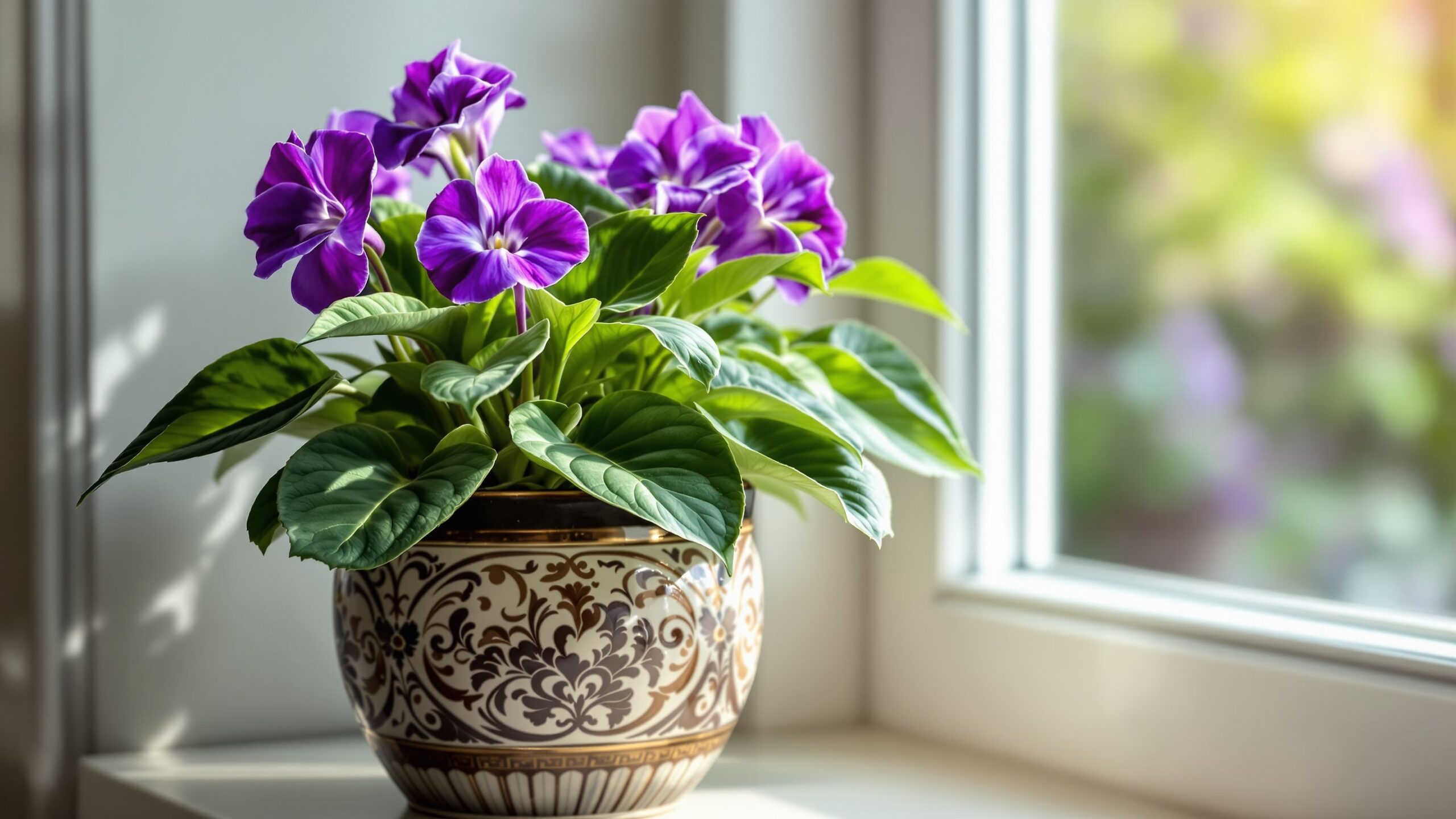
Few houseplants provide as much color in such a small space as the African violet. With soft, velvety leaves and clusters of jewel-like flowers, these compact plants have brightened windowsills, kitchens, offices, and indoor gardens for generations. Despite their common name, African violets are not true violets. The familiar cultivated plants are associated with Streptocarpus ionanthus and related hybrids in the family Gesneriaceae. Older references often classify them under the former genus Saintpaulia, a name still widely recognized among growers. Native to tropical eastern Africa, African violets thrive indoors when given warmth, bright filtered light, an airy growing medium, and consistent but controlled moisture.
A: Water when the top layer of soil begins to feel slightly dry, rather than following a strict weekly schedule.
A: No. Bright, indirect light is usually best because intense direct sunlight can scorch their leaves.
A: Insufficient light, oversized pots, nutrient problems, or environmental stress are common reasons for poor flowering.
A: Use a lightweight, airy African Violet mix that drains well while retaining moderate moisture.
A: Yes. Bottom watering can work well, but the pot should not be left standing in water for extended periods.
A: Yellowing may result from overwatering, poor drainage, nutrient imbalances, aging leaves, or improper light.
A: Yes. Healthy leaf cuttings can root and eventually produce new plantlets.
A: Routine misting is usually unnecessary because water sitting on fuzzy leaves can leave spots or contribute to problems.
A: Rotate the pot regularly so every side receives similar exposure to light.
A: Not necessarily. Once their preferences for light, moisture, small pots, and steady temperatures are understood, they can be very rewarding houseplants.
What African Violets Look Like
African violets are known for rounded or oval leaves arranged in compact rosettes. Their medium to deep green foliage is covered with fine hairs that create the plant’s famous velvety texture. Flowers rise slightly above the leaves on slender stems, forming colorful clusters that can make a healthy plant resemble a miniature bouquet.
Traditional African violets are associated with purple blossoms, but modern breeding has created an extraordinary range of colors and forms. Flowers may be violet, lavender, blue-purple, pink, white, burgundy-toned, multicolored, edged, speckled, streaked, or patterned. Blooms can be single, semi-double, double, ruffled, or frilled, while foliage may also be variegated with cream, white, pale green, or pinkish markings. Plants range from miniature and semi-miniature cultivars to standards and trailing forms.
African Origins and Houseplant History
African violets originated in eastern Africa, particularly areas of Tanzania and neighboring regions. Their wild ancestors developed in warm, humid, forested environments where filtered light, moisture, rocky surfaces, and organic material created favorable conditions. This background explains why African violets dislike harsh extremes. They are not adapted to scorching desert sun, freezing temperatures, completely dry roots, or constantly waterlogged soil.
Their journey into international horticulture began during the late nineteenth century, when plants collected in what is now Tanzania attracted European botanical attention. The former name Saintpaulia honored Baron Walter von Saint Paul-Illaire, who became associated with their introduction to European horticulture. Once the plants entered cultivation, breeders quickly recognized their potential. Their compact size and ability to flower indoors eventually led to thousands of cultivars differing in size, foliage, growth habit, color, and flower form.
The Best Light for African Violets
Light is one of the most important factors in African violet flowering. These plants generally prefer bright, indirect light that provides enough energy for blooms without scorching their delicate foliage. An east-facing window can work particularly well because it often provides gentler morning sunlight, although other exposures can be successful when plants are positioned appropriately or strong light is filtered.
Too little light commonly reduces flowering and may cause leaves to stretch outward or upward toward a brighter source. Excessive direct sun can pale or scorch foliage. Artificial grow lights are especially useful for collectors because they provide consistent illumination regardless of season or window availability. Entire shelves of African violets can be maintained successfully under properly positioned lights. The goal is strong, useful illumination without harsh exposure.
How to Water African Violets
Watering causes more confusion than almost any other part of African violet care. The plants appreciate consistent moisture but do not want roots sitting indefinitely in saturated growing medium. Rather than watering on a rigid weekly schedule, check the soil and plant regularly. Container size, temperature, humidity, light, plant size, and the composition of the potting mix all affect how quickly moisture is used.
Room-temperature water is generally preferable to extremely cold water. African violets can be watered carefully from above, from below, or with properly managed self-watering systems. Whichever method is chosen, the objective is the same: provide enough moisture for healthy growth while maintaining oxygen around the roots. The growing medium should not remain stagnant and waterlogged for long periods.
Can African Violet Leaves Get Wet?
African violet leaves have a reputation for being unable to tolerate water, but the reality is more complicated. A single drop does not automatically destroy a leaf. Problems are more likely when cold water remains on fuzzy foliage under unfavorable conditions, potentially contributing to spotting or damage. The fine hairs covering the leaves can hold droplets longer than smooth foliage would.
When watering from above, direct water toward the growing medium rather than repeatedly soaking the rosette. Dust can be removed gently with a soft brush so the delicate leaf surface is not damaged. African violet foliage is one of the plant’s most attractive features, and careful handling helps keep it clean and healthy.
Soil and Pots for Healthy Roots
African violet roots need a balance of moisture, oxygen, and drainage. Heavy garden soil is poorly suited to container-grown violets because it can compact and remain excessively wet. A lightweight African violet potting mix is a better choice, and some growers modify commercial mixes with additional aerating materials. The ideal medium absorbs enough water to support the plant while remaining loose around the roots.
Container size also matters. Bigger is not necessarily better, and many African violets bloom well when their roots are somewhat snug. An oversized pot can hold far more wet growing medium than a small root system can use, increasing the risk of unhealthy conditions. Growers often choose pots in proportion to the diameter of the leaf rosette rather than automatically moving plants into dramatically larger containers. Whatever style is used, drainage and careful moisture management remain essential.
Temperature, Humidity, and Airflow
African violets make excellent houseplants partly because they prefer temperatures similar to those most people find comfortable. They grow best in relatively warm, stable conditions and should be protected from freezing temperatures, severe drafts, and extreme heat. A plant pressed against cold winter glass or sitting beside a frequently opened exterior door may experience temperature stress.
Moderate humidity can be helpful, particularly in very dry homes, but the plants do not require constantly wet foliage or stagnant air. Grouping plants together, using room humidification, or carefully managed humidity trays may improve dry conditions. Good airflow remains important because the goal is a comfortable environment rather than a constantly damp one.
How to Encourage African Violets to Bloom
A healthy African violet that refuses to flower is often missing one or more environmental conditions needed for bud production. Light should be investigated first because plants can produce attractive leaves while receiving too little illumination to bloom well. Root health, temperature, moisture, nutrition, maturity, and cultivar can also affect flowering.
When conditions are favorable, African violets can bloom repeatedly rather than producing one brief annual display. Plants often cycle between flowering, leaf production, and new bud development. Removing spent blossoms keeps the rosette attractive and makes emerging buds easier to see. Stable care is usually more effective than trying to force flowers through sudden changes.
Fertilizing African Violets
African violets can benefit from appropriate feeding during active growth and flowering. Specialized African violet fertilizers are widely available, although other suitable balanced houseplant fertilizers may also work when used correctly. Plants growing vigorously under artificial lighting and flowering frequently may use nutrients differently from slower plants during darker seasons.
More fertilizer does not automatically produce more flowers. Excessive feeding can contribute to salt buildup and root damage. Fertilizer should support a plant that already has appropriate light, healthy roots, and sensible watering rather than being used as a cure for environmental problems. Following product directions and observing the plant’s response is safer than overfeeding.
Propagating African Violets From Leaves
One of the most fascinating qualities of African violets is their ability to produce new plants from individual leaves. A healthy mature leaf with its petiole can be removed from the parent and placed in an appropriate propagation medium. Under favorable conditions, roots develop and tiny plantlets eventually appear around the base of the leaf.
Once the young plants become large enough, they can be separated and moved into their own small containers. This makes African violets particularly easy to share and allows a favorite plant to produce numerous descendants without dividing the original specimen. Some highly variegated or genetically complex cultivars may not reproduce every characteristic perfectly through every propagation method, but leaf propagation works remarkably well for many traditional varieties.
Repotting and Managing an African Violet Neck
African violets benefit from occasional repotting because their growing medium gradually breaks down and becomes compacted. Repotting does not necessarily mean moving into a larger pot. Often the goal is simply to refresh the mix, inspect the roots, and position the plant properly.
As older lower leaves are removed, mature African violets may develop an exposed stem beneath the rosette that growers often call a neck. During repotting, experienced growers can reposition the plant so the rosette sits attractively near the surface again. Handle foliage gently throughout the process because leaves can break easily. A freshly repotted plant may need some time to settle before returning to vigorous growth and flowering.
Common African Violet Problems
African violets communicate many problems through their foliage. Drooping can result from dry soil, overwatering, unhealthy roots, or temperature stress, which is why automatically adding water whenever a plant wilts can sometimes make the problem worse. Yellowing may be associated with aging leaves, nutrition, root conditions, or environmental stress, while brown or damaged areas can result from intense sunlight, cold water, physical injury, or other issues.
Failure to flower frequently points toward inadequate light, although temperature, nutrition, maturity, and root health should also be considered. The most reliable approach is to examine the whole plant rather than diagnosing it from a single symptom. Check soil moisture, consider recent changes in location or temperature, inspect roots when necessary, and look closely for pests.
Pests That Affect African Violets
African violets can occasionally develop problems with mealybugs, thrips, mites, and other small pests. Some are easy to see, while others are tiny enough that plant damage may become noticeable before the insects themselves. Flowers, leaf joints, undersides of foliage, and tender new growth are useful areas to inspect.
New plants should be examined carefully before being placed among an established collection. This is especially important for collectors with many violets growing closely together, since one infested plant can expose numerous others. Isolating suspicious plants early makes pest management easier and helps protect the rest of the collection.
African Violet Colors and Flower Forms
Modern African violets offer far more variety than their name suggests. Flowers can be purple, white, pink, lavender, blue-violet, burgundy-toned, multicolored, striped, edged, speckled, or patterned. Some are simple and elegant, while others develop layers of ruffled petals that resemble tiny bouquets or miniature roses. Fantasy patterns may scatter contrasting dots, streaks, or splashes across individual blooms.
Foliage can be equally collectible. Variegated varieties may display cream, white, pale green, or pinkish markings, giving the plant ornamental value even when it is not flowering. This extraordinary diversity is one reason African violet collecting can quickly grow from a single windowsill plant into an entire shelf of different cultivars.
Miniature and Trailing African Violets
Miniature African violets provide the same colorful flowers and velvety foliage as larger plants but maintain much smaller rosettes. Their size allows collectors to grow numerous varieties in a relatively limited space and display them in small decorative containers. Because miniature pots contain less growing medium, however, moisture can change more quickly and requires closer attention.
Trailing African violets grow differently from the classic single-rosette form, producing multiple crowns and spreading stems that can create a fuller, cascading appearance. Along with standards, semi-miniatures, miniatures, variegated plants, and unusual flower forms, these growth habits demonstrate just how diverse modern African violet breeding has become.
African Violets Versus True Violets
Despite sharing a common name, African violets and true violets are botanically unrelated. True violets belong to the genus Viola and family Violaceae, a group that includes familiar garden violets and pansies. African violets belong to the family Gesneriaceae and are now classified within Streptocarpus.
The common name developed largely because early African violet flowers resembled familiar violet-colored blossoms. Their care requirements are very different as well. Many true violets are outdoor garden plants capable of tolerating conditions that would be unsuitable for an African violet. Recognizing the distinction helps prevent confusion when searching for growing advice.
Creating an Easy African Violet Care Routine
African violet care becomes much easier once a stable routine is established. Place the plant where it receives bright filtered light, check the growing medium regularly instead of watering by the calendar, and provide moisture without keeping the roots permanently saturated. Keep temperatures comfortably warm and protect plants from severe drafts.
Remove spent flowers and aging leaves, rotate pots occasionally if one side receives much more light, and inspect new growth for pests or unusual damage. Refresh the growing medium when it becomes old or compacted, but avoid automatically moving the plant into a dramatically larger pot. Feed appropriately during active growth while remembering that fertilizer cannot compensate for poor light or unhealthy roots. Most importantly, watch the plant and adjust care according to what its foliage, roots, and flowers reveal.
Why African Violets Remain Houseplant Favorites
African violets have remained beloved for generations because they combine color, personality, history, and accessibility in an extraordinarily compact plant. They do not require a greenhouse or large garden. A bright windowsill or growing shelf, small container, airy potting medium, comfortable temperatures, and attentive watering can be enough to produce beautiful results.
Their diversity makes them even more rewarding. Miniatures, trailing forms, variegated foliage, double flowers, ruffled petals, multicolored blossoms, and unusual patterns offer nearly endless possibilities for collectors. A single leaf can become a new plant, a tiny rosette can eventually fill its container, and a healthy specimen can repeatedly produce clusters of flowers above its velvety foliage. Give an African violet bright indirect light, controlled moisture, healthy roots, warmth, and a little attention, and this classic East African houseplant can deliver one of the most colorful displays possible in such a small space.
Garden Product Reviews
Step into Mossy Streets’ Garden Product Reviews — your go-to guide for the best tools, gear, gifts, books, and garden gadgets rooted in nature. From blooming backyard beauties to lush indoor jungles, from heirloom seeds to high-tech composters, we dig into top-rated products for green thumbs, beginners, educators, and plant lovers alike. Whether you’re planting, pruning, decorating, or simply enjoying your green space, we’ve unearthed the best so you can grow, bloom, and thrive — all in one vibrant place!