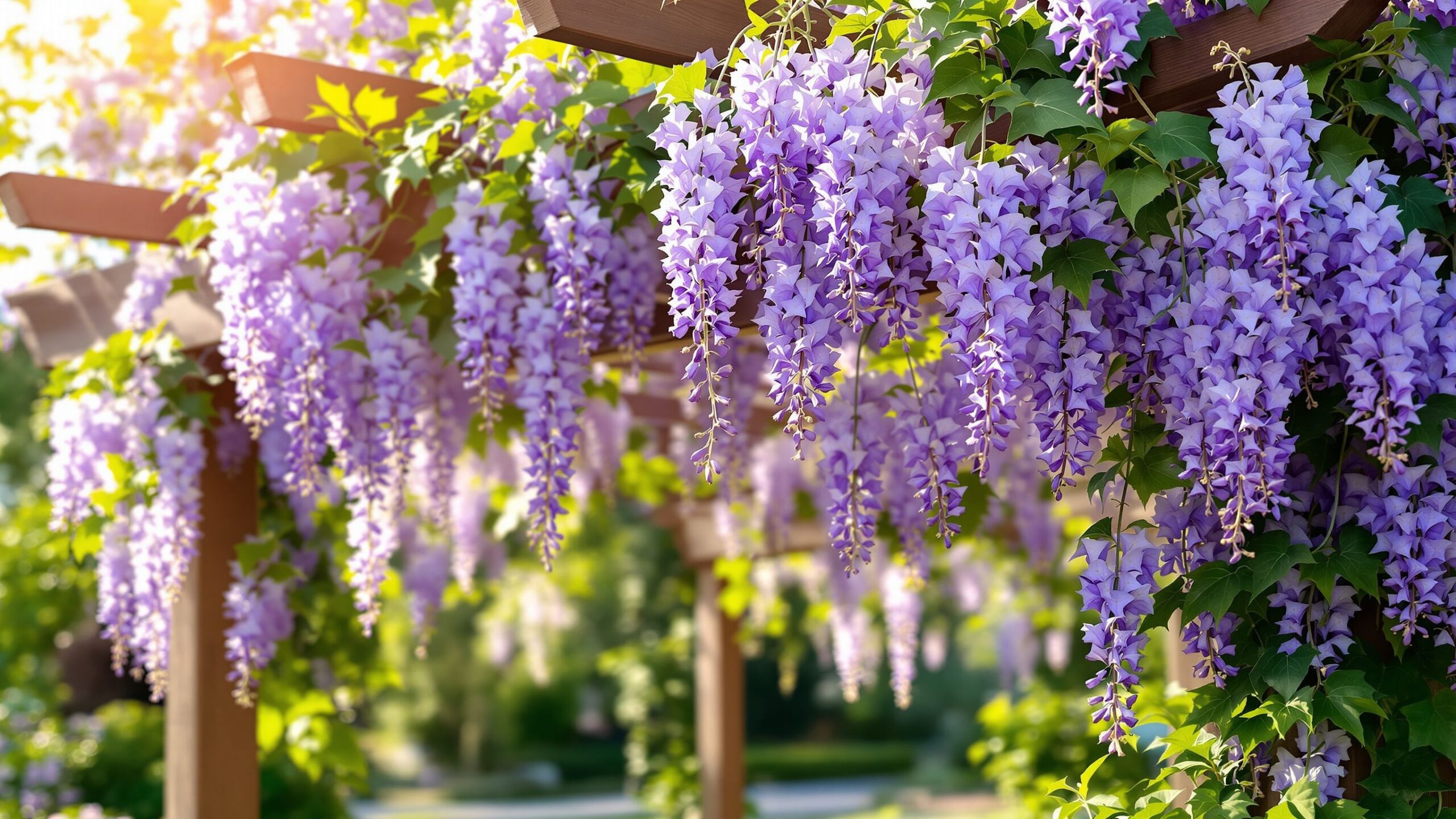
Few sights in the gardening world are as memorable as mature wisteria in full bloom. Long clusters of flowers hang from twisting woody vines like botanical chandeliers, creating curtains of lavender, purple, white, pink, or blue-violet color. When trained across a pergola or arbor, a mature vine can transform an ordinary structure into living architecture. Wisteria belongs to the pea family, Fabaceae, and several species are cultivated ornamentally, including Chinese wisteria, Wisteria sinensis; Japanese wisteria, Wisteria floribunda; and American wisteria, Wisteria frutescens. Their beauty comes with an important warning: wisteria is a powerful woody climber. Certain species grow aggressively, become extremely heavy, and can escape cultivation, so successful wisteria gardening requires thoughtful species selection, strong support, regular pruning, and long-term management.
A: Full sun is best for flowering, ideally providing at least six hours of direct sunlight each day.
A: Water young plants regularly while they establish. Mature vines usually need less frequent watering except during prolonged dry periods.
A: Common causes include insufficient sunlight, excessive nitrogen, improper pruning, immature plants, or seed-grown vines that have not reached flowering age.
A: Many gardeners prune once in summer to shorten vigorous shoots and again in winter to refine flowering spurs.
A: Yes. Mature plants become extremely heavy and require a permanent, structurally sound support.
A: It can be grown in a very large container with regular pruning, but it generally performs best when given substantial root space.
A: Established vines can grow several feet in a single season under favorable conditions.
A: Yes. Uncontrolled vines can enter gutters, roof spaces, siding, and weak structural gaps, so careful placement and pruning are important.
A: No. Most Wisteria species are deciduous and lose their leaves during the colder months.
A: Native American Wisteria is often a good choice because it is generally less aggressive than some Asian species while still producing beautiful flowers.
What Wisteria Looks Like
Wisteria is a deciduous woody vine with twining stems and compound leaves made up of multiple smaller leaflets. Its defining feature is the flower raceme, a hanging cluster containing numerous individual blossoms. Raceme length varies dramatically by species and cultivar, ranging from relatively compact clusters to exceptionally long displays that hang beneath pergolas and overhead structures.
As the plant matures, its stems thicken into twisting trunks and branches that can resemble those of small trees. After flowering, wisteria may produce pea-like seed pods, reflecting its membership in the legume family. Those pods should never be confused with edible peas or beans, however, because wisteria is considered a toxic ornamental plant.
Chinese, Japanese, and American Wisteria
Chinese, Japanese, and American wisterias may look similar at first glance, but their behavior can differ significantly. Chinese wisteria is famous for vigorous growth and dramatic flowering, with blossoms often opening across the raceme in a relatively concentrated display. Japanese wisteria is especially celebrated for cultivars capable of producing extraordinarily long flower clusters, which is why it is frequently displayed across large pergolas.
American wisteria is native to portions of the southeastern and south-central United States and generally produces shorter, more compact flower clusters. It tends to be somewhat more restrained than its Asian relatives, although it remains a substantial woody vine. Kentucky wisteria is commonly treated as Wisteria frutescens var. macrostachya, although horticultural references have varied in classification. Choosing the right species for the region is one of the most important decisions a gardener can make.
Is Wisteria Invasive?
Chinese and Japanese wisteria can be invasive in parts of the United States. Escaped vines may climb trees, shade native vegetation, form dense growth, and become difficult to remove once established. Their spectacular flowers do not eliminate the ecological problems they can create outside cultivation.
American wisteria can provide a native alternative in appropriate regions, but gardeners should still consider climate, available space, and mature size. Local invasive-species recommendations and regulations should be checked before planting any wisteria because ecological behavior differs by region. Responsible plant selection means considering what a vine may do beyond the boundaries of the garden as well as how beautiful it looks within them.
Sunlight, Soil, and Water
Abundant sunlight is one of the keys to strong wisteria flowering. A vine may survive and produce foliage in partial shade, but full sun generally supports the most impressive bloom display. The planting location should also provide enough room for mature growth and a permanent support capable of handling an increasingly heavy woody framework.
Wisteria adapts to a range of soils but generally performs well in reasonably fertile, well-drained ground. Constantly waterlogged roots can create problems, while excessive fertility and heavy nitrogen feeding may encourage enormous leafy growth without improving flowering. Young vines require regular moisture while becoming established, and mature plants may need supplemental irrigation during prolonged hot or dry periods. Deep watering based on actual soil conditions is more useful than frequent shallow watering on a rigid schedule.
How Fast Wisteria Grows
Wisteria has earned its reputation as a vigorous vine. Under favorable conditions, long shoots can extend several feet during a growing season, rapidly covering supports and reaching into nearby structures or vegetation. This speed is useful when the goal is to establish a large pergola canopy, but it also explains why neglected wisteria can become difficult to control.
A small nursery plant should never be treated as though it will remain modest. Over time, its main stems can become thick, woody, and permanent. Mature size and long-term maintenance should guide planting decisions from the beginning because relocating or removing an established vine is far more difficult than choosing the right location initially.
Building the Right Support
The delicate appearance of wisteria flowers hides the tremendous weight of a mature vine. Lightweight trellises may support a young plant temporarily but can bend or collapse as years of woody growth accumulate. Substantial pergolas, arbors, posts, wires, and other permanent structures should be designed with the mature plant in mind.
Gardeners should also be cautious about allowing vigorous wisteria to twine around gutters, railings, rooflines, siding, or other parts of buildings. Stems do not simply rest against objects; they wrap around them and thicken over time. The ideal support is exceptionally strong, positioned away from vulnerable structures, and accessible enough that the vine can still be pruned safely.
Training Wisteria
Training begins when wisteria is young. Rather than allowing every shoot to grow in whatever direction it chooses, select strong stems that will become the permanent framework and guide them along posts, wires, beams, or other supports. Side shoots can then be managed to create flowering branches without allowing the plant to turn into a tangled mass.
A beautifully structured mature wisteria is usually the result of years of deliberate guidance. Good training exposes the attractive woody framework, improves airflow, keeps growth within the intended area, and positions flower clusters where they can be seen. On a pergola, the goal is often to establish strong permanent branches across the top while allowing flowering racemes to hang freely beneath the structure.
How to Prune Wisteria
Pruning is essential to keeping wisteria attractive and manageable. Without regular attention, vigorous shoots can quickly create enormous tangles of foliage, conceal flowers, invade nearby spaces, and overwhelm supports. Wisteria is commonly pruned more than once during the year.
Summer pruning helps shorten vigorous new growth and control overall size. During the dormant season, the woody framework is easier to see, allowing shoots to be shortened further while maintaining flowering spurs and the permanent structure. Exact timing varies with climate and growing conditions, but the principle remains the same: preserve a strong framework while repeatedly controlling excessive vegetative growth. Once gardeners understand which branches form the permanent structure, routine maintenance becomes much easier.
Why Wisteria Sometimes Refuses to Bloom
A large leafy wisteria without flowers can be frustrating, but several factors influence blooming. Age is particularly important. Seed-grown wisteria may take many years to reach flowering maturity, while named cultivars propagated vegetatively usually offer more predictable flowering characteristics.
Insufficient sunlight can also reduce blooming even when the vine itself grows vigorously. Excessive nitrogen may encourage leaves and long shoots at the expense of flowers, and incorrect pruning can remove growth needed for flower production. Sometimes the solution is simply patience. A healthy young vine may spend years establishing roots and structural growth before producing the display expected from a mature specimen.
When Wisteria Blooms
Wisteria is most strongly associated with spring and early summer, although exact timing depends on species, cultivar, local climate, and seasonal weather. Some types flower before their foliage has fully expanded, making the racemes especially dramatic against the woody branches, while others bloom alongside emerging leaves.
Certain cultivars can produce smaller repeat flushes later in the season, but the main bloom remains the defining event. Late frost can damage developing buds, and unusual weather can shift flowering time from one year to another. Peak bloom may be relatively brief, which is part of what makes a mature wisteria so memorable when thousands of blossoms open at once.
Japanese Wisteria and Its Extraordinary Racemes
Japanese wisteria, Wisteria floribunda, is legendary for the length and elegance of its flower clusters. Certain cultivars produce racemes that hang dramatically beneath overhead structures, creating curtains of blossoms. This growth habit explains why large horizontal frameworks are commonly used to display mature specimens.
Famous Japanese gardens demonstrate what can happen when old wisterias are given enormous supports and decades of careful training. Their branches spread across broad frameworks while the flowers hang freely beneath them, allowing visitors to walk under a ceiling of blossoms. Recreating even a smaller version at home requires generous space, substantial structural support, regular pruning, and patience.
Growing Wisteria on a Pergola
A pergola is one of the most effective structures for showcasing wisteria. The vine can be trained up sturdy posts and then guided across horizontal beams, eventually creating a canopy from which the flower clusters hang. This places the blossoms overhead and allows their cascading shape to be appreciated fully.
Strength and accessibility are essential. A pergola intended only for lightweight annual vines may not withstand decades of wisteria growth. The structure should also allow gardeners to reach the vine for routine pruning. When architecture and plant training are planned together from the beginning, wisteria can become an extraordinary living roof rather than an uncontrolled burden.
Growing Wisteria in Containers or as a Standard
Wisteria can be grown in a large container, although it requires considerably more management than many patio vines. Container plants need sufficient root space, dependable watering, appropriate nutrition, strong support, and frequent pruning. Restricted root space can help limit vigor somewhat, but it does not turn wisteria into a low-maintenance plant.
The vine can also be trained into a tree-like standard by developing a supported trunk and carefully shaping a flowering crown. Wisteria does not naturally become a conventional self-supporting tree, so this form requires deliberate pruning and structural support, particularly while the framework develops. Named cultivars with suitable growth habits are generally preferable for long-term container or standard training.
Propagating Wisteria
Wisteria can be propagated from seed, cuttings, layering, and grafting. Seed propagation can be interesting, but seedlings may take many years to bloom and may not reproduce the flower characteristics of the parent plant. For gardeners primarily interested in predictable flowers, this can mean a very long wait for uncertain results.
Vegetative propagation preserves desirable characteristics more reliably. Layering is particularly approachable because a flexible stem can develop roots while it remains attached to the parent before being separated later. Named cultivars sold by reputable nurseries are commonly propagated vegetatively to preserve characteristics such as flower color, raceme length, growth habit, and flowering performance.
Wisteria Seed Pods and Toxicity
After flowering, wisteria may produce seed pods that resemble those of other plants in the pea family. Despite their familiar appearance, the pods and seeds are not edible. Wisteria contains potentially harmful compounds, and the seeds and pods are of particular concern if swallowed.
This is important in gardens used by young children or pets, where pea-like pods might attract attention. Seed pods can be removed after flowering to keep the plant tidy and reduce unwanted seedlings. Suspected ingestion should be handled by contacting an appropriate medical professional, veterinarian, or poison-control service rather than relying on home remedies.
Wisteria and Pollinators
Wisteria flowers can attract bees and other pollinating insects with their nectar and fragrance. A mature vine in bloom may become noticeably active on warm spring days as insects move through the racemes. Native wisterias can be particularly useful components of regionally appropriate landscapes when grown within their natural range.
Pollinator activity should still be considered alongside ecological behavior. An invasive plant does not become environmentally harmless simply because insects visit its flowers. Choosing native or non-invasive alternatives where appropriate allows gardeners to combine ornamental beauty with more responsible landscape planning.
Wisteria in Japanese Gardens
Known as fuji in Japanese, wisteria has been celebrated in Japanese gardens, art, poetry, and culture for centuries. Traditional horticultural displays often use broad overhead trellises that allow mature branches to spread while the flowers hang freely below. Old specimens can extend across enormous frameworks and create the appearance of waterfalls or clouds of blossoms.
This style highlights an important principle of wisteria design: its beauty becomes most powerful when the plant’s natural growth habit is given room and intentionally displayed. Rather than squeezing an enormous vine into a tiny corner, successful designs provide strong horizontal space for mature branches and position the cascading racemes where visitors can experience them from below.
Famous Wisteria Displays
Some of the world’s most celebrated wisteria displays are found in Japan. Ashikaga Flower Park is internationally known for enormous mature specimens and elaborate flowering structures, while Kawachi Wisteria Garden is famous for tunnels filled with cascading blossoms. These displays demonstrate the remarkable scale that carefully trained wisteria can achieve over decades.
Their beauty also represents enormous horticultural effort. Vast canopies do not form through neglect. They depend on years of structural training, pruning, plant-health management, and strong supports capable of carrying mature woody growth. The result is spectacular precisely because both the plant’s vigor and its structure have been carefully controlled.
How Long Wisteria Can Live
Wisteria can be remarkably long-lived. Well-maintained plants may survive for many decades, and exceptional old specimens become landmarks because of their age, massive trunks, and extraordinary flower displays. As a vine matures, its main stems can develop into thick, twisted structures with almost tree-like character.
That longevity makes initial planning especially important. Wisteria should not be viewed as a temporary seasonal decoration. In favorable conditions, it can become a permanent feature of a property and may remain long after the original gardener is gone. Choosing an appropriate species, location, and support system at the beginning can shape the landscape for generations.
Creating a Manageable Wisteria Care Routine
Successful wisteria care begins before planting. Choose a species or named cultivar appropriate for the region and check whether invasive varieties are restricted or discouraged locally. Select a sunny site with enough room for mature growth and install a permanent support capable of carrying a heavy woody vine.
Water consistently while the plant establishes, then adjust irrigation according to rainfall, heat, soil, and plant maturity. Train the main framework deliberately, prune vigorous shoots regularly, and avoid excessive nitrogen fertilization. Most importantly, give the vine time to mature. Wisteria is not always an instant-gratification plant, but careful management becomes increasingly rewarding as the permanent framework develops and flowering improves.
Why Wisteria Earned Its Legendary Reputation
Wisteria combines elegance and strength in a way few flowering vines can match. A young plant may begin as a thin stem wrapped around a support, but over time it can develop twisting woody trunks and a vast canopy. Then, during flowering season, that powerful structure becomes covered with hanging racemes that transform pergolas, arbors, and garden structures into spectacular displays.
Its beauty also demands respect. Selecting an appropriate species, avoiding invasive types where they threaten local ecosystems, providing substantial support, and committing to regular pruning are essential parts of responsible cultivation. For gardeners prepared to manage that vigor, the reward can be extraordinary. With abundant sunlight, strong structural support, careful training, regular pruning, and patience, a mature wisteria can become more than another flowering vine—it can become the defining feature of an entire garden.
Garden Product Reviews
Step into Mossy Streets’ Garden Product Reviews — your go-to guide for the best tools, gear, gifts, books, and garden gadgets rooted in nature. From blooming backyard beauties to lush indoor jungles, from heirloom seeds to high-tech composters, we dig into top-rated products for green thumbs, beginners, educators, and plant lovers alike. Whether you’re planting, pruning, decorating, or simply enjoying your green space, we’ve unearthed the best so you can grow, bloom, and thrive — all in one vibrant place!