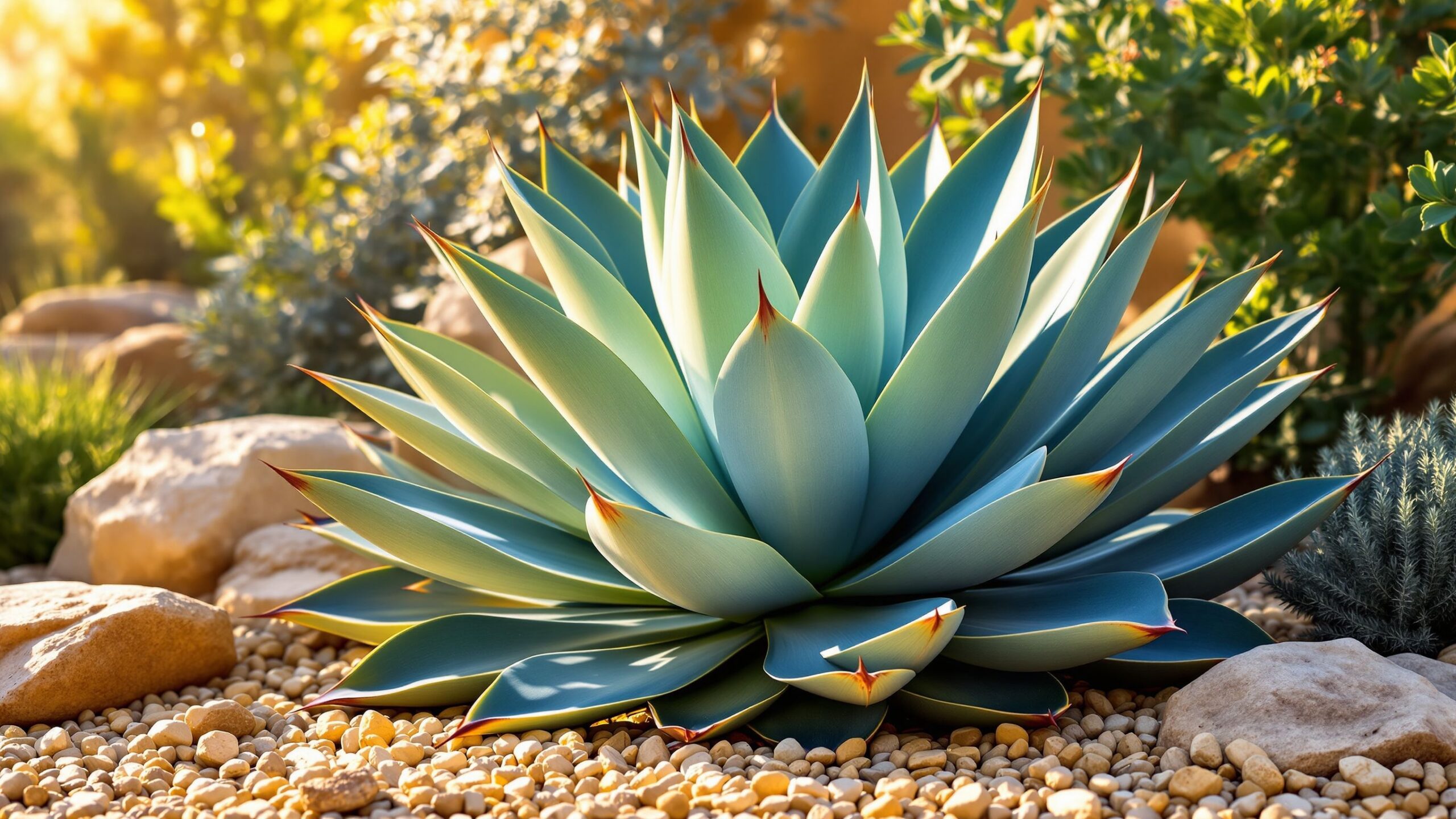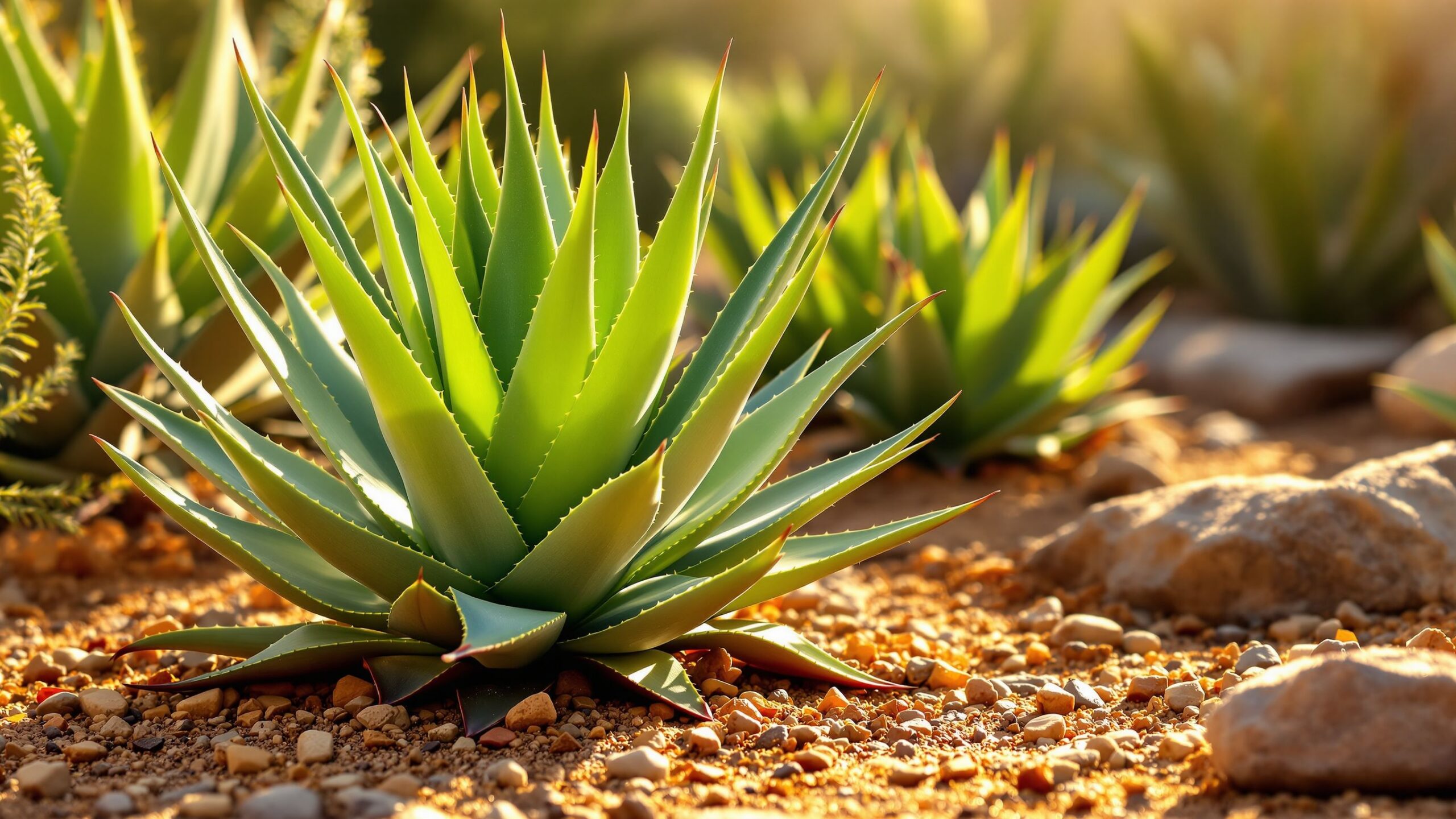
Few plants are as instantly recognizable as aloe vera. Its thick, pointed leaves grow in sculptural rosettes that look equally at home in a sunny windowsill or a warm outdoor landscape. Botanically known as Aloe vera, the plant belongs to the family Asphodelaceae and the large Aloe genus. Although its drought tolerance and desert-like appearance sometimes lead people to group it with cacti, aloe vera is a succulent rather than a cactus. Its specialized tissues store water, allowing it to survive dry periods and making it relatively easy to maintain when provided with bright light, excellent drainage, and sensible watering.
A: Water deeply, then allow the soil to dry substantially before watering again rather than following a strict weekly schedule.
A: It prefers very bright light and can handle direct sun when gradually acclimated, but sudden intense exposure can cause scorching.
A: Choose a loose, fast-draining cactus or succulent mix that does not remain soggy.
A: Browning can result from sunburn, watering problems, cold damage, physical injury, or environmental stress.
A: Soft leaves can be a warning sign of overwatering, cold injury, or developing root and crown rot.
A: Yes. It is a popular houseplant when placed in a bright location with excellent drainage.
A: The easiest method is usually separating rooted pups from around the base of a mature plant.
A: Only lightly. A diluted succulent fertilizer can be applied occasionally during active growth.
A: Leaning often happens when the plant stretches toward stronger light or becomes top-heavy in its container.
A: Only in climates where temperatures remain sufficiently warm. Aloe Vera should be protected from frost and freezing conditions.
What Aloe Vera Looks Like
Aloe vera’s defining feature is its thick, fleshy foliage. Mature plants produce green to gray-green leaves that extend upward and outward from a central rosette, often with small toothlike structures along their edges. Young plants may show subtle spotting that changes as they mature. Inside each leaf are several layers of specialized tissue, including the familiar clear inner gel. These water-rich leaves function as biological reservoirs and help the plant withstand periods of limited moisture.
Healthy aloe plants can become surprisingly large, with mature leaves extending well over a foot under favorable conditions. Rather than developing a traditional woody trunk, aloe generally maintains a low rosette form. Mature plants can also produce tall flower stalks that rise dramatically above the foliage and carry tubular flowers, often in yellow, orange, or reddish shades. Indoor plants do not always flower as readily as established outdoor specimens, making blooms especially exciting for houseplant growers.
Aloe Vera’s History and Popularity
Aloe has been associated with human civilization for centuries, particularly in warm, dry regions where various species thrive naturally or under cultivation. Its unusual leaves attracted attention because cutting through the tough exterior reveals a translucent, moisture-rich interior. Over time, aloe became associated with traditional cosmetic and topical practices and eventually spread far beyond its earlier cultivated ranges through horticulture and trade.
Today, aloe vera occupies an unusual place in popular culture. It is simultaneously a decorative houseplant, an outdoor landscape succulent, a familiar ingredient associated with personal-care products, and one of the world’s most recognizable plants. Its resilience also makes it particularly suitable for container gardening, allowing people in cold climates to enjoy a plant associated with much warmer environments.
The Best Light for Aloe Vera
Bright light is one of the most important requirements for attractive aloe growth. Indoors, aloe generally performs best near a bright window where it can maintain a strong, compact rosette. Plants receiving too little light may stretch toward the brightest source, producing elongated, weak, or pale leaves and losing the tight shape that makes aloe so appealing.
Strong sunlight should still be introduced gradually. A plant that has spent months indoors or in dim conditions can become stressed if suddenly placed in intense outdoor sun. Gradual acclimation allows the foliage to adjust. Outdoor exposure also depends on climate, since extreme afternoon heat can be stressful for an unacclimated plant. Watching leaf firmness, color, and orientation can help reveal whether the plant is responding well to its light conditions.
How to Water Aloe Vera
Overwatering is one of the most common aloe care mistakes. Because the leaves are designed to store water, aloe does not need constantly damp soil. A safer approach is to water thoroughly, allow excess moisture to drain from the pot, and then wait until the growing medium has dried substantially before watering again. This creates the wet-to-dry rhythm that drought-adapted succulents naturally tolerate well.
There is no universal watering schedule because drying speed changes with light, temperature, humidity, season, soil composition, and container size. A plant growing actively in warm, bright conditions may use water much faster than the same plant during a cool, dim winter. Checking the soil is therefore more reliable than watering simply because a certain number of days have passed. Aloe generally benefits from observation rather than rigid scheduling.
Choosing Soil and Containers
Drainage is essential for aloe vera. Dense soil that remains saturated can deprive roots of oxygen and encourage decay, while a loose, fast-draining succulent mix allows water to move through the root zone efficiently. Commercial cactus and succulent mixes can provide a useful starting point, and some growers add coarse mineral materials to improve aeration and drainage further.
Container design matters just as much as soil. Aloe should generally be grown in a pot with a functional drainage hole so excess water has somewhere to escape. Terracotta is popular because its porous surface encourages evaporation, but other materials can work well when watering is managed correctly. Avoid placing a small aloe in an excessively large container because the extra volume of soil may stay wet longer than the roots can comfortably tolerate.
Temperature, Humidity, and Airflow
Aloe vera reflects its warm-climate heritage and generally prefers comfortable to warm temperatures. Frost and freezing conditions can cause serious damage, so gardeners in cold climates often keep aloe in containers that can be moved indoors before winter. Even large established specimens should not be assumed to tolerate severe cold.
Ordinary household humidity is generally sufficient. Aloe does not need the consistently humid conditions preferred by many tropical foliage plants, and excessive moisture can actually work against its natural adaptations. Good airflow around the plant can help the growing medium dry appropriately and reduce persistently damp conditions, especially when several succulents are grouped together.
Repotting Aloe Vera
Aloe does not need frequent repotting, but healthy plants eventually become crowded, top-heavy, or filled with offsets. When that happens, choose a container that provides somewhat more room without being dramatically oversized. Handle the plant carefully because its leaves can crack or snap even though they appear thick and sturdy. Supporting the base rather than pulling on individual leaves makes the process safer.
Repotting also provides an opportunity to inspect the root system. Healthy roots should not be sitting in foul-smelling, permanently soggy material. If roots show signs of deterioration, simply moving the plant into a prettier pot will not solve the problem; drainage and watering habits must also be corrected.
Aloe Vera Pups and Propagation
Mature aloe plants commonly produce offsets around their base, often called pups. These miniature plants can eventually create a dense colony around the parent. Once a pup is sufficiently developed, it can be carefully separated, ideally with some of its own roots attached, and placed into a suitably sized container filled with well-draining succulent soil.
Propagation by offsets is one of the easiest and most rewarding parts of growing aloe. Removing selected pups can prevent overcrowding while producing additional plants for other rooms, containers, or gardeners. Over time, one original aloe can become an entire family of plants, which is why aloe pups are frequently passed among friends and relatives.
Common Aloe Vera Problems
Aloe communicates stress through changes in its leaves. Soft, collapsing, or translucent foliage may be associated with excessive moisture and root problems, particularly when the soil remains saturated. Thin, curled, or depleted-looking leaves may indicate that the plant is using stored water, but watering should never be increased automatically without first checking the soil.
Light problems can also alter the plant’s appearance. Too little light may produce stretched, weak growth, while a sudden jump to intense sunlight can cause discoloration or damaged areas. Physical injuries are another common issue because bent or broken leaves do not simply return to their original appearance. Observing the entire growing environment before reacting is usually the best way to identify what has changed.
Growing Aloe Vera Outdoors
Aloe vera can become an impressive landscape plant in warm climates where freezing weather is not a major threat. Its geometric foliage works particularly well in succulent gardens, xeriscapes, rock gardens, drought-conscious landscapes, and Mediterranean-inspired designs. Outdoor plants may grow larger and more vigorously than indoor specimens because they often receive stronger light and experience a broader natural environment.
Drainage remains essential outdoors. Aloe can struggle in soggy ground even when temperatures are ideal, so slopes, raised beds, rocky areas, and naturally well-drained soils are often excellent locations. Gardeners in colder regions can move potted aloe outside during warm weather and bring it indoors before frost, gradually acclimating the plant whenever it moves between dramatically different light conditions.
Fertilizing Aloe Vera
Aloe is not a heavy feeder and does not require constant fertilizer. Container plants have access only to nutrients available in their potting medium, so occasional appropriate feeding during active growth can be useful, but excessive fertilizer is unnecessary. Products intended for succulents can be used according to their directions.
More fertilizer cannot compensate for poor growing conditions. If aloe is stretching from inadequate light or declining because its roots are sitting in wet soil, feeding it will not solve the underlying issue. Light, drainage, watering, and temperature have a much greater influence on long-term health.
How Aloe Vera Survives Drought
Aloe’s thick leaves are not merely decorative. They are specialized water-storage structures that help the plant survive environments where moisture may arrive irregularly. Succulents store resources when water is available and use them efficiently during drier periods rather than depending on continuously moist soil.
Aloe also uses a water-conserving photosynthetic strategy known as Crassulacean Acid Metabolism, or CAM. Plants using CAM shift important aspects of gas exchange toward nighttime conditions, helping reduce water loss. Understanding these adaptations explains why ordinary moisture-loving houseplant care can harm aloe. A plant built to conserve water does not benefit from having its roots continually soaked.
Aloe Vera as a Decorative Plant
Aloe’s popularity is not based only on its reputation as a useful plant. Its architectural shape makes it an attractive addition to contemporary interiors, sunny windowsills, succulent collections, and warm-climate gardens. A mature aloe in a simple terracotta or ceramic pot can become a strong visual focal point, while smaller plants can be grouped with other drought-tolerant species.
Outdoors, aloe provides structure and texture throughout the year in suitable climates. Its long pointed leaves contrast with rounded succulents, ornamental grasses, rocks, gravel, and other dry-garden materials. When a mature plant sends up a towering flower stalk, the low rosette suddenly gains an entirely different vertical character.
Aloe Vera and Traditional Uses
Aloe vera has a long association with topical and cosmetic traditions, and the clear inner gel of its leaves is familiar from many personal-care products. However, an aloe leaf contains more than clear gel. Different tissues and substances are present within the leaf, including yellowish latex near the outer portions. This distinction matters because using a commercially formulated topical product is not the same as consuming or processing a freshly cut leaf.
Gardening information and traditional uses should also be distinguished from medical guidance. A thriving houseplant is not automatically a substitute for a properly formulated healthcare product. From a horticultural perspective, aloe is best appreciated first as a fascinating succulent with unusual water-storage adaptations, a long cultural history, and distinctive ornamental value.
How Long Aloe Vera Can Live
With appropriate care, aloe vera can remain in a plant collection for many years. Mature specimens can flower, produce numerous offsets, and gradually become substantial plants. Their pups also provide continuity because they can be separated and grown into a new generation even as the original plant ages.
This ability helps explain why aloe is so often shared between people. A small offset from a relative’s plant can become a mature specimen that eventually produces pups of its own. Starting with one modest aloe and ending up with an entire collection is a common sign of long-term success.
Fascinating Aloe Vera Adaptations
Aloe vera’s familiar appearance can make it easy to overlook how unusual it really is. It is a succulent rather than a cactus, stores significant moisture inside specialized leaves, can produce tall flower stalks, generates new plants through offsets, and uses CAM photosynthesis to conserve water. Young plants may also look somewhat different from mature specimens, with spotting and growth patterns changing over time.
Aloe visibly responds to its surroundings. Water availability, light intensity, temperature, and root conditions can influence leaf color, firmness, orientation, and shape. For an observant gardener, those changes provide useful clues about how well the plant’s environment matches its needs.
Creating an Easy Aloe Vera Care Routine
Successful aloe care is relatively simple when growers resist the temptation to overmanage the plant. Begin with abundant light, a draining container, and loose succulent-friendly soil. Water thoroughly when needed, allow excess water to escape, and then give the soil plenty of time to dry before watering again. Adjust care with the seasons instead of following an inflexible calendar.
Indoor containers can be rotated occasionally if plants begin leaning strongly toward a window. Inspect leaves for damage, pests, or unusual changes, remove dead material when necessary, and repot when the plant becomes crowded or unstable. Most importantly, observe conditions before reacting. Aloe often grows best when given the environment it needs and then allowed to behave like the drought-adapted succulent it is.
Why Aloe Vera Deserves a Place in Your Plant Collection
Aloe vera combines bold architectural foliage, manageable care requirements, fascinating biological adaptations, a long relationship with people, and the ability to produce new plants around its base. For beginners, it provides an excellent introduction to succulent care by demonstrating the importance of drainage and showing why watering should depend on soil conditions rather than a rigid schedule.
For experienced gardeners, mature aloe plants can become impressive specimens capable of flowering and producing generations of offsets. Outdoors, they add drought-tolerant structure to warm landscapes; indoors, they bring the character of arid environments to bright windows and plant collections. Give aloe vera plenty of light, excellent drainage, warmth, sensible watering, and enough time, and this recognizable succulent can provide years of distinctive growth.
Garden Product Reviews
Step into Mossy Streets’ Garden Product Reviews — your go-to guide for the best tools, gear, gifts, books, and garden gadgets rooted in nature. From blooming backyard beauties to lush indoor jungles, from heirloom seeds to high-tech composters, we dig into top-rated products for green thumbs, beginners, educators, and plant lovers alike. Whether you’re planting, pruning, decorating, or simply enjoying your green space, we’ve unearthed the best so you can grow, bloom, and thrive — all in one vibrant place!