Natural pest control has become one of the most important topics in modern gardening as more people search for healthier, safer, and environmentally friendly ways to care for their plants. For decades, synthetic pesticides dominated commercial agriculture and home gardening, but growing awareness about pollinator decline, environmental contamination, soil health, and food safety has encouraged gardeners to explore natural alternatives. Today, beginners everywhere are discovering that safe and effective pest control does not always require harsh chemicals. In many cases, healthy gardens can thrive through balanced ecosystems, preventive strategies, and carefully chosen organic methods.
One of the biggest misconceptions about natural pest control is that it means allowing insects to completely take over the garden. In reality, natural pest management focuses on maintaining balance rather than seeking total eradication. Gardens are living ecosystems filled with beneficial insects, microorganisms, pollinators, birds, and other wildlife that all interact together. Some insects damage plants, while others protect them by feeding on harmful pests. Natural gardening encourages gardeners to work with those natural relationships instead of disrupting them with aggressive chemical treatments.
For beginners, natural pest control may initially feel overwhelming because there are so many different insects, remedies, and gardening techniques to learn. However, the foundation of successful organic pest management is surprisingly simple. Healthy plants are naturally more resistant to damage, observation helps identify problems early, and gentle interventions can often solve issues before infestations become severe. Over time, gardeners develop a deeper understanding of how plants and insects interact, making pest control feel less stressful and far more rewarding.
The shift toward natural gardening is not just about protecting vegetables or flowers. It also reflects a broader movement toward sustainability, environmental awareness, and healthier lifestyles. Gardens treated with natural methods often support richer biodiversity, healthier soil organisms, and safer outdoor spaces for children, pets, and pollinators.
A: Many methods are safer than harsh chemicals, but products should still be used carefully.
A: A few times each week during the growing season is ideal.
A: Aphids, caterpillars, and slugs are often manageable with organic methods.
A: Usually not. Natural control works gradually with consistent care.
A: Yes, many methods work for houseplants and indoor gardens.
A: It is growing plants together to improve growth or discourage pests naturally.
A: No, many insects help pollinate flowers or eat harmful pests.
A: Poor airflow, stressed plants, and nearby infestations can cause repeat issues.
A: Sometimes removing badly damaged plants helps protect the rest of the garden.
A: Prevention, healthy soil, regular inspections, and gentle treatments work best together.
Understanding the Difference Between Harmful and Beneficial Insects
One of the first lessons every beginner gardener should learn is that not all insects are harmful. In fact, many insects provide critical services that help gardens thrive. Pollinators such as bees, butterflies, and hoverflies are essential for fruit and vegetable production because they transfer pollen between flowers. Predator insects such as ladybugs, lacewings, praying mantises, and parasitic wasps help naturally control pest populations by feeding on aphids, mites, caterpillars, and other destructive insects.
Beginners sometimes panic at the sight of any insect and immediately reach for pesticides, but this approach can create more problems over time. Broad-spectrum chemical sprays often kill beneficial insects alongside pests, disrupting natural balance and making future infestations even worse. Without predators to control them, pest populations may rebound faster and more aggressively than before.
Learning to identify common garden insects is one of the most valuable skills a gardener can develop. Aphids, whiteflies, cabbage worms, spider mites, and mealybugs are examples of pests that commonly damage plants. Meanwhile, ladybugs, ground beetles, spiders, dragonflies, and lacewing larvae are often helpful allies in the garden.
Observation is extremely important. Many insect problems can be managed successfully when caught early. Spending just a few minutes each day inspecting leaves, stems, flowers, and soil can help beginners recognize warning signs before infestations spread.
Why Healthy Plants Resist Pests Better
Strong and healthy plants naturally resist pests more effectively than weak or stressed plants. A plant struggling from poor soil, inconsistent watering, overcrowding, or nutrient deficiencies is often far more attractive to harmful insects.
Healthy soil forms the foundation of natural pest resistance. Soil rich in organic matter supports beneficial microorganisms that help plants absorb nutrients and develop stronger immune responses. Compost, mulch, worm castings, and organic fertilizers all contribute to healthier soil ecosystems.
Proper watering also plays a major role in pest prevention. Overwatered plants may develop fungal issues and attract pests like fungus gnats, while underwatered plants become stressed and vulnerable to spider mites and other insects. Consistent watering practices encourage stable growth and stronger resilience.
Air circulation is another critical factor. Overcrowded gardens trap moisture and create ideal environments for pests and disease. Proper spacing between plants allows airflow to reduce humidity and discourage fungal growth.
Sunlight is equally important because many plants become weak and susceptible to pests when grown in unsuitable lighting conditions. Matching plants to the proper growing environment dramatically improves long-term garden health.
The Importance of Prevention in Natural Pest Control
Prevention is one of the core principles of effective natural gardening. It is always easier to prevent infestations than to fight major pest outbreaks after they spread.
One of the simplest preventative methods is keeping the garden clean and healthy. Removing dead leaves, diseased plants, and rotting debris eliminates hiding places for pests and fungal spores. Weeds should also be controlled because they can host insects and diseases that later spread to vegetables or flowers.
Crop rotation is another important strategy, especially for vegetable gardens. Repeatedly planting the same crop in the same location can encourage pest populations to build over time. Rotating plant families helps interrupt insect life cycles and reduces long-term infestations.
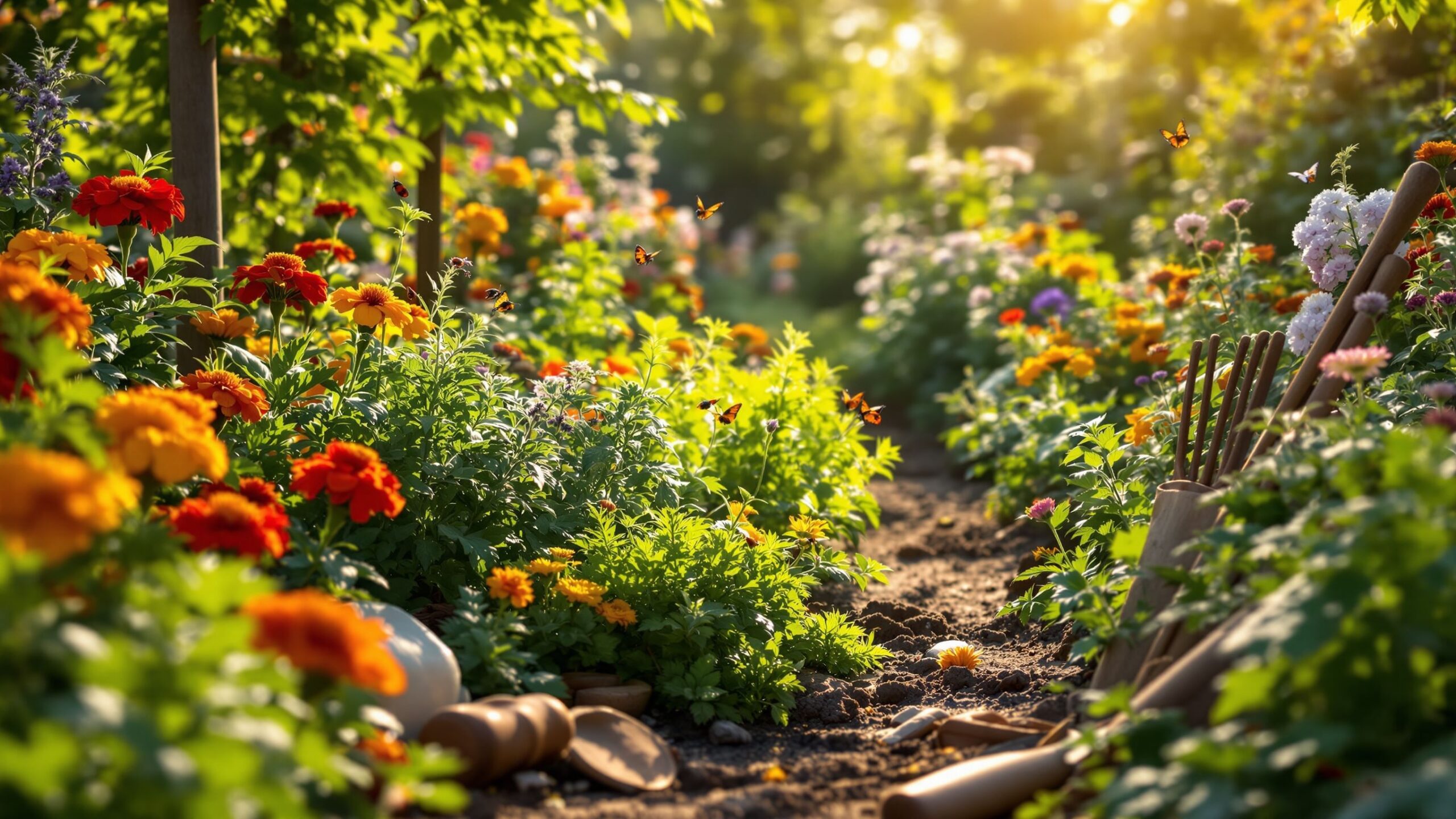
Companion planting is also widely used in natural gardening. Certain plants naturally repel pests or attract beneficial insects. Marigolds, basil, dill, nasturtiums, mint, lavender, and chives are commonly planted alongside vegetables to help discourage harmful insects.
Mulching provides additional protection by helping regulate soil moisture, suppress weeds, and reduce plant stress. Healthy, stable growing conditions make plants more resistant to pest damage.
Safe Homemade Natural Pest Sprays
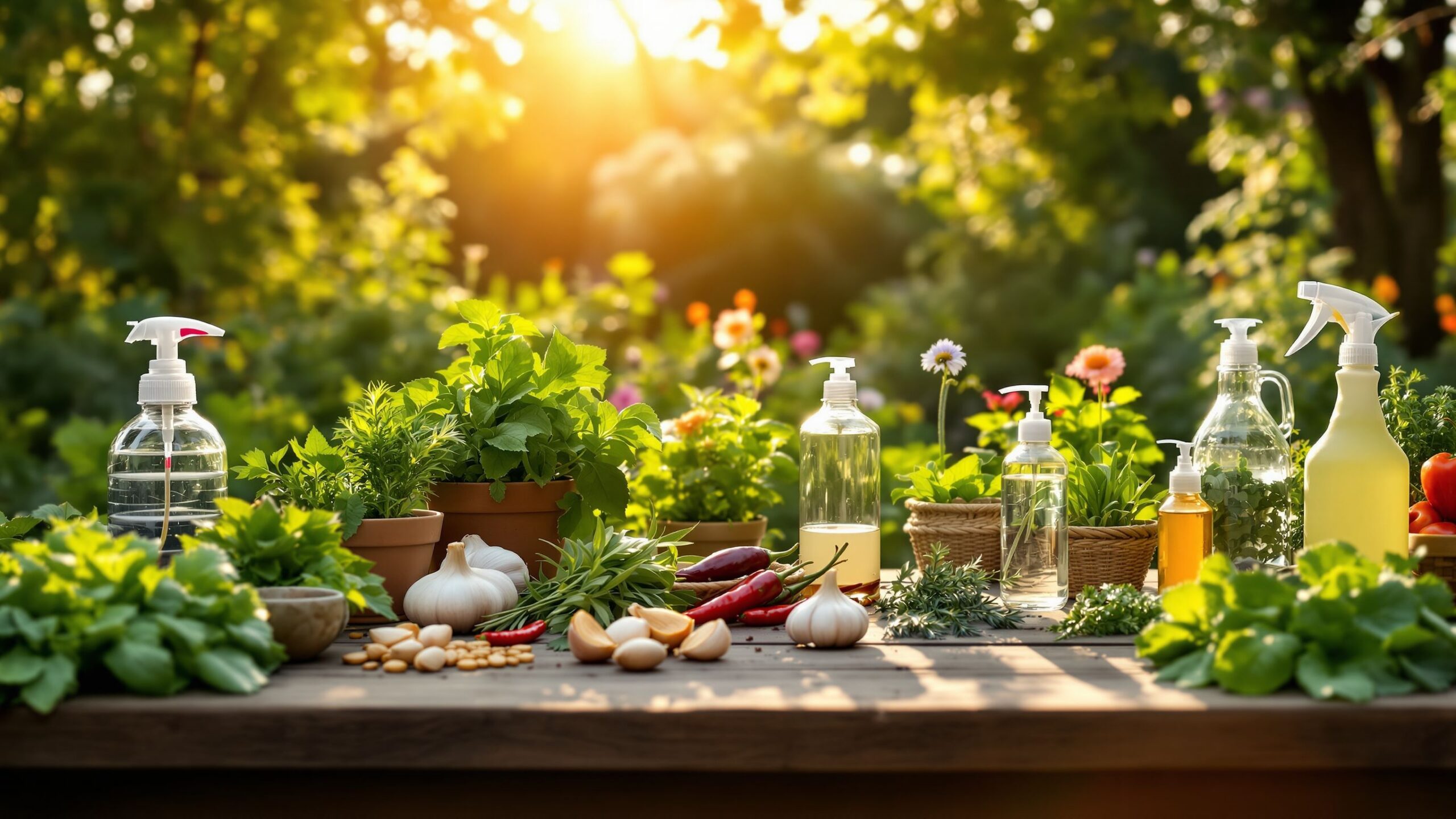
Homemade organic sprays are among the most popular natural pest-control tools because they are affordable, simple to make, and highly customizable. These sprays are often made from common household ingredients such as garlic, soap, neem oil, herbs, peppers, and vinegar.
Soap sprays are particularly effective against soft-bodied insects such as aphids, whiteflies, and spider mites. A simple mixture of mild liquid soap and water can break down insect protective coatings and dehydrate pests.
Garlic sprays work by creating strong odors that repel insects from treated plants. Pepper sprays irritate chewing pests and discourage feeding activity. Neem oil disrupts insect development and reproduction, making it one of the most versatile organic pest-control products available.
Even natural sprays should be used carefully. Beginners should always test sprays on a small section of the plant before widespread application because some plants are sensitive to certain ingredients.
Timing also matters. Most natural sprays should be applied during cooler morning or evening hours to reduce the risk of leaf burn and minimize harm to pollinators.
Using Beneficial Insects as Natural Pest Control
One of the most fascinating aspects of organic gardening is the use of beneficial insects as living pest-control partners. Nature already contains countless predator-prey relationships that gardeners can encourage naturally.
Ladybugs are famous for feeding on aphids and can consume large numbers of pests throughout their lives. Lacewing larvae are equally valuable because they aggressively hunt aphids, mites, and whiteflies. Praying mantises prey on many different insects, while parasitic wasps help control caterpillars and garden worms.
Creating habitats for beneficial insects is often more effective than purchasing them commercially. Flowering plants such as dill, fennel, yarrow, alyssum, sunflowers, and cosmos attract pollinators and predator insects naturally.
Avoiding unnecessary pesticide use is essential because many chemical treatments kill beneficial insects alongside harmful pests.
Natural Barriers and Physical Pest Control Methods
Not all natural pest control involves sprays or insects. Physical barriers are extremely effective and often overlooked by beginners.
Row covers can protect vegetables from moths, beetles, and other flying pests while still allowing sunlight and water to reach plants. Copper tape is commonly used around raised beds or containers to deter slugs and snails.
Hand-picking pests is another surprisingly effective method for small gardens. Caterpillars, beetles, and slugs can often be removed manually before populations grow larger.
Sticky traps help monitor flying insects such as whiteflies and fungus gnats. Diatomaceous earth, a natural powder made from fossilized algae, can damage insect exoskeletons and help reduce crawling pests when applied carefully.
These physical methods are often safest because they target pests directly without affecting surrounding ecosystems significantly.
Understanding Natural Pest Cycles
One important lesson beginners eventually learn is that pest populations naturally rise and fall throughout the growing season. Seeing a few insects on plants does not necessarily mean disaster.
In many gardens, predator insects eventually arrive to feed on pests naturally. Aphid outbreaks, for example, are often followed by increased ladybug activity. Overreacting with excessive spraying can interfere with these natural cycles.
Patience and observation are essential parts of successful organic gardening. Minor cosmetic damage is often acceptable if the overall plant remains healthy and productive.
Understanding seasonal patterns also helps gardeners prepare more effectively. Certain pests become more active during hot dry weather, while others thrive in cool damp conditions.
Safe Natural Pest Control for Indoor Plants
Indoor plants face many of the same pest challenges as outdoor gardens. Spider mites, fungus gnats, mealybugs, and scale insects are especially common indoors because enclosed spaces often lack natural predators and airflow.
Natural indoor pest control usually begins with prevention. Avoiding overwatering, improving air circulation, and regularly cleaning leaves can significantly reduce infestations.
Gentle soap sprays and diluted neem oil are commonly used for indoor plants because they avoid harsh chemical fumes inside the home. Isolating infected plants can also prevent pests from spreading throughout indoor collections.
Because indoor plants are often more sensitive than outdoor garden plants, mild treatments and careful observation are especially important.
Common Mistakes Beginners Should Avoid
Many beginners accidentally create pest problems through overwatering, overcrowding, excessive fertilization, or panic spraying. Healthy gardening requires patience and balance rather than constant intervention.
Overusing even organic sprays can stress plants and harm beneficial insects. Spraying during intense sunlight may cause leaf burn, while spraying flowering plants carelessly can expose pollinators to unnecessary risk.
Another common mistake is misidentifying pests. Some insects resemble harmful species but are actually beneficial predators. Proper identification helps gardeners choose the safest and most effective response.
Beginners should also avoid expecting instant results from natural methods. Organic pest control often works gradually by disrupting life cycles and strengthening overall garden health over time.
The Long-Term Benefits of Natural Gardening
Natural pest control provides benefits that extend far beyond reducing insect damage. Gardens managed organically often develop richer biodiversity, healthier soil ecosystems, and stronger long-term resilience.
Children and pets can enjoy outdoor spaces with fewer concerns about chemical exposure. Pollinator populations benefit from safer environments filled with flowers and untreated habitats. Birds, frogs, butterflies, and beneficial insects all contribute to healthier garden ecosystems.
Organic gardening also encourages deeper observation and appreciation of nature. Gardeners become more aware of seasonal changes, insect behavior, soil health, weather patterns, and plant relationships.
Over time, many gardeners discover that natural pest control transforms gardening from a constant battle into a more balanced and rewarding partnership with the environment.
Final Thoughts
Learning safe and effective natural pest control is one of the most valuable skills a beginner gardener can develop. By focusing on prevention, healthy soil, biodiversity, beneficial insects, and gentle organic methods, gardeners can protect plants while supporting healthier ecosystems and safer outdoor spaces.
Natural pest control is not about perfection or total insect elimination. It is about balance, observation, and long-term sustainability. Small daily habits such as checking leaves, watering properly, improving soil health, and encouraging beneficial insects often make a larger difference than aggressive spraying.
As beginners gain experience, they usually discover that healthy gardens naturally become more resilient over time. Homemade sprays, companion planting, physical barriers, and beneficial insects all work together to create safer and more sustainable growing environments.
Whether growing vegetables, flowers, herbs, fruit trees, or indoor plants, natural pest control allows gardeners to build thriving gardens while protecting pollinators, wildlife, soil health, and the broader environment for future generations.
Garden Product Reviews
Step into Mossy Streets’ Garden Product Reviews — your go-to guide for the best tools, gear, gifts, books, and garden gadgets rooted in nature. From blooming backyard beauties to lush indoor jungles, from heirloom seeds to high-tech composters, we dig into top-rated products for green thumbs, beginners, educators, and plant lovers alike. Whether you’re planting, pruning, decorating, or simply enjoying your green space, we’ve unearthed the best so you can grow, bloom, and thrive — all in one vibrant place!