
Choose Indoor Climbers for Healthy Growth and Honest Benefits
An indoor climber can draw the eye upward, soften a plain corner, and make a small room feel more connected to living foliage. Pothos, heartleaf philodendron, hoya, and monstera offer different leaf shapes and growth habits, so the best choice depends on the room and the care you can provide. The air-purification part of the title needs a clear limit: ordinary potted plants should not be relied on as an effective substitute for ventilation, pollution-source control, or suitable filtration. Laboratory findings about pollutant removal do not translate straightforwardly into a meaningful air-cleaning effect from a few houseplants in a real home. Their decorative value remains worthwhile without that promise. Begin with available light, a stable support, mature space, and household suitability. A plant that grows well and can be cared for comfortably will contribute more to the room than a fashionable climber placed in a dark inaccessible corner on the strength of an exaggerated health claim.
A: No, passive pots cannot reliably replace air cleaning; use appropriate source control, ventilation, and filtration for that purpose.
A: Real rooms have ongoing pollution sources and air exchange, unlike sealed tests used to measure individual plants' removal rates.
A: It still needs useful light, so a very dim corner can reduce growth despite its relative tolerance.
A: No, confirm the selected species has a vining habit suited to the hoop rather than assuming all philodendrons climb.
A: Thicker waxy leaves and twining stems produce a different framework display from the leafy trailing form of pothos.
A: No, confirm the exact species before extending the ASPCA's Hoya carnosa classification to an unidentified wax plant.
A: No, reserve room for larger mature leaves and provide a stable support as its substantial climbing outline develops.
A: Support the main stem deliberately rather than using leaf stalks as structural ties against the climbing pole.
A: Check moisture within the roots and consider light, season, growing medium, and plant condition before adding more water.
A: Choose a climber with a clear decorative role, suitable light, household compatibility, and care needs you can maintain.
Assess the Room Before Choosing a Leaf Shape
Look at the intended position from the plant's perspective. A room can feel bright to a person while offering little useful light several feet from its windows. Direction, glazing, nearby buildings, curtains, and seasonal daylight affect what reaches the foliage. Choose a plant whose requirements fit that position or provide appropriate supplemental light. A low-light-tolerant label does not mean that the plant needs no light or will produce vigorous climbing growth in a dark recess.
Measure the space the developed plant and support will occupy. A small nursery vine may eventually extend well beyond its pot, and large leaves can obstruct a walkway or press against a window. Check access for watering, drainage, and occasional pruning before placing it on a high shelf. The decorative arrangement should remain practical after the stems grow. A smaller suitable climber is often easier to use than a large species repeatedly cut back because the room cannot accommodate it.
Consider people and pets who use the space. Several familiar climbing houseplants contain irritating compounds and should be kept away from chewing or handling that could lead to exposure. Verify the full identity and relevant household guidance rather than assuming all indoor greenery is harmless. A high shelf is not necessarily inaccessible to a cat, and a trailing stem can reach lower than its pot. Choose the plant and placement together so the living decoration fits the home beyond its visual effect.
Use Pothos for Adaptable Foliage With Real Light
Pothos, Epipremnum aureum, is a familiar vining houseplant that can trail or be trained upward on a suitable support. Cultivars differ in leaf markings and appearance, so select the actual plant rather than expecting every pothos to look the same. It can tolerate lower light than many flowering indoor plants, but useful indirect light generally supports better growth. Observe whether new stems remain healthy and proportionate in the chosen location. Decorative flexibility works best when the plant is actively supported by its environment.
Use a draining pot and a suitable growing medium, and water according to root-zone conditions instead of an inflexible calendar. Empty unwanted standing water from decorative outer pots or trays as appropriate. If stems become very long with sparse leaves, review light and care rather than merely winding more bare growth around the support. Pothos contains insoluble calcium oxalate and is unsuitable for chewing by pets or children. Its easy-care reputation should be understood as relative adaptability, not a guarantee of safety or neglect tolerance.
Choose a Vining Philodendron Rather Than Assuming the Whole Genus Climbs
Heartleaf philodendron, Philodendron hederaceum, can provide heart-shaped leaves on vining stems, but many other philodendrons have different growth habits. Confirm the full identity before buying a plant for a hoop, pole, or trailing display. Give the selected vine suitable indirect light and enough space for its mature growth. Its attractive leaf shape can suit a quieter interior palette without needing an air-cleaning claim. Like pothos and other aroids, it contains irritating calcium oxalate compounds, so household suitability and protected placement belong in the selection decision.
Try Hoya Where Bright Light and a Twining Framework Fit
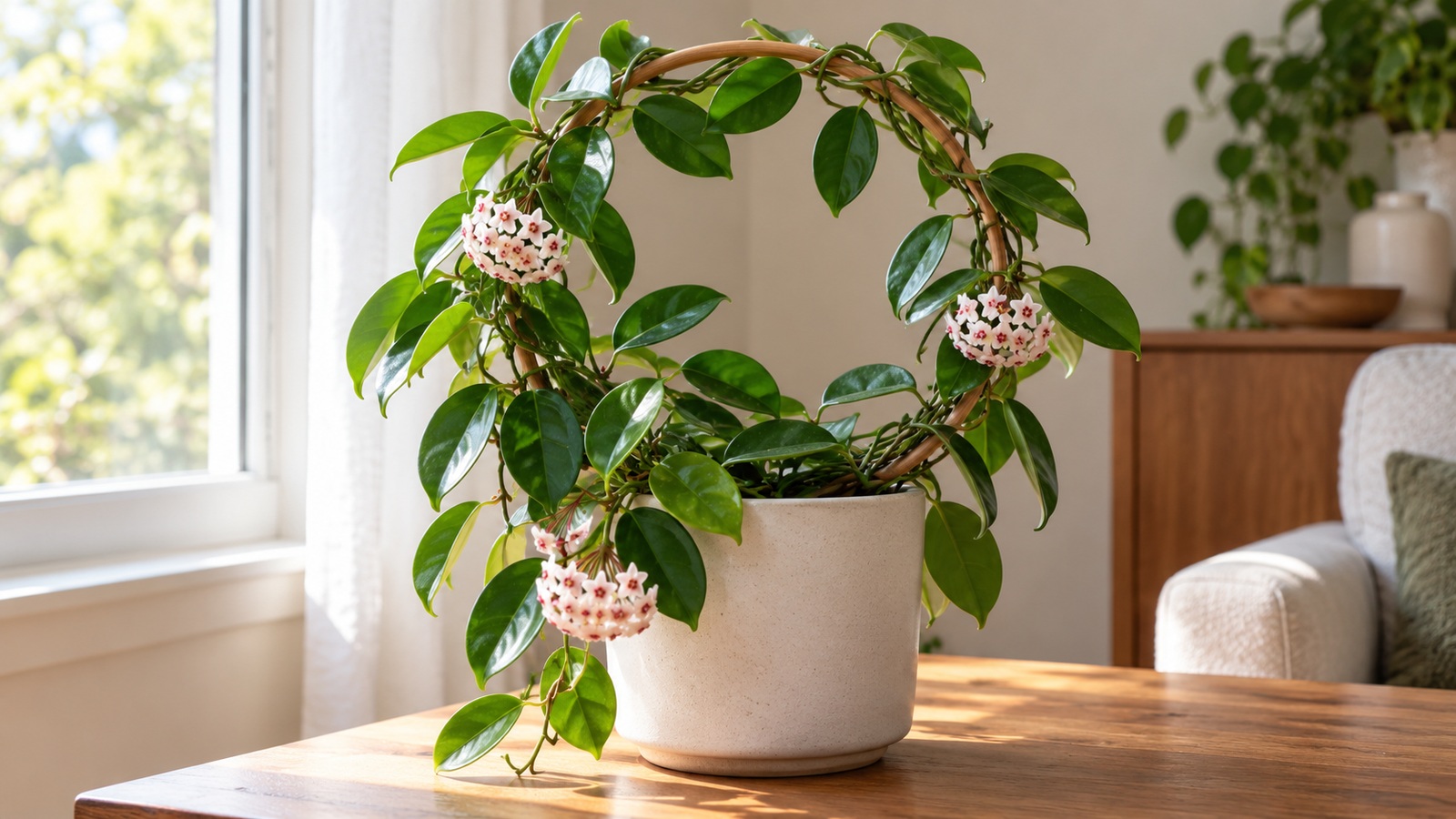
Hoya carnosa offers thicker waxy leaves and stems that can be arranged on a suitable small framework. Its character differs from a thin-leaved trailing aroid, making it useful when you want a more defined pot-and-support composition. Provide appropriate bright light and drainage rather than placing it in the darkest corner because it is sold as a houseplant. The size and growth habit of the specific cultivar still matter. A young plant can look compact while producing longer searching stems later.
Water according to the growing medium and conditions, avoiding a routine that leaves the roots continually saturated. Do not force every new stem tightly into an ornamental shape; guide it gently as the plant develops. Flowers may appear when the plant is suitably established and conditions support them, but a foliage display can be valuable before that stage. Keep care instructions specific to the chosen hoya. The genus includes many species, so one plant's routine should not become a universal rule for all wax plants.
The ASPCA lists Hoya carnosa as nontoxic to cats and dogs, which can make it a candidate where pet compatibility influences the choice. Preserve the exact identity rather than extending that statement indiscriminately to every plant called hoya. Nontoxic classification does not make any houseplant food or eliminate the value of preventing chewing and soil disturbance. A stable pot and thoughtful placement still matter. The useful distinction helps you choose within the household context while keeping expectations practical.
Reserve Monstera for a Room With Mature Space
Monstera deliciosa can provide large dramatic leaves and a climbing growth habit, but it needs substantially more room than a modest hoop-trained vine. A small starter plant should not be judged only by its current footprint. Plan for leaf reach, a sturdy support, and a container that remains stable as the plant gains weight. Appropriate light and care influence development, and mature leaf shape changes with growth conditions and age. Choose it where that larger character is welcome rather than trying to keep a statement plant permanently miniature.
Support the main stem deliberately without using leaf stalks as structural tying points. Follow reliable species guidance when arranging the plant and its aerial roots. Keep the pot accessible and prevent leaves from blocking normal circulation through the room. Monstera is another aroid with irritating calcium oxalate, so it belongs outside pet and child chewing access. Its scale can be an advantage in a suitable room, but the plant should remain compatible with the people, routes, and furniture around it.
Match Support to the Plant's Growth and Your Care Routine
A hoop, trellis, pole, or other indoor support should suit the plant's attachment and mature weight. Twining stems, climbing aroids, and loosely trailing growth do not all use a structure identically. Install the support securely and avoid a design that becomes unstable when the foliage extends to one side. Use appropriate gentle ties where needed and inspect them as stems thicken. A neat appearance at installation does not establish that the framework will remain safe and effective as the plant develops.
Leave access to the growing medium and drainage arrangement. A dense decorative wrapping can hide the soil surface and make watering awkward, while a tall narrow support may complicate moving or repotting. Decide how you will clean the leaves and check for pests before winding stems through every opening. Indoor styling and plant care should support each other. A simple accessible framework often makes a healthier display than an elaborate arrangement that cannot be adjusted without damaging growth.
Keep stems away from heaters, cold drafts, electrical fittings, and surfaces vulnerable to moisture. Plants should not be used to hide a leak or a damp wall problem that needs repair. If a support includes moisture-retentive material, manage it appropriately without allowing persistent wetness to affect the room. Check the pot and nearby surfaces during routine care. The plant's decorative role is easier to sustain when the whole arrangement remains clean, stable, and understandable.
Separate Real-Room Air Quality From Laboratory Plant Findings
A review and analysis of published volatile-organic-compound removal studies found that passive potted plants would require impractically large numbers to match ordinary building air exchange. Small sealed test chambers differ greatly from occupied rooms with ongoing sources and ventilation. This is why a few attractive pots should not be marketed as dependable room air purifiers. For indoor-air concerns, address sources, appropriate ventilation, and suitable filtration using reliable guidance. Enjoy climbers for their living form and decorative contribution while keeping that air-quality expectation separate from the care decision.
Observe Watering, Growth, and Pests Rather Than Following a Fixed Formula
Water needs change with light, temperature, pot size, growing medium, and season. Check the root zone and the plant's condition before adding water, especially when growth slows during darker months. Persistently wet medium can damage roots, while repeated severe drying can stress plants that need steadier moisture. A yellow leaf is a symptom to investigate, not proof of one universal problem. Review the whole setting before treating a plant or changing the routine drastically.
Inspect new plants before they join an established collection and keep an appropriate observation period where practical. Look at leaf undersides, stems, and the growing medium for signs of pests or deterioration. Early identification can make a small problem easier to manage than one concealed among several tangled vines. Use reliable guidance for any treatment and follow product directions for indoor use. A decorative plant remains a living organism whose health is easier to maintain when inspection is part of normal care.
Build a Small Indoor Collection That Works With the Home
Start with one suitable climber and learn how it grows in the intended room. Record light, watering response, and the space needed as stems develop before adding several more. A successful pothos, philodendron, hoya, or monstera can help you understand what the site supports, though each species still has its own requirements. Avoid expanding the collection merely because another plant is advertised as an air cleaner. The more useful reason to add it is a clear decorative role and a realistic care plan.
Refine the display as the plant matures. You may need a stronger support, a better-lit position, or a different scale of plant for the available space. Prune or repot according to species guidance instead of treating every vine as a uniform decoration. Preserve household suitability when new growth extends beyond the original location. A display that remains accessible, stable, and healthy will be easier to enjoy than one maintained only for the appearance of abundance.
The best indoor climbing plant is the one that can grow well where you live and contribute a form you want to see every day. Choose the identity carefully, match light and support, and maintain drainage and practical access. Keep pet and child considerations in the selection, and use evidence-based measures for genuine air-quality problems. The plant can then provide greenery, texture, and a changing living outline without exaggerated promises. That honest combination of decorative value and sound care makes a lasting indoor garden.
Use Evidence for Air Quality and Plant Guidance for Care
Review the research review of passive potted-plant air cleaning before relying on that claim. For supports and care supplies, consult Garden Product Reviews with the plant’s actual needs in mind.


