
Choose Grasses for the Garden Tradition and Site You Mean
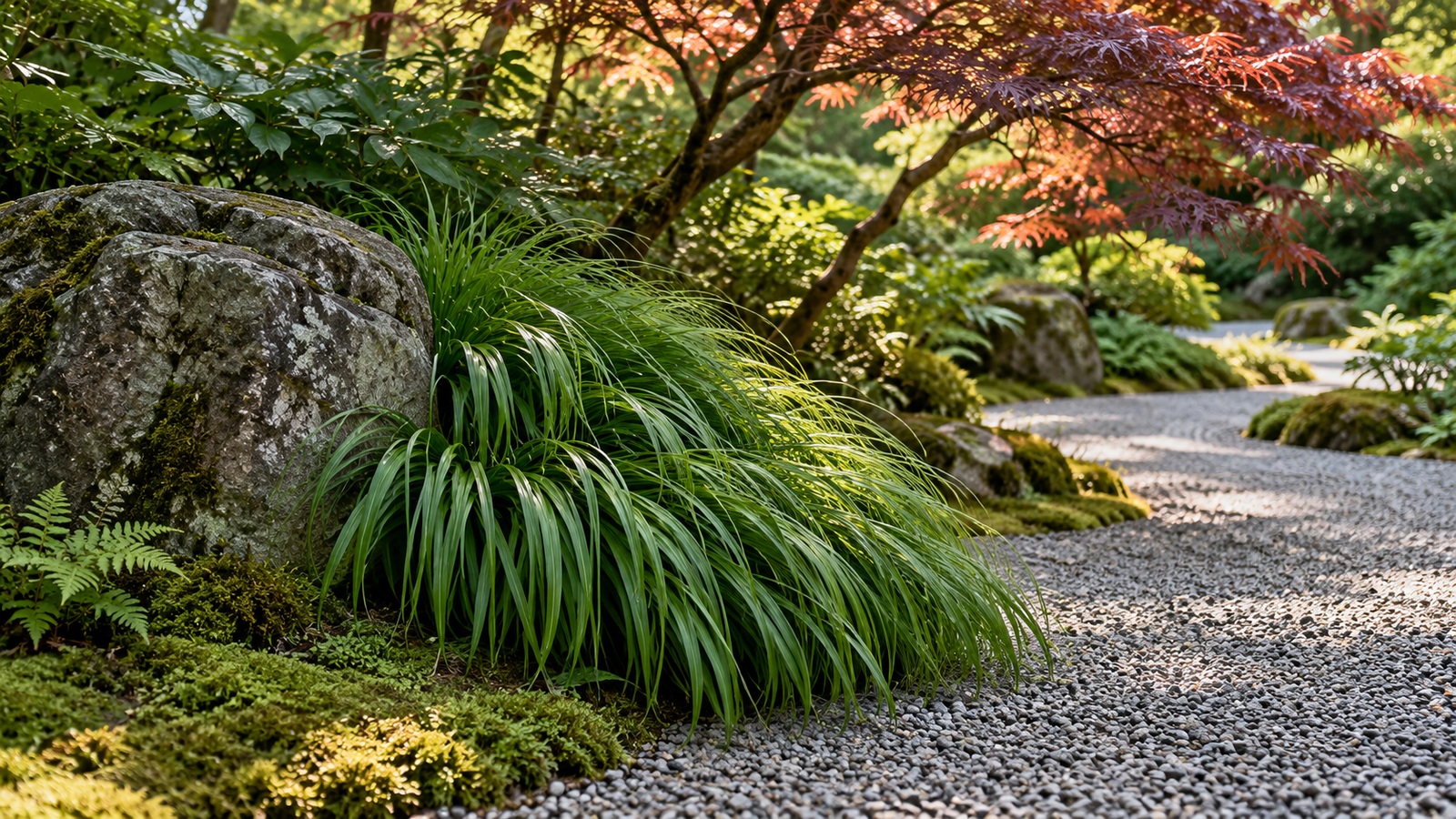
The phrase Asian-inspired can describe very different gardens, from a Japanese-style courtyard to a planting informed by Chinese landscape traditions or a contemporary design drawing on several influences. A thoughtful grass selection begins by recognizing that variety rather than treating a continent as a single decorative style. Grasses can contribute flowing foliage, a quiet seasonal texture, or a contrast with stone and woody plants, but they should have a specific role in the garden you are making. Japanese forest grass is one familiar option where its growing requirements fit; other suitable grasses and sedges may perform useful roles without claiming a historical connection they do not have. Start with your local climate, the actual light and soil, and the design qualities you want to emphasize. A small, healthy grouping that relates clearly to its surroundings will contribute more than a collection chosen solely because its common names sound appropriate to a theme.
A: No, identify the particular tradition or landscape qualities informing your choices rather than assuming a single uniform style.
A: No, locally suitable plants can serve a clearly described contemporary interpretation when their design roles fit the intended view.
A: Its arching ribbonlike leaves create a low flowing mound where the site supports healthy growth and room to cascade.
A: No, gold foliage can become a strong accent, so judge its emphasis within the garden's actual viewing conditions.
A: No, individual Carex selections differ in height, spread, and requirements, which should guide the particular planting choice.
A: The developed outline may change sightlines, neighboring light, and the scale of details in a small enclosed garden.
A: No, it still requires suitable climate, mature space, and an ongoing routine appropriate to its actual growth.
A: No, the plant's root requirements must fit the site even when its foliage looks attractive beside the water.
A: Appropriate stones, woody structure, and other permanent features can preserve the composition while the forest grass is dormant.
A: Review observed conditions and adjust the position or plant choice when repeated stress shows the arrangement is unsuitable.
Name the Influence Before Choosing a Plant Palette
Identify what attracts you to the garden tradition or individual landscape you are studying. It might be the relationship between stones and low foliage, a sequence of enclosed and open views, or a seasonal planting that changes gently through the year. Those are usable design observations, whereas a vague request for an Asian look can lead to unrelated plants and decorative objects. Explore reliable garden histories, public gardens, or documented examples when the cultural context matters. The aim is to understand a particular influence well enough to adapt it thoughtfully to your own place.
Avoid assigning every plant native to an Asian country the same design role. Geographic origin does not automatically establish suitability for a small courtyard, a dry sunny border, or a traditional garden composition. Nor does using a locally native grass erase the possibility of a thoughtful inspired design. Plant performance and the arrangement of forms remain practical concerns. Be clear when you are making a personal interpretation rather than recreating an established garden type, and let that clarity guide a focused palette.
Use Japanese Forest Grass Where Cascading Foliage Fits
Hakonechloa macra, commonly called Japanese forest grass, offers arching ribbonlike leaves that can create a flowing low mound. Its form is useful beside a path, at the base of a woody plant, or near a stone where the leaves can drape without obscuring an essential route. Green and variegated cultivars produce different visual effects, so choose the actual selection rather than treating the species as one uniform plant. Check its mature dimensions and regional hardiness before buying. Its appeal comes from the natural leaf arrangement, not from forcing it into a sharply clipped shape.
Provide a site that suits the cultivar's light, moisture, and soil requirements. Light shade or other appropriate exposure may support an attractive plant, while very heavy or excessively dry soil can cause problems. The best placement depends on climate as well as the amount of shade: a cool garden and a hot reflective courtyard do not offer identical conditions. Consult local guidance and observe the root zone. A shaded position beneath a thirsty tree may still be too dry for the healthy foliage you want.
Allow time for a new clump to develop and leave enough space for its eventual cascade. Small nursery plants may initially look modest beside a large stone, but crowding them to obtain an instant effect can interfere with mature form. Use suitable temporary gap care while roots establish. Protect crowns from buried mulch and keep traffic away from arching leaves. A patient grouping can become a coherent flowing layer without requiring repeated corrective trimming.
Decide Whether Green or Variegated Leaves Serve the View
Plain green forest grass can connect mosslike textures, shrubs, and stones without becoming the brightest feature in the composition. Gold or striped selections can make a darker area more visually prominent, but the color also draws attention. Decide whether that is the intended role before repeating a bright cultivar widely.
A quiet background may reveal variegation clearly, while many patterned neighbors can make it look busy. Compare the plants from the main viewing point rather than selecting only from close-up nursery photographs.
The preferred color is the one that supports the garden's hierarchy and remains healthy in the available exposure. Include the surrounding surface in the decision: pale gravel and gold foliage may merge visually, whereas darker stone can make the same leaves stand out. Look during the hours when you normally use the garden.
An effect selected for bright midday sun may be much quieter in the shaded evening view. That observation helps determine whether color should emphasize this particular corner or remain a supporting detail within the larger arrangement.
Consider Suitable Sedges for Fine Low Texture
Sedges can provide grasslike foliage in places where their requirements fit better than those of a true ornamental grass. Carex species and cultivars vary substantially in height, spread, and preferred conditions. Some remain distinct tufts, while others extend into a connected layer. Select a named locally suitable option and determine how it will occupy the ground before adding it beside stones or slow-growing plants. The genus is too varied for a single promise about easy shade or universal moisture tolerance.
Use a fine sedge texture to support a larger focal plant or clarify the edge of a bed. A clumping form may leave separate outlines visible, whereas a spreading choice can link an area more continuously. Both effects can work, but they lead to different care. Keep essential path width clear and leave access around woody crowns. A low plant still changes the way the garden is used when its mature leaves extend across a stepping route or conceal a feature you need to inspect.
Add Taller Grasses Only Where Their Scale Belongs
An upright ornamental grass can provide seasonal vertical structure in a broad composition, but it can dominate a small enclosed garden. Measure the mature height and spread against walls, windows, and the main sightlines. Feather reed grass or a suitable locally adapted native grass may serve a contemporary interpretation where its form and growing needs fit. Do not describe that practical choice as proof of a historical tradition. Its value lies in what it contributes to your particular arrangement.
Large grasses can change nearby light and make smaller details harder to see. A tall mass behind stones might supply a useful background, while the same plant immediately beside a narrow path may become intrusive. Mark the mature outline in the site and view it from several positions. Leave room for seasonal care without walking through the lower planting. A deliberate larger grouping is easier to maintain and understand than an oversized specimen repeatedly cut back to squeeze it into a small corner.
Consider the dormant outline before choosing a tall form. Some stems can contribute winter texture where local weather leaves them intact; others collapse or require timely removal. Seasonal cutting also creates a lower, more open period. A stone arrangement, woody framework, or other permanent feature can carry the composition through that change. The grass can then provide an evolving layer without being expected to keep the same silhouette all year.
Screen Aggressive Grasses and Bamboo Before Installation
Bamboo is botanically a grass, but its woody stems, growth habits, and containment requirements make it a different garden commitment from a modest herbaceous clump. Running types can spread through underground stems and create difficult boundary problems. Clumping types still need appropriate climate and mature space. Check regional invasive guidance and realistic control requirements before considering either. A design influence should never become a reason to install a plant whose long-term behavior you cannot manage.
Arrange Stone, Water, and Planting With Practical Care in Mind
Place grasses in relation to the garden's existing forms rather than adding them as a separate decorative layer. A cascading mound can soften one side of a stone while leaving enough of its surface visible to retain the intended emphasis. Fine foliage can frame a water feature without spilling into its working parts. The arrangement should reveal each element rather than allowing plants to hide everything as they mature. Study the balance from the actual seat, doorway, or path where the view is experienced.
Water features and planted margins need different kinds of access. Leave room to clean equipment, inspect drainage, and tend plants without disturbing the whole composition. A permanently wet edge is not suitable for every grass that looks graceful beside water in a photograph. Match the root conditions to the species and keep the visible proximity separate from assumptions about moisture tolerance. Good placement can create an association with water while allowing the plant to grow in an appropriate nearby bed.
Let Repetition and Seasonal Change Establish Continuity
Repeat a compatible grass or sedge where the garden needs a link between views. The repetition can be a small grouping, a short flowing edge, or echoed clumps rather than a continuous ribbon. Keep enough unplanted or otherwise appropriate open space for the shapes to remain visible. Too many different leaf colors and heights can weaken the connection you hoped to create. A restrained selection lets subtle changes in light and movement provide interest without continual additions to the palette.
Observe foliage through the entire growing cycle. New shoots, full summer leaves, autumn tones, and winter dormancy each change the relationship with surrounding plants and materials. Japanese forest grass loses its leaves seasonally rather than supplying a permanent evergreen surface. Plan the interval when its mound is less visible, and avoid interpreting that normal change as a design failure. The woody framework and hard landscape can preserve continuity while the grass renews itself.
Record what remains attractive and what requires frequent correction. A cultivar that looks excellent in spring but repeatedly scorches or dries at your site may need relocation or replacement. A plant that spreads farther than expected may belong in a more controllable area. Refine the layout based on actual performance rather than defending a themed purchase. The most convincing garden is one whose plants and place work together, with the original inspiration informing choices instead of overriding evidence.
Build a Garden You Can Understand and Sustain
Keep the planting palette small enough that you can learn each plant's needs and seasonal behavior. Provide establishment water, manage gaps, and time cleanup according to the species rather than applying one uniform routine. Preserve access and review mature spacing as clumps expand. If a culturally specific design matters to you, continue learning from reliable sources and acknowledge the particular influence. That ongoing attention produces a more thoughtful result than buying a list of plants associated loosely with a continent.
The best grass choice may be Japanese forest grass, a suitable sedge, a locally appropriate upright accent, or no grass in a particular part of the design. Select for form, site, scale, and the relationship with surrounding features. Let seasonal change remain visible and avoid plants that create unreasonable containment demands. Healthy foliage arranged deliberately can express movement and quiet texture while keeping the garden comfortable to use. The result is a personal landscape grounded in both its inspiration and the conditions where it actually grows.
Learn the Plant and the Garden Context
The Royal Horticultural Society’s Hakonechloa guide describes this grass’s form and growing preferences. For planting and seasonal-care supplies, visit Garden Product Reviews after settling the plant’s role and local suitability.


