Give Simple Garden Lines a Living Counterpart
A plain wall, an open terrace, or a clean paving line can make the movement of a single grass surprisingly noticeable. Ornamental grasses suit modern and minimalist gardens when their form is chosen deliberately and the surrounding space lets it read clearly. The design does not depend on collecting many different species or covering every surface. It depends on a few compatible plants, mature spacing, and an understanding of how the composition changes with the season. An upright clump can echo architecture, a low fountainlike mound can soften it, and airy stems can make light visible against a quiet background. Those effects still rely on a suitable growing site and a maintenance routine. Start with the room the garden needs to function, then use grasses to define selected places within it. Restraint works best when it leaves healthy plants enough space to develop their natural shape.
A: No, a small compatible selection can work when each plant contributes a clearly defined form, texture, or scale.
A: Compare each shape with the architecture, available width, and main view before deciding which role the grass should fill.
A: No, its seasonal stems change with dormancy, weather, and cutting, so the composition needs other lasting elements.
A: Its mature fountainlike mound generally develops gradually, requiring a design that accommodates a slower period of establishment.
A: No, check the named cultivar's regional performance, particularly summer conditions and the drainage available at the site.
A: Yes, appropriate sedges can contribute grasslike forms when their growth habit and site requirements fit the intended composition.
A: Space them for the desired result, preserving distinct outlines or allowing connected coverage according to the design.
A: Permanent architecture, suitable woody planting, and hardscape can retain structure during the interval before grass foliage returns.
A: Edit competing features and review spacing or boundaries before adding more plants to the already crowded composition.
A: Healthy forms gain variation from changing light, movement, seasonal flowers, and foliage color within a coherent small palette.
Begin With Open Space and a Clear Planting Role
Identify the main lines of the garden before selecting plants. A long wall, a terrace edge, or a narrow view from an indoor room may suggest a specific grass arrangement. Decide whether the planting should frame the view, soften a hard boundary, or provide a single focal form. These roles need different scales and locations. A grass placed only because a corner feels empty can eventually interrupt the route or compete with the feature you wanted to emphasize.
Treat unplanted space as part of the composition. A clear paved or otherwise appropriate open area makes the outline of a grass easier to see and preserves room for everyday use. This does not mean leaving unsuitable bare soil exposed throughout the garden; surface materials and coverage should fit the site. It means resisting the impulse to fill every visual gap with another species. A small number of well-positioned forms can give the landscape more clarity than a dense collection of unrelated accents.
Choose One Dominant Form and a Compatible Supporting Scale
Compare grass shapes rather than beginning with a list of flower colors. Upright stems make a vertical effect, arching leaves create a rounded or fountainlike silhouette, and fine flowering structures can appear as a light haze above the base. Select a dominant shape that works with the architecture and the available width. The plant's mature habit should be visible without constant manipulation. If you need to tie, shear, or squeeze it continually to achieve the design, a better-fitting selection may be available.
A supporting grass or grasslike plant should have a clear reason to join the palette. A lower mound can balance a taller repeated form, while a finer texture can provide contrast beside a broad simple surface. Avoid adding a second species merely because its nursery foliage looks attractive beside the first. Check that both can grow well in the same conditions and that their seasonal development supports the composition. A minimalist palette is easier to maintain when its members do not require incompatible care.
Scale the plants to the viewer's position. A fine seed head may be beautiful beside a seat but barely noticeable across a large courtyard. A tall broad clump can dominate a small entrance even if the catalog photograph makes it look graceful. Mark mature dimensions in the actual site and stand at the main viewing points before buying. That practical exercise helps you judge proportion with the building and the routes people will use.
Use Upright Grasses Where Vertical Rhythm Belongs
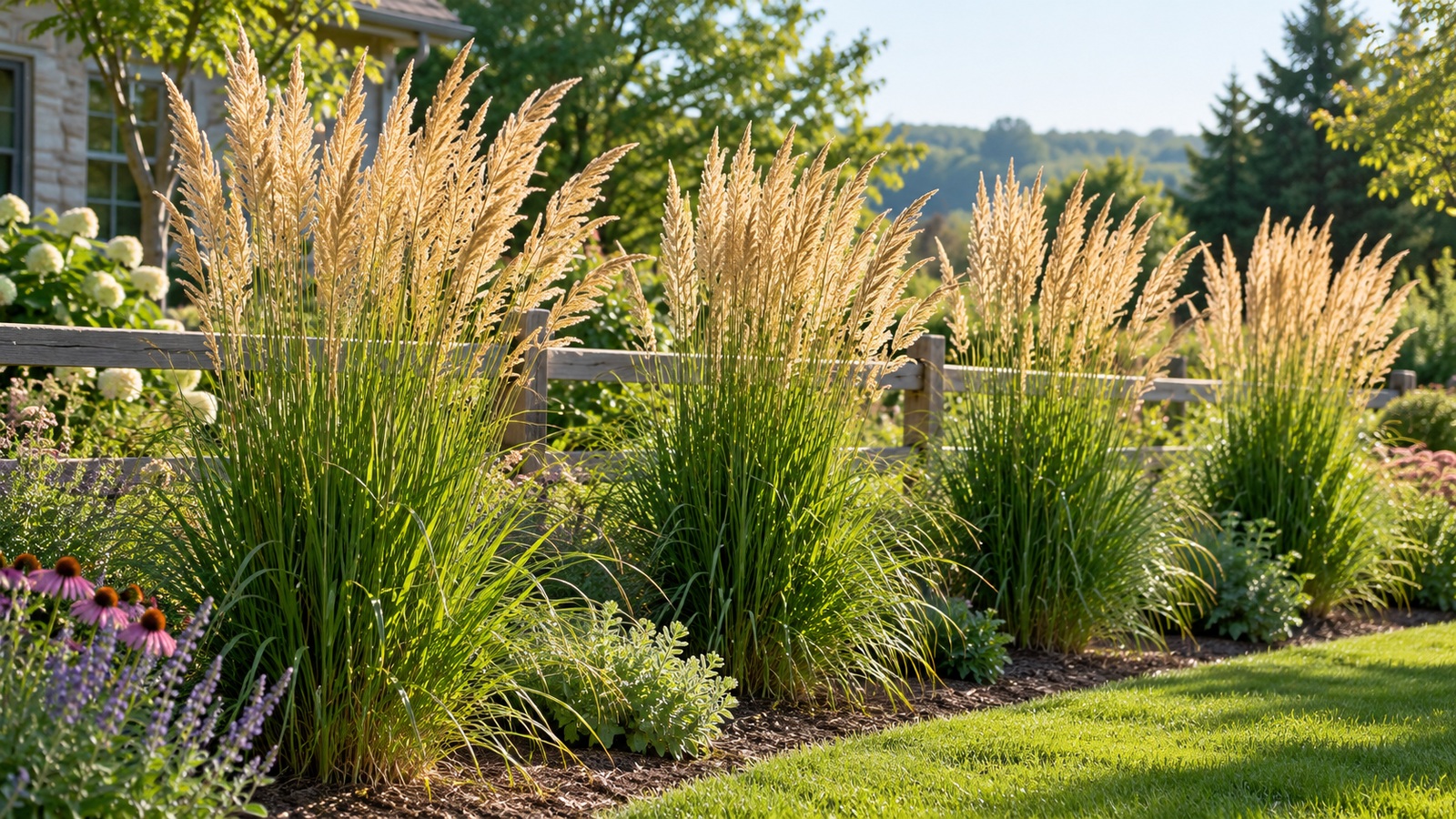
Feather reed grass cultivars, including Calamagrostis × acutiflora 'Karl Foerster', can provide an upright seasonal outline in suitable sites. Repeated clumps may echo posts, wall divisions, or a straight border without becoming a solid barrier. Their cool-season growth brings a different calendar from many warm-season grasses. Choose the cultivar for regional suitability, mature height, and width rather than for a familiar name alone. A restrained row should still have enough room for each plant's base and stems.
Selected switchgrass cultivars, Panicum virgatum, offer another route to upright or substantial structure with warmer-season development and airy flowering stems. Forms differ, so verify the actual cultivar rather than assuming every switchgrass remains equally narrow. Match the plant's mature spread to the bed and preserve necessary sightlines. Use the seasonal outline as part of the design while recognizing the open period after cutting or dormancy. Grasses can define space elegantly without providing permanent evergreen architecture.
Use Prairie Dropseed for a Low Fountainlike Counterpoint
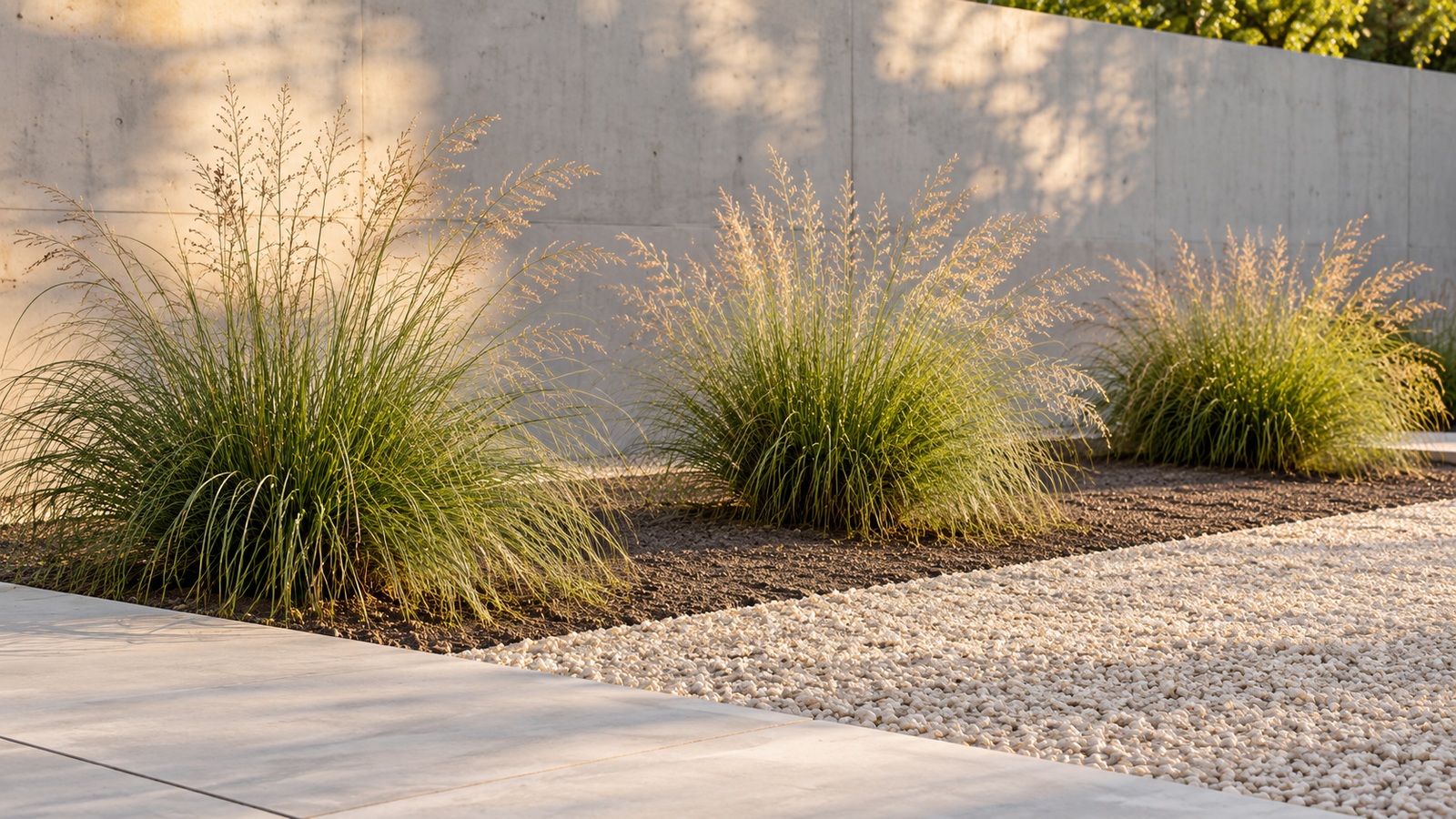
Prairie dropseed, Sporobolus heterolepis, can offer fine arching foliage in a rounded fountainlike clump where its regional and site requirements are met. Its form can soften a straight edge while leaving a different silhouette from upright reed grass. It is known for slower establishment, so a mature effect requires patience rather than a promise of instant fullness.
Space plants for the developed mound and keep the surrounding area clear enough to reveal it. The gentle shape is most useful when it can remain recognizable instead of merging into crowded neighboring foliage.
In a small composition, several healthy repeated mounds can provide enough texture without requiring a large assortment of species. View the grouping from the angle that matters most, because an overlapping row can appear denser from a low indoor viewpoint than it does from above. Leave enough separation to retain the outlines you want from that position.
A slight adjustment in placement can change the whole effect without increasing the number of plants. During establishment, keep interim coverage modest and appropriate so it protects the soil while allowing you to observe the developing grass crowns clearly.
Evaluate Short Grasses and Sedges by Climate, Light, and Habit
Blue fescue, Festuca glauca, can contribute a small rounded tuft and cooler-toned foliage in an appropriate climate and draining site. It should not be treated as a universal low accent for every hot or humid garden. Cultivar and regional performance matter when the design depends on a few plants remaining attractive. Consult local growing guidance and consider seasonal foliage quality before making it the main repeated element. A modest plant with a striking nursery color still needs conditions that support its long-term health.
Sedges can provide a grasslike option where the light or moisture suggests a different palette from sun-loving prairie grasses. Carex is a diverse genus, so choose the species or cultivar by actual requirements and growth habit. Some form clear tufts, while others spread more freely. For a modern garden, that distinction influences whether the design retains separate forms or becomes a connected layer. The visual resemblance to grass is useful, but it does not make all sedges interchangeable in care.
Keep regional invasive behavior in the selection process. Certain ornamental grasses commonly sold in nurseries can be inappropriate where they escape cultivation, including problematic Miscanthus and fountain-grass species. Verify the botanical identity and local guidance before buying. A limited palette amplifies every choice, so an unsuitable plant can affect a large part of the garden's appearance and maintenance. A locally appropriate alternative that grows well is more valuable than preserving a fashionable species at the site's expense.
Repeat Plants With Enough Space to Read Their Shape
Repetition creates continuity when the plants share a recognizable form and are placed deliberately. It does not require a mathematically rigid line in every garden. A short row, a broad grouping, or a few echoed clumps can connect separate views. Use spacing based on mature dimensions and the amount of separation you want between outlines. If the intended effect relies on distinct mounds, leave enough room that their leaves can expand without immediately becoming one indistinct mass.
Consider the relationship between plants and materials. Fine leaves stand out against a simple wall, while a complicated gravel pattern or many small ornaments can compete with the texture. Limit competing features and choose durable surfaces appropriate to drainage and use. Keep planting crowns clear rather than burying them beneath decorative material to achieve a polished surface. The clean appearance should come from a coherent arrangement, not from compromising the plants' growing conditions.
Plan for Light, Movement, and Seasonal Change
Observe how the garden is lit when you usually see it. Low sunlight can reveal fine stems against a shaded background, while bright front light may emphasize foliage color more than silhouette. Place the grass where its texture can register without blocking a useful view. Wind movement can make a restrained planting lively, but exposed sites also need species that remain suitable under local conditions. The moving outline should be a welcome part of the setting rather than a continual source of damage or obstruction.
Map the design outside summer. Some stems remain attractive through part of winter, while others flatten or lose definition in local weather. Seasonal cutting leaves a period when the planted structure is much lower, and warm-season grasses may take longer to resume visible growth. A wall, evergreen element, or appropriate hardscape can carry the composition through that interval. Minimalism does not require pretending that living plants keep a fixed outline throughout the year.
Make color changes part of the plan rather than an unexpected departure from a green photograph. Many grasses develop tan stems or autumn foliage tones, and those shifts can work well beside quiet materials. Choose a background that suits both growing-season and dormant appearances. If the desired palette cannot accommodate normal seasonal change, reconsider the plant's role. A successful simple garden feels intentional through its transitions, even when the display is subtler at some times than others.
Make Maintenance Part of the Composition
A garden with few repeated plants makes damage, unwanted seedlings, and uneven growth particularly visible, so plan a manageable inspection and seasonal-care routine. Leave access for cutting, division when needed, and checking the root zone without stepping into every clump. Establishment watering remains important even for grasses that become drought tolerant later. Use species-appropriate cleanup timing and avoid injuring fresh growth beneath old stems. Do not overfeed simply to make each plant match an idealized size. Healthy form and clear boundaries usually contribute more to a restrained design than forced uniformity, and occasional variation can remain attractive when the main structure is coherent.
Refine the Palette After Seeing the Plants Mature
Evaluate the composition from the main indoor and outdoor viewpoints after the plants have developed. Check whether the spacing still reveals the intended outlines and whether the paths remain comfortable. A plant that leans into a narrow route may need relocation or replacement with a better-fitting form. Resist adding new species immediately to solve every empty-looking interval. The more useful adjustment may be moving a group, clarifying an edge, or allowing a slower plant another season to establish.
Modern and minimalist grass planting succeeds when each choice has a clear job. Upright forms can establish rhythm, low fountains can soften geometry, and a suitable sedge or compact grass can supply a supporting texture. Match those roles to the site, respect mature dimensions, and plan for seasonal change and care. The result can feel calm without being static, because light and movement provide variation within a small palette. A healthy, understandable arrangement is the lasting foundation; restraint gives its living details room to be noticed.
Verify Plant Fit Before Repeating It
Use University of Maryland Extension’s ornamental and native grass guidance alongside local recommendations. For seasonal-care equipment, compare options through Garden Product Reviews after defining the planting’s mature dimensions.