Plan a Waystation Around the Monarch's Changing Needs
A monarch waystation is more than a bed of orange flowers or a place where butterflies occasionally land. It is habitat planned to provide appropriate milkweed for caterpillars and nectar flowers for adult monarchs during the periods when they occur locally. Those roles require different plants and a care routine that protects the living activity you hope to support. Begin with regional guidance, because monarch use, native milkweed choices, and seasonal flowering patterns differ across North America. Then select a suitable site and build a planting you can maintain through establishment and later seasons. You do not need to promise a butterfly on every visit or measure success by a single dramatic photograph. A useful waystation offers resources when they are needed and remains free of avoidable hazards. Thoughtful native planting can contribute to a broader habitat network while giving you a practical place to observe the relationship between plants, insects, and the garden's seasonal rhythm.
A: It can supply adult nectar, but suitable milkweed is needed when the aim includes hosting monarch caterpillars in the planting.
A: Use regional native guidance, then match the identified species to the site's sunlight, moisture, and room for its mature growth.
A: Persistent tropical milkweed can raise disease and seasonal-behavior concerns, so consult current conservation guidance before choosing a substitute host.
A: No, obtain locality-specific advice where western coastal settings or nearby overwintering areas require a different approach to milkweed planting.
A: Record actual flowering through the local monarch season and compare the observed sequence with times when nectar is needed.
A: Ask for botanical identity and relevant production treatment history, including whether systemic pesticides were used while the plants were propagated.
A: No, caterpillar feeding is part of the intended milkweed host role rather than an automatic reason to spray the planting.
A: No, concentrate on suitable outdoor habitat and follow conservation guidance when considering any separate captive-rearing activity.
A: Consult Monarch Watch's current program criteria directly before submitting an application for recognition of the planted habitat.
A: Review weather, timing, regional presence, and the resources maintained across the season instead of relying on one brief sighting check.
Separate Caterpillar Food From Adult Nectar
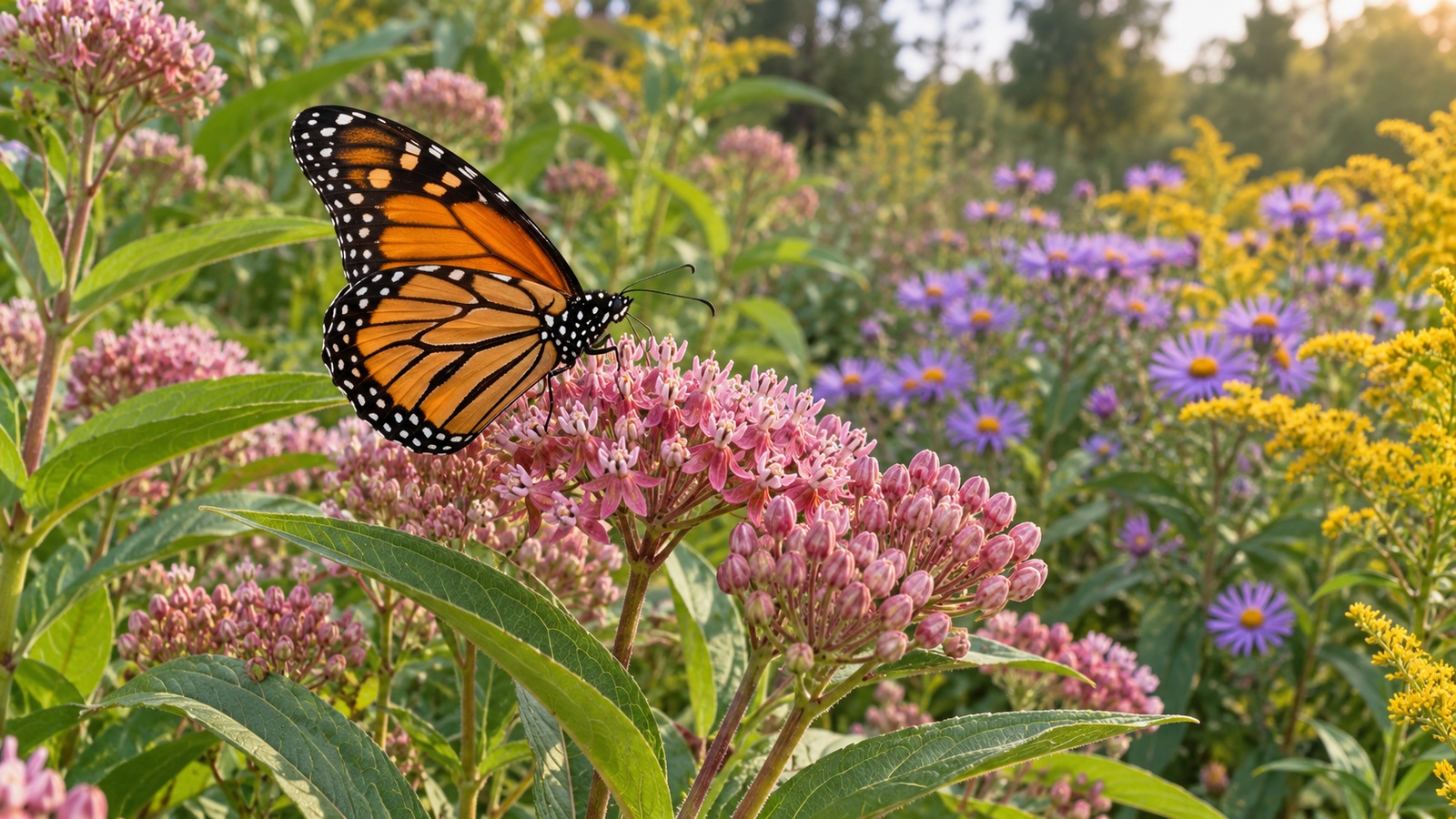
Monarch caterpillars depend on milkweeds and closely related host plants, while adult butterflies use nectar from a range of flowers. A nectar-rich bed without suitable host plants cannot provide the same breeding role as a planting that includes milkweed. Likewise, milkweed alone may not supply the full seasonal sequence of nectar needed by adults. Plan both functions explicitly and use reliable regional recommendations. This distinction helps you choose plants for their actual contribution rather than assuming any flower attractive to butterflies completes the habitat.
Choose Milkweed Native to the Region and Suited to the Site
Use regional milkweed guides to identify appropriate species, then compare their sunlight, moisture, soil, and mature growth with your garden. Common milkweed, swamp milkweed, butterfly weed, showy milkweed, and narrowleaf milkweed have different ranges and habits; they are not interchangeable across the continent. Verify the botanical name when buying plants. A label simply saying milkweed does not tell you whether the plant is locally appropriate or how it will behave in the bed. Accurate identification is part of responsible habitat planning.
Match each selection to its root environment. A species suited to moister soil may be a poor choice for a dry exposed slope, while a dry-site candidate may struggle in persistent saturation. Spreading behavior also matters in a home garden. Some milkweeds can move through a bed more freely than others, so allow room and select a species whose habit fits the available space. The goal is a healthy useful host planting, rather than a collection purchased solely because every plant belongs to the same genus.
Avoid tropical milkweed as a substitute for regional native choices in areas where conservation guidance advises against it. Its persistence in mild climates can create concerns about monarch disease and seasonal behavior. Follow current regional advice rather than relying on the fact that monarchs will lay eggs on it. Where milkweed planting itself is discouraged in a particular locality, such as some coastal settings near western overwintering areas, use specialist local guidance. A habitat project should support the regional conservation goal, not apply one planting prescription everywhere.
Provide Nectar Through the Local Monarch Season
Choose a sequence of native nectar plants that flower when adults are expected locally, including appropriate migration periods. Regional nectar guides can help identify useful species beyond the most familiar garden flowers. Combine early, middle, and later flowering candidates where the climate and monarch use support that pattern. The exact calendar differs by place, so do not copy another region's dates unquestioningly. A well-planned sequence reduces the chance that the bed looks abundant during one brief period but offers little afterward.
Observe the actual flowering schedule after planting. Weather, soil moisture, and the age of the plants can shift bloom timing, and a packet's broad season may not describe your first year. Add a suitable plant if a genuine gap develops rather than increasing variety without purpose. Late-flowering asters or goldenrods may be useful in appropriate regions, while other areas have different candidates. Keep their mature spread and site requirements in the design. Nectar continuity works best when the plants can remain healthy together.
Set the Habitat in a Place You Can Care For
Select a site with suitable light and enough room for the proposed plants, while keeping watering and observation access practical. Many commonly recommended milkweeds and nectar species need substantial sun, but requirements remain species-specific. Avoid a location that is routinely sprayed, mown, or disturbed without regard to the planting. In shared landscapes, clarify the bed's purpose with those responsible for maintenance before installation. Habitat value can be lost quickly if a well-intended mowing or treatment routine ignores the plants and insects present. Mark the intended boundary clearly during establishment and keep the planting plan available to whoever performs routine landscape work, so a change of staff does not erase its purpose.
Arrange Repeated Groups With Clear Access
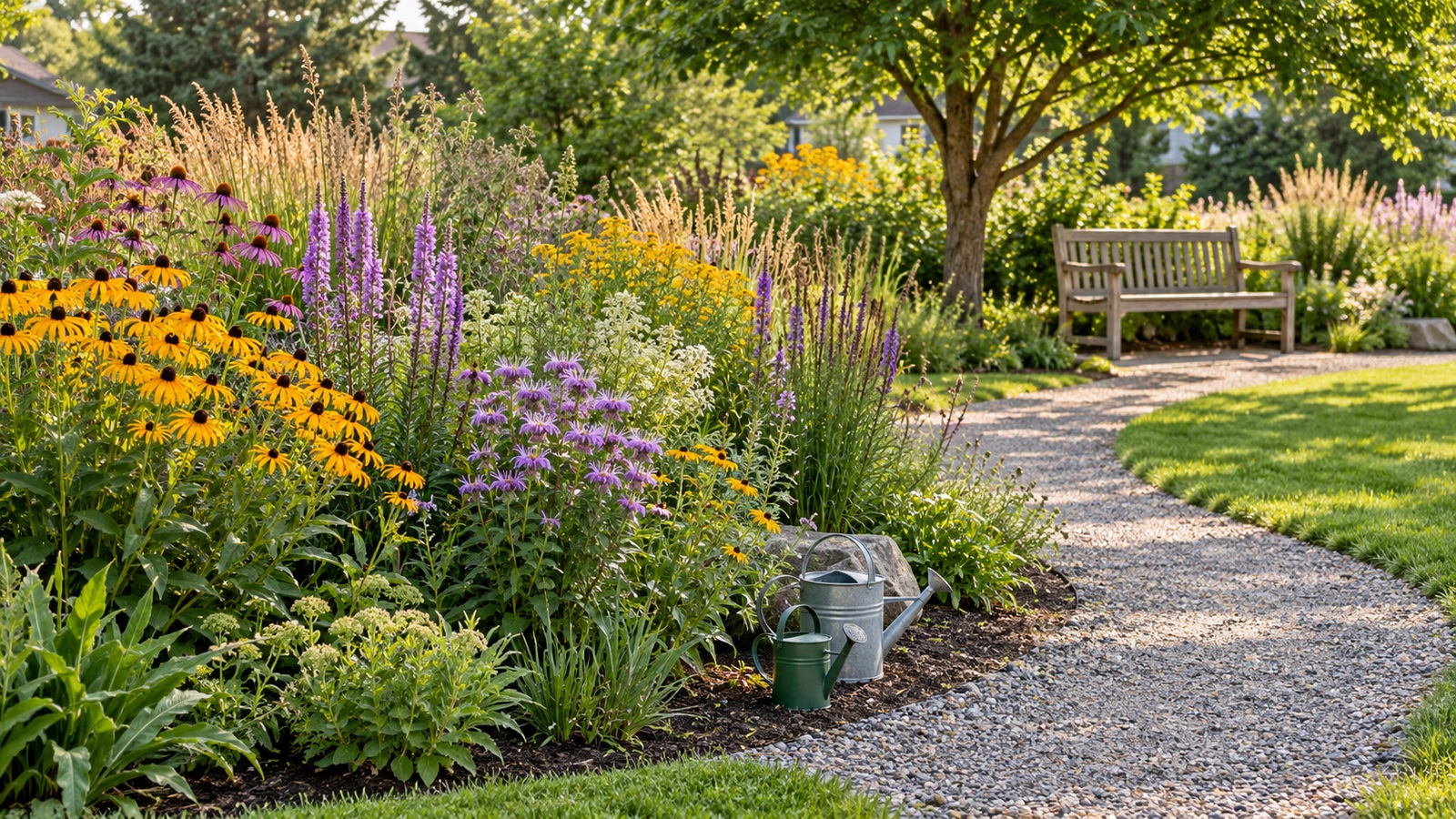
Use groups of suitable plants so the habitat offers a visible resource rather than isolated stems scattered through unrelated planting. Repetition can also make a small bed easier to understand and care for. Leave adequate spacing for mature growth, and allow taller species to occupy positions where they will not shade smaller contributors excessively. The arrangement need not look like a formal collection. It should make ecological roles and practical care compatible within the garden's available dimensions.
Preserve an access route that lets you inspect plants without entering the dense center of the bed. A path, reachable edge, or small open working area can reduce accidental damage during watering and weeding. Consider the view from normal garden positions so the habitat feels deliberate within the surrounding landscape. Clear boundaries can help other people recognize that the area is being maintained intentionally. Good design supports both the insects' resources and the human understanding needed to keep the planting intact.
Avoid adding decorative features that create work without a clear benefit. A sign can explain the project, but it cannot compensate for absent host plants or gaps in nectar availability. Likewise, an elaborate structure is less important than healthy regionally appropriate planting and suitable care. Keep the initial project modest enough to establish successfully. You can expand later using what the first seasons reveal about growth, flowering, and the site's practical limitations.
Ask About Plant Treatment History Before Buying
Source plants and seeds from reputable suppliers that can discuss their identity and relevant growing or treatment history. Monarch Watch emphasizes obtaining plants that have not been treated with systemic pesticides during propagation. A flower covered in visiting insects is not proof that all nursery production practices were suitable for habitat use. Ask specific questions rather than accepting a general pollinator-friendly marketing label. Local native-plant nurseries or well-run plant sales may be helpful sources, but each purchase still deserves checking.
Manage the established bed with a habitat purpose in mind. Avoid insecticide use that could harm monarchs and other beneficial insects, and identify a perceived problem before deciding it needs treatment. Milkweed leaves being eaten by monarch caterpillars are serving the intended function. Other insects may also use the planting without requiring intervention. Seek reliable advice when a serious plant-health issue arises, and choose a response consistent with the habitat goal. Preventing avoidable exposure is more useful than trying to repair the consequences afterward.
Give the First Seasons an Establishment Plan
Prepare the site appropriately before planting, addressing competing vegetation and any soil limitations through methods suited to the setting. Young plants need a realistic watering plan even when mature native plants are adapted to local conditions. Check root-zone moisture and follow species-specific establishment guidance. A drought-tolerant reputation describes an established plant more reliably than a recently installed plug. Keep the planting identifiable while it develops so useful seedlings are not confused with unwanted growth.
Weeding is often important early because small native plants can be overwhelmed before they occupy the bed. Learn the appearance of your seedlings and common local weeds, and inspect carefully before removing material. Access from the edges makes this work less disruptive. Do not interpret a sparse first-year display as automatic failure; many perennial plantings need time to develop roots and flowering size. Review survival and growth rather than comparing a new planting immediately with photographs of mature habitat gardens.
Keep basic records of plant identities, installation dates, and how the site responds. These records help explain losses, seasonal gaps, or unexpected spread and make future adjustments more deliberate. Replace a poorly matched species with a suitable regional candidate instead of forcing it through repeated extra care. A waystation benefits from continued attention beyond the day it is planted. A realistic establishment plan gives its host plants and nectar resources a stronger chance of remaining useful over subsequent seasons.
Observe Wild Monarchs Without Turning Habitat Into a Rearing Project
Watch for adults, eggs, caterpillars, and feeding activity with patience and minimal disturbance. An absence of sightings during a short visit does not prove the planting has no value; local abundance, weather, and timing influence what you see. Photograph or record observations carefully if you want to contribute to an appropriate community-science program. Use reliable identification resources before submitting uncertain records. The garden can support many insects alongside monarchs, and those interactions are part of its broader habitat role.
Creating habitat does not require bringing caterpillars indoors or raising large numbers of butterflies. Conservation organizations caution against assuming captive rearing is equivalent to protecting wild populations. Keep the project focused on suitable plants and reduced hazards unless you have specific current expert guidance for another activity. Outdoor observations let you learn about the natural life cycle without trying to control every outcome. A useful waystation supports wild activity rather than promising that every egg will survive to an adult under human supervision.
Review the Habitat Before Seeking Formal Recognition
If you want official Monarch Watch waystation certification, review the program's current requirements directly before applying. Plant quantities, site details, and management expectations should come from the program rather than an old summary or a decorative sign. Registration can help explain the project to visitors, but habitat quality is the practical priority. You can create useful planting before seeking recognition. The plants and care routine should fulfill the ecological purpose whether or not the garden has a certificate.
Review the bed each season for host-plant health, flowering gaps, crowding, and conflicts with surrounding maintenance. Adjust selectively rather than redesigning after every disappointing observation. Check current regional conservation advice when making substantial changes, especially in areas with specific milkweed concerns. Preserve the distinction between supporting habitat and guaranteeing monarch numbers. A small well-maintained site contributes resources within a larger landscape whose conditions remain beyond one gardener's control.
The strongest waystation is a continuing relationship with place. Regionally appropriate milkweed serves caterpillars, a deliberate flowering sequence serves adults, and practical care keeps those resources available. Protect the planting from avoidable pesticide exposure and routine disturbance, and let observations guide modest improvements. Enjoy the butterflies when they arrive while valuing the wider life the garden supports. That sustained approach turns a one-time planting idea into habitat that can remain useful as seasons and local conditions change.
Use Regional Monarch Habitat Resources
Consult Xerces’ native milkweed resources and Monarch Watch’s current waystation program. Find appropriate garden-care equipment through Garden Product Reviews.