Bring the Garden Indoors Without Losing Its Local Character
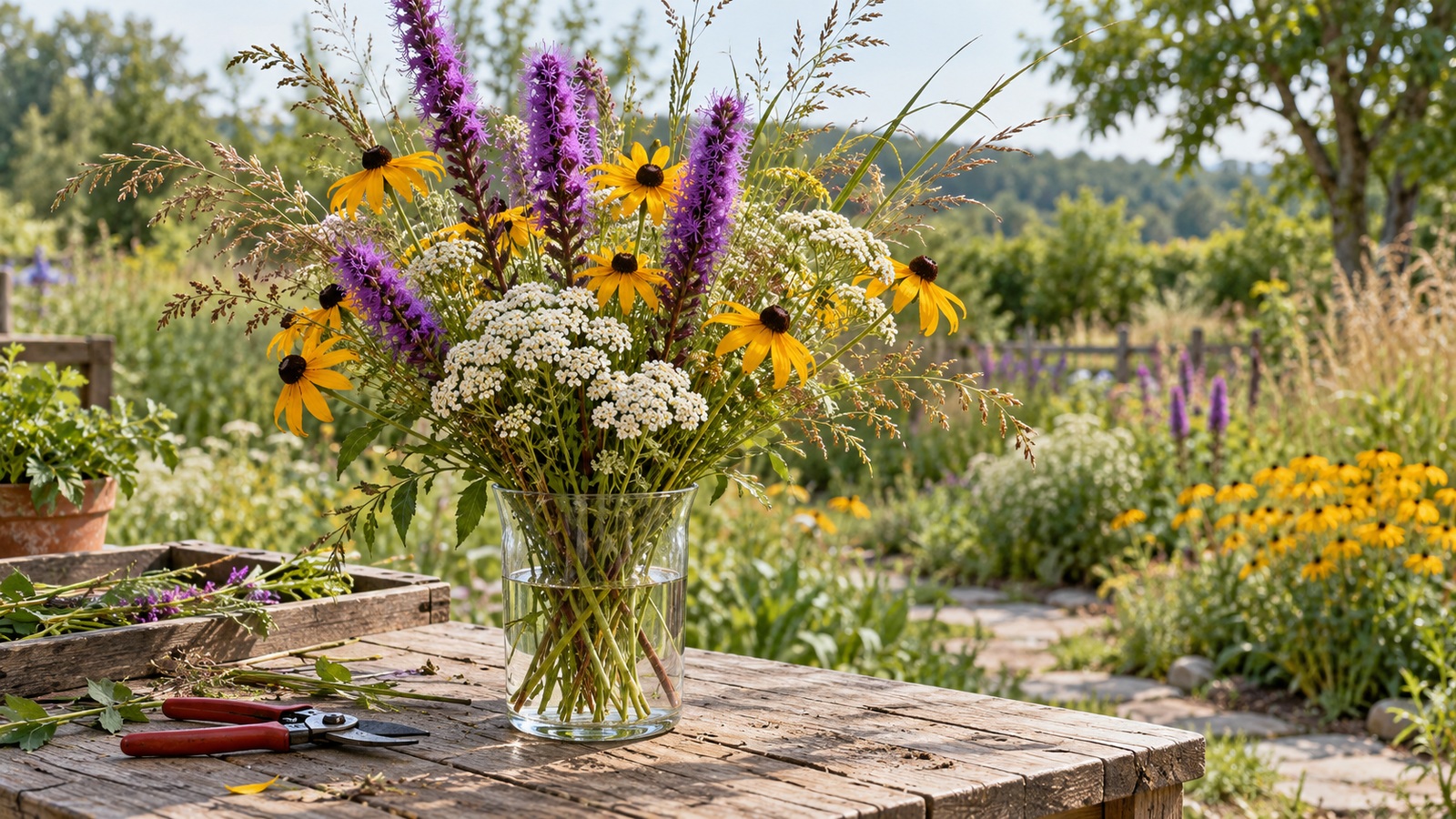
A vase of garden-grown native wildflowers can carry the season indoors through distinctive shapes: upright blazing-star spikes, open daisy-like blooms, airy branching stems, or a few carefully chosen leaves. The best flowers for that vase are those that grow well in your region, provide useful stems, and hold their appearance long enough for the arrangement's purpose. Native status alone does not guarantee good vase performance, and a species native in one part of the country may be outside its natural range in another. Begin with cultivated plants obtained responsibly, then evaluate both their garden role and their behavior after cutting. You can build a modest cutting area alongside habitat planting, leaving enough flowers and seed development for the outdoor garden to continue its work. Thoughtful selection and restrained harvesting create arrangements with a sense of place while preserving the living planting that makes future bouquets possible.
A: No, species, harvest stage, stem quality, and household handling all influence performance after a flower leaves the garden.
A: Verify the particular Liatris species' regional native range and growing needs instead of assuming every blazing star is local.
A: Their visible flower faces provide focal color and shape among finer sprays or upright stems in a loose arrangement.
A: Yes, suitable seed heads can add texture, while leaving some outdoors maintains the seasonal role of the garden planting.
A: Use responsibly propagated cultivated stock and observe relevant permissions rather than gathering bouquet material from protected or vulnerable wild populations.
A: It separates bouquet priorities from habitat goals, reducing harvesting pressure on native flowers intended primarily for outdoor wildlife resources.
A: Consider the bed's size, plant health, and purpose instead of applying a universal quota to every native flower planting.
A: Prepare clean cutting tools, a clean collection container, and suitable water so gathered stems can receive prompt hydration.
A: No, vary lengths intentionally so the chosen flower faces, spikes, and finer textures remain visible in the vase.
A: Keep records of local growing performance, useful stem forms, and the harvest stages that held well in household arrangements.
Define Native Locally Before Building a Cutting List
Use regional native-plant resources to identify which species belong to the area where you garden. A broad North American native label covers many different climates and habitats, so it is only the beginning of the decision. Confirm the full botanical identity when buying seeds or plants. Common names can refer to unrelated species, including flowers with very different origins. A locally appropriate choice is more useful than a familiar name selected without checking what the supplier is actually offering.
Match the plant to sunlight, drainage, moisture, and available growing space. A wet-meadow wildflower will not become drought-adapted simply because it is native somewhere nearby, and a prairie species may decline in deep shade. Native range and site suitability work together. Choose legally and responsibly propagated stock rather than collecting plants from wild populations. Your cutting garden can provide a reliable harvest precisely because it is cultivated for the purpose, with enough plants and suitable care to support repeated use.
Select for Stem Quality as Well as Flower Appeal
Look for usable stem length, a clear point for cutting, and a flower form that suits the arrangement. A lovely low bloom may be difficult to combine with tall spikes in a deep vase, while a branching stem can provide volume from a single cut. Check whether the flower holds its shape after harvest and how quickly it fades in your conditions.
Garden beauty and vase usefulness overlap, but they are not identical. Choose plants whose actual performance supports the kind of arrangements you want to make.
Consider the surfaces where the display will stand, too. A tall dining-table bouquet may obstruct conversation, whereas a shorter arrangement can bring the same seasonal color into everyday use. A narrow shelf may suit only a small stable vase with a restrained outline.
Matching the harvest to those real positions helps determine useful stem lengths before cutting. It also prevents gathering an impressive quantity of material that cannot be displayed comfortably once it reaches the house.
Use Blazing Star to Establish a Vertical Line
Blazing stars, Liatris species, provide distinctive upright flower spikes that can add height and direction to an arrangement. Liatris spicata is a familiar cultivated example with an eastern North American native range, but other Liatris species may be more appropriate locally. Confirm the species and growing requirements rather than treating the genus as one interchangeable plant. A well-chosen spike can organize a loose bouquet without requiring many additional flowers. Its linear form contrasts naturally with rounded or daisy-like blooms.
Plan for the height of the growing plant and the stem length you want to harvest. Give the selected species suitable light and soil conditions so stems develop strongly. If the garden position repeatedly produces weak leaning growth, review the site rather than assuming support alone will solve the problem. Harvest timing should reflect the species and the stage of opening needed for your display. Consult reliable cut-flower guidance or test a small number of stems before committing a large part of the planting.
Use a few spikes at different heights rather than packing every vertical stem into a rigid row. Their role is to lead the eye through the arrangement and provide contrast. Leave enough space for the other flower shapes to remain visible. You can repeat the spike color elsewhere in the bouquet or let it stand against a quieter palette. The result should retain the lightness of garden-grown material instead of becoming a dense bundle that hides the character of each stem.
Let Black-Eyed Susans Supply Clear Flower Faces
Rudbeckia flowers offer familiar yellow or golden rays around darker centers, making them useful focal blooms in many garden arrangements. Rudbeckia hirta is one candidate with a broad native distribution, while other species and cultivated selections differ in habit, life span, and flower form. Verify the identity and local relevance of the plant. The common name black-eyed Susan can also be used for unrelated plants, so it is not enough on its own. Select stems that show the actual flower character you want.
Arrange the flower faces so they can be seen from the intended viewing angle. A few placed deliberately can carry a bouquet more effectively than a crowded mass all pointing in different directions. Consider how their bright color relates to the vase and neighboring flowers. Combine them with finer-textured material when you want a relaxed effect, or give them more open space in a small arrangement. Test harvested stems under your household conditions rather than assuming every Rudbeckia selection will provide the same vase life.
Consider Coneflowers for Form, Texture, and Seasonal Change
Coneflowers, Echinacea species, can bring a strong central cone and distinctive ray petals to arrangements where the species is locally appropriate. They may serve as flower faces or later as textural seed-head material, depending on the stage harvested and the intended display. Cultivars can differ greatly from straight species, including changes in flower structure that affect appearance and wildlife use. Check both garden and cutting purposes when selecting them. Avoid harvesting every bloom from a small habitat planting just because its flower form works well indoors.
Add Airy Flowers and Foliage With a Deliberate Role
Finer branching flowers can connect larger blooms and soften the outline of a bouquet. Regionally suitable asters, goldenrods, or other locally appropriate species may provide that role, but their size, spread, and postharvest behavior need evaluation. Do not choose a plant solely because a florist uses a similar-looking species. Confirm the actual identity and whether it suits the garden. A cutting area should remain manageable outdoors as well as productive for the vase.
Foliage can give an arrangement structure before additional flowers are needed. Choose cultivated material that holds well after cutting and has a leaf shape suited to the composition. A few grass stems may supply movement, while broader leaves can create a quieter base. Keep identification and household suitability in mind when placing any material indoors. Do not assume that native greenery is harmless to children or pets, or that an unidentified plant can be used safely around food or dining surfaces.
Assign each material a visible purpose. One might provide height, another a main flower face, and a third a fine connection between them. You do not need all of these roles in every vase; a single-species arrangement can be striking when the stems are well chosen. Avoid gathering a long list of fillers merely to make the bouquet look abundant. A restrained selection often shows local flower character more clearly and reduces the amount that must be harvested from the garden.
Grow Enough for Cutting Without Emptying the Habitat Bed
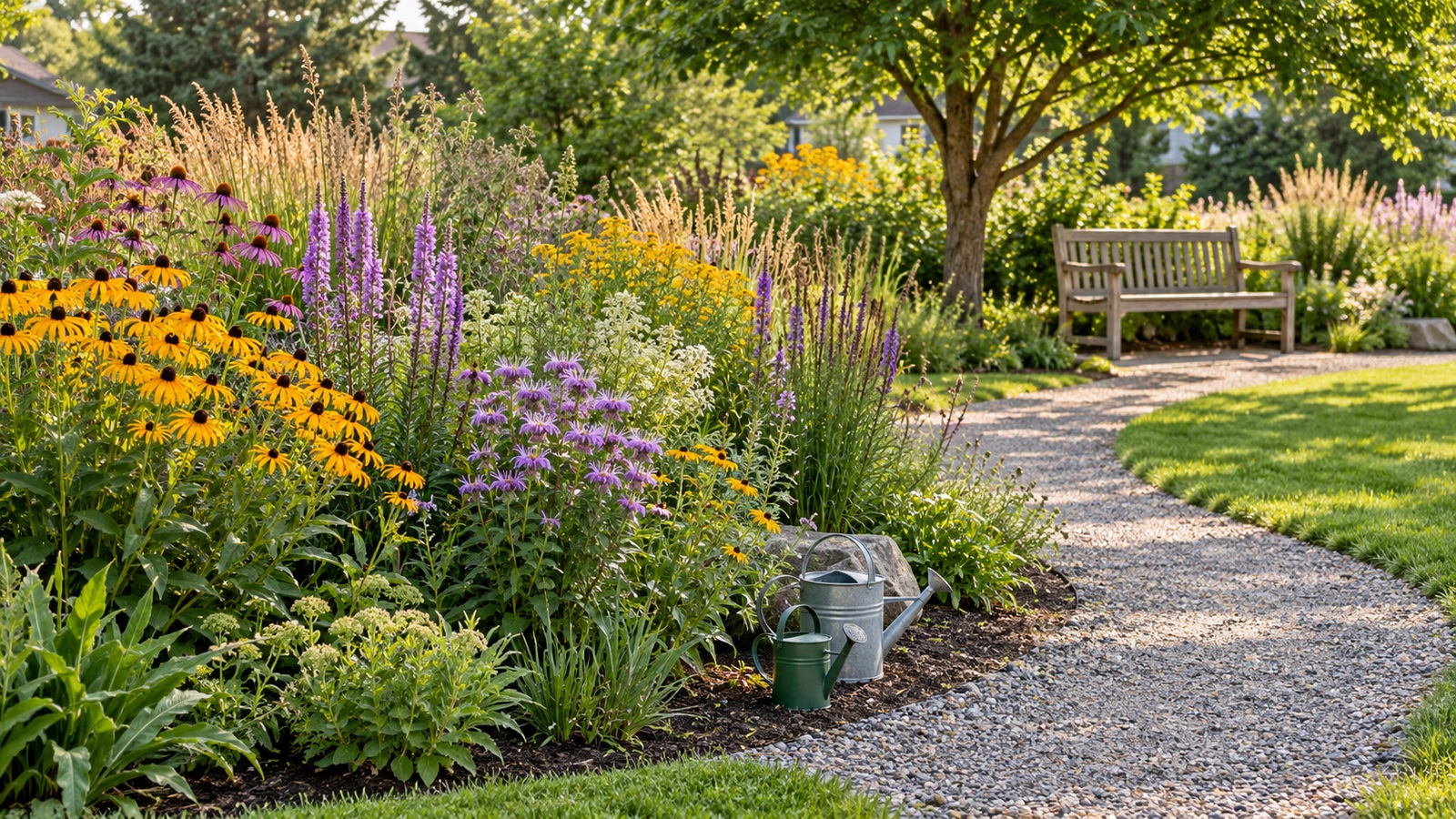
Separate a dedicated cutting patch from the part of the garden where flowers and seed heads are primarily left for wildlife if space permits. The distinction makes harvest decisions clearer and allows plants to be arranged for practical access. You can use repeated groups of suitable species so one modest bouquet does not remove the entire display. Plan seasonal availability rather than expecting every plant to flower together. A sequence of useful material can support smaller arrangements across more of the year.
Check the planting before cutting for insects, eggs, or other activity you do not want to disturb. Leave a meaningful portion of flowers and developing seed where they contribute to the garden's ecological role. The appropriate amount depends on the size and purpose of the planting, so avoid a universal harvest quota. A young or stressed patch may need little or no cutting. Treat the outdoor garden as the foundation of the arrangement, with harvesting adjusted to its condition rather than driven by a fixed bouquet target.
Harvest and Condition With Clean Equipment
Prepare clean cutting tools, a clean collection container, and suitable water before entering the garden. Harvest during a cooler part of the day when appropriate, choosing the opening stage recommended for the species. Put stems into water promptly rather than leaving a full armful in the sun while searching for more. Handle flowers gently to avoid bruising petals or bending useful stems. A smaller careful harvest can produce a better arrangement than a large one that deteriorates before reaching the vase.
Remove foliage that would remain below the water line and use a clean vase. Follow suitable conditioning guidance for the identified flowers, allowing time for hydration before final arranging where recommended. If using a commercial floral preservative, follow its directions rather than inventing a mixture. Different species can respond differently, so observe a small trial and keep useful records. Do not promise a fixed number of vase days without knowing the species, harvest stage, care, and household conditions.
Arrange with the available stem lengths and forms instead of forcing every flower to the same height. Choose a vase that supports the stems and remains stable with the completed bouquet. Keep the display away from conditions that accelerate deterioration, such as excessive heat or direct sun. Monitor water, remove deteriorating material, and refresh according to appropriate cut-flower guidance. These practical steps preserve the effort invested in growing and harvesting while making it easier to judge which plants earn a place in future cutting plans.
Learn From Each Vase and Build a Useful Seasonal Palette
Record which material held its appearance, which stems were awkward to use, and which harvest stage gave the most satisfying result. The information is specific to your garden and household, so it can be more useful than an advertised best-flower ranking. Compare a small number of stems under consistent conditions before expanding a planting. A flower that fades quickly may still suit a short event, while a longer-lasting species may be preferable for a week of everyday enjoyment. The intended use determines what counts as successful performance.
Refine the palette without assuming more species are always better. Add a plant when it fills a clear seasonal gap or provides a useful shape that the current garden lacks. Keep mature spread, growing requirements, and responsible sourcing in view as the collection develops. Native cut-flower arrangements are strongest when their beauty comes from a healthy locally appropriate planting. Thoughtful harvest and honest observation let you enjoy a piece of that garden indoors while leaving enough living abundance for the next season and the wildlife outside.
Match Harvest Care to the Flowers You Grow
Review Iowa State’s cut-flower harvest and conditioning guidance. Compare useful cutting and garden supplies in Garden Product Reviews.