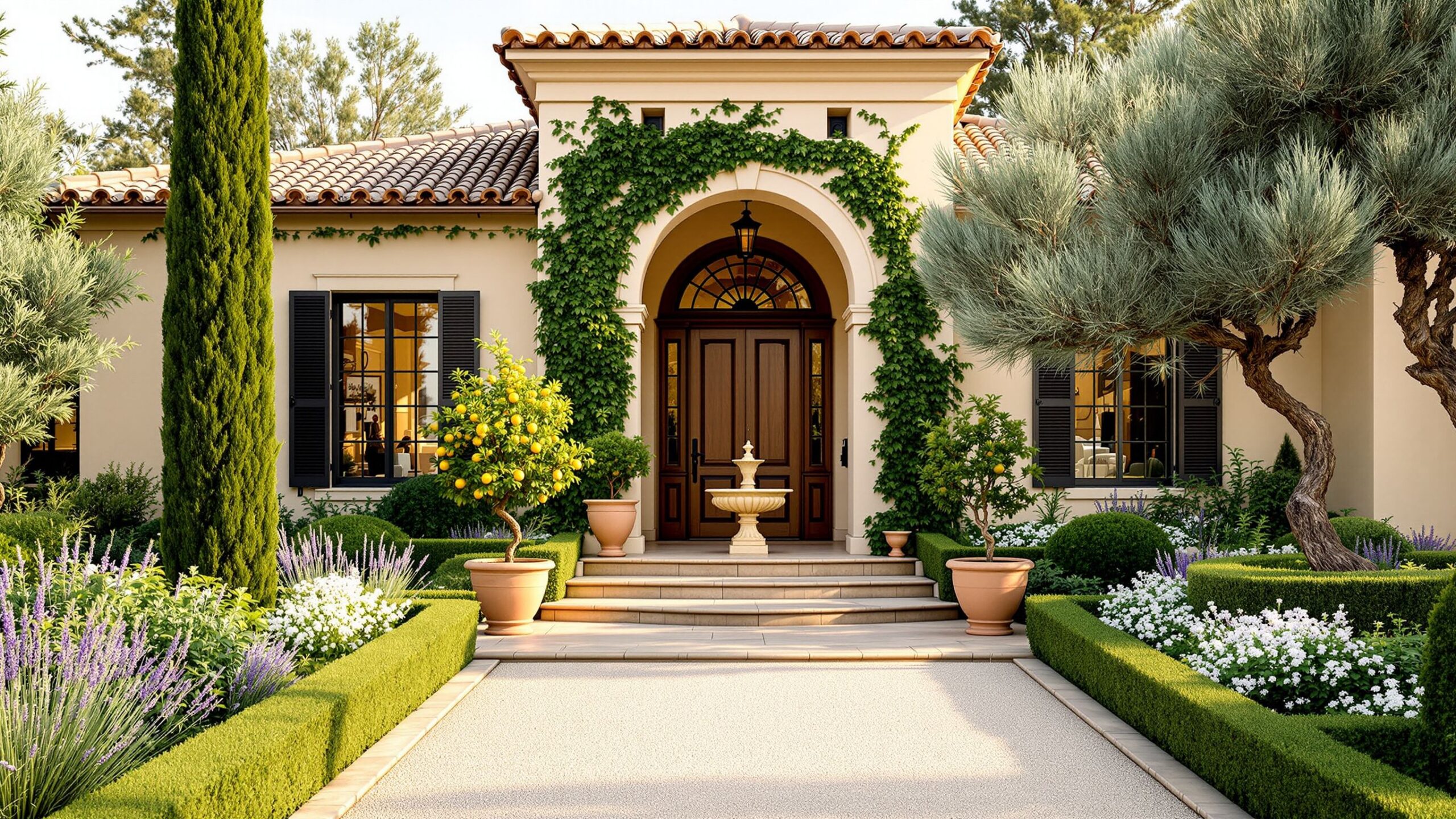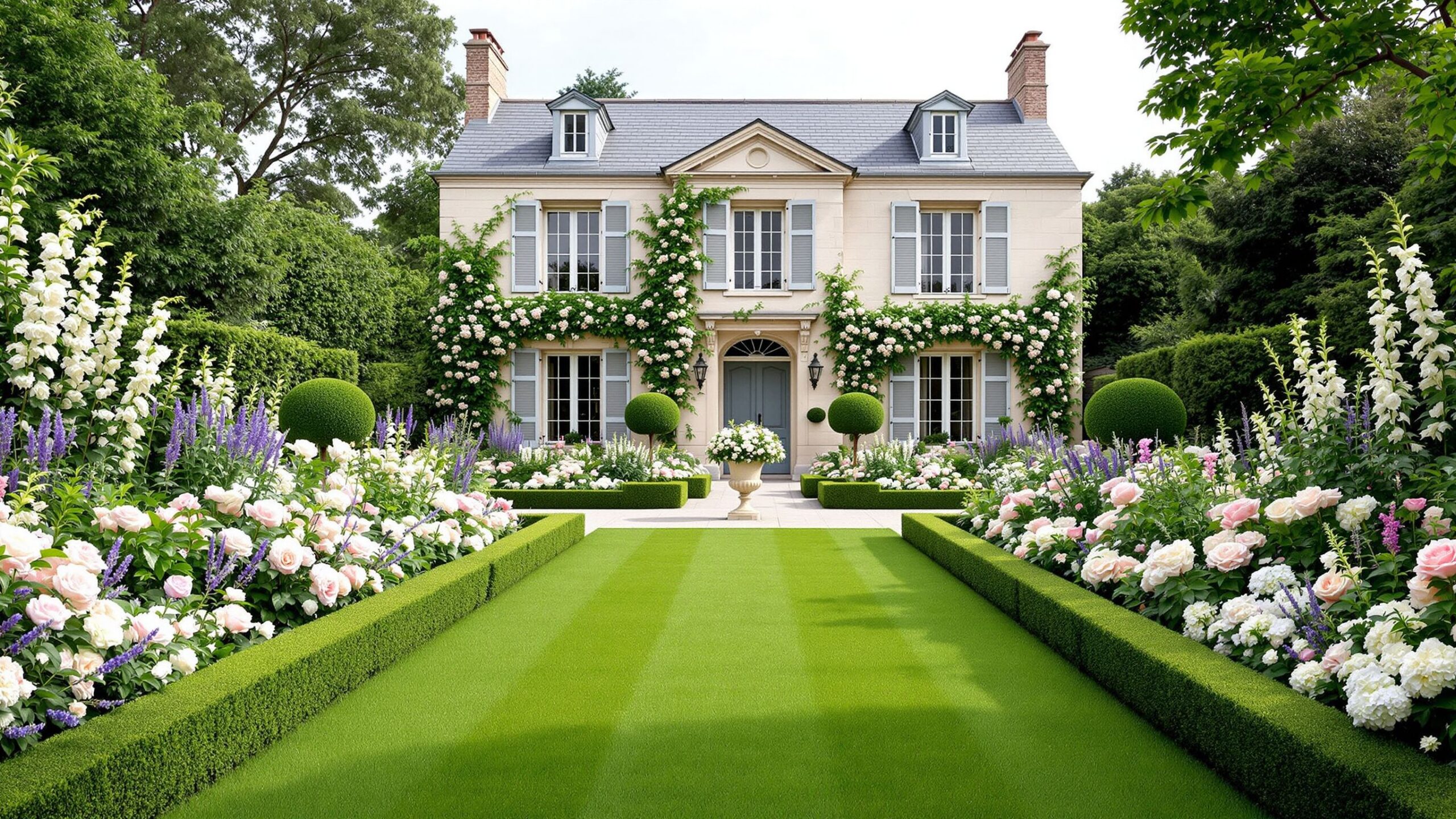
French gardens have captivated visitors for centuries with their remarkable combination of symmetry, romance, architecture, and carefully controlled nature. From the enormous formal gardens surrounding royal châteaux to intimate Provençal courtyards filled with lavender and weathered stone, French garden design can take many forms. What connects these landscapes is an extraordinary attention to composition. Pathways guide the eye toward important views, clipped hedges create architectural structure, fountains introduce movement and sound, and flowering plants soften formal lines with color and fragrance. Although the grandest historic French gardens were created on an enormous scale, their fundamental design principles translate beautifully to modern homes. A symmetrical front walkway, a pair of clipped evergreens, pale gravel, fragrant lavender, climbing roses, an elegant fountain, or carefully positioned garden furniture can introduce French character without requiring acres of property. Understanding where French gardens came from and why their designs work makes it much easier to recreate their sophisticated European style at home.
A: Symmetry, geometric beds, clipped hedges, gravel paths, topiary, fountains, elegant containers, and carefully positioned focal points create the classic look.
A: Absolutely. A simple central path with matching beds, symmetrical planters, clipped shrubs, and a fountain can make a small space feel distinctly French.
A: Boxwood alternatives, lavender, roses, hydrangeas, fruit trees, herbs, and neatly shaped evergreens can all contribute to the style when appropriate for your climate.
A: Not necessarily, but strong symmetry and visual balance are among the easiest ways to establish a recognizable French formal style.
A: Fine gravel is a classic choice, although brick and natural stone can also complement French-inspired landscapes.
A: Yes. A French-inspired potager intentionally combines edible and ornamental plants in an attractive, organized layout.
A: No. One affordable fountain, urn, birdbath, or sculptural planter can provide an effective focal point.
A: Green should provide the foundation, while white, lavender, blue, pink, and restrained seasonal colors can create an elegant palette.
A: Prioritize symmetry, clean edging, repeated plants, coordinated containers, defined pathways, and well-maintained hedges before adding elaborate decorations.
A: Design the structure first. Strong geometry, repetition, symmetry, sightlines, and defined borders create elegance even when the plants and materials are relatively simple.
The Origins of French Garden Design
The history of French garden design developed through centuries of changing architecture, politics, art, and cultural exchange. Medieval gardens surrounding castles, monasteries, and manor houses were often enclosed and practical. Herbs, medicinal plants, fruit trees, vegetables, and flowers could share carefully organized spaces protected by walls or hedges. During the Renaissance, however, French nobles became increasingly influenced by Italian architecture and garden design. Italian Renaissance gardens demonstrated how terraces, fountains, sculptures, geometric planting beds, staircases, and carefully controlled perspectives could transform landscapes into works of art. French designers adopted many of these principles and gradually developed a distinctive approach that placed even greater emphasis on geometry, symmetry, scale, and long visual axes. Gardens were no longer simply outdoor spaces surrounding important buildings. They became expressions of artistic ambition, social status, and the human ability to organize the landscape.
The Rise of the French Formal Garden
By the 17th century, the jardin à la française, or French formal garden, had become one of Europe’s most influential landscape styles. These gardens were designed around powerful geometric layouts that often extended directly from the architecture of a palace or château. Straight avenues, perfectly clipped hedges, ornamental pools, fountains, sculptures, terraces, and intricate planting beds created landscapes of extraordinary precision. Unlike naturalistic gardens designed to imitate wilderness, French formal gardens intentionally displayed human control over nature. Trees could be planted in perfectly aligned rows, hedges trimmed into architectural walls, and flower beds arranged into elaborate symmetrical patterns. The effect was dramatic, theatrical, and unmistakably sophisticated. Even today, the principles behind these gardens influence public parks, estates, hotels, resorts, and private landscapes around the world.
Versailles and the Grandeur of French Landscape Design
No discussion of French gardens would be complete without the gardens of Versailles. Developed primarily during the reign of Louis XIV, the enormous landscape surrounding the Palace of Versailles became one of history’s most famous examples of formal garden design. Landscape architect André Le Nôtre played a central role in creating its extraordinary arrangement of avenues, parterres, fountains, canals, groves, sculptures, and carefully manipulated perspectives. The garden was designed to impress visitors with its scale and order. Long visual axes seemed to stretch toward the horizon, while fountains and sculptures created dramatic destinations throughout the grounds. Although recreating Versailles in a residential backyard is obviously unrealistic, the design principles behind it are surprisingly adaptable. Strong sightlines, balanced planting, carefully chosen focal points, and clear relationships between the home and garden can make even a modest property feel more organized and elegant.
Symmetry: The Foundation of French Garden Style
Symmetry is perhaps the most recognizable characteristic of traditional French garden design. Matching elements create immediate visual harmony and make entrances, pathways, patios, and planting beds feel intentional. Homeowners can introduce symmetry easily by placing matching planters on either side of a front door, planting identical shrubs along a walkway, or positioning two small ornamental trees to frame an entrance. A fountain placed directly along the central axis of a pathway can strengthen the effect even further. However, symmetry does not mean every inch of the garden needs to be identical. The strongest residential designs often establish formal structure near the home and gradually introduce softer, more relaxed planting farther away. This combination prevents the landscape from feeling overly rigid while preserving the unmistakable elegance associated with French gardens.
The Art of the French Parterre
One of the most iconic features of formal French gardens is the parterre, an ornamental planting arrangement designed to be appreciated from above as well as from ground level. Traditional parterres might contain intricate patterns formed from clipped boxwood, gravel, flowers, and other low-growing plants. Some resembled elaborate embroidery spread across the landscape. Homeowners can create simplified versions without attempting complicated palace-scale patterns. Low evergreen hedges can outline rectangular, square, circular, or diamond-shaped beds filled with flowers, herbs, gravel, or roses. A small central fountain, urn, or ornamental tree can provide a focal point. The secret is maintaining clearly defined edges. Even a simple geometric bed can feel distinctly French when its borders are crisp and the surrounding composition is balanced.
Gravel Pathways and Courtyards
Pale gravel is one of the easiest materials for recreating French garden atmosphere at home. Gravel has been used extensively throughout historic European gardens because it provides excellent drainage, creates strong visual lines, and complements stone architecture beautifully. Its soft neutral color also allows surrounding greenery and flowers to become more prominent. A gravel pathway bordered by clipped hedges can immediately introduce formality, while a larger gravel courtyard can become an elegant outdoor seating or dining area. Gravel also produces a distinctive crunch beneath footsteps, adding sound to the garden experience. For a more authentic appearance, combine pale gravel with natural stone edging, weathered terracotta containers, clipped evergreens, and traditional garden furniture.
Clipped Hedges and Evergreen Structure
Evergreen hedges provide the architectural framework of many French gardens. Historically, plants such as boxwood were used to outline pathways, create parterres, define garden rooms, and establish elaborate geometric patterns. Taller hedges could function almost like outdoor walls, separating one section of the landscape from another. Modern homeowners can achieve similar effects using boxwood or locally suitable alternatives capable of tolerating regular pruning. Low hedges are particularly effective along front walkways and around planting beds because they provide year-round definition without overwhelming the landscape. Clipped spheres, cones, and other topiary forms can add additional structure near entrances or patios. The most successful designs balance this formal greenery with softer plants so the garden feels elegant rather than severe.
Roses and the Romantic Side of French Gardens
Although formal geometry provides structure, flowers give French gardens their unmistakable romance. Roses are particularly important because they introduce fragrance, softness, history, and abundant color. Climbing roses can cover walls, arches, gates, and pergolas, while shrub roses can soften clipped hedges and stone pathways. Rather than filling every available area with different flower varieties, consider selecting a restrained color palette. Soft pink, cream, white, pale lavender, and muted peach can create a sophisticated French-inspired atmosphere. Repeating the same colors throughout the landscape creates visual continuity. Flowers should appear to soften the formal framework rather than compete with it.
Lavender and the Gardens of Provence
French garden style extends far beyond the formal landscapes of Paris and Versailles. The gardens of Provence offer a warmer, more relaxed interpretation shaped by southern France’s Mediterranean climate. Lavender is one of the region’s most recognizable plants, creating waves of purple flowers and fragrance during the warmer months. Rosemary, thyme, sage, olive trees, cypress, roses, and other drought-tolerant plants contribute to the Provençal landscape. Homeowners can recreate this atmosphere by planting lavender along pathways, surrounding patios with aromatic herbs, and incorporating weathered stone and terracotta containers. Where lavender does not thrive, locally suitable plants with similar form and color can provide the same visual effect. The goal is to capture the layered textures, fragrance, and sun-washed character associated with the French countryside.
The Importance of Fountains and Water
Water introduces movement and sound into an otherwise highly structured landscape. Historic French gardens frequently featured fountains, reflecting pools, canals, and elaborate water displays that reinforced major visual axes. At home, even a modest fountain can become a powerful focal point. A circular stone fountain centered within a gravel courtyard immediately creates European character. A wall fountain surrounded by climbing plants can transform a small patio, while a simple reflecting pool can make a larger garden feel more formal and expansive. Position water features where they can be appreciated from important viewpoints, such as the front entrance, patio, dining area, or interior windows. When the fountain aligns with a pathway or doorway, it becomes part of the overall architecture of the garden.
Stone as a Timeless French Garden Material
Natural stone gives French gardens a sense of permanence and history. Limestone walls, stone pathways, fountains, steps, urns, and terraces can make even newly constructed landscapes feel established. Weathering often enhances the effect. Slight discoloration, moss, softened edges, and natural imperfections prevent stone features from appearing excessively new or artificial. Homeowners do not need to use genuine antique materials to create this character. Selecting stone with warm neutral tones and avoiding too many competing materials can create a cohesive appearance. Gravel, limestone, aged brick, terracotta, and natural wood work particularly well together. The objective is to create a material palette that looks as though it could become more beautiful with age.
French Garden Statues, Urns and Decorative Details
Sculptures and architectural ornaments have played important roles in historic French gardens, but residential landscapes benefit from restraint. One elegant stone urn positioned at the end of a pathway can become a stronger focal point than several unrelated decorations. Classical statues can work beautifully when surrounded by clipped greenery or partially concealed by climbing plants. Large urns filled with topiary or flowering plants are particularly effective near entrances, staircases, and terraces. Decorative details should support the overall composition rather than dominate it. The best French-inspired gardens often feel collected gradually over time rather than decorated all at once.
Creating Outdoor Rooms
French gardens frequently organize the landscape into distinct spaces that function much like rooms inside a home. Hedges, walls, trees, pathways, and changes in elevation can establish boundaries while openings create visual connections between different areas. Homeowners can use this principle to make ordinary yards feel larger and more sophisticated. A gravel dining terrace might become one outdoor room, while a rose-covered bench creates another. A fountain surrounded by clipped hedges could become a secluded destination farther into the garden. Each area should have a purpose while remaining visually connected to the overall design. When visitors discover spaces gradually rather than seeing the entire yard immediately, the garden often feels more expansive.
How to Create a French Garden at Home
Begin by studying the architecture and layout of your property. Identify doors, windows, walkways, and existing views that could establish the garden’s main visual lines. French garden design works particularly well when landscaping feels connected to the house. Choose a central axis, such as the walkway leading toward the front door, and establish symmetry around it. Introduce clipped evergreen plants for year-round structure, then soften them with roses, lavender, herbs, or other flowering plants. Select a limited palette of natural materials such as pale gravel, stone, terracotta, and aged wood. Add one strong focal point rather than several competing features. A fountain, urn, ornamental tree, bench, or sculpture can provide the destination your garden needs. Once the basic structure is established, smaller decorative details can be introduced gradually.
Creating an Elegant French Front Garden
The front yard is one of the best places to recreate classic French garden style because a home’s entrance naturally provides a central focal point. Begin with the pathway leading toward the front door and emphasize its relationship with the architecture. A pale gravel or natural stone walkway bordered by low clipped hedges can immediately establish formal structure. Position matching topiary trees or large planters on either side of the entrance to create symmetry. Lavender, white roses, soft pink flowers, and silvery foliage can fill the surrounding beds without overpowering the house. If sufficient space exists, a small circular fountain positioned along the main sightline can become a spectacular centerpiece. Keep lawns, hedges, and pathway edges carefully maintained so the overall landscape feels polished. The result should create the impression that the house and garden were designed together rather than landscaped independently.
Recreating a French Country Garden
Homeowners who prefer a more relaxed landscape can draw inspiration from French country gardens rather than formal château landscapes. French country gardens maintain intentional structure but allow plants to grow more freely. Stone walls might support climbing roses, lavender can spill toward gravel paths, herbs can grow near kitchen doors, and fruit trees can provide both beauty and harvests. Weathered wooden furniture, aged terracotta pots, iron gates, and rustic stone fountains complement this style beautifully. The overall atmosphere should feel romantic and established rather than perfectly manicured. Combining formal elements, such as symmetrical planters or clipped shrubs, with relaxed flowering plants creates the balance that makes French country landscaping so appealing.
Designing a Small French Garden
Small courtyards, patios, and narrow front gardens can capture French elegance surprisingly well. In fact, limited space can make symmetry easier to establish. Begin with one strong focal point, such as a wall fountain, ornamental tree, or large urn. Use gravel or stone for the ground surface and surround the area with neatly clipped greenery. Vertical planting is especially valuable in compact gardens. Climbing roses, espaliered fruit trees, and vines can cover walls without consuming significant floor space. A small café table with traditional metal chairs can transform the area into a charming European retreat. Carefully positioned containers filled with lavender, herbs, or topiary provide additional greenery while remaining flexible. Rather than overcrowding a small garden, leave enough open space for every feature to be appreciated.
Choosing Colors for a French Garden
Color can dramatically influence whether a garden feels sophisticated or chaotic. French-inspired landscapes often benefit from restrained palettes that allow greenery and architecture to remain prominent. White, cream, blush pink, soft lavender, dusty purple, pale blue, and muted peach are particularly effective for creating a romantic atmosphere. Green should remain the dominant background color, while flowers provide seasonal highlights. Terracotta introduces warm earthy tones, and pale gravel or limestone creates a neutral foundation. Repeating several colors throughout the landscape creates unity. Homeowners seeking a more formal appearance might emphasize white flowers and dark evergreen foliage, while a Provençal garden can incorporate stronger lavender and purple tones.
French Garden Furniture and Outdoor Living
Furniture can strengthen the European character of a garden while making it genuinely enjoyable to use. Traditional metal café tables and chairs work beautifully on gravel terraces, particularly beneath trees or beside flower beds. Simple benches positioned at the end of pathways create destinations and encourage visitors to experience the garden from different viewpoints. Larger gardens might include dining tables beneath pergolas covered with climbing roses or vines. Choose furniture that complements the garden rather than overwhelming it. Black, weathered metal, natural wood, and subdued finishes generally integrate more successfully than oversized contemporary pieces. French garden design is ultimately about living outdoors as much as admiring the landscape, so comfortable seating should be incorporated wherever possible.
Designing a French Garden Through the Seasons
A successful French garden should remain visually appealing beyond spring and summer. Evergreen hedges and topiary provide structure throughout the year, while stone pathways, fountains, urns, walls, and architectural features maintain interest when flowers disappear. Spring can bring tulips, flowering trees, and fresh rose growth. Summer introduces lavender, roses, herbs, and abundant greenery. Autumn allows foliage, fruit, and seed heads to add warmer colors and texture. Winter reveals the underlying geometry of hedges, pathways, and trees. When selecting plants, consider their entire seasonal cycle rather than focusing exclusively on flowers. A garden with strong permanent structure can remain elegant even when relatively little is blooming.
Common Mistakes When Designing a French Garden
One of the most common mistakes is assuming that more decoration creates more French character. Filling a landscape with fountains, statues, urns, topiary, benches, and elaborate ornaments can quickly make it feel cluttered. French garden elegance comes primarily from composition, not accessories. Another mistake is creating formal symmetry without introducing softness. Perfectly clipped hedges and straight pathways need flowering plants, textured foliage, or mature trees to prevent the garden from feeling sterile. Homeowners should also avoid using too many different materials or colors. A restrained palette creates a much more convincing European atmosphere. Finally, select plants appropriate for your local climate. French design principles can be recreated using regional plants that provide similar forms, textures, and colors.
Why French Gardens Never Go Out of Style
French gardens remain timeless because they balance two seemingly opposite qualities: control and romance. Geometric pathways, clipped hedges, and symmetrical layouts provide order, while roses, lavender, vines, weathered stone, and seasonal flowers introduce softness and personality. This contrast creates landscapes that feel sophisticated without becoming lifeless. French garden principles can also adapt to nearly any property size. A grand estate might feature enormous parterres and fountains, while a suburban home could capture the same spirit with a symmetrical walkway, clipped shrubs, lavender, and elegant containers. A tiny courtyard might need nothing more than gravel, climbing roses, a wall fountain, and a café table to feel unmistakably European.
Bringing French Garden Elegance Home
Recreating French garden style at home does not require copying a historic château landscape exactly. Instead, focus on the principles that have made French gardens beautiful for generations. Establish strong visual lines, create symmetry around important architectural features, use evergreen plants to provide structure, soften formal geometry with flowers and herbs, and select natural materials that become more attractive with age. Introduce one or two carefully chosen focal points and leave enough space for them to make an impact. Whether your inspiration comes from the magnificent gardens of Versailles, a romantic Provençal farmhouse, or a tiny Parisian courtyard, French garden design offers endless possibilities. When architecture, plants, pathways, water, and decorative details work together, an ordinary outdoor space can begin to feel like a private corner of France.
Garden Product Reviews
Step into Mossy Streets’ Garden Product Reviews — your go-to guide for the best tools, gear, gifts, books, and garden gadgets rooted in nature. From blooming backyard beauties to lush indoor jungles, from heirloom seeds to high-tech composters, we dig into top-rated products for green thumbs, beginners, educators, and plant lovers alike. Whether you’re planting, pruning, decorating, or simply enjoying your green space, we’ve unearthed the best so you can grow, bloom, and thrive — all in one vibrant place!