Japanese gardens are far more than carefully arranged landscapes filled with graceful trees, weathered stones, tranquil ponds, and winding pathways. They are living works of art designed to create harmony between people and nature. For centuries, Japanese garden designers have transformed outdoor spaces into miniature interpretations of mountains, forests, rivers, islands, and other natural landscapes. Every element has a purpose, from the placement of a single stone to the direction of a pathway disappearing behind a tree. Rather than overwhelming visitors with color or decoration, Japanese gardens encourage people to slow down and notice subtle details: reflections moving across water, moss creeping over an old stone, leaves shifting in the breeze, or sunlight filtering through branches. This thoughtful approach to landscape design has made Japanese gardens admired throughout the world. Better still, homeowners do not need acres of land or an enormous budget to capture their peaceful atmosphere. By understanding the history, symbolism, and fundamental principles behind Japanese garden design, even an ordinary backyard, patio, courtyard, or side garden can become a beautiful place of reflection and discovery.
A: No. Japanese-inspired designs can work beautifully in courtyards, side yards, patios, and even small container gardens.
A: No. Gravel, stone, water basins, and dry streambeds can suggest water when a pond is not practical.
A: Consider Japanese maples, pines, azaleas, ferns, mosses, ornamental grasses, and other plants suited to your local climate.
A: Yes, but choose sun-tolerant plants and provide suitable conditions for any shade-loving species.
A: They can require regular pruning, weeding, raking, and cleaning, but thoughtful plant selection can reduce maintenance.
A: Usually not. Asymmetry and natural-looking balance are important characteristics of many Japanese gardens.
A: Absolutely. Native plants can recreate the textures, structure, and seasonal beauty of Japanese gardens while adapting better to local conditions.
A: Choose natural stone with varied shapes, textures, and weathered appearances rather than highly polished decorative rock.
A: Position it near a pathway, water feature, entrance, or planting where it feels integrated rather than isolated.
A: Focus on simplicity, balance, natural materials, seasonal change, and creating a peaceful experience rather than adding every traditional feature at once.
The Ancient History of Japanese Gardens
The history of Japanese gardens stretches back more than a thousand years, although their earliest roots can be found in Japan’s ancient relationship with the natural world. Mountains, waterfalls, unusual rock formations, ancient trees, islands, and other striking natural features could hold spiritual importance. Nature was not simply something to admire from a distance; it could be treated with profound respect and reverence. As Japan developed cultural connections with China and the Korean Peninsula, new ideas involving Buddhism, architecture, art, and landscape design influenced the development of formal gardens. During the Asuka and Nara periods, gardens associated with aristocratic residences began incorporating ponds, streams, islands, stones, and carefully arranged vegetation. Chinese landscape traditions were highly influential, but Japanese designers gradually transformed those influences into distinctive garden styles suited to Japan’s climate, geography, religious traditions, and aesthetic ideals. Instead of forcing nature into perfect symmetry, designers increasingly worked to create landscapes that looked spontaneous and natural even though nearly every detail had been carefully considered.
Japanese Gardens During the Heian Period
Japanese garden design became increasingly sophisticated during the Heian period, which lasted from 794 to 1185. Aristocratic residences in Heian-kyo, the city now known as Kyoto, often featured expansive gardens containing ponds, islands, streams, bridges, and elegant pavilions. These landscapes were not simply decorative backgrounds. They became places for boating, poetry, music, ceremonies, gatherings, and contemplation. Water was particularly important because it reflected architecture, trees, clouds, and changing light while adding movement to otherwise peaceful scenery. Buddhist beliefs also influenced garden design during this period. Pure Land Buddhism inspired gardens intended to evoke the paradise associated with Amida Buddha. Ponds, islands, temple halls, and surrounding landscapes could therefore carry spiritual significance while remaining extraordinarily beautiful physical spaces. The garden was becoming something greater than an extension of architecture. It could represent another world, offering visitors an opportunity to experience beauty, spirituality, and nature simultaneously.
Zen Buddhism and the Rise of Dry Gardens
One of the most internationally recognizable forms of Japanese garden design developed alongside the growing influence of Zen Buddhism. Zen temple landscapes often emphasized restraint, contemplation, simplicity, and carefully balanced compositions. Among the most famous examples are karesansui gardens, commonly known as Japanese dry gardens or Zen rock gardens. Instead of using large ponds and flowing streams, designers could create landscapes from gravel, sand, stones, moss, and limited vegetation. Raked gravel might suggest rippling water, while large stones could evoke mountains, cliffs, islands, or distant landscapes. These gardens demonstrate an important principle of Japanese design: a landscape does not need to represent nature literally to create the feeling of nature. Empty space becomes as meaningful as the objects placed within it. This approach can be especially valuable for modern homeowners because it proves that a peaceful Japanese-inspired garden does not require dozens of plants or expensive landscaping features. Sometimes removing unnecessary elements creates a stronger and more memorable landscape.
Tea Gardens and the Beauty of the Journey
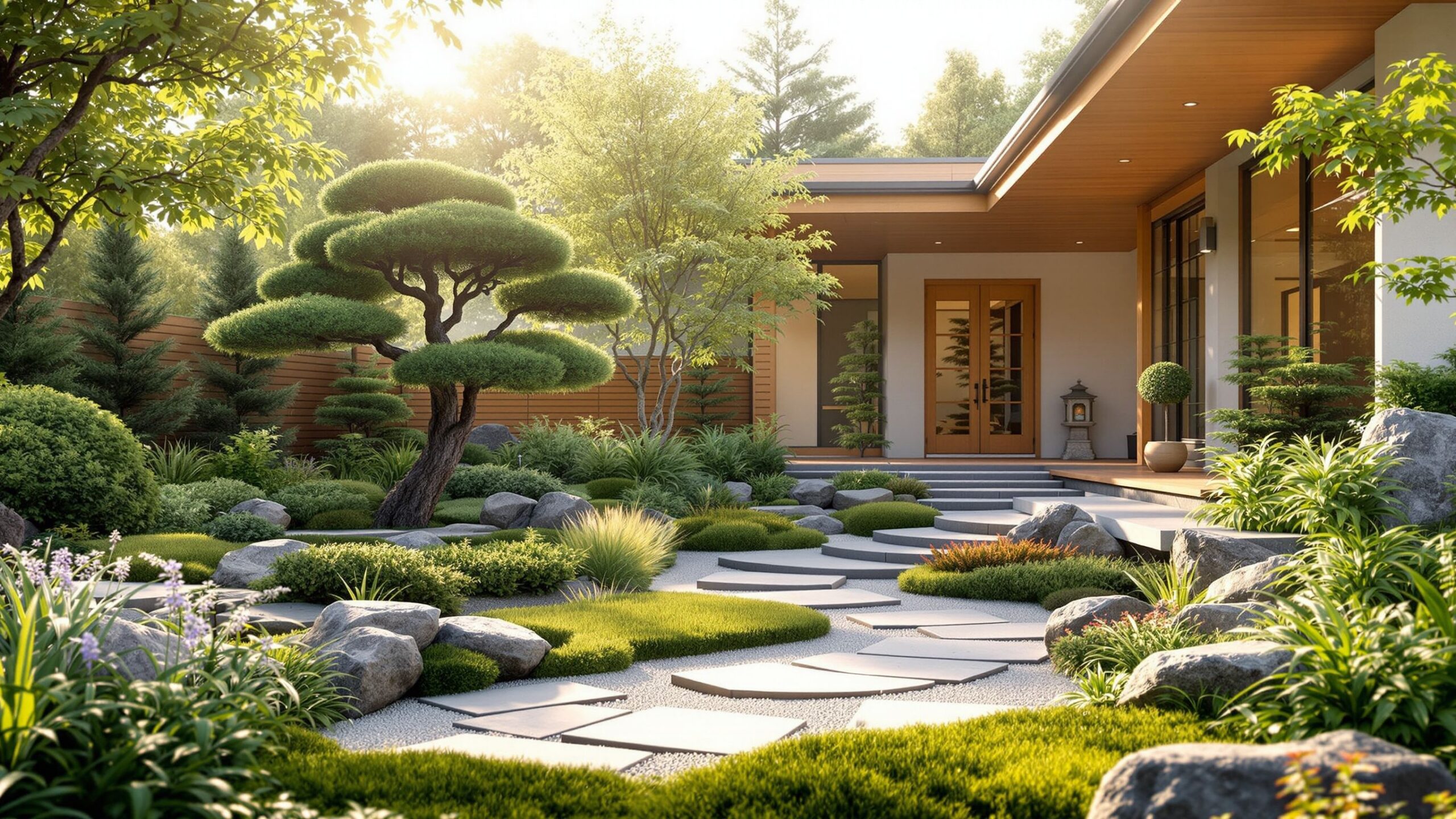
The development of the Japanese tea ceremony contributed to another influential landscape tradition known as the roji, or tea garden. Rather than displaying the entire garden immediately, the tea garden was designed as a journey toward the tea house. Visitors traditionally traveled along stepping stones and through carefully arranged vegetation, gradually leaving the distractions of everyday life behind. Moss, stone lanterns, water basins, evergreen plants, simple gates, natural pathways, and understated materials helped establish an atmosphere of humility and tranquility. The concept of the journey remains extremely useful when designing a Japanese garden at home. A pathway does not have to function only as transportation between two locations. It can determine how visitors experience the landscape. A curved path disappearing behind a shrub creates mystery. Stepping stones naturally slow a person’s pace. A partially concealed bench creates anticipation. Instead of revealing everything from the entrance, Japanese-inspired landscaping can encourage visitors to discover the garden gradually.
Understanding the Meaning Behind Japanese Gardens
Japanese gardens often communicate through suggestion and symbolism. A carefully positioned stone does not need to resemble a mountain perfectly to represent one, and a bed of raked gravel does not need actual water to suggest a river or sea. This ability to compress enormous landscapes into small spaces is one reason Japanese garden design works so beautifully in modern residential yards. Several traditional aesthetic ideas can help explain their distinctive atmosphere. Wabi-sabi is commonly associated with an appreciation for simplicity, imperfection, age, and impermanence. Weathered stone, aged wood, uneven surfaces, fallen leaves, moss, and changing plants can possess beauty precisely because they are not flawless or permanent. Another important idea is ma, which emphasizes meaningful space or intervals. Empty areas allow important elements to stand apart instead of competing for attention. Japanese gardens also celebrate seasonal transformation. Blossoms appear and disappear, maple leaves change color, moss becomes brilliant after rain, and winter exposes the elegant structure of branches and stones.
Water as a Symbol of Movement and Reflection
Water is one of the most powerful elements in traditional Japanese garden design. Ponds, streams, waterfalls, and water basins introduce movement, sound, reflection, and constantly changing light. A pond can visually expand a small garden by reflecting the sky and surrounding vegetation. A gentle waterfall can create soothing background sound while helping disguise traffic or neighborhood noise. Even a small stone basin can establish a sense of tranquility without requiring an elaborate water system. Homeowners should resist the temptation to make water features unnecessarily complicated. A small irregularly shaped pond surrounded by carefully positioned stones and plants may feel more natural than an enormous artificial feature crowded with decorations. Where actual water is impractical, gravel and stones can represent rivers, oceans, or streams. This makes dry landscape techniques particularly useful for courtyards, smaller properties, drought-conscious gardens, and homeowners looking for lower-maintenance Japanese garden ideas.
Stones as the Foundation of the Landscape
Stones are among the most important components of Japanese gardens because they provide permanence, structure, and visual weight. Traditional garden designers carefully considered the shape, texture, weathering, orientation, and relationship of individual stones before positioning them. Rocks might suggest mountains, islands, shorelines, cliffs, or waterfalls, while others simply provide visual anchors within the landscape. One common mistake homeowners make when creating Japanese-inspired gardens is scattering decorative rocks randomly throughout the yard. Stones should instead appear connected to the surrounding landscape. Partially burying larger stones can make them appear as though they have existed there for generations. Arranging stones asymmetrically can create a more organic appearance, while moss and low-growing plants around their bases help integrate them naturally into the garden. Ideally, visitors should not immediately think about where the stones were purchased. They should feel as though the rocks have always belonged exactly where they are.
Choosing Plants for a Japanese Garden
Plants bring seasonal transformation, movement, texture, and life to Japanese gardens, but restraint is important. Unlike gardens designed primarily around continuous flowering displays, Japanese gardens frequently emphasize foliage, branching structure, shape, texture, and seasonal changes. Japanese maples are especially popular because of their delicate leaves, elegant branching, and spectacular autumn colors. Pines provide evergreen structure and have traditionally been associated with endurance and longevity. Azaleas can be carefully shaped into flowing masses, while bamboo creates vertical movement and privacy. Moss can soften stones, pathways, and shaded areas while creating an immediate feeling of age. Homeowners do not necessarily need plants native to Japan to create a convincing Japanese-inspired landscape. Plants adapted to the local climate can often provide similar textures, shapes, and seasonal interest while requiring less maintenance. The objective is not to collect every plant associated with Japan. It is to create harmony among the plants, architecture, stones, water, and surrounding environment.
The Art of Borrowed Scenery
One of the most fascinating Japanese garden techniques is shakkei, commonly translated as borrowed scenery. Instead of treating a fence or property boundary as the absolute end of the garden, designers visually incorporate distant landscapes into the composition. Mountains, hillsides, forests, mature trees, and other distant features can appear to become part of the garden itself. Modern homeowners can use the same technique even in suburban neighborhoods. If a beautiful mature tree grows beyond your fence, position nearby plants so the tree appears connected to your landscape. If mountains are visible in the distance, create an opening between trees or shrubs that intentionally frames the view. Even the sky can become borrowed scenery when viewed through carefully positioned branches. This technique demonstrates one of the most creative principles of Japanese landscape design: your garden can visually extend far beyond the property you actually own.
How to Create a Japanese Garden at Home
Creating a Japanese garden begins with observation rather than shopping. Spend time studying your property before purchasing plants, stones, lanterns, or water features. Notice where sunlight appears throughout the day, where shade remains longest, which existing trees deserve to stay, and which unattractive views should be screened. Consider where you naturally want to walk and where a bench might feel private and peaceful. Next, determine what atmosphere you want the garden to create. Perhaps you want a quiet retreat for morning coffee, a winding woodland-style pathway, a minimalist dry garden, or a backyard pond surrounded by trees and natural stones. Once you understand the purpose of the space, choose a few strong features instead of filling every available corner. A beautifully shaped Japanese maple beside one large weathered stone can create more visual impact than dozens of unrelated ornaments.
Creating Natural Japanese Garden Pathways
Paths play an important role because they determine how quickly people move through the garden and what they see along the way. Natural stone, gravel, stepping stones, and subdued paving materials are excellent choices for Japanese-inspired pathways. Perfectly straight paths are not always necessary. Allowing a walkway to curve around plants, disappear behind shrubs, or pass beside stones can make even a relatively small backyard feel mysterious and expansive. Stepping stones are especially effective because visitors naturally slow down and pay attention to where they place their feet. This transforms walking into part of the garden experience. Consider positioning interesting plants or stones where they become visible only after turning a corner. A garden becomes more engaging when visitors cannot understand the entire landscape from a single viewpoint.
Adding a Pond or Water Feature
If your property and budget allow, a pond can become one of the most captivating elements of a Japanese-inspired backyard. Consider an irregular shape rather than a perfectly circular pond, and use stones and vegetation to soften visible edges. Reflections should also become part of the design. Trees positioned near the water can create beautiful mirrored images that change with the weather and seasons. Smaller gardens can achieve similar effects with compact fountains, stone water basins, or recirculating streams. The gentle sound of moving water can dramatically change the atmosphere of an outdoor space, particularly in suburban or urban environments. If maintaining water is impractical, create a dry stream using gravel and carefully positioned rocks. A dry riverbed can provide movement and direction through the landscape while requiring significantly less maintenance.
Using Bridges, Lanterns and Ornaments With Restraint
Stone lanterns, bridges, gates, water basins, and other recognizable Japanese garden features can contribute tremendous character when used thoughtfully. However, adding too many can make a backyard feel more like a themed display than a peaceful landscape. Select features because they contribute to the overall composition rather than simply because they look Japanese. A single weathered stone lantern partially surrounded by vegetation can become a beautiful focal point. A bridge makes visual sense when crossing a pond, stream, or intentionally designed dry riverbed. A gate can create a transition between an ordinary part of the yard and a more secluded garden. Every decorative element should appear to have a purpose. Restraint is often what separates a sophisticated Japanese-inspired landscape from one that feels overly decorated.
Creating a Japanese Garden in a Small Backyard
Small yards, patios, and courtyards can be surprisingly well suited to Japanese garden design because these landscapes frequently rely on controlled views and carefully selected details. A narrow side yard could contain stepping stones surrounded by ferns and shade-tolerant plants. A small courtyard might feature gravel, three sculptural stones, and one carefully shaped tree. A patio corner could become a tranquil retreat with a stone water basin, privacy screen, evergreen plants, and natural stone. Screening is especially useful in compact gardens because hiding neighboring buildings, utility equipment, or busy streets helps establish a feeling of separation. Instead of trying to make a small garden physically larger, create mystery. Partially concealed spaces often feel larger because visitors cannot see the entire landscape at once.
Designing a Japanese Garden for Every Season
Seasonal transformation is one of the greatest pleasures of Japanese garden design. Spring can bring delicate blossoms and fresh green foliage. Summer produces rich layers of greenery and deep shade. Autumn transforms Japanese maples and other deciduous plants into brilliant displays of red, orange, yellow, and gold. Winter reveals the underlying structure of the landscape as branches, evergreens, stones, pathways, and architectural elements become more visible. When selecting plants, consider how they will appear throughout the entire year rather than choosing them solely because they look attractive at the garden center. A tree with beautiful bark or branching structure may remain interesting long after its leaves disappear. Evergreen shrubs and pines can provide winter structure, while deciduous plants create dramatic seasonal changes. A thoughtfully designed Japanese garden should never depend entirely on one brief flowering season to feel beautiful.
Maintaining a Japanese Garden Naturally
Japanese-inspired gardens require maintenance, but the objective is generally controlled naturalism rather than flawless perfection. Pruning is particularly important because it can reveal attractive branching patterns, maintain carefully balanced shapes, and prevent plants from overwhelming important stones or pathways. Instead of cutting every shrub into an identical shape, consider the plant’s natural growth habit and relationship with surrounding space. Remove unnecessary growth that creates visual clutter while preserving branches that add character. Moss, weathered stone, aged wood, fallen leaves, and other signs of time do not always need to be eliminated. A landscape can remain carefully maintained while still appearing mature and natural. The goal is not neglect but balance. The garden should feel cared for without looking excessively controlled.
Common Japanese Garden Design Mistakes
One of the biggest mistakes homeowners make is attempting to include every recognizable Japanese garden feature in a single space. A red bridge, bamboo fence, Buddha statue, koi pond, stone lantern, pagoda ornament, bonsai tree, fountain, Japanese maple, and gravel garden may each be attractive individually, but combining all of them can quickly overwhelm the landscape. Japanese garden design often gains its strength from what has intentionally been left out. Another mistake is selecting plants that cannot thrive in the local climate. A garden inspired by Japanese principles should still respond intelligently to its actual environment. Healthy regional plants with appropriate shapes and textures can often create a more beautiful landscape than struggling plants selected only because they originated in Japan. Finally, avoid expecting the garden to look completely mature immediately. Some of the most beautiful landscapes become richer as trees develop character, stones weather, moss spreads, and plants settle naturally into their surroundings.
Bringing the Spirit of a Japanese Garden Home
Creating a Japanese garden at home is ultimately less about purchasing specific plants and decorations and more about changing the way you think about outdoor space. A stone can represent a mountain. Gravel can suggest a flowing river. A narrow opening between trees can frame the sky. A winding pathway can transform a ten-second walk across the backyard into a slow journey of discovery. The most successful Japanese-inspired gardens balance human intention with the appearance of naturalness. They encourage people to slow down, appreciate changing seasons, observe subtle details, and recognize beauty in things that are imperfect or temporary. Whether you have several acres, an ordinary suburban backyard, a narrow side yard, or a tiny courtyard, these principles can still be applied. Begin with the landscape you already have, remove unnecessary clutter, choose plants and stones thoughtfully, create pathways that encourage exploration, introduce water or the suggestion of water where appropriate, and leave room for emptiness, shadow, weather, and time. Japanese gardens have remained influential for centuries because they offer something timeless: an opportunity to experience nature more deliberately. Your backyard does not need to recreate an ancient Kyoto temple garden to capture that feeling. It simply needs to establish a meaningful relationship between plants, stone, water, space, season, and the people who experience it.
Garden Product Reviews
Step into Mossy Streets’ Garden Product Reviews — your go-to guide for the best tools, gear, gifts, books, and garden gadgets rooted in nature. From blooming backyard beauties to lush indoor jungles, from heirloom seeds to high-tech composters, we dig into top-rated products for green thumbs, beginners, educators, and plant lovers alike. Whether you’re planting, pruning, decorating, or simply enjoying your green space, we’ve unearthed the best so you can grow, bloom, and thrive — all in one vibrant place!