Gardening may feel like one of life’s simplest pleasures, but every flower bed, vegetable patch, landscaped yard, and backyard herb garden is connected to a story stretching back thousands of years. Long before gardening became a weekend hobby, ancient civilizations were cultivating plants for food, medicine, religion, beauty, and survival. Egyptians created gardens beside the Nile, Mesopotamian societies engineered sophisticated irrigation systems, Romans filled villas with courtyards and ornamental plants, medieval households relied on productive gardens, and Renaissance designers transformed landscapes into elaborate expressions of art and power. Over the centuries, gardening evolved alongside human civilization itself. New plants crossed oceans, scientific discoveries changed horticulture, public parks brought designed landscapes into growing cities, and eventually ordinary homeowners transformed their own backyards into personal retreats. The history of gardening is therefore much more than the history of plants. It is the story of how humans have continually reshaped nature while nature, in return, has influenced culture, architecture, food, medicine, science, and everyday life. From the carefully irrigated gardens of ancient civilizations to today’s pollinator-friendly yards and raised vegetable beds, gardening has never stopped evolving.
A: Gardening developed alongside early agriculture as settled communities began intentionally growing useful plants close to where they lived.
A: They could provide food, medicine, herbs, fruit, shade, religious symbolism, recreation, and displays of wealth.
A: Egyptians, Mesopotamians, Persians, Greeks, Romans, Chinese, and many other cultures developed influential gardening traditions.
A: No. Wealthy households created elaborate ornamental gardens, but ordinary families also cultivated practical food and herb plots.
A: They helped maintain knowledge about medicinal herbs, food cultivation, fruit trees, and useful plants during the medieval period.
A: Decorative gardens existed in ancient civilizations, but increasingly elaborate ornamental styles developed across later royal courts, estates, and wealthy households.
A: Plants were transported between continents, dramatically expanding the foods and ornamentals available to gardeners.
A: Private home gardening expanded greatly as urban and suburban housing spread during the 19th and 20th centuries.
A: Composting, crop rotation, seed saving, mulching, irrigation, pruning, companion planting, and raised-bed gardening all have deep historical roots.
A: Modern gardeners have access to advanced tools, scientific plant knowledge, commercial fertilizers, automated irrigation, and global plant varieties, but many basic gardening principles remain remarkably similar.
Before Gardens: When Humans First Began Cultivating Plants
The earliest chapter in gardening history began when humans transitioned from relying entirely on hunting and gathering toward deliberately cultivating useful plants. The development of agriculture occurred independently in different regions of the world over thousands of years, transforming human societies. Once communities began planting crops, saving seeds, managing water, and selecting desirable plants, they were doing more than producing food. They were beginning a long process of intentionally shaping the plant world around them. Early cultivation focused primarily on survival, but people gradually became skilled at recognizing differences among plants. Seeds from productive specimens could be saved. Useful plants could be grown closer to settlements. Wild species could be encouraged or managed. Over generations, human selection contributed to the domestication of crops that would eventually become fundamental to civilizations. These early agricultural spaces were not gardens in the modern suburban sense, but they established gardening’s most important principle: humans could intentionally create environments where chosen plants were encouraged to thrive.
Ancient Mesopotamia and the Power of Irrigation
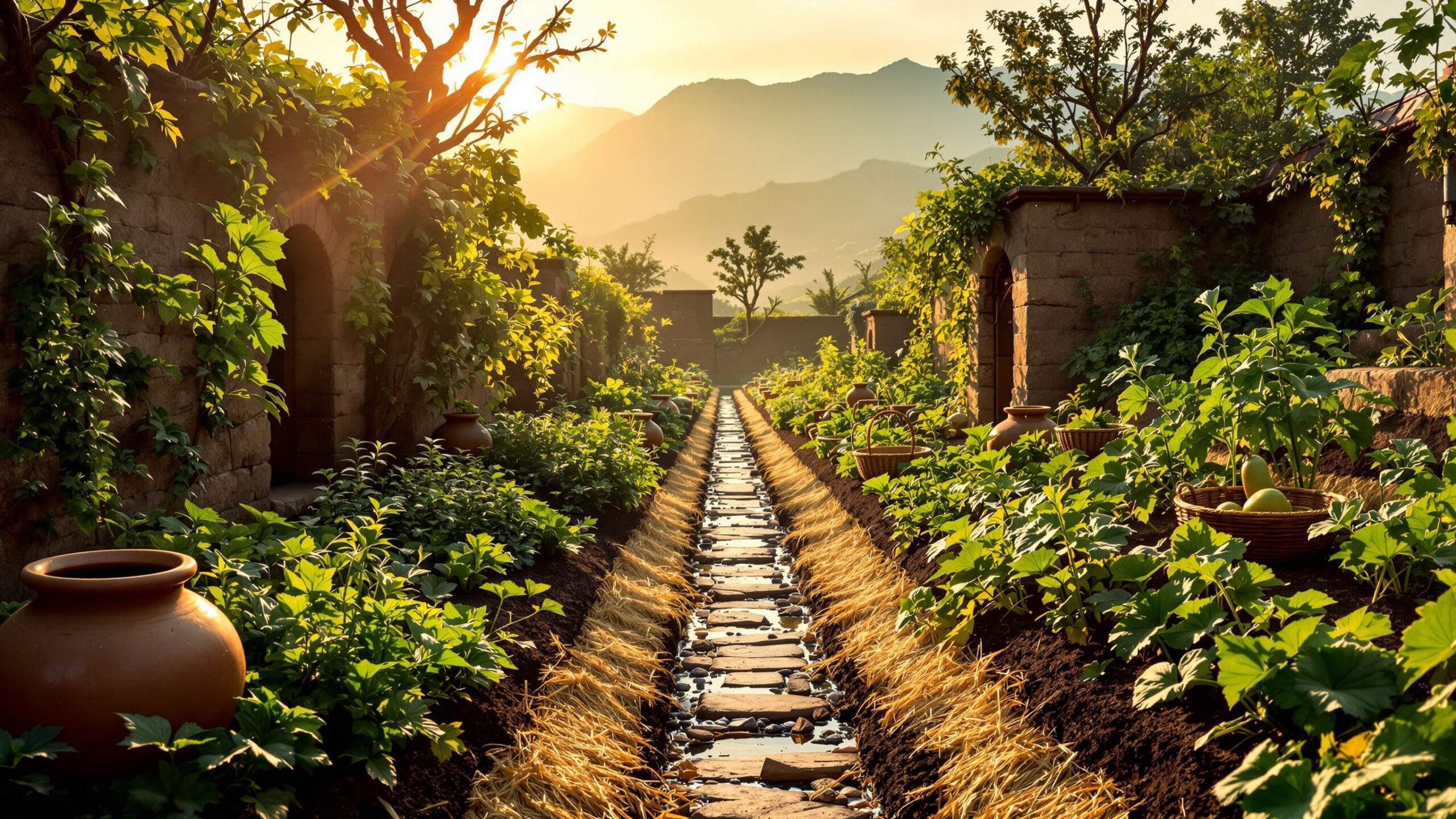
Some of the earliest complex agricultural societies emerged in Mesopotamia, where controlling water was essential. The region between the Tigris and Euphrates rivers could support productive agriculture, but successful cultivation required people to understand seasonal flooding, canals, drainage, and irrigation. Mesopotamian communities developed increasingly sophisticated systems for directing water toward crops and settlements. Gardens could contain fruit trees, vegetables, herbs, and ornamental plants, particularly around temples, palaces, and wealthy residences. Water became both a practical necessity and an important landscape feature. Perhaps no ancient garden is more famous than the Hanging Gardens of Babylon, traditionally described as an extraordinary terraced landscape filled with vegetation. Their actual existence, location, and appearance remain debated by historians, but the enduring legend demonstrates how strongly ancient people associated impressive gardens with wealth, engineering, beauty, and power. Whether or not the legendary gardens existed exactly as later writers described them, Mesopotamian achievements in irrigation unquestionably helped establish principles of water management that influenced agriculture and gardening for centuries.
Ancient Egyptian Gardens Along the Nile
Ancient Egypt developed a rich gardening tradition shaped by the Nile River. The annual rhythms of the river supported agriculture and allowed Egyptian society to flourish in an otherwise challenging environment. Gardens appeared around temples, palaces, estates, and wealthy residences, combining practical plants with ornamental beauty. Date palms, figs, grapes, vegetables, herbs, and flowering plants could all play roles within cultivated landscapes. Water features were especially significant. Rectangular pools could provide irrigation water while also supporting aquatic plants and creating visually striking garden centers. Trees offered valuable shade beneath the intense Egyptian sun, turning gardens into comfortable retreats as well as productive spaces. Artistic depictions from ancient Egypt provide remarkable evidence of carefully organized gardens containing rows of trees, vines, ponds, and cultivated plants. These spaces reveal that gardening had already moved beyond basic food production. Gardens could represent abundance, order, status, spirituality, pleasure, and humanity’s ability to create life-filled environments within difficult landscapes.
Persian Gardens and the Vision of Paradise
Ancient Persian gardening traditions profoundly influenced landscape design across a vast geographic area. Persian gardens were often organized around geometry, enclosed spaces, shade, flowing water, fragrant plants, and carefully arranged vegetation. One influential design concept involved dividing the garden into four sections, frequently using pathways or water channels. This arrangement became associated with the chahar bagh tradition and influenced later Islamic garden design. In hot and dry environments, water had extraordinary practical and symbolic importance. Channels, fountains, and pools could cool the air, irrigate vegetation, create soothing sounds, and communicate abundance. Trees provided shade, while fruit and fragrant flowers made gardens pleasurable to experience. The Persian garden became closely connected with ideas of paradise: an enclosed, fertile, refreshing refuge separated from the harsh conditions beyond its walls. That dream of the garden as a protected paradise would travel across cultures and centuries, influencing gardens from Central and South Asia to the Mediterranean and eventually shaping landscape traditions far beyond Persia.
Gardens of Ancient Greece
Ancient Greek culture is remembered for philosophy, architecture, politics, theater, and art, but cultivated landscapes also played important roles in Greek life. Sacred groves, orchards, household gardens, gymnasia, and philosophical gathering places incorporated vegetation into daily and cultural experience. Olive trees, grapevines, figs, herbs, vegetables, and other Mediterranean plants were deeply connected to Greek agriculture and cuisine. Gardens and groves could also carry religious meaning, with certain trees and plants associated with deities, myths, and sacred spaces. Philosophical schools sometimes met in landscaped or tree-filled environments, reinforcing the relationship between nature, contemplation, and learning. Although the grand ornamental garden traditions associated with later European periods had not yet developed, Greek approaches to cultivated landscapes contributed to ideas about outdoor spaces as settings for thought, conversation, exercise, beauty, and social life.
Ancient Rome Turns Gardening Into Lifestyle
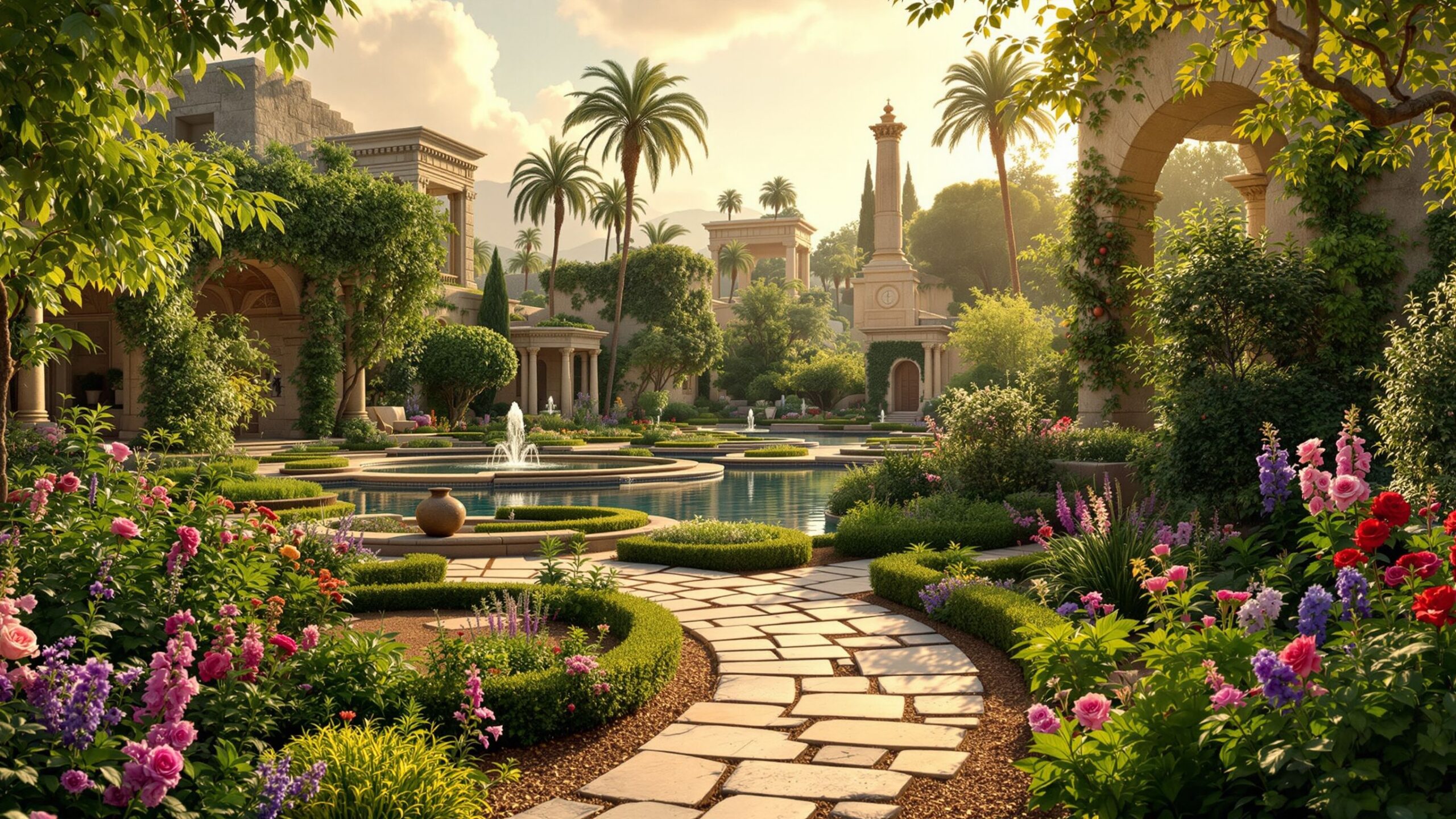
The Romans developed gardening into an important element of architecture and domestic life. Wealthy Roman villas could contain elaborate courtyards, terraces, orchards, fountains, pools, clipped greenery, decorative sculptures, and carefully arranged ornamental plants. Even urban houses sometimes incorporated interior courtyards where vegetation, water, and architecture came together. Romans valued gardens for food production, relaxation, entertaining, status, and beauty. Fruit trees, vegetables, herbs, flowers, and medicinal plants could all appear within Roman landscapes. Topiary, the practice of clipping shrubs and trees into controlled shapes, became associated with Roman ornamental horticulture. Garden paintings and architectural features could even create illusions of expanded landscapes where physical space was limited. Roman gardening demonstrates a major development in garden history: the garden was becoming an extension of the home. Outdoor areas could function almost like rooms, designed for dining, conversation, contemplation, and displaying wealth. This idea remains remarkably familiar to anyone who considers a modern patio or backyard an extension of indoor living space.
Gardening in Ancient China
Chinese gardening developed according to philosophies and artistic traditions very different from the highly geometric approaches found in some Western landscapes. Gardens could be designed to evoke idealized natural scenery using rocks, water, plants, pathways, architecture, and carefully composed views. Rather than simply imposing rigid order on nature, many Chinese garden traditions sought to create landscapes that appeared harmonious and deeply connected to natural forms. Rocks could represent mountains, ponds could suggest lakes, and strategically positioned plants could frame changing views as visitors moved through the garden. Gardens became places for poetry, painting, contemplation, scholarship, and social gatherings. The experience of moving through the landscape was important, with walls, windows, gates, pathways, and pavilions revealing different scenes gradually. This concept of the garden as an unfolding experience remains influential in landscape design today.
Japanese Gardens and the Beauty of Restraint
Japanese garden traditions developed through a complex combination of Indigenous practices and influences from China and Korea, eventually producing distinctive approaches to landscape design. Water, rocks, moss, carefully shaped trees, bridges, lanterns, gravel, and architecture could be used to create environments emphasizing harmony, seasonality, symbolism, and contemplation. Some gardens recreated natural landscapes in miniature, while dry gardens used carefully arranged stones and gravel to evoke larger natural scenes. Tea gardens developed around pathways leading toward tea houses, encouraging visitors to transition mentally from the outside world into a more contemplative environment. Japanese gardens demonstrate that abundance is not the only path to beauty. Empty space, carefully positioned stones, restrained planting, and subtle seasonal changes can be just as powerful as enormous displays of flowers. Modern minimalist gardens continue to draw inspiration from these principles.
Medieval European Gardens: Survival Behind the Walls
Following the decline of the Western Roman Empire, gardening traditions in Europe changed alongside political, religious, and social structures. Medieval gardens were often practical spaces associated with monasteries, castles, manor houses, and ordinary households. Monasteries became particularly important centers for cultivating herbs, fruits, vegetables, and medicinal plants. Enclosed gardens could contain orderly beds of useful species, orchards, vineyards, and spaces for contemplation. Monastic communities preserved and developed knowledge about plants while using gardens to support everyday life. Household cottage gardens similarly focused on usefulness, providing vegetables, herbs, fruit, and medicinal plants close to the home. Flowers were present as well, particularly species valued for fragrance, symbolism, or traditional uses. The medieval garden was frequently enclosed by walls, fences, hedges, or buildings, creating protected growing environments. These enclosed spaces contributed to the enduring image of the garden as a private refuge separated from the uncertainty of the outside world.
Islamic Gardens and the Celebration of Water
Across the medieval Islamic world, garden design reached extraordinary levels of sophistication. Drawing upon Persian traditions while developing distinctive regional expressions, Islamic gardens often incorporated geometry, courtyards, shade, fountains, channels, pools, fruit trees, aromatic plants, and ornamental vegetation. Water was especially important in warm climates, where it provided cooling, irrigation, movement, sound, and visual beauty. Gardens could be designed as earthly reflections of paradise, creating environments of peace, abundance, fragrance, and refreshment. Famous examples associated with Islamic architectural traditions demonstrate how closely buildings and gardens could be integrated. Courtyards framed water features, pathways divided planted areas, and architecture created shade while directing views. These principles influenced garden design across North Africa, the Middle East, Spain, Central Asia, and South Asia, leaving a legacy still visible in historic landscapes today.
Renaissance Gardens Become Living Works of Art
The European Renaissance transformed gardens into increasingly elaborate expressions of architecture, mathematics, art, politics, and wealth. Particularly in Italy, wealthy families commissioned landscapes containing terraces, fountains, staircases, sculptures, clipped hedges, grottos, and dramatic views. Gardens became carefully choreographed experiences where architecture and nature were deliberately connected. Symmetry and perspective helped organize space, while fountains demonstrated both engineering skill and financial power. Plants remained important, but the overall composition often mattered as much as individual flowers. A Renaissance garden could communicate education, cultural sophistication, political influence, and control over the landscape. These Italian traditions would strongly influence garden design elsewhere in Europe, particularly the grand formal gardens that emerged in France.
French Formal Gardens and the Triumph of Geometry
By the seventeenth century, French formal garden design elevated symmetry and geometric control to extraordinary levels. Grand landscapes associated with royal estates featured long avenues, clipped hedges, ornamental parterres, fountains, canals, sculptures, and carefully controlled views extending toward the horizon. The gardens of Versailles became the most famous expression of this approach. Nature was shaped into an enormous visual composition designed to impress. Trees were aligned, hedges were clipped, water was engineered, and pathways directed movement through the landscape. These gardens required enormous labor and resources, making them powerful demonstrations of wealth and authority. Although few homeowners today would attempt anything remotely comparable, elements of French formal gardening survive in symmetrical paths, clipped hedges, geometric beds, topiary, and formal entrance gardens around the world.
The English Landscape Garden Changes the Rules
During the eighteenth century, influential English designers began moving away from the rigid geometry associated with formal European gardens. The English landscape garden embraced sweeping lawns, irregular lakes, carefully positioned groups of trees, winding paths, bridges, and picturesque views intended to resemble an idealized natural landscape. Designers such as Lancelot “Capability” Brown became famous for transforming large estates into apparently effortless countryside scenes. Despite their natural appearance, these landscapes were carefully engineered. Hills might be reshaped, lakes constructed, trees strategically planted, and entire views redesigned. The objective was to make the designer’s work disappear beneath an illusion of nature. This represented a dramatic change in gardening philosophy. Instead of displaying obvious human control through geometry, designers demonstrated control by creating landscapes that appeared beautifully natural.
Cottage Gardens Celebrate Abundance and Informality
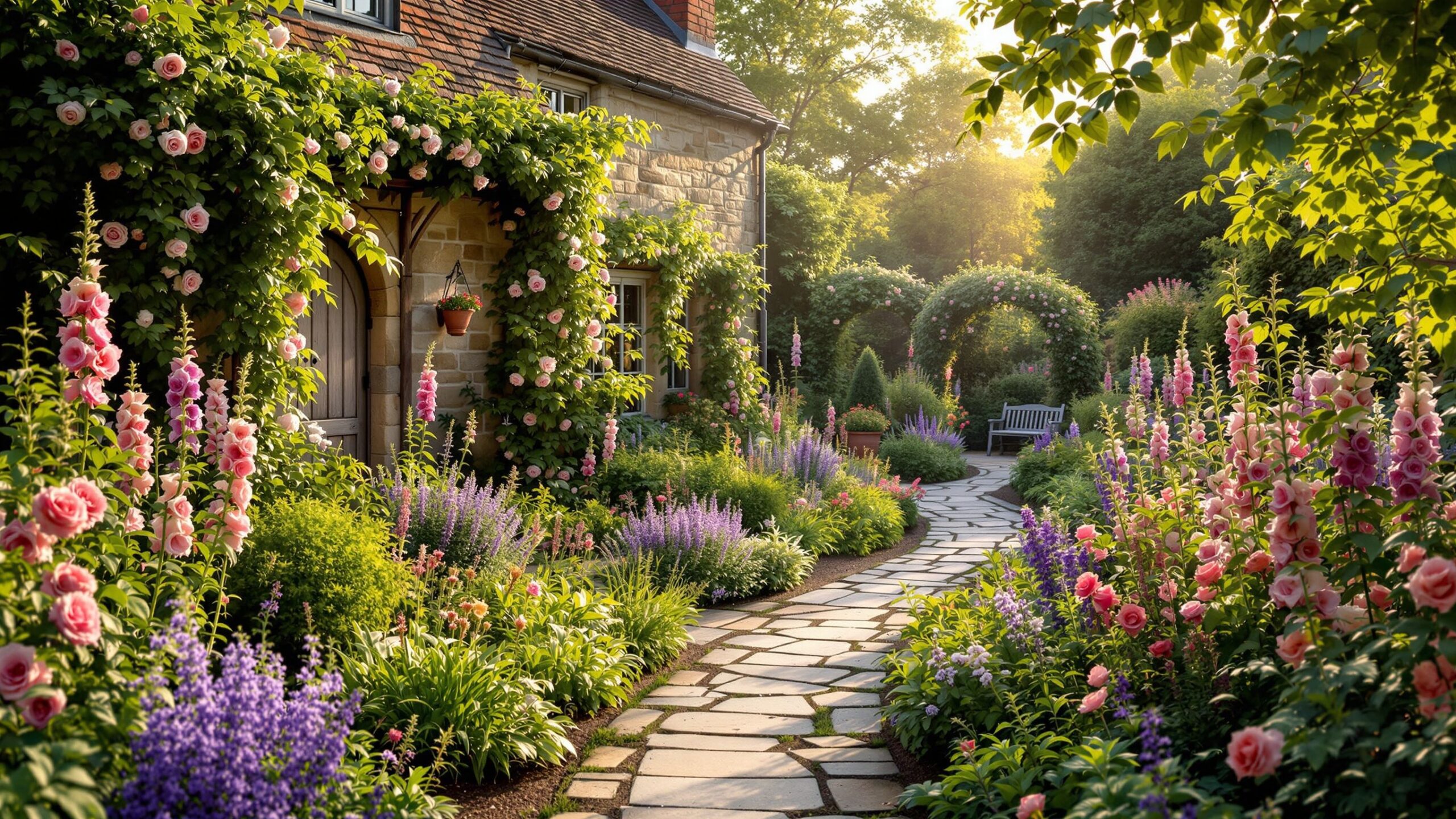
While wealthy estates experimented with enormous landscapes, the humble cottage garden continued developing around ordinary homes. These gardens mixed vegetables, fruit, herbs, flowers, and useful plants within relatively small spaces. Over time, the cottage garden became romanticized as an expression of traditional rural life. Roses, foxgloves, hollyhocks, lavender, climbing plants, winding paths, and densely planted borders became strongly associated with the style. By the nineteenth century, influential gardeners and designers helped transform informal planting into a sophisticated aesthetic. The cottage garden demonstrated that beautiful gardening did not require monumental fountains or acres of manicured lawn. Intimacy, fragrance, abundance, and personality could create equally memorable landscapes.
Plant Exploration Transforms the World’s Gardens
From the sixteenth through nineteenth centuries and beyond, expanding global trade, exploration, colonization, and scientific collecting dramatically changed horticulture. Plants were transported between continents on an unprecedented scale. European gardens gained access to ornamental and useful species from Asia, Africa, the Americas, and other regions, while European plants were similarly introduced elsewhere. Botanical gardens became important centers for collecting, studying, classifying, and displaying plants. Wealthy collectors competed for unusual specimens, and horticultural nurseries expanded their offerings. This global movement transformed what gardeners could grow, although it was also deeply connected to colonial power, exploitation, and the displacement of Indigenous knowledge. Many plants now considered ordinary garden favorites traveled enormous distances before becoming familiar features of local landscapes. The modern garden is, in many ways, a living record of centuries of global plant movement.
Victorian Gardening and the Age of Horticultural Obsession
The Victorian era brought extraordinary enthusiasm for gardening, botanical collecting, conservatories, flower shows, and ornamental plants. Advances in greenhouse technology allowed gardeners to cultivate species that could not survive outdoors in Britain’s climate. Wealthy estates constructed elaborate glasshouses filled with exotic plants, while increasingly sophisticated nurseries supplied a growing gardening public. Highly colorful bedding displays became fashionable, with annual plants arranged in intricate patterns. Fern collecting became a widespread craze, and houseplants gained popularity as indoor horticulture expanded. Gardening publications, societies, exhibitions, and improved transportation helped horticultural knowledge spread to larger audiences. The garden was becoming not only a productive or aristocratic space but also an increasingly accessible hobby and cultural passion.
Public Parks Bring Gardens Into Growing Cities
Industrialization transformed cities, creating crowded urban environments where access to open green space became increasingly important. Public parks emerged as essential landscapes for recreation, health, social life, and relief from dense development. Designers created lawns, tree-lined paths, lakes, flowerbeds, and gathering spaces where city residents could experience nature without owning private land. The public park represented an important shift in gardening history because designed landscapes were no longer exclusively associated with palaces, estates, monasteries, or private homes. Green space became a civic resource. This movement would eventually influence urban planning around the world and establish the idea that gardens and parks contribute to quality of life within cities.
The Rise of the Modern Home Garden
During the nineteenth and twentieth centuries, changing housing patterns, expanding suburbs, commercial nurseries, lawn culture, and increased availability of gardening products transformed private gardening. More households gained access to yards that could be personalized with lawns, flowerbeds, shrubs, vegetable gardens, patios, and ornamental trees. The backyard became an extension of domestic life. Families entertained outdoors, children played on lawns, gardeners cultivated vegetables, and homeowners used landscaping to express personal style. Gardening magazines, radio programs, television shows, catalogs, and eventually the internet made horticultural information easier to access. Techniques that once might have been passed primarily between generations or learned through apprenticeships could now reach millions of people.
Victory Gardens Turn Backyards Into Food Sources
During the First and Second World Wars, governments encouraged citizens in several countries to grow food in home gardens and community spaces. These Victory Gardens transformed yards, vacant lots, parks, and other available land into productive vegetable plots. Gardening became connected with national food supplies, household resilience, and wartime participation. Families who might previously have focused primarily on ornamental landscaping learned to grow vegetables and preserve harvests. The movement demonstrated how quickly private landscapes could become productive when circumstances demanded it. Decades later, renewed interest in vegetable gardening, food security, and self-sufficiency would echo many of the same principles.
Gardening Becomes a Major Leisure Activity
By the later twentieth century, gardening had become a major recreational activity in many countries. Garden centers offered enormous selections of plants, fertilizers, tools, containers, outdoor furniture, and landscaping materials. Homeowners experimented with roses, lawns, vegetable beds, ornamental shrubs, patios, water gardens, and themed landscapes. Television gardening personalities and magazines introduced audiences to new plants and design ideas. At the same time, concerns about pesticides, habitat loss, water consumption, and environmental sustainability began influencing gardening choices. Organic gardening gained broader attention, composting became increasingly popular, and gardeners started reconsidering how their yards interacted with the surrounding ecosystem.
The Modern Backyard Becomes an Outdoor Living Space
Today’s backyard can serve more purposes than almost any garden in history. It may contain a vegetable garden, outdoor kitchen, children’s play area, swimming pool, wildlife habitat, flower beds, fire pit, fruit trees, patio, greenhouse, compost system, or quiet reading corner. Modern landscape design increasingly treats outdoor areas as extensions of the home. Comfortable furniture, lighting, kitchens, pergolas, and architectural features blur the boundary between indoors and outdoors. In an interesting way, this idea connects modern homeowners with the ancient Romans, who also treated courtyards and gardens as living spaces for relaxation, conversation, dining, and entertainment. Technology has changed dramatically, but the desire to live among plants remains surprisingly consistent.
Native Plants and Pollinator Gardens Reshape Modern Gardening
One of the most significant modern gardening movements involves greater awareness of ecological relationships. Gardeners are increasingly considering how their plant choices affect bees, butterflies, birds, soil organisms, water use, and local ecosystems. Native plants have gained attention because species adapted to regional conditions can provide valuable resources for local wildlife when appropriately selected. Pollinator gardens combine flowering plants that provide nectar and pollen across different parts of the growing season. Some homeowners are replacing portions of conventional lawns with meadow-style plantings, drought-tolerant landscapes, native beds, or productive gardens. The modern garden is increasingly being viewed not as an isolated decoration but as part of a larger ecological network.
Raised Beds, Containers, and Urban Gardening
Gardening today is no longer limited to people with large properties. Raised beds, containers, vertical gardens, community gardens, balconies, rooftops, and indoor growing systems allow people to cultivate plants in increasingly creative spaces. A city resident may grow tomatoes on a balcony, herbs on a windowsill, vegetables in a community plot, or flowers on a rooftop. Raised beds have become especially popular because they create defined growing spaces and allow gardeners greater control over soil conditions. Although these approaches feel modern, many have ancient parallels. Humans have been constructing specialized growing areas, managing soil, and adapting cultivation to limited spaces for thousands of years. Modern materials may be different, but the fundamental challenge remains the same: how can we create productive growing conditions with the space available?
Technology Enters the Garden
Modern gardening now includes technology ancient growers could scarcely have imagined. Automated irrigation systems can adjust watering schedules, sensors can measure soil moisture, smartphone applications can help identify plants, weather stations can monitor local conditions, and sophisticated greenhouse systems can regulate temperature and humidity. Indoor gardens can use artificial lighting and hydroponic systems to grow food without traditional soil. Robotic lawn equipment and automated watering systems can reduce routine maintenance. Yet technology has not eliminated the importance of basic gardening knowledge. A moisture sensor cannot replace understanding what a plant needs, and an automated irrigation system can still waste water if designed poorly. The most successful modern gardens often combine technological convenience with ancient principles of observation, soil care, diversity, and responsible water management.
Ancient Gardening Wisdom Returns
Perhaps the most fascinating development in modern gardening is the renewed interest in techniques that are centuries or even thousands of years old. Composting, mulching, seed saving, companion planting, crop rotation, water harvesting, terracing, clay-pot irrigation, and diverse planting systems are receiving new attention from gardeners interested in sustainability. These practices survived because they address fundamental gardening challenges that have never disappeared. Soil still needs organic matter. Plants still require water. Exposed ground still loses moisture. Diverse ecosystems can still provide resilience. Modern science allows gardeners to better understand why many traditional methods work and where their limitations lie. The future of gardening may therefore depend partly on combining scientific innovation with knowledge inherited from the past.
What Thousands of Years of Gardening Can Teach Us
The history of gardening reveals that there has never been one correct way to create a garden. Ancient Egyptians designed gardens around water and shade. Persian gardeners created enclosed visions of paradise. Chinese and Japanese traditions explored harmony, symbolism, and carefully composed nature. Medieval households emphasized useful plants. Renaissance and French designers celebrated geometry and control. English landscape designers created illusions of untouched countryside. Cottage gardeners embraced abundance. Victorians collected plants with extraordinary enthusiasm. Modern homeowners combine recreation, food production, ecology, technology, and personal expression within the same backyard. Each period reflects the priorities, challenges, resources, and beliefs of the people who created its gardens.
From Ancient Civilizations to the Garden Outside Your Door
Every modern garden carries pieces of this enormous history. A fountain recalls ancient traditions of using water as both a practical and decorative feature. A clipped hedge echoes formal European landscapes. A densely planted flower border carries the spirit of cottage gardening. A raised vegetable bed continues humanity’s ancient desire to create productive soil. A patio surrounded by plants reflects the Roman idea of outdoor living. A pollinator garden connects gardening with an even older relationship between plants, insects, and ecosystems. Gardening has survived thousands of years because it continually adapts while satisfying fundamental human desires. We grow plants because we need food, seek beauty, enjoy fragrance, value nature, want peaceful spaces, and take satisfaction in watching something live because we cared for it. Technologies, fashions, and garden styles will continue changing, but the relationship between humans and cultivated plants is unlikely to disappear. From the irrigation channels of ancient civilizations to a tomato plant growing beside a modern suburban patio, gardening remains one of humanity’s oldest and most enduring conversations with the natural world.
Garden Product Reviews
Step into Mossy Streets’ Garden Product Reviews — your go-to guide for the best tools, gear, gifts, books, and garden gadgets rooted in nature. From blooming backyard beauties to lush indoor jungles, from heirloom seeds to high-tech composters, we dig into top-rated products for green thumbs, beginners, educators, and plant lovers alike. Whether you’re planting, pruning, decorating, or simply enjoying your green space, we’ve unearthed the best so you can grow, bloom, and thrive — all in one vibrant place!