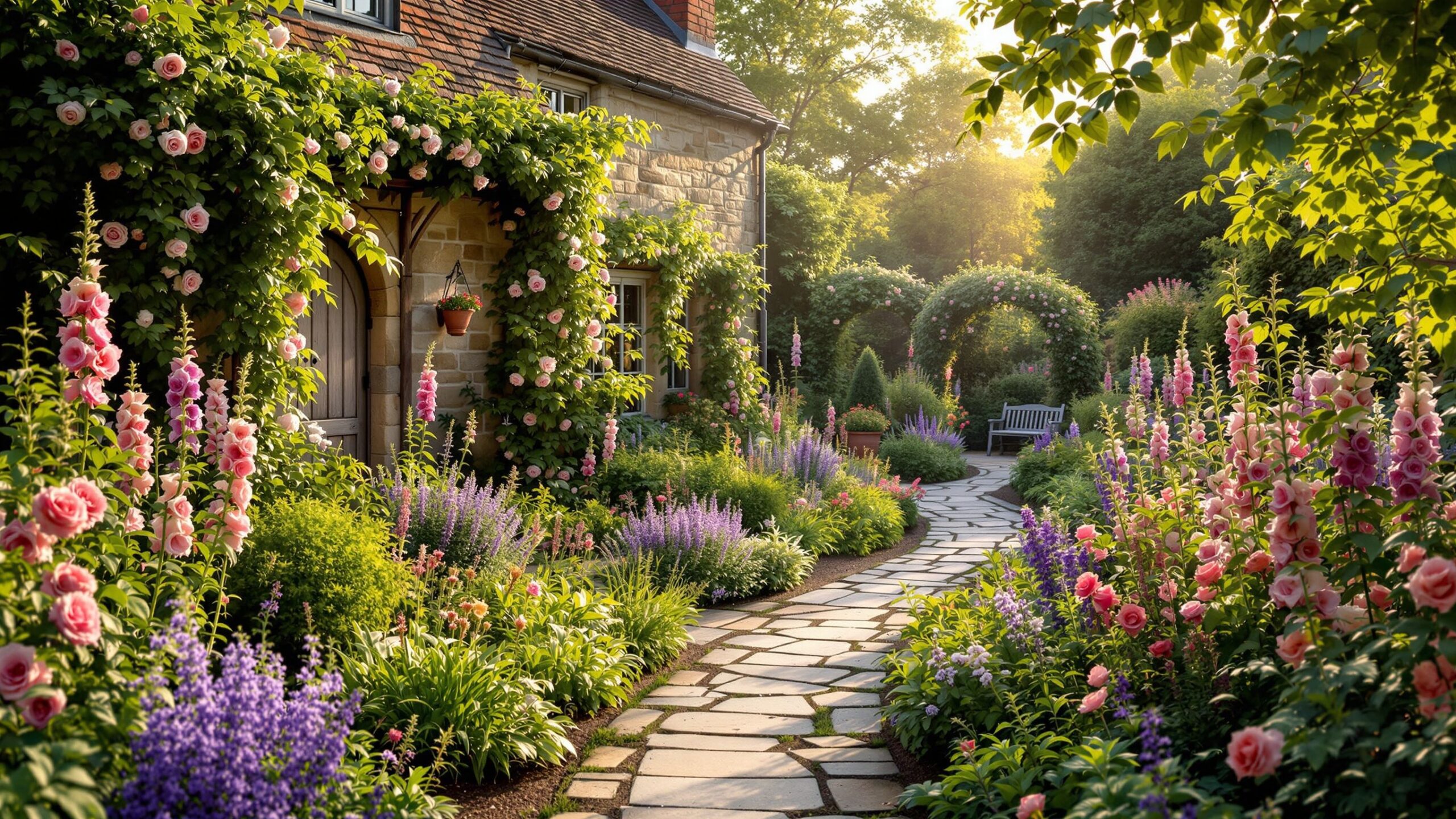
Few garden styles capture the imagination quite like the English cottage garden. Overflowing with roses, lavender, foxgloves, hollyhocks, herbs, climbing vines, and seemingly spontaneous combinations of flowers, the cottage garden appears romantic and effortless. A narrow pathway may disappear beneath arching blooms, an old wooden gate might be surrounded by climbing roses, and flowers seem to tumble into one another without following any obvious rules. Yet behind this beautifully informal appearance is a fascinating history shaped by practicality, necessity, changing social ideals, and generations of gardeners. The English cottage garden did not originally develop as a carefully designed landscape style. Early cottage gardens were working spaces where ordinary families grew plants they could eat, use as medicine, preserve, trade, or enjoy. Flowers eventually became increasingly important, and influential gardeners transformed the humble cottage plot into one of the world’s most recognizable gardening styles. Today, homeowners can recreate the English cottage garden look even without living beside a centuries-old stone cottage in the English countryside. Understanding its history reveals the most important lesson of cottage gardening: beauty comes from abundance, usefulness, personality, and allowing nature to feel slightly untamed.
A: Dense informal planting, abundant flowers, traditional materials, winding paths, and a mixture of ornamental and useful plants create the signature look.
A: Roses, foxgloves, hollyhocks, delphiniums, lavender, daisies, lupines, and other old-fashioned flowers are excellent choices.
A: Not exactly. The best cottage gardens feel abundant and spontaneous while still using thoughtful plant placement and maintenance.
A: Absolutely. Small spaces can actually enhance the cozy, densely planted feeling associated with cottage gardens.
A: Yes. Traditional cottage gardens commonly combined vegetables, herbs, fruit, and flowers.
A: Many classic cottage flowers prefer plenty of sunlight, but plant selections can be adjusted for partially shaded gardens.
A: Use layered planting, climbers, densely arranged perennials, self-seeding flowers, and softened pathway edges.
A: Gravel, natural stone, reclaimed brick, and similar traditional materials complement the cottage aesthetic beautifully.
A: You can, but cottage gardens often combine several complementary colors for a relaxed and abundant appearance.
A: Start with a curved path or border, plant flowers generously in layers, add fragrant herbs and climbing plants, and avoid making the arrangement overly symmetrical.
The Humble Origins of the English Cottage Garden
The traditional English cottage garden developed around the homes of working people rather than grand country estates. Medieval and early rural households often had relatively small plots of land available around their cottages, making every section valuable. Gardens needed to provide practical benefits. Vegetables, culinary herbs, medicinal plants, fruit, and other useful crops were grown close to the home where they could be easily harvested. Chickens, bees, or other small livestock might also form part of the household landscape. Unlike the formal gardens surrounding wealthy estates, these spaces were not primarily designed to impress visitors. Their purpose was productivity. Plants were placed where they could fit, and useful species frequently grew close together. Over time, flowers were added for fragrance, household decoration, traditional remedies, celebrations, and simple enjoyment. This combination of usefulness and beauty became one of the defining characteristics of the English cottage garden. The densely planted, informal appearance admired today emerged partly because early gardeners did not have enormous amounts of land to waste. Their gardens needed to accomplish as much as possible within a relatively small space.
Medieval Gardens and the Importance of Useful Plants
During the medieval period, gardens often served as important household resources. Herbs were particularly valuable because they could be used for cooking, fragrance, household purposes, and traditional remedies. Sage, thyme, rosemary, mint, and other useful plants became familiar sights around homes and settlements. Vegetables and fruit provided food, while flowers could attract pollinators or simply brighten an otherwise hardworking landscape. Medieval gardens varied enormously depending on region, wealth, climate, and access to land, but the tradition of growing useful plants close to the home helped establish a gardening philosophy that would remain central to the cottage style. Instead of separating edible plants from ornamental ones, traditional cottage gardens often allowed them to coexist. A flowering herb might sit beside vegetables, while fruit trees could rise above lower-growing plants. Modern gardeners attempting to recreate an authentic cottage atmosphere can borrow directly from this tradition by mixing edible and ornamental species rather than dividing the yard into rigid categories.
How Flowers Became Cottage Garden Stars
As gardening traditions developed and access to ornamental plants expanded, flowers became increasingly prominent around cottages. Plants were shared between neighbors, passed through families, exchanged locally, and introduced through expanding horticultural networks. Familiar cottage garden favorites eventually included roses, hollyhocks, pinks, violets, primroses, foxgloves, delphiniums, and many other flowering plants. The cottage garden gradually became more colorful and ornamental while retaining its informal structure. Unlike formal gardens where plants might be arranged into precise geometric patterns, cottage flowers could intermingle freely. Tall plants rose behind shorter ones, self-seeding flowers appeared in unexpected places, vines climbed walls and fences, and pathways became softened by vegetation spilling over their edges. This layered appearance created the sense that the garden had developed naturally over many years rather than being installed all at once. That feeling of accumulated history remains one of the most desirable characteristics of cottage garden design today.
The Contrast Between Cottage Gardens and Formal Estates
England’s grand estates developed elaborate formal gardens based on symmetry, geometry, controlled views, clipped hedges, fountains, terraces, and carefully arranged ornamental features. These landscapes demonstrated wealth, power, and control over nature. Cottage gardens represented almost the opposite philosophy. Their beauty came from abundance rather than precision. Flowers could lean into pathways, herbs might grow beside roses, and climbing plants could cover fences, walls, and entrances. The contrast eventually helped make cottage gardens especially appealing. While formal landscapes could feel monumental and carefully controlled, cottage gardens felt intimate, welcoming, and personal. They appeared to belong to the people who lived among them. This distinction remains important when recreating the style. A cottage garden should not look like a miniature palace garden filled with perfectly symmetrical flowerbeds. Its charm depends on controlled informality, where thoughtful design exists beneath a surface that feels natural and relaxed.
The Romantic Reinvention of the Cottage Garden
By the nineteenth century, changing cultural attitudes toward rural life helped transform perceptions of cottage gardens. Industrialization and rapidly expanding cities contributed to romantic ideas about the countryside, traditional villages, craftsmanship, and simpler ways of living. The cottage surrounded by flowers became an increasingly powerful image of rural England. Artists, writers, horticulturists, and designers helped popularize gardens that appeared natural, abundant, and connected to traditional landscapes. What had begun largely as a practical household garden gradually became an aesthetic ideal. Wealthier gardeners started deliberately recreating aspects of cottage gardening within larger properties. The irony was striking: a style born partly from limited space and necessity became something people intentionally designed for beauty. Nevertheless, the transition helped preserve many characteristics associated with the traditional cottage garden and established the romantic image that continues to influence garden design around the world.
William Robinson and the Rise of Naturalistic Gardening
The development of naturalistic English gardening was strongly influenced by nineteenth-century horticulturist and writer William Robinson. Robinson criticized excessively artificial Victorian bedding schemes and promoted more natural approaches to planting. He encouraged gardeners to use hardy plants in arrangements that felt connected to the landscape rather than relying exclusively on rigid patterns and highly controlled seasonal displays. His ideas helped change how gardeners thought about ornamental planting. Gardens could be beautiful without appearing geometrically perfect. Plants could form generous groups, naturalize, and create compositions inspired by nature. Although Robinson’s work extended far beyond what would strictly be considered cottage gardening, his philosophy helped strengthen appreciation for informal and naturalistic planting. Modern cottage gardens continue to reflect this preference for abundance, seasonal change, and plants that appear comfortable in their surroundings rather than arranged like objects in a display case.
Gertrude Jekyll and the Art of Controlled Abundance
Another enormously influential figure in English garden design was Gertrude Jekyll. Her sophisticated approach to planting demonstrated how informal-looking gardens could be carefully designed through thoughtful combinations of color, texture, height, and seasonal interest. Jekyll understood that a border could appear spontaneous while still being meticulously planned. Plants could flow from one group into another, creating waves of color and texture rather than obvious rigid patterns. This principle is essential for anyone trying to recreate the English cottage garden look. The goal is not randomness. Completely random planting can quickly become chaotic. Successful cottage gardens use structure beneath the abundance. Taller plants create vertical interest, medium-height plants fill the center of borders, and lower plants soften edges. Repeated colors or plant varieties visually connect different areas. Paths, fences, hedges, walls, and gates provide permanent structure while flowers create the impression of joyful disorder.
Roses and the Romantic Cottage Garden
Few plants are more strongly associated with the English cottage garden than roses. Climbing roses surrounding doorways, rambling roses covering fences, and fragrant shrub roses emerging from crowded borders have become defining images of the style. Roses provide several qualities cottage gardens value at once: fragrance, abundant flowers, romantic character, and the ability to interact beautifully with structures. A climbing rose can transform an ordinary arbor or fence into a dramatic garden feature, while shrub roses create substantial flowering anchors within mixed borders. Gardeners recreating the style do not necessarily need rare historic roses. The most important consideration is selecting varieties suited to the local climate, available space, disease pressures, and growing conditions. Combining roses with perennials, herbs, and flowering annuals prevents them from appearing isolated. In a cottage garden, the rose should feel as though it belongs to a larger community of plants rather than standing alone as a formal specimen.
Hollyhocks, Foxgloves, and Delphiniums Create Height
Vertical flowers are essential to the classic cottage garden appearance. Hollyhocks, foxgloves, delphiniums, lupines, and other tall flowering plants create dramatic towers of color that rise above lower vegetation. They help produce the layered, immersive quality that makes cottage gardens feel so abundant. Tall flowers can be positioned near fences, walls, sheds, or toward the backs of borders where their height creates a backdrop for smaller plants. However, strict height rules do not need to be followed everywhere. Allowing an occasional tall flower to emerge unexpectedly from the middle of a border can enhance the informal character. Climate and growing conditions should determine which plants are used. Some traditional English cottage flowers may struggle in regions with extreme heat, humidity, drought, or very different winters. Recreating the cottage look successfully is more important than forcing historically associated plants into unsuitable conditions.
Lavender, Herbs, and Fragrance Along the Path
A true cottage garden should appeal to more than the eyes. Fragrance is one of its most enchanting characteristics. Lavender, thyme, rosemary, mint, sage, roses, sweet peas, dianthus, and other aromatic plants can create layers of scent throughout the garden. Positioning fragrant plants near pathways, gates, seating areas, windows, and entrances allows people to experience them at close range. Herbs are particularly appropriate because they reconnect the modern cottage garden with its practical origins. A border containing lavender, sage, thyme, roses, and flowering perennials can be beautiful while still providing useful plants for the household. Low-growing aromatic herbs can also soften hard edges around paths and patios. When brushed by clothing or warmed by sunlight, their leaves may release fragrance into the surrounding air. This sensory quality makes cottage gardens feel intimate and alive.
Create Winding Paths Instead of Straight Lines
Pathways play an important role in establishing cottage garden character. A perfectly straight, broad walkway can sometimes feel too formal unless the surrounding planting strongly softens it. Cottage gardens often benefit from narrower paths that curve gently or disappear behind vegetation. Gravel, brick, stone, stepping stones, and other natural-looking materials can help create an established atmosphere. Plants should be allowed to soften the edges. Creeping thyme might grow between stones, lavender can lean toward the walkway, and flowering plants may partially obscure the border. The path should still remain functional and safe, but it does not need to appear completely separated from the garden. Ideally, walking through a cottage garden should feel like moving through the plants rather than observing them from a distance.
Use an Arbor, Gate, or Fence as Garden Structure
The abundance of a cottage garden becomes more effective when it is balanced by permanent structural elements. Wooden gates, picket fences, stone walls, arbors, trellises, benches, and small garden structures can provide visual anchors. These features prevent dense planting from feeling completely uncontrolled. A simple gate surrounded by climbing roses immediately creates cottage character. An arbor covered with clematis can form an entrance into another section of the garden. A weathered bench placed beneath flowering vines can create a quiet destination. Materials generally work best when they feel natural and understated. Wood, brick, stone, iron, gravel, and aged finishes often complement cottage planting better than extremely glossy or futuristic materials. The objective is to create the impression that the garden and its structures have evolved together over time.
Mix Flowers, Vegetables, Fruit, and Herbs
One of the easiest mistakes when designing a cottage garden is focusing exclusively on flowers. Historically, cottage gardens were productive spaces, and mixing useful plants with ornamental ones creates a more authentic interpretation. Herbs can grow beside roses. Strawberries can edge a bed. Fruit trees can rise above flowering perennials. Lettuce, kale, chard, beans, and other vegetables can become part of the visual composition rather than being hidden in a separate vegetable patch. Many edible plants are surprisingly ornamental. Purple basil, colorful chard, flowering beans, strawberries, artichokes, and herbs can contribute texture and color while producing food. This mixture also keeps the garden interesting throughout the growing season. Instead of one dramatic flowering display followed by emptiness, different plants can provide changing colors, harvests, fragrances, and textures.
Let Plants Spill Over the Edges
Cottage gardens should rarely appear as though every plant has been instructed to remain inside an invisible boundary. Some of their charm comes from plants spilling over paths, climbing fences, leaning against neighboring flowers, and emerging through gaps. This does not mean allowing the garden to become completely uncontrolled. The effect should be curated abundance. Gardeners can trim plants that block walkways, remove aggressive species, and manage self-seeding while still allowing softer growth around edges. Groundcovers, herbs, trailing flowers, and low-growing perennials are especially useful for creating this effect. The goal is to disguise some of the garden’s boundaries so that plants appear to occupy every available opportunity.
Encourage Self-Seeding for a Garden That Evolves
Many traditional cottage garden plants can self-seed under suitable conditions, allowing new plants to appear naturally from year to year. Foxgloves, hollyhocks, poppies, forget-me-nots, calendula, nigella, and other species may contribute to this evolving appearance depending on climate and local conditions. Self-seeding creates the impression that the garden has a life of its own. A flower may appear beside a path one year and establish itself somewhere unexpected the next. Gardeners can selectively remove seedlings growing in inconvenient locations while allowing desirable volunteers to remain. Over time, this process creates subtle changes that make the landscape feel established rather than static. It is one of the best ways to achieve the seemingly effortless quality associated with old cottage gardens.
Layer Plants From Ground Level to Overhead
A successful English cottage garden uses nearly every visual level. Groundcovers occupy spaces close to the soil, shorter flowers soften pathways, medium-height perennials create fullness, tall flowers provide vertical drama, shrubs add permanent structure, and climbing plants extend the garden onto walls, fences, trellises, and arbors. This layering creates the impression of extraordinary abundance even within a relatively small space. It also allows gardeners to create depth. Instead of seeing one flat row of flowers, the eye travels through multiple levels of vegetation. Climbers are particularly valuable because they transform vertical surfaces into growing space. Roses, clematis, honeysuckle, sweet peas, and other suitable vines can soften structures and make the garden feel enclosed by plants.
Choose a Romantic but Controlled Color Palette
Traditional cottage gardens can contain enormous amounts of color, but thoughtful repetition prevents them from becoming visually overwhelming. Soft pinks, whites, blues, purples, creams, and gentle yellows are often associated with the romantic English cottage aesthetic, although brighter colors can also work beautifully. Rather than selecting every flower independently, repeat several colors throughout the garden. A purple flower near the entrance might visually connect with another purple bloom farther along the path. White flowers can brighten shaded areas and create visual pauses between stronger colors. Gardeners who prefer energetic landscapes can use reds, oranges, deep pinks, and yellows while still maintaining cohesion through repetition. The goal is not to create a perfectly coordinated color chart. Cottage gardens should feel relaxed. However, subtle planning underneath the apparent spontaneity produces a much more polished result.
Design for Pollinators and Wildlife
Traditional cottage gardens often contained an extraordinary variety of flowering plants, herbs, shrubs, fruiting plants, and vegetables. Modern gardeners can use that diversity to create valuable habitat for pollinators and other wildlife. Selecting flowers that bloom at different times can provide resources across a longer season. Native plants suited to the local region can be incorporated alongside traditional cottage favorites to support local insects and wildlife while maintaining the desired aesthetic. A small water source, dense vegetation, seed-producing flowers, and varied plant heights can further increase habitat value. This approach allows the cottage garden to become more than a decorative landscape. It becomes a living ecosystem filled with movement, fragrance, birds, butterflies, bees, and changing seasonal activity.
How to Recreate an English Cottage Garden in a Small Yard
A large property is not necessary to create cottage garden charm. In fact, small spaces can be particularly well suited to the style because dense planting makes them feel immersive. Begin with a simple path or central structural feature, then build planting areas around it. Use vertical space aggressively by adding climbing plants to fences, trellises, or walls. Choose several reliable flowering perennials, mix in herbs and annuals, and allow groundcovers to soften hard edges. Containers can also contribute to the effect when filled generously rather than displaying one isolated plant each. A small bench, weathered pot, birdbath, or simple arbor can provide a focal point without consuming excessive space. The objective is to create layers and discovery. Even a tiny garden can feel larger when paths disappear behind plants and every corner contains something interesting.
Creating the Cottage Garden Look in Different Climates
The English cottage garden aesthetic can be recreated far beyond England, but copying an exact historical plant list is rarely the best strategy. Plants that thrive in England’s climate may struggle in hot, dry, humid, tropical, or extremely cold regions. Instead, gardeners should recreate the principles of cottage planting using species suited to their own environment. Choose locally appropriate plants that provide similar shapes, colors, heights, textures, and functions. A drought-tolerant flowering perennial can replace a thirsty traditional favorite while maintaining the same visual effect. Native climbing plants can cover an arbor, locally adapted herbs can edge pathways, and regional wildflowers can provide the spontaneous character associated with classic cottage borders. Successful garden design works with climate rather than constantly fighting it.
Avoid Making the Garden Too Perfect
Perhaps the most important rule of English cottage garden design is knowing when to stop controlling everything. Perfectly clipped edges, identical spacing, bare soil between plants, and rigid symmetry can quickly remove the character that makes cottage gardens appealing. Leave room for plants to mingle. Allow some flowers to lean. Let appropriate vines climb naturally and permit selected seedlings to appear in unexpected locations. Weathered materials can develop character instead of being replaced immediately. At the same time, informal does not mean neglected. Cottage gardens require regular maintenance, including pruning, weeding, dividing perennials, managing aggressive plants, supporting tall flowers, and refreshing pathways. The secret is maintaining the garden without making that maintenance visually obvious.
Why the English Cottage Garden Remains Timeless
The English cottage garden has endured because it offers something many people continue to desire: a landscape that feels personal, abundant, welcoming, and alive. It does not demand enormous acreage or architectural perfection. It celebrates flowers alongside food, fragrance alongside function, and thoughtful design alongside natural spontaneity. Its history stretches from hardworking household plots to romantic nineteenth-century garden ideals and sophisticated modern interpretations. Yet its essential philosophy remains remarkably consistent. Use the available space generously, grow plants that provide beauty or purpose, allow nature some freedom, and create a garden meant to be experienced rather than simply admired from a distance. Recreating the English cottage garden look today is not about building a historical replica. It is about capturing the atmosphere that made these gardens beloved in the first place. When roses climb over an arbor, lavender brushes against a pathway, foxgloves rise above crowded borders, herbs grow beside flowers, and a narrow path disappears into greenery, the garden begins to feel as though it has always been there. That sense of history, discovery, abundance, and imperfect beauty is the true heart of the English cottage garden.
Garden Product Reviews
Step into Mossy Streets’ Garden Product Reviews — your go-to guide for the best tools, gear, gifts, books, and garden gadgets rooted in nature. From blooming backyard beauties to lush indoor jungles, from heirloom seeds to high-tech composters, we dig into top-rated products for green thumbs, beginners, educators, and plant lovers alike. Whether you’re planting, pruning, decorating, or simply enjoying your green space, we’ve unearthed the best so you can grow, bloom, and thrive — all in one vibrant place!