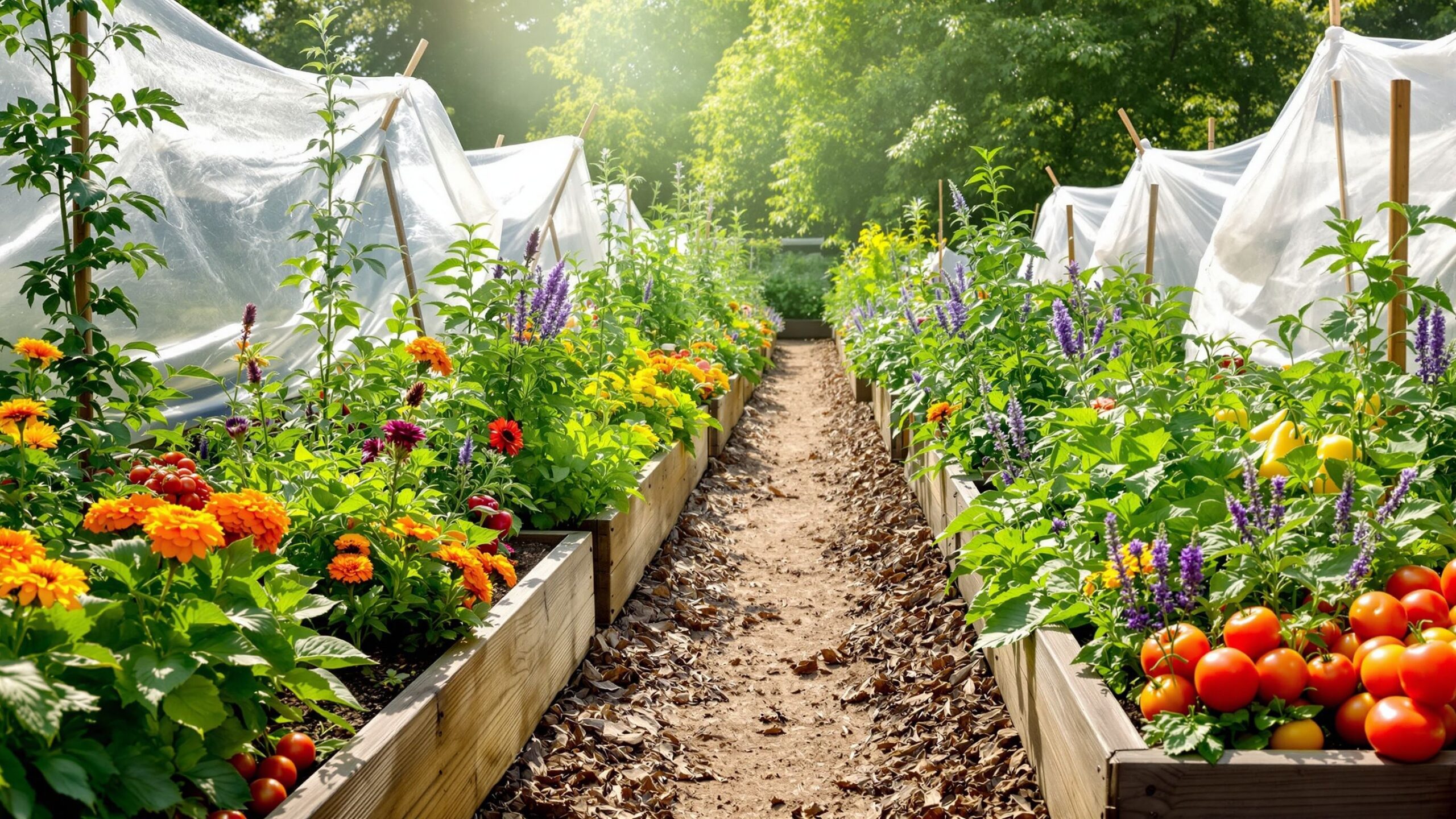
Every gardener eventually encounters pests. Whether growing vegetables, flowers, herbs, shrubs, fruit trees, or ornamental plants, insects and plant diseases are a natural part of gardening. The challenge is not eliminating every pest from the landscape but managing problems in a way that protects plant health while preserving the broader ecosystem. This is where Integrated Pest Management, commonly known as IPM, becomes one of the most valuable tools available to gardeners. Rather than relying solely on pesticides or reacting to problems after they appear, IPM provides a systematic approach that focuses on prevention, observation, and informed decision-making.
Integrated Pest Management is widely used in agriculture, horticulture, landscaping, and environmental management because it combines multiple strategies into a coordinated plan. Instead of treating every insect as an enemy, IPM encourages gardeners to understand pest life cycles, monitor plant health, encourage beneficial organisms, and intervene only when necessary. The result is often healthier plants, fewer chemical applications, lower maintenance costs, and more sustainable gardening practices.
One of the biggest advantages of IPM is its flexibility. Every garden is different, with unique plant selections, climates, soil conditions, pest pressures, and environmental challenges. An IPM plan can be customized to fit any situation, whether someone manages a small backyard vegetable garden, a collection of ornamental beds, a fruit orchard, or a large landscape.
Building an IPM plan from scratch may sound complicated at first, but the process becomes surprisingly manageable when broken into clear steps. Once established, an IPM plan serves as a roadmap that helps gardeners make informed decisions throughout the growing season rather than reacting emotionally whenever a pest appears.
A: IPM means Integrated Pest Management, a step-by-step way to manage pests safely and effectively.
A: No, home gardeners can use IPM in flower beds, vegetable gardens, lawns, and containers.
A: Sometimes, but sprays are used only when needed and after safer methods are considered.
A: Once or twice a week is helpful during the growing season.
A: It is the point where pest damage becomes serious enough to justify treatment.
A: Record the pest, plant, damage, location, weather, date, and what you did.
A: Yes, IPM can reduce diseases through prevention, monitoring, sanitation, and proper treatment.
A: Regular inspection is the easiest and most important first habit.
A: A good IPM plan tries to protect beneficial insects whenever possible.
A: Consistent monitoring, prevention, accurate identification, and using the least harmful effective method.
Understanding the Purpose of Integrated Pest Management
The primary goal of Integrated Pest Management is not complete pest elimination. In fact, many successful IPM programs tolerate low levels of pest activity because some insects are beneficial, and minor damage rarely threatens overall plant health.
IPM focuses on maintaining balance within the garden ecosystem. Healthy plants, beneficial insects, soil organisms, birds, and pollinators all contribute to natural pest regulation. Problems occur when pest populations grow beyond acceptable levels and begin causing significant economic, aesthetic, or ecological damage.
Instead of relying on a single solution, IPM combines prevention, monitoring, identification, cultural controls, biological controls, mechanical controls, and targeted treatments when necessary. This layered approach often provides better long-term results than repeated pesticide applications alone.
Understanding this philosophy is the foundation of every successful IPM plan.
Step One: Define Your Gardening Goals
Before creating an IPM plan, gardeners should clearly define their objectives. Different gardens have different priorities, and those priorities influence management decisions.
A vegetable gardener may focus primarily on crop production and harvest quality. A flower gardener may prioritize aesthetics and continuous blooming. Fruit growers may be concerned with preventing damage that affects harvest yields, while wildlife gardeners may place greater emphasis on supporting pollinators and beneficial insects.
Identifying goals helps establish acceptable levels of pest activity. A few holes in ornamental leaves may be perfectly acceptable to one gardener but unacceptable to another. Understanding personal priorities makes future decisions easier and more consistent.
Clear goals provide direction for the entire IPM process.
Step Two: Learn What You Are Growing
An effective IPM plan begins with a thorough understanding of the plants in the garden.
Different plants attract different pests and diseases. Tomatoes may experience hornworms, aphids, and blight. Roses may encounter black spot, Japanese beetles, and powdery mildew. Fruit trees face their own unique challenges involving insects, fungal diseases, and environmental stresses.
Creating a list of plant species and researching their common pest problems helps gardeners anticipate potential issues before they arise.
Knowledge of plant needs also improves prevention efforts because healthy plants are naturally more resistant to many pests and diseases.
The better gardeners understand their plants, the easier it becomes to protect them effectively.
Step Three: Identify Common Pests in Your Area
Every region has its own pest challenges. Learning which insects, weeds, diseases, and environmental problems are common locally allows gardeners to prepare in advance.
Local extension offices, gardening organizations, botanical gardens, and experienced gardeners often provide valuable information about regional pest pressures. Understanding seasonal pest patterns helps gardeners anticipate problems before they occur.
For example, aphids may become common during spring growth, while spider mites often increase during hot, dry weather. Certain fungal diseases may appear primarily during humid conditions or periods of prolonged rainfall.
Knowing what to expect helps gardeners develop more proactive management strategies.
Step Four: Establish a Monitoring System
Monitoring is one of the most important components of Integrated Pest Management. Without regular observation, problems often go unnoticed until they become severe.
An effective monitoring system includes routine inspections of leaves, stems, flowers, fruit, roots, and surrounding soil. Many gardeners perform weekly inspections during the growing season, although high-risk periods may require more frequent observation.
Monitoring should also include environmental conditions such as temperature, humidity, rainfall, irrigation practices, and plant vigor. Changes in growing conditions often influence pest development.
Keeping written notes or photographs helps track trends and identify recurring issues over time.
Consistent monitoring transforms pest management from guesswork into informed decision-making.
Step Five: Learn Proper Pest Identification
One of the most common gardening mistakes is treating a problem before identifying it correctly.
Many symptoms can have multiple causes. Yellow leaves may indicate nutrient deficiencies, disease, root problems, environmental stress, or insect damage. Some beneficial insects closely resemble harmful pests, leading gardeners to accidentally eliminate helpful species.
Accurate identification is essential because different pests require different management approaches. Misidentification often results in ineffective treatments and wasted effort.
When uncertain, gardeners should consult identification guides, local experts, extension offices, or reputable gardening resources.
Correct identification is the foundation of successful intervention.
Step Six: Set Action Thresholds
An action threshold is the point at which pest activity becomes significant enough to justify intervention.
This concept is one of the defining features of Integrated Pest Management. Instead of treating every pest immediately, gardeners determine what level of damage is acceptable before action becomes necessary.
For example, a few aphids on a vegetable plant may not require treatment because natural predators often provide sufficient control. A severe infestation affecting multiple plants may exceed the action threshold and require intervention.
Thresholds vary depending on plant value, gardener goals, pest type, and potential consequences.
Establishing thresholds helps prevent unnecessary treatments and encourages more thoughtful decision-making.
Step Seven: Focus on Prevention First
Prevention is always easier than treatment. A strong IPM plan prioritizes practices that reduce the likelihood of pest problems developing in the first place.
Healthy soil, proper watering, adequate spacing, crop rotation, mulching, sanitation, and selecting disease-resistant varieties all contribute to prevention.
Removing diseased plant debris, cleaning tools, controlling weeds, and avoiding overcrowding can dramatically reduce pest and disease pressure.
Strong, healthy plants are naturally more capable of resisting stress and recovering from minor damage.
Preventive practices form the backbone of long-term IPM success.
Step Eight: Encourage Beneficial Organisms
Beneficial insects, birds, spiders, frogs, and soil organisms play important roles in natural pest control.
Ladybugs, lacewings, hoverflies, parasitic wasps, and predatory beetles help regulate pest populations by feeding on aphids, mites, caterpillars, and other harmful insects.
Planting flowers such as dill, fennel, yarrow, alyssum, cosmos, and sunflowers attracts beneficial species and supports biodiversity throughout the growing season.
Reducing unnecessary pesticide use also protects natural predators that contribute to ecosystem balance.
A healthy garden ecosystem often provides significant pest control without human intervention.
Step Nine: Use Cultural Controls
Cultural controls involve modifying gardening practices to make conditions less favorable for pests and diseases.
Examples include adjusting irrigation schedules, improving airflow, rotating crops, changing planting dates, selecting resistant varieties, and improving soil health.
These techniques often address underlying causes of pest problems rather than simply treating symptoms.
Cultural controls are frequently among the most sustainable and effective components of an IPM program.
They also tend to provide long-term benefits that extend beyond pest management.
Step Ten: Add Mechanical and Physical Controls
Mechanical and physical controls offer direct methods for reducing pest populations without relying on chemicals.
Hand-picking insects, removing diseased leaves, installing row covers, using sticky traps, applying mulch, and erecting barriers are all examples of physical control methods.
Many gardeners underestimate the effectiveness of these approaches, but they often provide excellent results when used consistently.
Physical controls are particularly useful for small gardens where targeted intervention is practical.
These methods frequently serve as valuable first responses when action thresholds are exceeded.
Step Eleven: Consider Biological Controls
Biological control involves using living organisms to manage pest populations.
Predatory insects, beneficial nematodes, microbial products, and naturally occurring pathogens can all contribute to pest suppression.
Unlike broad-spectrum pesticides, biological controls often target specific pests while minimizing impacts on beneficial organisms.
Successful biological control depends on understanding the relationships between pests and their natural enemies.
When incorporated thoughtfully, biological controls can become powerful components of an IPM plan.
Step Twelve: Use Targeted Treatments Only When Necessary
Chemical and organic treatments should generally serve as tools of last resort within an IPM framework.
When intervention becomes necessary, targeted products are preferred over broad-spectrum treatments that affect many non-target organisms.
Organic sprays such as insecticidal soaps, neem oil, horticultural oils, and biological pesticides may provide effective control for certain problems while minimizing environmental impacts.
The goal is not to avoid treatments entirely but to use them thoughtfully and strategically when other methods prove insufficient.
Targeted applications help preserve beneficial organisms and maintain ecosystem balance.
Creating an IPM Record-Keeping System
Good records significantly improve the effectiveness of an IPM plan over time.
Documenting pest observations, weather conditions, treatments, successes, and failures helps identify recurring patterns and refine future strategies.
Garden journals, spreadsheets, photographs, and mobile applications can all serve as useful record-keeping tools.
Detailed records often reveal seasonal trends that would otherwise go unnoticed.
Over multiple years, these records become valuable resources for improving pest management decisions.
Evaluating and Adjusting Your Plan
An IPM plan should never remain static. Gardens change, pest populations shift, weather patterns vary, and new challenges emerge each year.
Regular evaluation helps determine which strategies are working and which require adjustment. If a particular pest continues causing problems despite intervention, additional prevention measures or alternative approaches may be necessary.
Successful IPM practitioners view their plans as evolving systems rather than fixed rules.
Flexibility and continuous learning contribute significantly to long-term success.
Common Mistakes to Avoid
Many gardeners accidentally undermine their IPM efforts by reacting too quickly to minor pest activity. Treating every insect sighting as an emergency often disrupts natural predator-prey relationships and creates unnecessary work.
Another common mistake is failing to monitor regularly. Without consistent observation, action thresholds become difficult to establish and problems may progress unnoticed.
Misidentification, poor record keeping, and overreliance on pesticides can also reduce the effectiveness of an IPM program.
Avoiding these mistakes strengthens the overall success of the plan.
Final Thoughts
Learning how to build your own Integrated Pest Management plan from scratch is one of the smartest investments a gardener can make. Rather than relying on reactive treatments and guesswork, IPM provides a structured framework for preventing problems, monitoring plant health, identifying threats accurately, and responding strategically when intervention becomes necessary.
A successful IPM plan combines prevention, observation, biological balance, cultural practices, mechanical controls, and carefully targeted treatments into a coordinated system that supports long-term garden health. The goal is not to eliminate every pest but to maintain a healthy and productive landscape where problems remain manageable and ecosystems remain balanced.
By taking the time to build a customized IPM plan, gardeners gain greater confidence, reduce unnecessary pesticide use, encourage beneficial organisms, and create more resilient gardens capable of thriving year after year. Over time, Integrated Pest Management becomes less of a strategy and more of a mindset that transforms how gardeners view pests, plant health, and the natural world around them.
Garden Product Reviews
Step into Mossy Streets’ Garden Product Reviews — your go-to guide for the best tools, gear, gifts, books, and garden gadgets rooted in nature. From blooming backyard beauties to lush indoor jungles, from heirloom seeds to high-tech composters, we dig into top-rated products for green thumbs, beginners, educators, and plant lovers alike. Whether you’re planting, pruning, decorating, or simply enjoying your green space, we’ve unearthed the best so you can grow, bloom, and thrive — all in one vibrant place!