
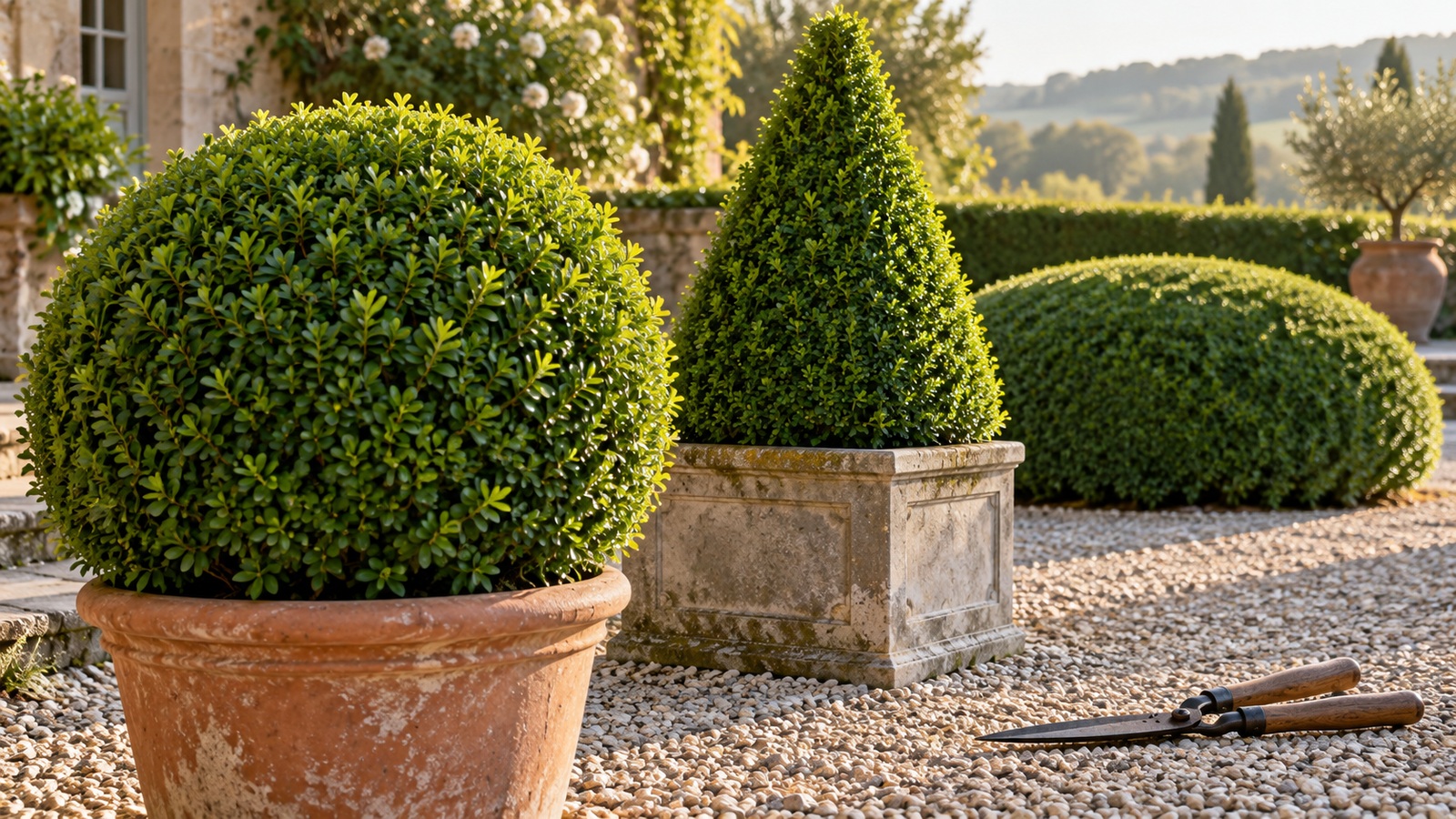
Begin a Living Sculpture With a Shape You Can Maintain
A carefully clipped shrub can give a garden a memorable focal point without elaborate ornament: a green sphere beside a door, a tapered cone at the end of a path, or a repeated series of rounded forms around a courtyard. Creating that effect is a process of guiding living growth, rather than carving a finished object from unlimited material. The plant needs a suitable site, healthy roots, and enough foliage to support recovery after each cut. Start with a simple form and a shrub that responds well to the intended treatment in your region. Then build the outline gradually, observing it from several directions and allowing new growth to fill thin areas. The most convincing topiary combines proportion with plant health. A modest shape kept crisp and balanced usually has more presence than an ambitious figure whose bare patches, unstable container, or unsuitable species make every maintenance session a struggle.
A: A sphere or a simple tapered cone provides a clear first outline without requiring detailed training of an intricate figure.
A: No, choose healthy dense branching close to the needed outline rather than treating height as the main advantage.
A: No, recovery depends on species, and many conifers cannot reliably replace foliage removed from old bare stems.
A: Check every side during light successive passes so the developing outline remains rounded from several useful viewing directions.
A: No, preserve useful leaves and identify the problem because the gap may need new growth rather than more cutting.
A: No, the shrub needs appropriate branch structure, healthy growth, and time to occupy the details indicated by the frame.
A: Let it reach the intended height, then use guidance appropriate to the species before shortening its central growth.
A: Its elevated crown catches wind above the container, whose weight and stability can decrease when growing medium dries.
A: Pause shaping the affected area and identify the cause before another cut removes foliage needed for possible recovery.
A: Not always; species and health determine whether gradual renovation, a simpler outline, or replacement offers the more realistic result.
Choose a Plant That Can Support the Intended Form
Look for healthy, well-branched material with foliage where the shape needs volume. Small leaves and dense growth can make a clipped outline read more clearly, while a sparse base may remain difficult to disguise. Inspect the entire plant rather than choosing the tallest specimen available. The eventual form might need a central upright stem, several well-positioned branches, or a naturally rounded framework. A shrub already close to the intended outline usually gives you a more realistic starting point than one requiring severe reconstruction.
Traditional topiary subjects include box, yew, and suitable hollies, but regional conditions and plant risks must influence the choice. Box can face serious disease or pest problems in some areas, and yew requires attention to drainage and its toxicity if material could be ingested. Holly species differ in leaf shape, growth, and climate suitability. Check local advice before selecting a familiar plant from a photograph. A species that clips well elsewhere may still be unsuitable for the site or household where you intend to grow it.
Understand how the proposed plant responds to cutting into older wood. Some topiary subjects can regenerate after appropriate renovation, while many conifers do not reliably refill cuts made into bare old growth. Do not assume that evergreen foliage means unlimited pruning tolerance. The difference matters before you remove a branch that supplies most of one side's green surface. Choose a plant whose normal response supports your plan and retain enough living growth to build the form through successive seasons.
Set the Size Before Making the First Cut
Decide how the completed shape will relate to its surroundings. A small ball may disappear beside a broad doorway, while a large cone can dominate a modest courtyard or obstruct a view. Mark the intended height and width without damaging the plant and look at the proposed outline from normal viewing positions. Include the container, if there is one, in the overall composition. The foliage shape and its base should feel balanced together rather than appearing to belong to different scales. Leave enough space to walk around the specimen comfortably, since those additional viewpoints will be needed at every future shaping session.
Prepare the Shrub and the Working Area
Allow a newly planted shrub to establish before subjecting it to substantial shaping. Check its water supply, drainage, and signs of stress, and avoid treating an unhealthy plant as raw material for an ambitious design. A specimen with unexplained browning or sparse growth needs assessment before additional foliage is removed. Identify any pest or disease problem accurately rather than clipping away visible symptoms and assuming the issue has disappeared. Healthy recovery is the foundation of a dense surface.
Use clean, sharp tools suited to the stems being cut. Hand shears can provide control over fine surface growth, while appropriate pruning tools are needed for selected thicker branches. Follow reliable sanitation guidance when disease is suspected or confirmed, and do not transfer contaminated debris through a collection. Arrange stable access around the plant and keep the work area clear. If the shape requires awkward overhead cutting or insecure footing, reduce the ambition or use qualified help rather than improvising a risky position.
Develop a Sphere From Several Viewing Directions
A rounded shrub is a forgiving introduction because its underlying branching often supports the desired volume. Begin by identifying the center and the intended outer boundary. Remove small amounts of protruding growth while keeping the shape broad enough to retain foliage across its surface. Walk around it frequently instead of finishing one side completely before looking at the others. A form that appears round from the doorway may be flattened or tilted when viewed from the path.
Work toward a balanced outline through light passes. Check the top, sides, and lower curve separately, then assess how they connect. A simple guide can help establish consistent dimensions, but it should assist observation rather than encourage cutting a thin area down to match a stronger one. If one side lacks growth, preserve it and allow the plant time to fill. Shrinking the entire sphere to remove every irregularity can sacrifice the foliage needed for recovery.
Step back far enough to see the whole composition after each pass. Small bumps may be less visible from the normal viewing distance than they are when your face is beside the leaves. Look for major balance and a continuous silhouette before pursuing tiny imperfections. Stop while the plant still has a healthy green surface. The final refinement can come from later growth and careful maintenance, which is more effective than trying to produce permanent perfection in one cutting session.
Build a Cone Around a Clear Central Axis
A cone depends on a stable upright center and a base wide enough to support a tapered outline. Choose material with the necessary height and branching rather than removing the leader before the plant reaches the intended size. Establish the axis visually or with a suitable guide, then shape gently toward it from several sides. Check that the cone appears upright from the approach path as well as directly in front. A leaning outline can be exaggerated by an uneven container or sloping background.
Keep lower foliage supplied with appropriate light and avoid an excessively broad top that shades the base. The slope should be consistent enough to read as a deliberate form, but it need not become a mathematical exercise at the expense of healthy branches. Thin spots may require time rather than a deeper cut. If a major branch sits outside the intended boundary, consider its role in supporting nearby foliage before removing it. Gradual decisions preserve options as the shape develops.
Use Frames as Guides Without Forgetting the Plant
A frame can help define a more complex form or maintain repeated dimensions, but it cannot create branches where the shrub has none. Choose an appropriate size and understand whether the frame is intended to remain or be removed. Allow growth to occupy the form gradually, and inspect ties or contact points so developing stems are not constricted. Beginners often learn more from a simple sphere or cone before attempting a detailed figure. The frame should support a realistic training process rather than promise an instant sculpture.
Keep Standards and Containers Structurally Sound
A standard topiary has a clear stem supporting a shaped crown, so its training differs from clipping a shrub that branches from the base. Select a suitable upright stem and guide it appropriately while allowing the plant to establish the height and strength needed. Removing lower growth is a gradual decision with long-term consequences for the outline. Inspect supporting ties regularly and adjust them before they damage a thickening stem. A developing standard needs stable structure as well as a decorative crown.
Container-grown topiary needs enough root volume, appropriate drainage, and a stable base. A tall crown can catch wind, especially when the pot becomes lighter as its medium dries. Consider the combined balance of shrub and container rather than buying a narrow decorative pot solely for appearance. Keep watering access practical and monitor moisture according to conditions. A formal outline does not change the plant's dependence on functioning roots or make a small container easier to manage.
Plan how the specimen will remain manageable as it matures. Repotting, root management where appropriate, and access for pruning may become necessary over time. A pair of containers can grow at different rates if light or water differs, so matching appearances may require reviewing the environment rather than cutting one plant excessively. Choose a scale you can maintain without moving unstable heavy pots repeatedly. Structural care helps the living sculpture remain an enjoyable garden feature instead of an awkward seasonal chore.
Time Maintenance Around Growth and Recovery
Use species-specific and regional guidance for clipping timing and frequency. Growth rate, weather, and the intended finish all influence how often a topiary needs attention. Avoid heavy work when the shrub is stressed by drought, heat, or other unsuitable conditions, and consider whether tender regrowth will have time to mature before damaging weather. Inspect for nesting wildlife before work and follow applicable protections. A tidy calendar is less useful than a routine that responds to the actual plant and setting.
Remove clippings from the surface and around the base as appropriate so they do not hide problems or accumulate against stems. Review water and root conditions after cutting rather than automatically applying fertilizer to force replacement growth. Nutrition decisions should follow the plant's needs and reliable guidance. If repeated trimming leaves the interior sparse, reconsider the method, light, and overall scale. The goal is a durable green form, not a cycle of increasingly hard cuts followed by attempts to stimulate recovery.
Repair Uneven Shapes With Patience and a Clear Limit
When a topiary develops a bare area, identify the cause before changing the shape. Shading, physical damage, disease, root stress, or cutting beyond the plant's regrowth capacity can produce similar visible gaps. A healthy thin patch may fill through suitable growth and selective training, while a damaged branch may require a different approach. Avoid trimming all surrounding foliage to the depth of the gap. That can turn a local problem into a much larger loss of surface coverage.
For an overgrown specimen, confirm whether the species can tolerate the proposed renovation and how long recovery may take. Some forms can be restored gradually; others need replacement or a simpler new outline. Seek local professional guidance where valuable mature specimens or major cuts are involved. A realistic recovery plan may temporarily reduce the ornamental effect, but it protects the chance of a healthy result. Do not promise immediate restoration from old bare stems without knowing the plant's response.
Let skill develop through observation. Photographs from consistent viewpoints can help you see whether proportions are improving across seasons, and a simple record of clipping dates can reveal the maintenance rhythm the shrub needs. Begin with one achievable form and expand only when its care is comfortable. A topiary masterpiece is convincing because the plant and shape work together. Patient training, suitable material, and careful small cuts create a lasting garden feature that rewards attention without demanding constant correction.
Match Shaping to the Plant’s Pruning Response
Use extension pruning guidance to understand the selected shrub before major cuts. Compare suitable hand tools through Garden Product Reviews.


