
Choose Shrubs With Lower Pollen Exposure in Mind
A garden planned around seasonal allergies can still have flowers, texture, and comfortable places to sit. The aim is to make thoughtful choices about the plants and activities closest to you, while recognizing that pollen also arrives from beyond the property. No shrub can guarantee an allergy-free garden, and a plant that suits one person may not suit another person's triggers. Start with a clear understanding of your own allergies, using an allergist's guidance where needed, then combine that information with regional plant advice. Insect-pollinated flowering shrubs are often useful candidates because their pollen is generally less dependent on wind dispersal than that of many common airborne-pollen sources. Their suitability still depends on the individual, the species, and the site's growing conditions. A practical low-allergen garden brings those considerations together with placement and manageable care, so attractive planting supports a more comfortable outdoor routine without making a medical promise.
A: No, individual reactions vary and pollen can arrive from outside the property even after every garden shrub is reconsidered.
A: Their reproduction generally depends less on airborne pollen dispersal, making them useful candidates alongside personal and regional considerations.
A: No, simultaneous flowering cannot identify the cause when other pollen sources may be active in the wider region.
A: No, lower airborne-pollen potential does not establish tolerance to direct contact with smooth hydrangea leaves or other plant tissue.
A: No, check the identified azalea's soil, drainage, exposure, and climate needs before relying on its place on a candidate list.
A: Assess regional fit, mature spread, flowering season, and personal fragrance comfort alongside its decorative relationship to the window.
A: No, verify plant sex and compatible pollination arrangements before expecting a dependable winterberry fruit display from the planting.
A: No, they involve different triggers and need their own individual medical guidance when informing comfortable garden use.
A: Pollen from nearby properties and the broader region continues arriving, so changing patio shrubs cannot eliminate every relevant exposure.
A: Clarify personal triggers and the garden areas used most often before comparing suitable shrubs and their actual placement.
Begin With Personal Triggers Rather Than a Universal Safe List
The word allergy covers several different experiences, and plant selection becomes more useful when the relevant trigger is understood. Airborne pollen sensitivity, contact reactions, and discomfort around strong scents are not interchangeable. An allergist can help identify the cause of persistent or significant symptoms and advise on an appropriate management plan. Do not use a garden shopping list as a diagnosis. A clear personal starting point prevents you from removing useful plants or buying replacements on the assumption that every flowering shrub has the same effect.
Record plant identities and flowering periods if you are discussing a garden-related pattern with a clinician. Observations can provide context, but a shrub blooming when symptoms appear does not prove it caused them. Regional trees, grasses, and weeds may release pollen at the same time. Keep the distinction between observation and diagnosis clear. This makes the information more useful and lets plant decisions follow evidence rather than the visual prominence of whichever flowers happen to be nearest the patio.
Understand Why Pollination Method Helps Narrow the Choices
Wind-pollinated plants release pollen into the air as part of reproduction, while many showy flowering shrubs rely substantially on insects to move it between flowers. That difference can help guide an initial shortlist for lower local airborne-pollen exposure. It does not prove that an insect-pollinated plant is harmless to every individual. Personal sensitization and the way someone encounters the plant still matter. Use the distinction as a selection tool alongside specific plant identification, rather than converting it into a blanket guarantee.
Large visible flowers are not a reliable measure of the pollen already circulating through a neighborhood. A quiet-looking wind-pollinated plant may contribute to airborne exposure while a showier flower draws most of the attention. Consider the wider seasonal context when evaluating symptoms or planning a replacement. Equally, avoid assuming that every cultivar within a familiar genus has identical reproductive features. Accurate names help when comparing horticultural information and discussing personal suitability with a knowledgeable professional.
Published lower-allergen plant lists are best treated as candidate lists with stated limits. An older AAAAI workgroup report includes smooth hydrangea, winterberry, and other insect-pollinated shrubs, but it is reference material rather than current clinical policy. It also emphasizes individual circumstances and regional fit. The practical lesson is to evaluate candidates deliberately, not to assign a universal medical rating to a whole garden. Combine current personal medical advice with reliable local horticultural guidance when a significant allergy influences planting decisions.
Consider Smooth Hydrangea for Suitable Flowering Beds
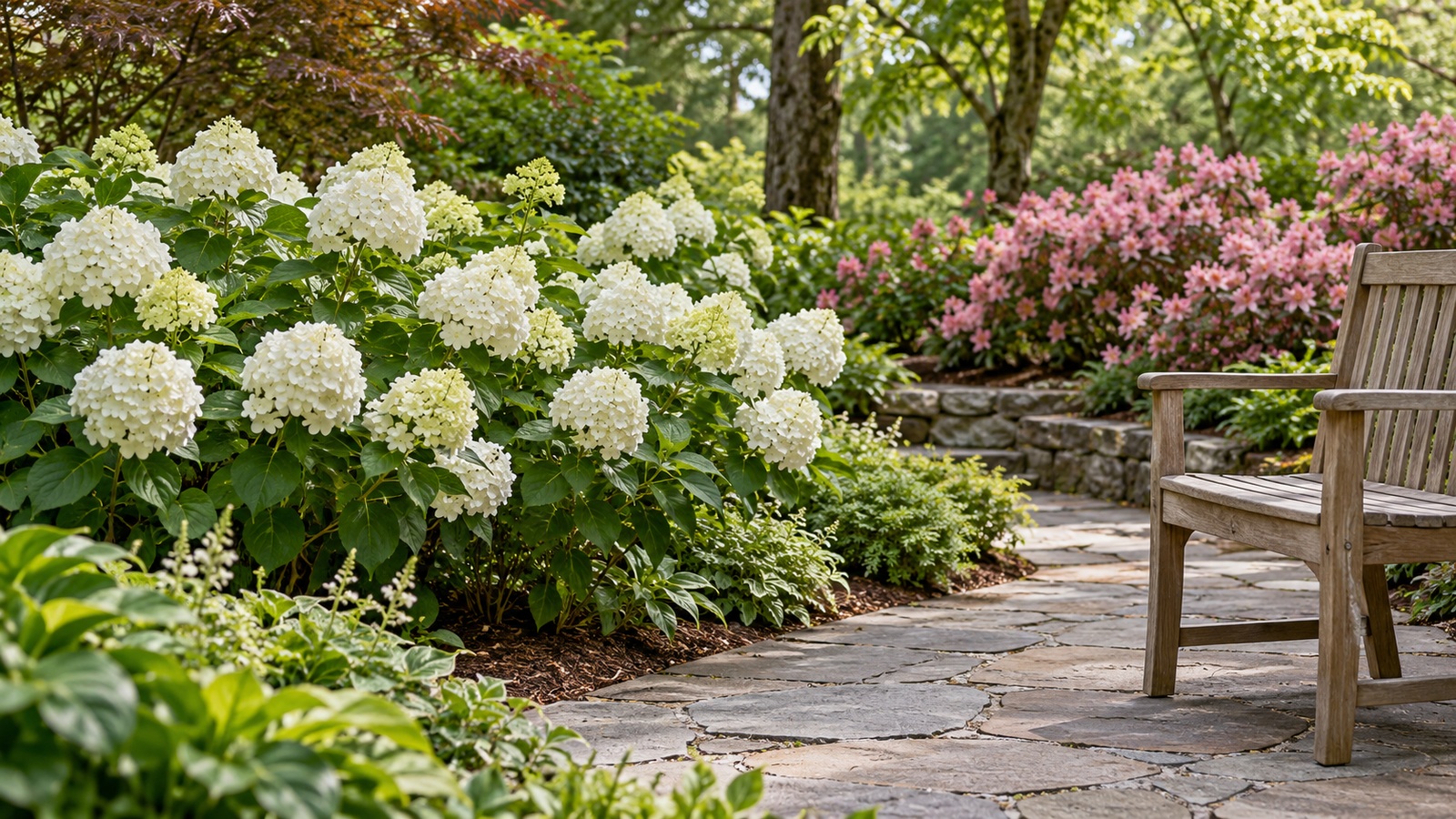
Smooth hydrangea, Hydrangea arborescens, is a useful flowering candidate to discuss for an appropriate low-allergen planting plan. It is a deciduous shrub with cultivar differences in dimensions and flower presentation, so choose the actual named plant for the bed. Give it suitable light, moisture, and drainage according to regional guidance. Do not assume a flower head with many showy florets means the entire plant is pollen-free. Lower airborne-pollen potential also says nothing about whether direct foliage contact will suit a person with sensitive skin.
Use Azaleas Where Their Soil and Exposure Requirements Fit
Azaleas provide another group of showy, insect-pollinated flowering shrubs to evaluate, with considerable variation in size, climate adaptation, and evergreen or deciduous habit. Their usefulness depends on choosing a suitable species or cultivar and providing appropriate soil conditions. Many require an acidic, well-drained root environment rather than an arbitrary planting hole in an unsuitable bed. Compare the full identity with local recommendations. A shrub selected for a lower airborne-pollen role still needs a site where it can grow well.
Place the flowering display where it can be seen without forcing people to brush through it along a narrow path. This is a design decision with several benefits: access remains comfortable, branches are less likely to be damaged, and routine inspection is easier. Consider the mature width rather than the nursery plant's current footprint. An attractive azalea can frame a seating area from a little distance instead of being pressed against the chair. Give the garden user a clear route and the plant room to develop.
Pollinating insects are part of the flower's ecology, so account for that activity when choosing the position. Pollen allergy and insect-venom allergy are different concerns and require their own medical guidance. A person with a significant sting allergy should discuss outdoor precautions with their clinician rather than relying on a lower-pollen plant label. Thoughtful placement can improve ordinary use of the garden, but it cannot replace that individual plan. Select and locate the shrub with both its horticultural role and the household context in mind.
Evaluate Camellias and Other Flowering Candidates Individually
Camellias can offer glossy foliage and seasonal flowers in suitable climates, making them candidates where evergreen structure is desired alongside a lower airborne-pollen planting approach. Species and cultivars differ in flowering season, hardiness, and exposure needs. They generally require an appropriate acidic root environment, so verify the soil rather than adding one because it appears on a broad garden list. Their mature spread also matters near windows and doors. A healthy camellia in a suitable position can provide ornamental value without being presented as a cure for symptoms.
Compare other locally appropriate flowering shrubs with the same care. A candidate should have a known identity, suitable dimensions, and a role in the garden, as well as an acceptable personal exposure profile. Strong fragrance may affect comfort even when airborne pollen is not the main issue, so consider scent separately. Visit flowering examples when practical without intentionally challenging a known allergy. You are choosing a plant to live with over many seasons, and immediate flower appeal is only one part of that decision.
Look Beyond Evergreen Foliage When Assessing Winterberry
Winterberry, Ilex verticillata, is a deciduous holly that can contribute winter fruit in appropriate conditions and is listed among insect-pollinated shrub candidates in the older workgroup reference. Fruit production generally involves suitable female plants and compatible pollen-bearing male plants, so verify the planting arrangement before buying for berries. Do not describe every holly as pollen-free or assume a female selection settles every exposure concern. Mature size, moisture requirements, local suitability, and individual medical considerations still determine whether this shrub belongs in the design.
Design for Comfortable Use and Straightforward Maintenance
Place selected shrubs where their mature branches leave clear space around seats and main routes. Keep access to water supplies and care points simple so maintaining the garden does not require pushing through dense foliage. A planting plan that is attractive from indoors can also provide enjoyment on days when outdoor exposure is less comfortable. Consider window views as part of the design rather than focusing exclusively on the patio. Useful visual relationships can make a modest number of shrubs feel purposeful throughout the property.
Choose manageable dimensions to reduce the need for repeated heavy pruning. A naturally suitable outline leaves fewer large maintenance tasks than an oversized shrub constantly cut back beside an entrance. Check flowering habits before trimming so care does not remove the display the plant was chosen to provide. Set plants far enough apart for their developed form and for practical inspection. This approach improves horticultural quality while making it easier to organize care according to the needs of the garden's users.
Think about who will perform tasks that a sensitive person finds difficult. You may choose a different maintenance arrangement for mowing, moving dusty material, or major pruning while keeping the person involved in design and observation. Discuss significant exposure concerns with the relevant clinician and follow appropriate practical precautions. Garden planning can reduce avoidable inconvenience, but it should not become an instruction to tolerate symptoms while finishing a job. The aim is an arrangement that supports comfortable participation within the person's individual health plan.
Use Local Conditions and Pollen Information Together
Regional pollen information can help put a garden visit in context, especially during a known problem season. It should be considered alongside the specific allergens relevant to you, since an overall high or low count does not describe every person's exposure equally. Follow current guidance from appropriate allergy resources and your clinician when planning outdoor activity. Changing the shrubs closest to the seat may reduce one local contribution, yet it will not stop pollen arriving from nearby properties or the wider landscape.
Keep growing conditions part of the plan even when health concerns are the main motivation. A shrub repeatedly stressed by unsuitable drainage, light, or climate is unlikely to become a satisfactory replacement. Review local invasive concerns and household suitability as well as the plant's ornamental features. Plant fewer well-matched specimens if that gives you a more manageable garden. A careful shortlist is more useful than a long collection of supposedly safe plants with incompatible needs or unclear identities.
Refine the Garden Without Promising Complete Pollen Avoidance
Make changes in a considered sequence. Identify the garden areas used most, establish the relevant personal guidance, and evaluate candidate shrubs for those positions before replacing large parts of an established landscape. Mature plants may have useful shade, habitat, or structural value that deserves weighing in the decision. Do not remove healthy specimens merely because a general list sounds alarming. A specific justified change is easier to assess than an expensive redesign driven by uncertain assumptions about the source of symptoms.
Keep accurate plant names and basic care information after installation. This helps future pruning, replacement, and any discussion of plant-related exposure. Review whether the garden remains comfortable to use and whether the selected plants are developing as expected. Adjust access, spacing, or maintenance arrangements where a practical problem appears. Observations can guide design refinements, but medical interpretation belongs with an appropriate professional. Preserving that boundary helps the garden remain useful without becoming a series of uncontrolled personal allergy experiments.
The strongest low-allergen shrub plan combines a realistic aim with good gardening. Smooth hydrangeas, suitable azaleas, camellias, and carefully evaluated hollies can be candidates, depending on the person and place. Choose for regional performance, mature form, and a clear ornamental role, then place the plants where care and daily use remain manageable. Accept that the wider outdoor environment continues to contribute pollen. A thoughtful garden can improve the setting you control while working alongside individual allergy care rather than claiming to replace it.
Use Current Allergy Advice Alongside Local Plant Guidance
Review the AAAAI’s public gardening and allergy guidance and discuss significant personal concerns with an allergist. Explore practical garden supplies through Garden Product Reviews.


