Give a Small Garden Shrubs That Fit Beyond the First Season
A compact shrub can give a small urban garden the structure of a much larger landscape: flowers at eye level, foliage that frames a seat, and a dependable outline after seasonal bedding fades. The difficulty is choosing a plant that remains proportionate once its roots and branches develop. A tiny nursery pot can contain a future obstacle, while a genuinely compact cultivar may provide years of interest without swallowing the route to the door. Begin with the usable space, light, and root environment rather than a photograph of a perfect flower display. Courtyards, balconies, narrow front beds, and enclosed patios impose different limits. The best shrubs are those whose mature form and care requirements match those limits while contributing something you value through the year. A smaller planting chosen deliberately can feel richer and more comfortable than a collection of large shrubs constantly cut back to recover lost space.
A: Use the complete cultivar's mature spread, comparing it with usable bed width after preserving routes and necessary maintenance access.
A: No, compact hydrangeas still need substantial root space, drainage, moisture care, and clearance for their developed branches.
A: Different hydrangea groups form flower buds on different growth, so a shared pruning routine can produce different flowering results.
A: No, it is deciduous, so choose another suitable approach when dependable winter privacy is the main garden requirement.
A: No, verify the species' regional native range rather than assuming its broader continental label establishes a local relationship.
A: Suckering or spreading stems can exceed the available width even when the shrub's listed mature height appears manageable.
A: No, retaining open space preserves access and can make the few selected shrubs clearer within a compact composition.
A: Confirm the balcony's structural load allowance through appropriate building guidance before installing substantial shrubs and heavy wet containers.
A: Check which growth carries flower buds and prune at a suitable time for the identified shrub type.
A: Replacement becomes practical when the shrub's normal mature size repeatedly interferes with essential routes or use of the courtyard.
Measure the Garden as a Place People Use
Mark the width of paths, the area occupied by chairs, and the clearance needed to open doors before allocating space to shrubs. Include the position of bins, drainage outlets, and access points that must remain available. A plant may fit within the property dimensions while interfering with everyday use. Measure the eventual foliage outline rather than only the planting hole. In a small garden, keeping a clear route often matters more than filling every corner with leaves.
Look beyond height when assessing the proposed position. A low but broad shrub can crowd a doorway more severely than a narrow upright one. Arching branches may extend into a sitting area, while prickly foliage is inconvenient beside a frequently used passage. Consider the view from indoors and from the seat as well as the street. A plant placed with enough room for its natural form is more likely to remain an asset than one selected solely because it is described as dwarf.
Leave some unplanted space deliberately. Visible paving, a modest open patch, or a clear wall can help the planted area read as a coherent composition. The effect is especially useful where a small courtyard already contains furniture and containers. You do not need a different shrub for every season if one suitable plant offers flowers, foliage, and an attractive shape. Decide which features matter most and let each selected shrub perform a clear role.
Check the Microclimate Behind the Walls
Urban gardens can contain sharp contrasts over short distances. A wall may shelter a bed from wind while reflected heat increases drying, and nearby buildings may shade the soil for much of the day. Observe the intended position at different times rather than relying on a general description of the garden as sunny or shady. Seasonal changes also matter, especially where winter sun reaches beneath a neighboring tree but summer foliage blocks it. Choose plants for the actual pattern they will experience.
Assess drainage, root competition, and the physical soil volume. A narrow bed beside construction may contain compacted material or rubble that requires investigation before planting. A container offers control over the growing medium, but it creates different watering and temperature challenges. Shelter does not guarantee frost protection, and a hot paved corner does not suit every drought-tolerant shrub equally. Match the plant to the whole setting instead of expecting small stature to compensate for unsuitable conditions.
Read the Cultivar Name as Carefully as the Species
Compact selections can differ substantially from the full-sized species and from one another. Record the complete cultivar name and compare mature height, spread, hardiness, and light requirements with the available space. A vague dwarf label is less useful than a reliable description of the named plant. Even compact shrubs continue growing and need room for healthy roots and branches. If the only way a candidate fits is through repeated drastic pruning, look for a more appropriate selection or a different planting role.
Use a Small Panicle Hydrangea Where Summer Flowers Can Shine
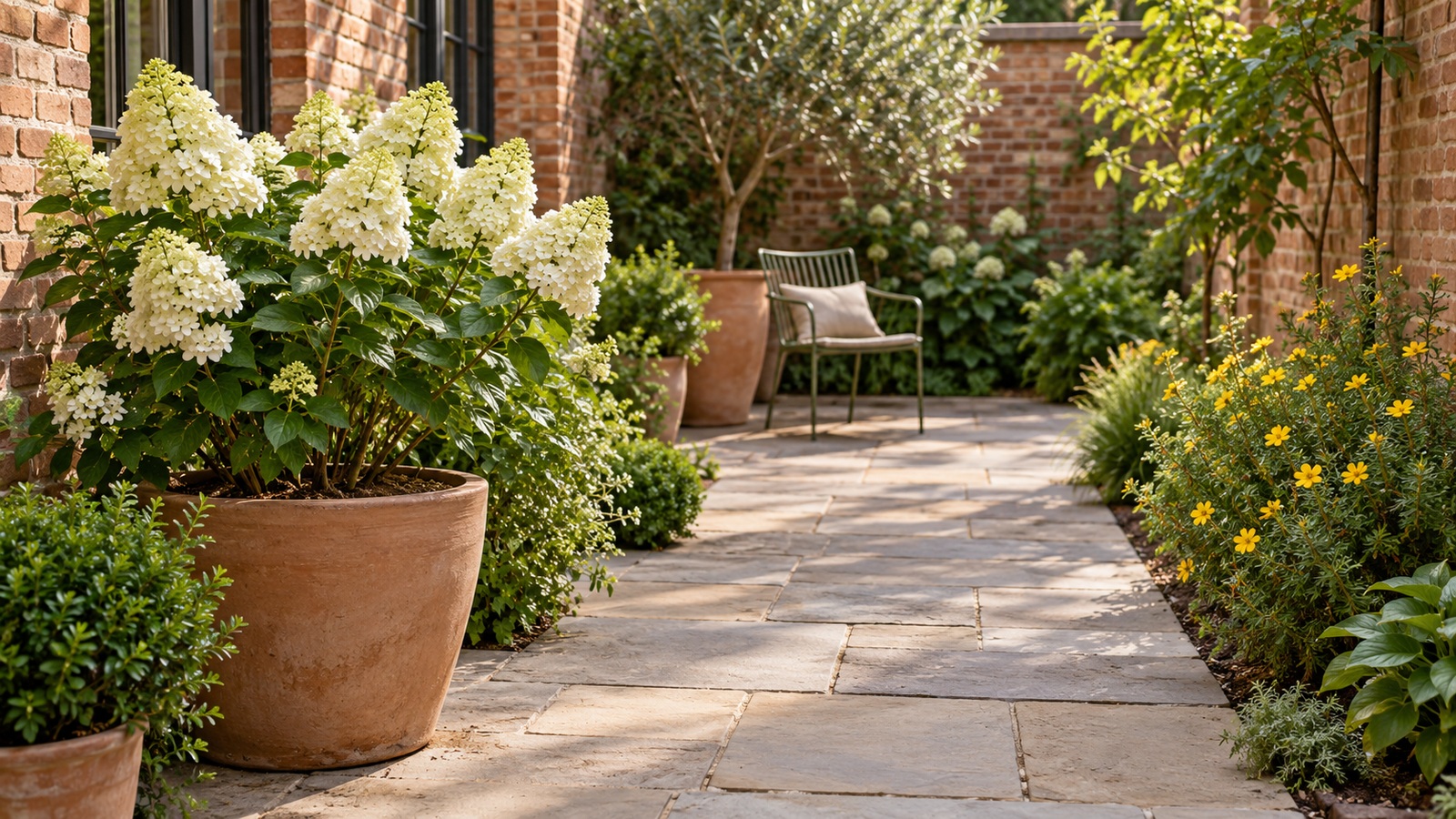
A compact panicle hydrangea can provide a generous summer flower display without the dimensions of larger selections. Bobo, a named Hydrangea paniculata cultivar, is commonly listed by its breeder at roughly two and a half to three feet tall and three to four feet wide. Those dimensions still represent a meaningful footprint in a narrow bed. Treat the stated range as a planning guide, allowing for local growth and the plant's natural shape. It is compact compared with larger hydrangeas, rather than miniature enough for every tiny corner.
Provide appropriate light, moisture, and drainage for the climate. A container-grown hydrangea needs sufficient root room and careful monitoring during warm weather; flowers do not make it independent of water. Panicle hydrangeas flower on new growth, but pruning advice should still reflect the selection and desired form. Other hydrangea types can carry flower buds on older stems and need different treatment. Preserving the full identity helps avoid a routine that sacrifices the feature you bought the plant to provide.
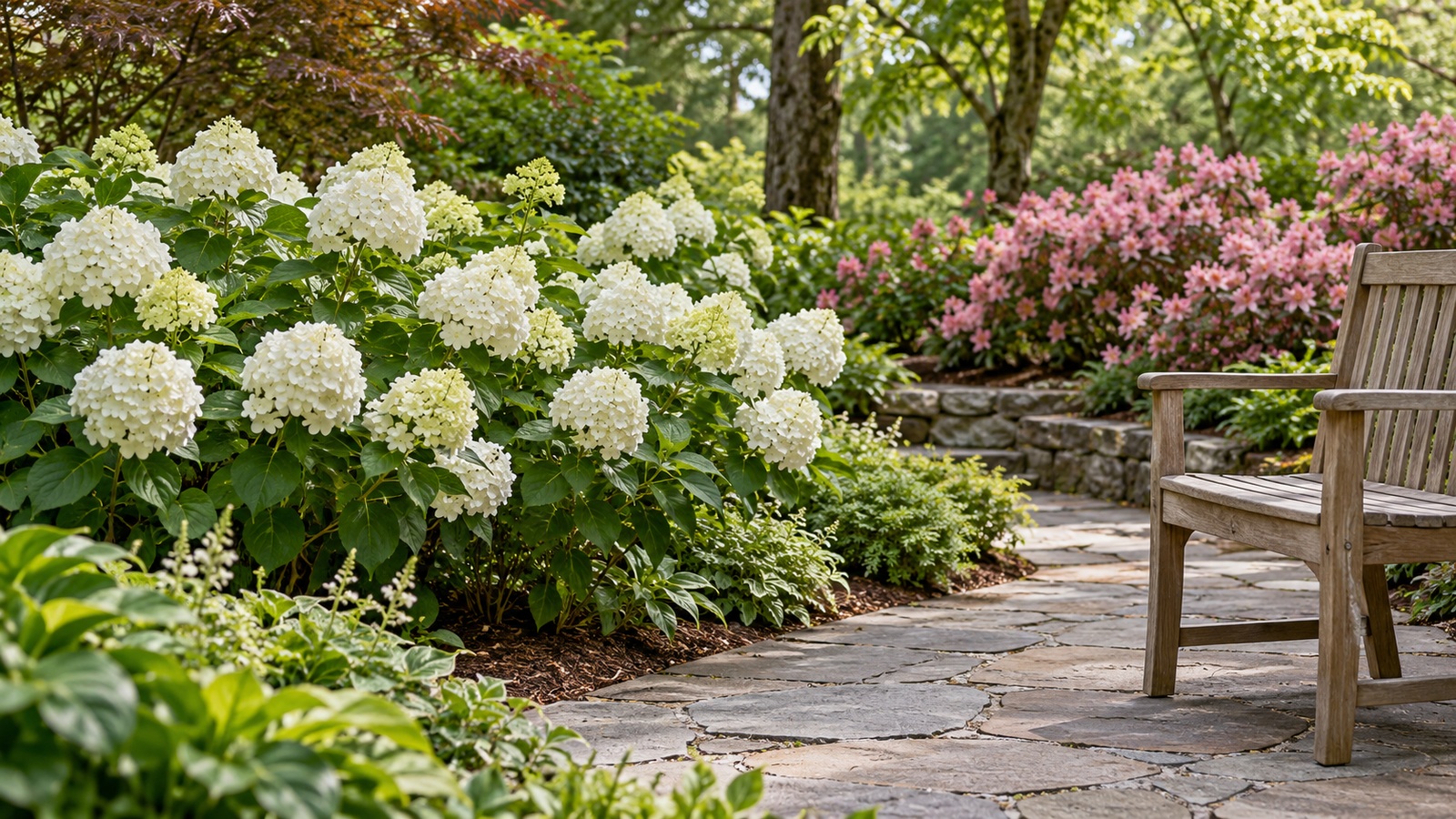
Position the flower heads where they can be enjoyed without pressing against a door or covering a neighboring plant. A single well-grown shrub may be enough to anchor a small courtyard display. Pair it with lower plants that tolerate compatible conditions rather than crowding another substantial shrub beneath it. Consider what the composition looks like outside flowering season, since this is a deciduous plant. An attractive container or an adjacent evergreen element can help maintain structure when the hydrangea has lost its leaves.
Consider Shrubby Cinquefoil for a Sunny Modest Border
Shrubby cinquefoil, Dasiphora fruticosa, is often sold under its older Potentilla name and includes selections with a compact branching form and small flowers. It can be useful in suitable sunny gardens where a lower deciduous shrub is wanted. Cultivars vary in color and dimensions, so check the exact plant rather than assuming every cinquefoil has the same footprint. Regional climate and drainage remain important. A compact shrub that flowers freely in one setting may struggle when placed in deep shade or a persistently unsuitable root zone.
Use its finer leaf texture to balance a larger-leaved companion or soften the edge of a small bed without obstructing the path. Allow the branches to develop instead of shearing them continually into a hard block. Learn an appropriate renewal or tidying method for the selected plant as it matures. Its useful role is a manageable flowering presence, not an evergreen winter screen. Where winter outline is a priority, combine it thoughtfully with other structural elements rather than expecting it to provide every garden function.
Evaluate Compact Native Shrubs by Their Local Role
A compact selection of a locally appropriate native shrub can connect a small garden with its surrounding landscape. Smaller ninebark, chokeberry, or sweetspire selections may be candidates in regions where their species and growing requirements are suitable. Native range is geographical, so a plant native somewhere in North America is not automatically local to your neighborhood. Consult regional guidance and check the exact cultivar's dimensions. Ecological value also depends on flowers, fruit, foliage, and how the plant is managed, rather than the label alone.
Spread deserves particular attention in a confined bed. Some native shrubs can sucker or form a broader colony over time, even when their individual stems are not very tall. That habit may be welcome in a naturalistic border but awkward between a wall and a walkway. Ask how the proposed selection behaves under local conditions before planting it. A plant that needs frequent removal of spreading growth may be less suitable than a different species with a more contained outline.
Keep wildlife benefits compatible with the site's use. Fruit can attract birds yet fall onto paving, and flowers may draw insects close to a chair or entrance. Those features are not reasons to reject a plant automatically, but they affect placement. Choose a position where the seasonal activity can be enjoyed comfortably. A small garden can make a meaningful contribution with a few appropriate shrubs and supportive care, without becoming a crowded attempt to include every attractive native species.
Make Containers Large Enough to Support a Living Shrub
A container should suit the shrub's root system, mature weight, and exposure, with functional drainage and a growing medium appropriate for container culture. Decorative scale matters, but a very small pot can become difficult to keep evenly watered as the shrub grows. Evaluate how you will reach the plant, move it if necessary, and manage runoff. On balconies or raised structures, verify load limits through suitable building guidance before placing heavy filled containers. The planting must fit the physical setting as well as the visual plan.
Choose Seasonal Interest Without Multiplying Maintenance
Compare the shrub's contribution through the whole year. Flowers may be brief, while foliage color, branching, fruit, or evergreen leaves occupy more months. A single plant with several useful features can justify its space more effectively than a shrub whose main appeal lasts only a short period. Look at mature examples or reliable seasonal photographs when available. The aim is not continuous spectacle but a garden that feels considered outside the moment when every plant is flowering.
Be realistic about fragrance and foliage near daily routes. A strongly scented shrub may be delightful beside an occasional seat and overwhelming beside an open window. Evergreen foliage supplies winter presence, but the chosen species must tolerate the site's light and climate. Sharp leaves or thorns can limit comfortable access in a narrow garden. Judge these traits from the viewpoint of the people using the space, and select the contribution that improves their ordinary experience rather than merely expanding a plant collection.
Pruning needs belong in the comparison before purchase. A naturally compact outline is usually easier to maintain than a large shrub repeatedly reduced to fit. Flowering time and the location of flower buds determine when some plants can be trimmed without losing their display. Containers may need periodic repotting or another long-term root-management plan. Choose a number of shrubs you can care for well. A few healthy plants with clear roles can make the garden feel complete without creating a demanding miniature nursery.
Keep the Planting Proportionate as the Garden Develops
Observe the first seasons before filling every remaining opening. Young shrubs need time to show their branching and occupy the space planned for them. Temporary seasonal plants can provide interest if they do not compete excessively or obscure watering access. Review whether the path stays clear, neighboring plants receive light, and the intended view remains attractive. Small adjustments to positioning or companions are easier while the planting is young than after several crowded shrubs have become established.
When a shrub consistently exceeds its role, reconsider the selection instead of assuming more pruning will solve the mismatch. A replacement with the right mature dimensions may improve both the garden and the care routine. Preserve adequate root room, match the real microclimate, and keep furniture and access part of the design. The best small-space shrubs do not simply remain short. They create useful form, seasonal interest, and a comfortable relationship with the limited space around them.
Check the Named Plant Before Buying
Compare the breeder’s Bobo panicle hydrangea details with the space available. Explore suitable containers and care equipment in Garden Product Reviews.