Longwood Gardens is one of the most extraordinary public gardens in the United States, but its story did not begin as a grand horticultural attraction. It began with trees. In the early 20th century, industrialist Pierre S. du Pont purchased a property in southeastern Pennsylvania after learning that its remarkable collection of mature trees was at risk. What began as an effort to preserve a beloved landscape eventually grew into an enormous vision combining horticulture, architecture, fountains, conservatories, performance spaces, formal gardens, meadows, woodlands, and seasonal displays. Today, Longwood Gardens is known for immersive plant collections, monumental water features, historic landscapes, and ambitious contemporary horticultural design. Yet the most fascinating part of Longwood is not simply what visitors see today. It is how the property evolved from rural land into one of America’s most celebrated gardens. Its story is one of preservation, experimentation, entertainment, engineering, philanthropy, and the belief that gardens can become places where beauty, education, and community come together.
A: Longwood Gardens is located in Kennett Square, Pennsylvania, in the Brandywine Valley region.
A: Pierre S. du Pont made the most significant contribution to its development after purchasing the property in 1906. :contentReference[oaicite:4]{index=4}
A: One of his original motivations was preserving the property's historic trees from destruction. :contentReference[oaicite:5]{index=5}
A: The Flower Garden Walk, laid out in 1907, was his first major formal garden. :contentReference[oaicite:6]{index=6}
A: The grand Conservatory opened in 1921. :contentReference[oaicite:7]{index=7}
A: Its fountains, conservatories, spectacular seasonal displays, horticultural artistry, historic gardens, and expansive landscapes are among its defining attractions.
A: Yes. Pierre du Pont drew particularly strong inspiration from Italian and French garden traditions. :contentReference[oaicite:8]{index=8}
A: No. It includes formal gardens, conservatories, fountains, woodlands, meadows, architectural spaces, plant collections, and educational programs.
A: You may not have its enormous scale, but you can borrow its use of layered planting, seasonal displays, dramatic focal points, water features, and carefully designed pathways.
A: It preserves Pierre du Pont's remarkable horticultural legacy while continuing to evolve as a center for gardening, design, education, conservation, and public enjoyment.
Where Is Longwood Gardens?
Longwood Gardens is located in Kennett Square, Pennsylvania, in the Brandywine Valley region west of Philadelphia. The area is known for rolling countryside, historic estates, woodlands, farms, and a long horticultural tradition. Longwood’s location helped shape its development because the region offered fertile land, favorable growing conditions, and proximity to major East Coast cities. Visitors today encounter a landscape that feels expansive and secluded even though it sits within a heavily populated part of the northeastern United States. Its mixture of formal gardens, open meadows, mature trees, conservatories, fountains, and woodland paths allows the property to feel like several different worlds contained within one destination.
The Land Before Longwood Gardens
The property that eventually became Longwood Gardens had a history long before Pierre S. du Pont arrived. European settlers had farmed and developed the land over generations, and by the 18th and 19th centuries the property had become known for impressive trees and landscaped grounds. Previous owners had planted collections of native and exotic trees, creating an arboretum-like setting that attracted local attention. These mature trees would later become central to the story of Longwood. When the property faced possible changes that threatened some of its landscape, du Pont saw something worth protecting. His decision to purchase the land in 1906 became the turning point that transformed the property into the institution known today.
Pierre S. du Pont and the Decision That Changed Everything
Pierre S. du Pont was a businessman, engineer, philanthropist, and member of the prominent du Pont family. Although his career was deeply connected to American industry, he also developed a passion for gardens, architecture, fountains, and public entertainment. When he purchased the property that became Longwood, he was reportedly motivated in part by the desire to prevent important trees from being removed. At first, there was no grand master plan to create one of the country’s most famous gardens. The landscape evolved gradually as du Pont experimented with new ideas, built structures, expanded plantings, and created places for friends, family, and guests to gather. His technical background and love of spectacle would eventually shape Longwood in ways that distinguished it from more traditional estate gardens.
From Private Estate to Horticultural Masterpiece
Du Pont did not treat the property merely as a private residence surrounded by decorative landscaping. He continually expanded its possibilities. Gardens became more elaborate, fountains more ambitious, and conservatories more extensive. He drew inspiration from places he encountered during his travels, including European gardens, architecture, water displays, and public spaces. Rather than copying one garden style exactly, he combined ideas from different traditions into a landscape with its own identity. Formal European influences appeared alongside American woodland scenery, glasshouse horticulture, theater, and engineering. Over time, Longwood became part garden, part estate, part cultural venue, and part experimental landscape.
The Influence of European Gardens
European garden traditions strongly influenced Pierre du Pont’s vision. Formal gardens in France and Italy demonstrated how architecture, water, symmetry, terraces, and planting could create dramatic outdoor experiences. Du Pont was particularly fascinated by fountains and the theatrical possibilities of moving water. These influences can be seen throughout Longwood, where formal geometry and architectural elements contrast with more naturalistic sections of the property. Yet Longwood never became a direct imitation of Versailles or an Italian Renaissance villa. Instead, European ideas were adapted to an American landscape and combined with du Pont’s own interests in technology, entertainment, and horticulture.
The Italian Water Garden
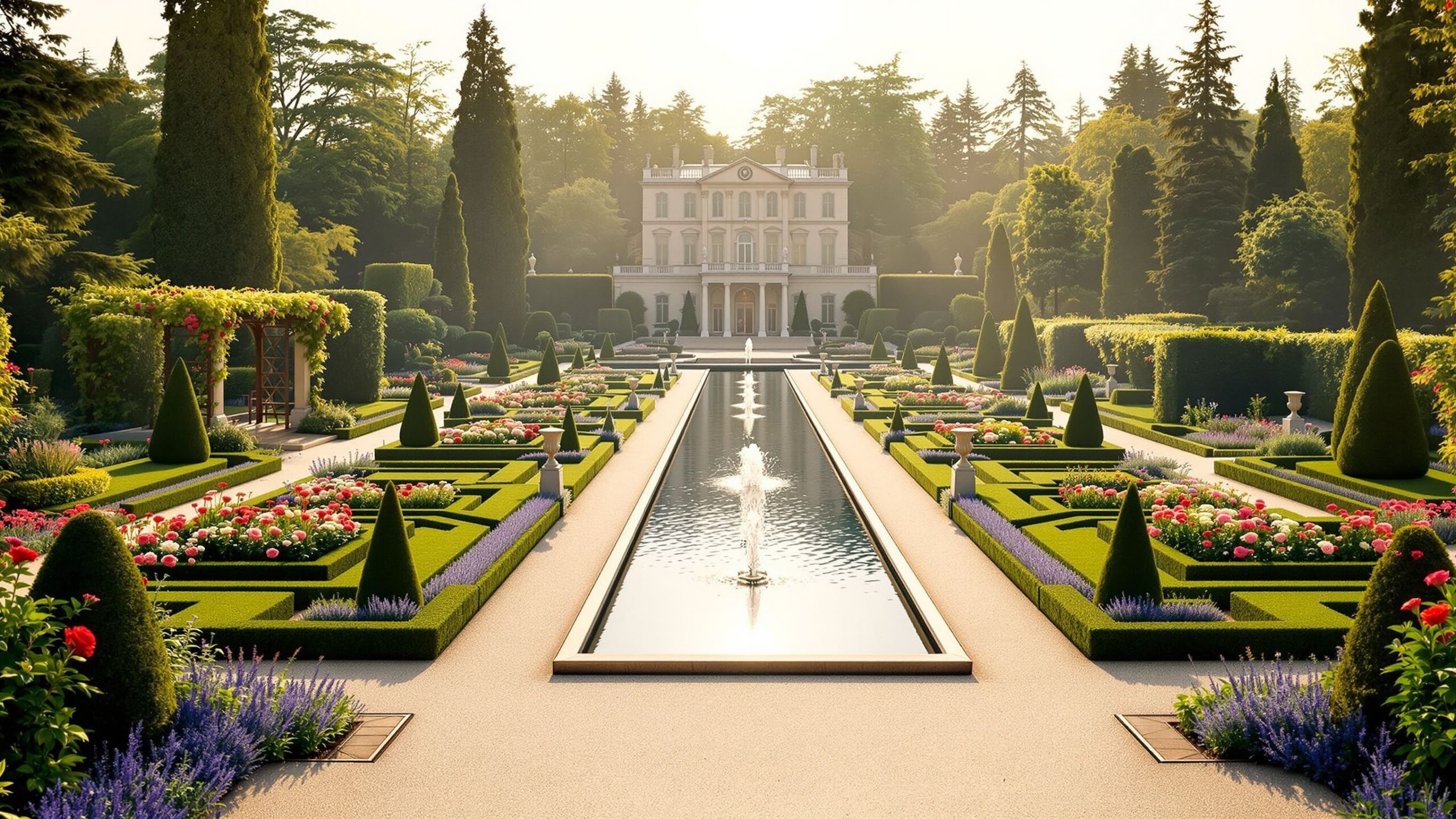
The Italian Water Garden is one of Longwood’s most recognizable formal landscapes. Inspired by European water gardens, it features a carefully organized arrangement of pools, fountains, clipped plantings, and architectural elements. The garden demonstrates how water can become both decoration and structure. Reflections create visual depth, while jets and cascades introduce movement and sound. The strong geometry contrasts beautifully with surrounding trees and vegetation, creating the feeling of an outdoor room carved from the broader landscape. For home gardeners, the Italian Water Garden offers a valuable design lesson: even a relatively simple combination of symmetry, water, and evergreen structure can create remarkable elegance.
The Open Air Theatre
One of Pierre du Pont’s most unusual contributions to Longwood was the creation of an outdoor theater. Du Pont loved entertainment and wanted the estate to function as a place for performances as well as gardening. The Open Air Theatre combined architecture, landscaping, fountains, and stagecraft in a way that reflected his belief that gardens should be experienced socially. Performances, concerts, and other events became part of life at Longwood. This blending of horticulture and entertainment helped distinguish the property from more conventional private estates. Gardens were not simply viewed. They became settings where music, theater, water, architecture, and people interacted.
The Conservatory and a World Under Glass
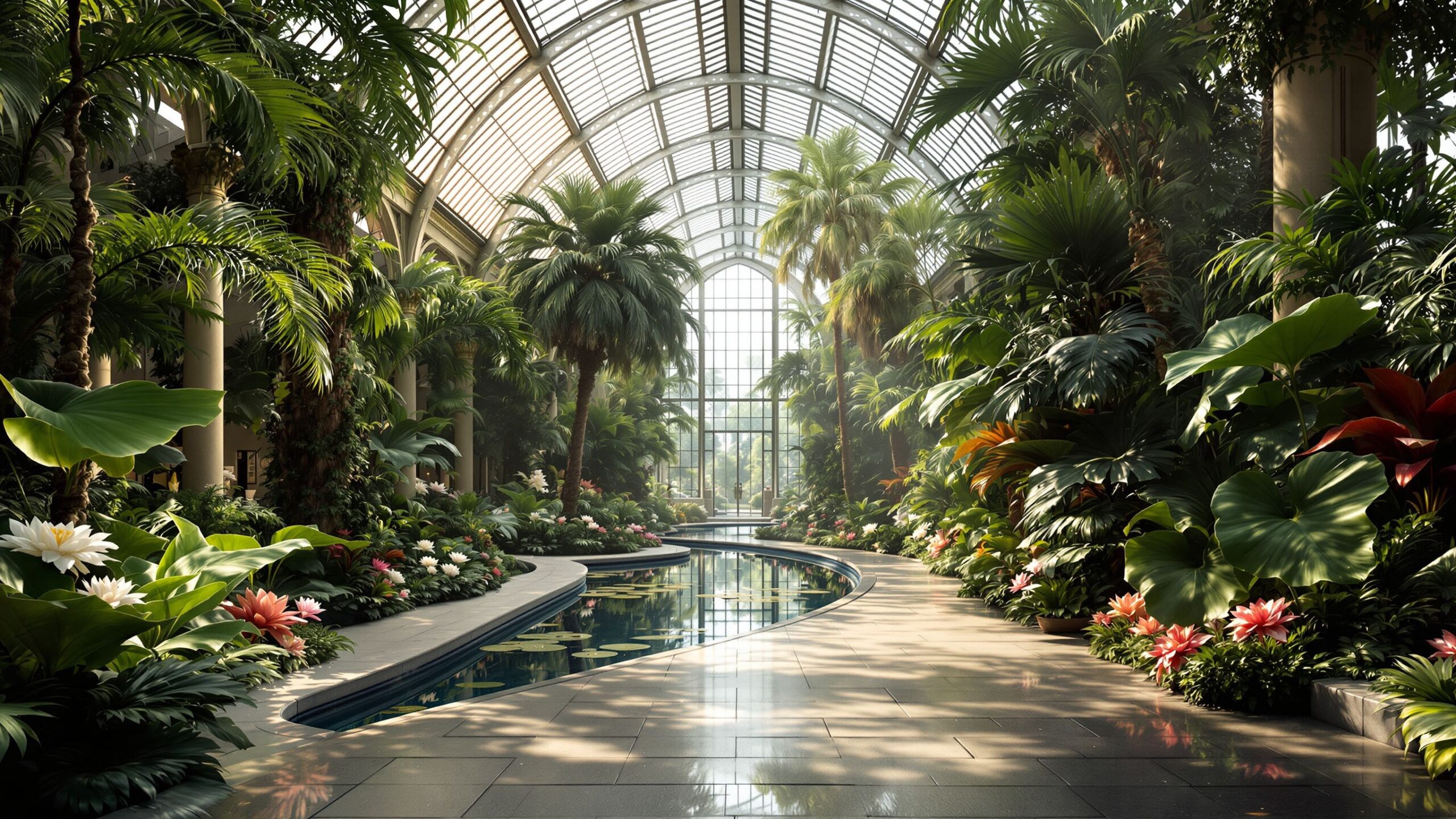
Longwood’s conservatory complex became another defining feature of the property. Glasshouses allowed du Pont and later horticulturists to cultivate plants that could not survive Pennsylvania winters outdoors. Visitors could move from one botanical environment to another, encountering tropical foliage, flowering plants, palms, seasonal displays, and carefully designed interior gardens. Conservatories were already important features of European and American estates, but Longwood developed them on an extraordinary scale. The experience of entering a warm, lush glasshouse during winter remains one of the most memorable aspects of public garden visiting. It collapses geography and season, allowing visitors to experience plants from very different climates within a single afternoon.
The Main Fountain Garden
Longwood’s Main Fountain Garden represents one of the clearest expressions of Pierre du Pont’s fascination with engineering and spectacle. Rather than treating fountains as small ornamental accents, Longwood uses water on a monumental scale. Choreographed jets can rise dramatically into the air, creating patterns enhanced by music and lighting during special performances. The fountain garden has undergone major restoration and modernization while preserving its historic character. The combination of technology and traditional garden design makes the space feel both historic and contemporary. It also demonstrates that garden history does not necessarily require freezing landscapes exactly as they once were. Thoughtful restoration can preserve original ideas while incorporating modern systems that allow them to function for future generations.
Why Fountains Became Central to Longwood
Water features appealed perfectly to Pierre du Pont because they combined several of his interests at once. Fountains require engineering, architecture, artistic design, and performance. Water can be controlled, timed, illuminated, and coordinated with music, turning a landscape into something theatrical. Du Pont’s industrial and engineering background likely made the mechanics of fountains as interesting to him as their beauty. At Longwood, water became one of the property’s signature experiences. Visitors do not simply observe static pools. They encounter movement, sound, reflection, and changing patterns that make the garden feel alive.
Longwood’s Historic Trees
The mature trees that helped inspire du Pont to purchase the property remain essential to Longwood’s identity. Trees provide scale, shade, seasonal color, habitat, and a sense of continuity that cannot be created quickly. A flower garden can change dramatically within a season, but a mature tree represents decades or centuries of growth. Longwood’s tree collections help connect its modern horticultural displays with the older landscape that existed before the estate reached its current form. The story is especially meaningful because preservation was one of the property’s earliest motivations. The trees remind visitors that sometimes the most important act of garden design is deciding what should not be removed.
The Idea of Gardens as Experiences
Longwood is unusual because it cannot be understood simply by studying individual flower beds. The property is organized as a sequence of experiences. Visitors might move from a formal fountain garden into a woodland, from an indoor conservatory into an outdoor terrace, or from brightly colored seasonal displays into a quiet meadow. Each transition changes the mood. This approach creates a sense of discovery and prevents the landscape from feeling repetitive. Home gardeners can borrow the same principle on a much smaller scale. A front garden, patio, shaded seating area, vegetable bed, and flowering border can each create a distinct experience even within one residential property.
Seasonal Displays and Constant Reinvention
One reason Longwood remains so popular is that it changes dramatically throughout the year. Spring can bring enormous bulb displays, flowering trees, and fresh foliage. Summer highlights fountains, annual flowers, water gardens, and outdoor performances. Autumn transforms trees and gardens with changing foliage and seasonal plantings. Winter brings elaborate indoor horticultural displays and holiday decorations within the conservatories and surrounding grounds. The property therefore encourages repeat visits because no single season reveals everything. This approach also reflects a fundamental truth about gardening: landscapes are never static. Their beauty depends on time.
Spring at Longwood Gardens
Spring is one of the most dramatic seasons at Longwood. Bulbs emerge in mass plantings, flowering trees transform the landscape, and woodland plants begin filling shaded areas. Tulips, daffodils, and other spring flowers can create enormous blocks of color around formal beds and pathways. The combination of mature trees and temporary seasonal displays produces a layered experience that feels both established and fresh. For home gardeners, Longwood’s spring displays demonstrate the power of repetition. Planting dozens of bulbs of the same variety or color can create significantly more impact than scattering individual flowers randomly throughout a yard.
Summer and the Garden at Full Power
By summer, Longwood becomes lush, colorful, and active. Annual gardens reach their peak, fountains become major attractions, water lilies and aquatic plants fill pools, and outdoor spaces support performances and gatherings. Summer reveals the enormous amount of planning required to keep a public garden visually compelling. Plantings must be coordinated so different areas reach their peak at different times. Irrigation, pruning, deadheading, soil care, and pest management happen continuously behind the scenes. The effortless beauty experienced by visitors is the result of intense horticultural work.
Autumn at Longwood
Autumn changes the character of Longwood again. Mature trees take center stage as leaves turn yellow, orange, crimson, bronze, and burgundy. Ornamental grasses catch lower sunlight, late-season flowers continue blooming, and cooler temperatures make long walks through the property especially inviting. Autumn demonstrates why gardens should not depend entirely on flowers. Bark, berries, seed heads, grasses, foliage, and plant structure can create just as much interest as blossoms. Longwood’s seasonal transformations encourage gardeners to think about what their landscapes will look like during every month rather than concentrating only on spring.
Longwood During the Holiday Season
Longwood has also become famous for its holiday displays, particularly within the conservatories. Seasonal horticulture, decorated trees, lights, flowers, and architectural details transform indoor and outdoor spaces into elaborate winter experiences. These displays demonstrate how plants can be used as part of storytelling and celebration. Rather than treating winter as the season when gardens disappear, Longwood uses glasshouses, evergreens, lighting, and decorative horticulture to create an entirely different type of garden experience.
Longwood’s Meadow Garden
Not every part of Longwood is highly formal. The Meadow Garden presents a more naturalistic landscape inspired by regional ecology. Grasses, wildflowers, native plants, and open views create a striking contrast with clipped hedges and formal fountains elsewhere on the property. The meadow changes continuously as plants flower, set seed, dry, and reemerge through the seasons. This area demonstrates an important development in contemporary public garden design: beauty can come from ecological processes as well as intensive formal planting. Meadows can provide habitat, support pollinators, and create dynamic landscapes requiring different forms of management from traditional lawns or flower beds.
Native Plants and Modern Garden Thinking
Longwood’s contemporary horticultural approach increasingly reflects broader interest in ecological gardening, native plants, biodiversity, and sustainable landscape management. Public gardens today face different responsibilities than historic estates did a century ago. They are not only expected to display beautiful plants but also to educate visitors about conservation, environmental change, and responsible horticulture. Integrating native plants and ecologically productive landscapes demonstrates how a historic institution can evolve without abandoning its identity.
The Importance of Horticultural Education
Longwood Gardens is more than a visitor attraction. Education has become an important part of its mission. Programs in horticulture, gardening, plant science, landscape management, and related subjects help train future professionals while providing learning opportunities for the public. This educational role reflects the broader purpose of many major public gardens. Beautiful displays attract visitors, but the knowledge behind those displays can influence how people care for plants far beyond the garden’s boundaries. A visitor inspired by a meadow, vegetable display, water garden, or conservatory may take those ideas home and apply them on a smaller scale.
Longwood as a Place of Plant Conservation
Public gardens can also contribute to plant conservation by maintaining collections, supporting research, participating in preservation efforts, and educating visitors about threatened species. Living collections provide opportunities to study how plants perform under different conditions. Seed conservation and collaboration with other botanical institutions can help protect genetic diversity. Although visitors may first come to Longwood because of flowers or fountains, the institution’s horticultural work extends far beyond decorative gardening.
The People Behind the Garden
Pierre du Pont created the foundation for Longwood, but the garden visitors experience today is the work of generations. Horticulturists, arborists, gardeners, engineers, designers, educators, researchers, conservators, technicians, and countless other professionals continually maintain and reinterpret the property. Public gardens require extraordinary teamwork. A tree collection may need long-term arboricultural care, fountain systems require engineers, glasshouses need climate management, and seasonal displays must be designed months or years in advance. The garden is therefore never the accomplishment of a single person, even when one founder’s vision begins the story.
Preserving History While Creating Something New
One of Longwood’s greatest challenges is balancing preservation with innovation. Historic gardens can lose their significance if altered without respect for their origins, but they can also become stagnant if change is completely avoided. Plants themselves make permanent preservation impossible. Trees die, diseases appear, weather damages landscapes, and growing plants alter the design around them. Longwood has responded by restoring historic features while also introducing new gardens, infrastructure, and visitor experiences. This balance helps the institution remain relevant while protecting the character that made it historically important.
Longwood Reimagined and the Garden’s New Chapter
In recent years, Longwood has undergone one of the most ambitious transformations in its modern history through the Longwood Reimagined project. The expansion and redevelopment have introduced major new horticultural and architectural experiences while reworking portions of the conservatory landscape. The project represents a continuation of the same spirit of experimentation that defined Pierre du Pont’s era. Rather than treating the property as a finished monument, Longwood continues evolving. New spaces create opportunities for plants, water, architecture, and visitors to interact in ways that respond to contemporary expectations while remaining connected to the institution’s history.
Why Longwood Gardens Feels Different From a Botanical Garden
Longwood shares many qualities with botanical gardens, including major plant collections, horticultural expertise, conservatories, education, and conservation. Yet its estate history gives it a distinctive atmosphere. Formal entertainment spaces, fountains, theaters, private-garden traditions, and du Pont’s personal interests remain visible throughout the property. Visitors experience both institutional horticulture and the lingering character of an extraordinarily ambitious private estate. This combination gives Longwood a sense of personality that is difficult to separate from its founder.
What Home Gardeners Can Learn From Longwood
Few homeowners can install monumental fountains or enormous glass conservatories, but many Longwood design principles translate surprisingly well to residential gardens. Strong focal points make landscapes memorable. Repetition creates visual impact. Mature trees deserve thoughtful preservation. Gardens benefit from distinct spaces rather than one undifferentiated lawn. Water introduces movement and sound. Seasonal planning keeps a landscape interesting throughout the year. Most importantly, a garden does not need to be completed all at once. Longwood developed gradually, and home gardens often become better when they are allowed to evolve over years rather than being forced into a finished appearance in one season.
Use One Strong Focal Point
One of the easiest lessons to borrow from Longwood is the use of focal points. In a large public garden, a fountain, conservatory, tree, sculpture, or distant architectural feature can guide visitors through the landscape. At home, the focal point might be much simpler. A specimen tree, birdbath, bench, large container, garden arch, or small fountain can immediately give a front garden direction. Position it where it can be seen from an important viewpoint, such as a window, doorway, patio, or entrance path.
Design for More Than One Season
Another major lesson is seasonal planning. Many residential gardens look spectacular for several weeks in spring and relatively empty for the rest of the year. Longwood demonstrates the power of combining plants with different peak seasons. Spring bulbs can give way to summer flowers, autumn foliage, berries, ornamental grasses, evergreens, and winter structure. Even a small garden can incorporate this strategy. Before purchasing a plant, consider not only its flowers but also its foliage, bark, fruit, seed heads, and winter form.
Protect Mature Trees Whenever Possible
Perhaps the most meaningful lesson from Longwood’s origin story is the value of mature trees. A large established tree can provide more character than almost any decorative feature purchased for a garden. It creates shade, habitat, scale, seasonal change, and a sense of age. When redesigning a landscape, homeowners sometimes begin by removing mature vegetation and starting over. Longwood’s story offers another possibility: begin by asking what is already worth saving. Building around a remarkable tree can create a garden with immediate history.
Create Garden Rooms at Home
Longwood’s variety comes partly from the way different areas create different moods. Homeowners can recreate that experience using hedges, fences, shrubs, pathways, pergolas, or changes in planting style. A sunny flower garden might transition into a shaded seating area. A formal entrance garden could lead toward a relaxed backyard meadow. A vegetable garden might be partially screened by flowering shrubs. Even a small property can feel larger when visitors discover it one space at a time.
Why Longwood Gardens Is So Spectacular
Longwood Gardens is spectacular not because of any one fountain, flower, tree, or building. Its impact comes from accumulation. Historic landscapes, ambitious engineering, botanical expertise, seasonal reinvention, architecture, art, conservation, and education all overlap. A visitor can experience delicate flowers one moment and monumental fountains the next. Quiet woodland paths can lead toward elaborate conservatories. Formal symmetry can give way to open meadows. This constant contrast keeps the garden engaging while revealing how many different interpretations of horticultural beauty can exist within one property.
The Legacy of Pierre S. du Pont
Pierre du Pont could have preserved a few trees and left the story there. Instead, his curiosity transformed the property repeatedly. His interest in horticulture led to gardens. His engineering background encouraged ambitious fountains. His love of entertainment inspired theaters and gathering spaces. His travel exposed him to international landscape traditions. Eventually, his private estate became something much larger than a personal garden. His legacy survives not only in the historic features he created but also in the institution’s continued willingness to experiment.
A Garden That Refuses to Stand Still
Perhaps the most fitting way to understand Longwood Gardens is as a landscape that has never really been finished. Pierre du Pont kept building and experimenting. Later generations restored historic spaces while creating new ones. Plants matured, disappeared, and were replaced. New technologies transformed fountains and conservatories. Ecological gardening introduced new perspectives. Major contemporary projects continue reshaping the visitor experience. This constant evolution is not a weakness. It is one of Longwood’s greatest strengths. Gardens are living things, and Longwood embraces that reality on an extraordinary scale.
Why the Story of Longwood Gardens Still Matters
Longwood’s history begins with a surprisingly simple idea: something beautiful was worth saving. From that act of preservation grew one of America’s most ambitious horticultural institutions. The story demonstrates how gardens can evolve far beyond their original purpose. A private property can become a public treasure. Industrial knowledge can inspire artistic fountains. Historic trees can become the foundation for an entire cultural institution. Formal gardens, ecological meadows, glasshouses, performances, education, and conservation can coexist within the same landscape. Longwood Gardens continues to attract visitors because it offers both beauty and possibility. It reminds us that a garden can begin with one tree, one decision, or one person’s curiosity and eventually become something generations of people will experience long after its creator is gone.
Garden Product Reviews
Step into Mossy Streets’ Garden Product Reviews — your go-to guide for the best tools, gear, gifts, books, and garden gadgets rooted in nature. From blooming backyard beauties to lush indoor jungles, from heirloom seeds to high-tech composters, we dig into top-rated products for green thumbs, beginners, educators, and plant lovers alike. Whether you’re planting, pruning, decorating, or simply enjoying your green space, we’ve unearthed the best so you can grow, bloom, and thrive — all in one vibrant place!