Some gardens are beautiful because of their flowers. Others are unforgettable because of their architecture, history, symbolism, scale, or the stories woven into every path and planting bed. Around the world, extraordinary gardens have been created by emperors, kings, artists, monks, botanists, wealthy collectors, landscape architects, and ordinary people with remarkable vision. Some were designed to display power, others to provide spiritual refuge, and still others to preserve rare plants or recreate the beauty of distant landscapes. Many changed dramatically over centuries as wars, political revolutions, changing fashions, and new owners reshaped them. The world’s most beautiful gardens are therefore much more than collections of plants. They are living cultural records. Their trees have witnessed generations of visitors, their pathways reflect the artistic ideals of different eras, and their fountains, bridges, terraces, and flower beds reveal how societies have imagined the relationship between people and nature. Exploring these famous gardens means discovering not only breathtaking landscapes but also the stories that made them extraordinary.
A: There is no single answer because beauty is subjective, but Versailles, Giverny, Keukenhof, Kenroku-en, Villa d'Este, and Butchart Gardens are frequently celebrated among the world's great gardens.
A: Its enormous scale, formal geometry, fountains, sculptures, canals, and historical connection to Louis XIV made it one of the most influential gardens in history.
A: Yes. Monet's house and gardens at Giverny remain one of France's best-known garden destinations.
A: Keukenhof in the Netherlands is especially famous for immense spring displays of tulips and other flowering bulbs.
A: Butchart Gardens is remarkable because part of the landscape was created from a former limestone quarry.
A: No. Gardens by the Bay in Singapore shows how innovative modern landscapes can become just as iconic as centuries-old gardens.
A: Claude Monet's garden at Giverny inspired many of his paintings, particularly his celebrated water-lily series.
A: Focus on strong pathways, focal points, repetition, layered planting, seasonal interest, and carefully framed views.
A: No. Even small yards can borrow individual elements such as a formal path, water feature, dramatic planting combination, pergola, or destination seating area.
A: Their beauty comes from intentional design. Plants, architecture, water, views, history, and movement are combined to create an experience rather than simply filling a space with flowers.
Gardens of Versailles, France
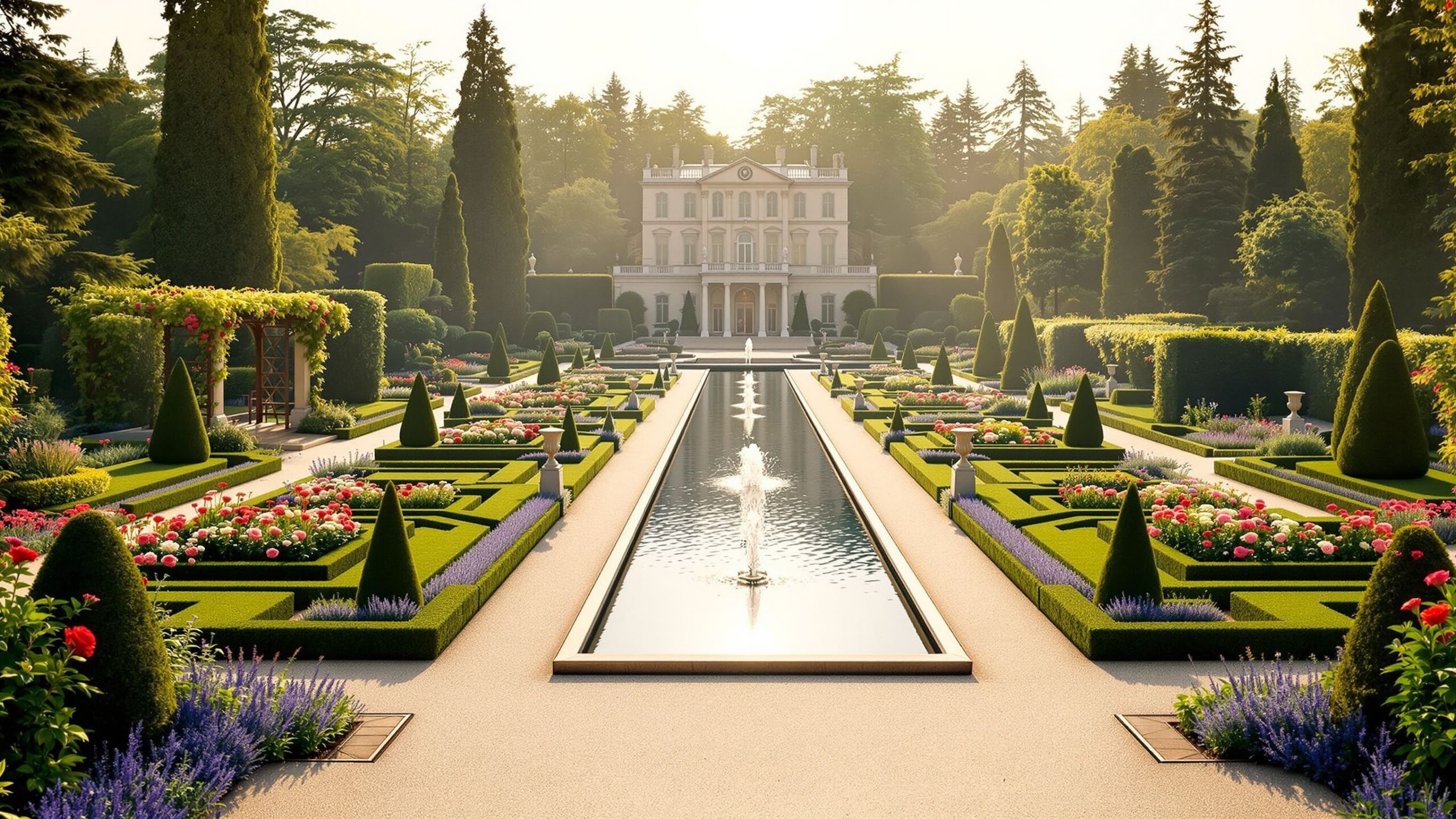
The Gardens of Versailles are among the most famous formal gardens ever created. Surrounding the Palace of Versailles outside Paris, the vast landscape became one of the defining symbols of the reign of Louis XIV. Landscape architect André Le Nôtre played a central role in transforming the grounds during the 17th century into an enormous composition of geometric parterres, fountains, canals, sculptures, tree-lined avenues, and carefully controlled perspectives. The garden was designed to appear almost limitless, with long visual axes extending outward from the palace toward the horizon. Every major element reinforced the sense of order, grandeur, and royal authority associated with Versailles. Yet the garden is not simply impressive because of its scale. Hidden groves, ornamental fountains, theatrical water displays, and intimate spaces create constant changes in atmosphere as visitors move through the landscape. Versailles helped establish the French formal garden as one of Europe’s most influential landscape traditions, inspiring estates far beyond France.
The Story Behind Versailles
Versailles began as a relatively modest royal hunting lodge before Louis XIV transformed the property into an extraordinary palace complex. The gardens became an essential part of his vision. Creating them required enormous human effort, engineering, earthmoving, planting, and water management. Trees were transported, land was reshaped, fountains were constructed, and complex hydraulic systems were developed to supply the elaborate water displays. The garden became a stage for court life, celebrations, political spectacle, and royal entertainment. Its strict symmetry communicated control over nature itself. Centuries later, that same landscape continues to demonstrate how gardens can become instruments of art, architecture, politics, and national identity.
Keukenhof, Netherlands
Few gardens create a spring spectacle comparable to Keukenhof in the Netherlands. Famous for enormous displays of tulips and other flowering bulbs, Keukenhof transforms into a sea of color each spring. Sweeping beds contain tulips in seemingly endless combinations of red, yellow, pink, orange, white, purple, and nearly every shade between. Daffodils, hyacinths, crocuses, and other bulbs add additional layers of texture and fragrance. Mature trees, ponds, pathways, and carefully designed displays provide structure around the seasonal explosion of flowers. Unlike centuries-old palace gardens designed primarily for aristocratic life, Keukenhof developed into a showcase for the Dutch flower industry. Its beauty reflects the Netherlands’ long association with tulips and commercial bulb cultivation.
The Story of the Dutch Tulip Garden
The land associated with Keukenhof has a history stretching back centuries, but the modern garden was established in the 20th century as a place where flower growers could display their bulbs. Its name translates roughly to “kitchen garden,” reflecting an earlier period when the surrounding estate supplied herbs and produce. Today, Keukenhof has become internationally famous for demonstrating what can be achieved with mass bulb planting. The garden’s spectacular appearance lasts only for a relatively short seasonal window, making its beauty especially connected to timing and impermanence. Visitors experience an extraordinary landscape knowing that within weeks the displays will fade and preparations for another year will begin.
Butchart Gardens, Canada
The Butchart Gardens on Vancouver Island in British Columbia tell one of gardening’s most inspiring transformation stories. The property was originally connected to a limestone quarry operated by Robert Butchart’s cement business. When the quarry became exhausted, his wife, Jennie Butchart, began transforming the scarred industrial landscape into a garden. What might have remained an abandoned pit gradually became the famous Sunken Garden, now one of the property’s most recognizable areas. Over time, additional gardens were developed, including Japanese, Italian, and rose gardens. The result is a remarkable example of how damaged land can be reimagined through horticulture.
From Quarry to Garden Paradise
The story behind Butchart Gardens is particularly powerful because its beauty emerged from a landscape that had been profoundly altered by industry. Jennie Butchart reportedly brought in soil and planted the former quarry with shrubs, trees, and flowers, gradually creating a lush garden where exposed rock and excavation once dominated. The transformation continued across generations, turning the family property into an internationally recognized destination. Today, the garden demonstrates that landscapes do not need perfect beginnings to become extraordinary. Sometimes the most memorable gardens emerge from places that require imagination, patience, and restoration.
Kew Gardens, England
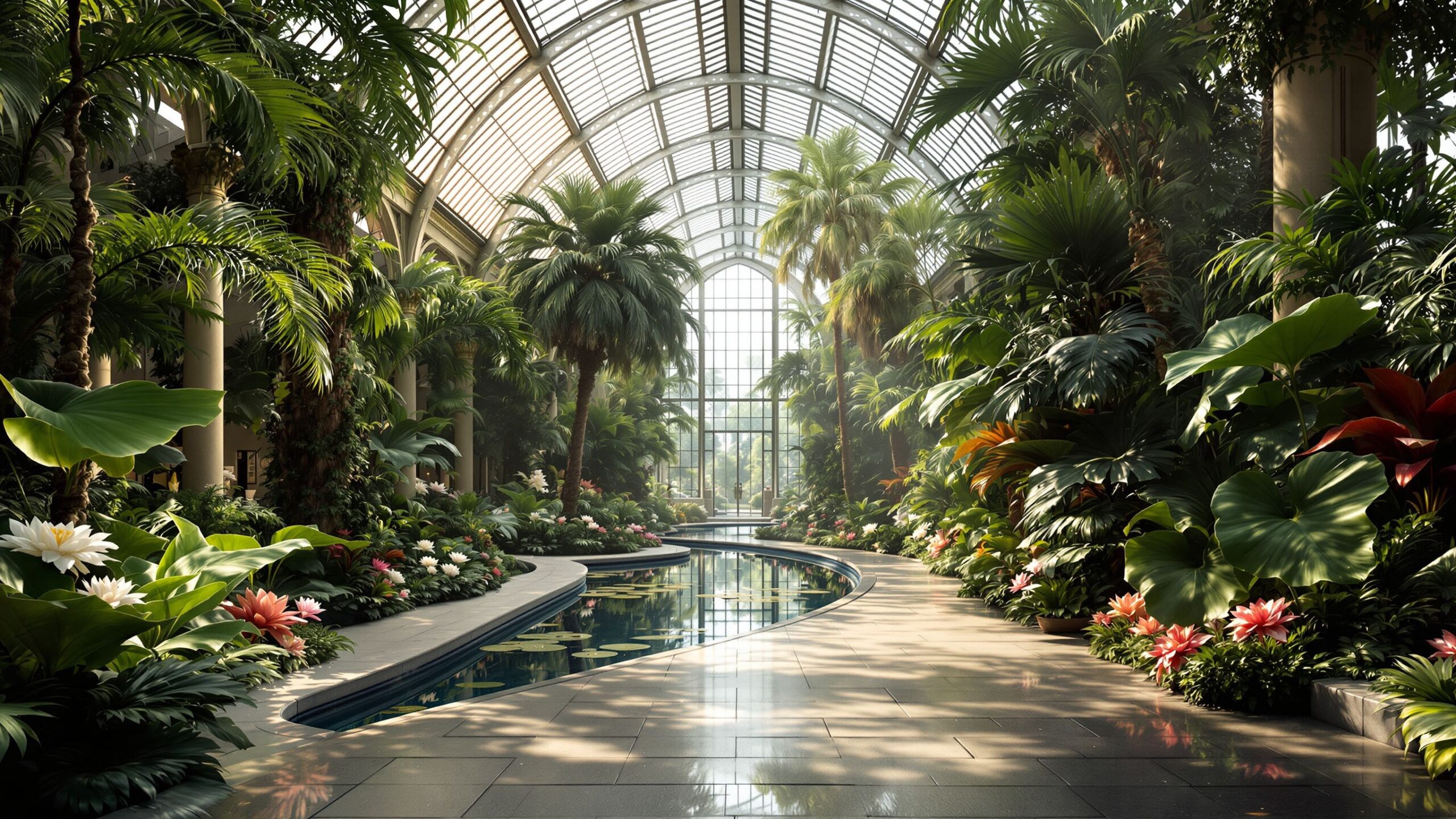
The Royal Botanic Gardens, Kew, near London, combines breathtaking landscape design with extraordinary scientific importance. Its vast collections include plants from around the world, housed across outdoor gardens, historic glasshouses, specialized collections, and research facilities. The Palm House, with its elegant Victorian iron-and-glass architecture, has become one of Kew’s most recognizable structures. Visitors can wander through landscapes containing everything from towering trees to tropical plants, alpine species, ornamental gardens, and carefully preserved botanical collections. Unlike gardens created primarily for aesthetic pleasure, Kew has long played an important role in plant science, conservation, taxonomy, and global botanical research.
Kew and the Age of Plant Exploration
Kew’s history became closely intertwined with European botanical exploration and the movement of plants around the world. Over centuries, explorers, scientists, collectors, and colonial networks contributed specimens and knowledge to the garden. This history is scientifically significant but also complicated, reflecting the political and colonial systems through which many plants were acquired and transferred. Today, Kew is deeply involved in conservation and research, including efforts to protect threatened species and preserve plant diversity. Its beauty therefore carries another dimension: the garden is not simply displaying plants but actively helping understand and conserve them.
Villa d’Este, Italy
Villa d’Este in Tivoli is one of the masterpieces of the Italian Renaissance garden. Famous for its terraces, fountains, cascades, grottoes, sculptures, and astonishing use of water, the garden turns a steep hillside into a theatrical landscape. Water seems to appear everywhere, flowing through channels, spraying from sculptural fountains, and descending between terraces. The garden is especially impressive because of the sophisticated hydraulic engineering that made these displays possible centuries before modern electric pumps. Architecture, sculpture, vegetation, and water work together so closely that the garden feels like an enormous outdoor artwork.
The Renaissance Dream Behind Villa d’Este
Villa d’Este was created in the 16th century for Cardinal Ippolito II d’Este. The garden reflected Renaissance fascination with classical antiquity, mythology, engineering, art, and controlled views. Its dramatic fountains were designed not simply as decoration but as experiences that visitors encountered while moving through the landscape. The famous Hundred Fountains create a long sequence of water features, while other areas surprise visitors with monumental compositions. Villa d’Este helped influence European garden design and remains one of the finest examples of how Renaissance designers transformed difficult terrain into spectacular beauty.
Monet’s Garden at Giverny, France
Claude Monet’s garden at Giverny is one of the most famous examples of a garden created by an artist and then transformed into art. Monet moved to Giverny in the late 19th century and gradually redesigned the surrounding landscape according to his own aesthetic vision. The garden near his house became filled with colorful flowers arranged in abundant combinations rather than strict formal patterns. Across the road, he created a water garden inspired partly by Japanese aesthetics, complete with a pond, water lilies, weeping willows, bamboo, and the now-iconic Japanese-style bridge.
The Garden That Became a Painting
Monet did not simply paint the landscape around him. He actively created the landscape he wanted to paint. His water-lily series and views of the Japanese bridge became some of the most recognizable works of Impressionism. The garden therefore occupies a unique place in cultural history because the boundary between horticulture and painting almost disappears. Flowers, reflections, seasonal light, and water became artistic subjects that Monet repeatedly studied. Visiting Giverny allows people to experience a landscape that exists simultaneously as a real garden and as one of the most famous imagined spaces in Western art.
Kenroku-en, Japan
Kenroku-en in Kanazawa is considered one of Japan’s most celebrated traditional landscape gardens. Developed over generations by the ruling Maeda family, the garden combines ponds, streams, bridges, carefully positioned stones, teahouses, trees, and expansive views. Its name is associated with six qualities traditionally considered difficult to combine in a single garden: spaciousness and seclusion, artificiality and antiquity, and water features and panoramic views. Rather than relying on overwhelming flower displays, Kenroku-en reveals beauty through balance, seasonal transformation, and carefully controlled scenery.
A Garden Designed for Every Season
One of Kenroku-en’s greatest strengths is its ability to change dramatically throughout the year. Spring brings cherry blossoms, summer creates lush greenery, autumn produces brilliant foliage, and winter transforms the landscape beneath snow. The garden is especially famous for yukitsuri, traditional rope structures used to protect tree branches from heavy snow. These supports themselves have become part of the winter scenery. Kenroku-en demonstrates a fundamental principle of Japanese garden design: a garden does not need to look the same throughout the year. Its transformation is part of its beauty.
Ryoan-ji, Japan
Ryoan-ji in Kyoto is famous for one of the world’s most influential dry landscape gardens. The composition is remarkably simple: carefully placed stones surrounded by raked gravel within an enclosed rectangular space. Yet this apparent simplicity has inspired centuries of interpretation. The stones may suggest islands, mountains, animals, or abstract forms, but no single explanation completely defines the garden. Its power comes partly from what has been omitted. There are no elaborate flower beds or dramatic fountains competing for attention. Instead, space, stone, texture, and contemplation become the experience.
The Mystery of the Rock Garden
The exact origins and intended meaning of the Ryoan-ji rock garden remain subjects of discussion, which has only increased its fascination. Visitors sitting along the viewing platform experience a landscape that changes subtly with light, weather, and perspective. The garden demonstrates how very little material can produce extraordinary emotional and intellectual depth. It has influenced architects, landscape designers, artists, and minimalist design traditions around the world. Ryoan-ji proves that beauty does not always depend on abundance.
Gardens by the Bay, Singapore
Gardens by the Bay represents a dramatically different vision of what a famous garden can be. Located in Singapore, the massive horticultural destination combines landscape architecture, environmental technology, botanical collections, and futuristic design. Its enormous Supertrees have become internationally recognized landmarks, rising above gardens filled with tropical vegetation. The Flower Dome and Cloud Forest conservatories allow visitors to experience plants from very different climates within spectacular architectural structures. Rather than recreating historic gardening traditions, Gardens by the Bay demonstrates how cities can integrate horticulture into bold visions of the future.
Building a Garden for a Modern City
Singapore has long invested heavily in urban greenery, and Gardens by the Bay became a major expression of that ambition. The project demonstrates how gardens can function as public spaces, tourist attractions, educational resources, ecological experiments, and architectural icons simultaneously. Its futuristic structures challenge the idea that beautiful gardens must imitate historical landscapes. Instead, technology and horticulture are intentionally combined. The result is a garden that feels unlike almost anything created before it.
Kirstenbosch National Botanical Garden, South Africa
Kirstenbosch National Botanical Garden lies against the eastern slopes of Table Mountain in Cape Town, creating one of the world’s most dramatic relationships between a botanical garden and its natural setting. Rather than attempting to separate cultivated gardens from the surrounding landscape, Kirstenbosch celebrates South Africa’s remarkable native flora. Proteas, cycads, fynbos plants, and countless other species grow against the spectacular mountain backdrop. The result feels simultaneously designed and wild.
A Garden Dedicated to Native Plants
Kirstenbosch became particularly significant because of its emphasis on indigenous South African plants. At a time when many botanical gardens focused heavily on exotic species from around the world, Kirstenbosch helped demonstrate the extraordinary value of native flora. South Africa contains remarkable plant biodiversity, especially within the Cape Floristic Region. By showcasing these species in their own geographic context, the garden allows visitors to experience plants not simply as isolated specimens but as part of a larger ecological story.
Majorelle Garden, Morocco
The Majorelle Garden in Marrakech is instantly recognizable for its extraordinary combination of lush plants, architectural forms, and intense cobalt-blue structures. French painter Jacques Majorelle spent decades creating the garden during the 20th century, collecting plants and developing a landscape filled with palms, bamboo, cacti, water features, and exotic species. The vivid blue used throughout the property became so closely associated with the garden that it is often called Majorelle Blue.
The Artists Who Saved Majorelle
After Jacques Majorelle’s death, the garden eventually faced uncertainty and deterioration. Fashion designer Yves Saint Laurent and Pierre Bergé later acquired the property and helped restore and preserve it. This second chapter added another layer to the garden’s cultural identity. Majorelle became connected not only to painting and horticulture but also to fashion and design. Its dramatic colors and sculptural plants demonstrate how a garden can become a highly personal artistic composition rather than a conventional landscape.
Boboli Gardens, Italy
Behind Florence’s Pitti Palace, the Boboli Gardens offer one of the great examples of Italian Renaissance landscape design. Terraces, broad avenues, sculptures, grottoes, fountains, and formal plantings unfold across the hillside, creating a garden that influenced later European estates. The landscape feels almost like an open-air museum, with classical sculpture and architecture integrated into vegetation and carefully controlled views.
A Garden for the Medici
The Boboli Gardens became closely associated with the powerful Medici family, whose influence shaped Renaissance Florence. The garden provided a setting for court life, entertainment, and displays of culture and status. Its arrangement demonstrates how Renaissance gardens became extensions of palaces, with outdoor spaces organized as carefully as interior rooms. Paths lead toward sculptures and fountains, terraces create dramatic viewpoints, and groves provide contrast with more formal spaces. Boboli helped establish design principles that later spread throughout Europe.
Powerscourt Gardens, Ireland
Powerscourt Gardens in County Wicklow combine formal terraces, ornamental lakes, statues, Japanese-inspired areas, woodland, and sweeping views toward the Wicklow Mountains. The estate’s landscape developed over centuries, creating a rich mixture of European garden traditions. Its terraced Italian Garden provides strong symmetry near the house, while more naturalistic areas gradually transition into the surrounding countryside.
Where Formal Gardens Meet the Landscape
One of the most striking qualities of Powerscourt is the way distant mountains become part of the garden’s composition. Rather than competing with the surrounding scenery, the formal landscape frames and emphasizes it. This creates the impression that the garden extends far beyond its actual boundaries. The technique resembles the broader concept of borrowed scenery found in several landscape traditions. Powerscourt demonstrates how spectacular natural surroundings can become one of a garden’s greatest design elements.
Longwood Gardens, United States
Longwood Gardens in Pennsylvania has grown into one of America’s most celebrated horticultural destinations. The property includes formal gardens, conservatories, fountains, woodlands, meadows, and enormous seasonal displays. Its history became closely associated with industrialist Pierre S. du Pont, who purchased the property in the early 20th century and gradually transformed it into an ambitious garden estate.
The Man Who Saved the Trees
Pierre du Pont reportedly purchased the property partly to prevent its mature trees from being cut down. What began as preservation developed into a much larger horticultural vision. Du Pont constructed gardens, conservatories, fountains, and entertainment spaces influenced by places he had visited around the world. Longwood eventually became a public horticultural institution known for both historic landscapes and ambitious contemporary displays. Its story illustrates how one decision to protect an existing landscape can grow into something far more significant.
Château de Villandry, France
The gardens of Château de Villandry in France are especially famous for transforming vegetables into formal ornamental design. Geometric kitchen gardens contain rows of lettuces, cabbages, leeks, and other edible crops arranged according to color, texture, and pattern. Elsewhere, ornamental gardens use clipped hedges and flowers to create symbolic designs. Villandry demonstrates that practical crops do not need to be hidden from view. Vegetables can become as visually sophisticated as flowers when arranged thoughtfully.
The Beauty of the Decorative Kitchen Garden
Villandry’s famous potager has influenced generations of gardeners interested in combining edible and ornamental design. The garden shows how vegetable beds can create architectural patterns when viewed from terraces above. Different crops provide changing colors throughout the growing season, meaning the design is never completely static. Home gardeners can borrow this idea by organizing vegetables within defined beds, using herbs as borders, and allowing edible plants to become part of the landscape rather than separating them into purely functional areas.
Desert Botanical Garden, United States
The Desert Botanical Garden in Phoenix, Arizona, reveals a completely different kind of garden beauty. Instead of lush lawns and abundant water, the landscape celebrates cacti, succulents, desert wildflowers, agaves, and other plants adapted to extreme heat and limited rainfall. Against the dramatic Sonoran Desert backdrop, sculptural plants create extraordinary combinations of form, shadow, and seasonal color.
Redefining What a Beautiful Garden Can Be
Traditional ideas about beautiful gardens often emphasize greenery, flowers, and water, but desert gardens challenge those expectations. A towering saguaro cactus can be every bit as dramatic as an ancient oak, while agaves can create architectural patterns more striking than clipped hedges. The Desert Botanical Garden also demonstrates the importance of designing landscapes appropriate to their climate. As water conservation becomes increasingly important in many regions, desert gardening offers lessons that extend far beyond the American Southwest.
Why Famous Gardens Tell Us So Much About History
The world’s greatest gardens reveal how different cultures have understood nature. Versailles represents control, spectacle, and royal power. Japanese gardens demonstrate the importance of suggestion, seasonal change, and carefully composed natural forms. Renaissance Italian gardens combine engineering, art, and classical mythology. Botanical gardens reflect scientific exploration and plant conservation. Modern landscapes such as Gardens by the Bay explore relationships between technology, cities, and nature. Even private gardens reveal the personalities of their creators. Monet’s garden reflects the eye of a painter, while Majorelle reveals an artist’s fascination with color and plant form.
What Home Gardeners Can Learn From the World’s Most Beautiful Gardens
Very few homeowners have the space or resources to recreate Versailles, Villa d’Este, or Kew Gardens, but copying their scale is unnecessary. The most useful lessons lie in their design principles. Versailles demonstrates the power of strong sightlines. Giverny shows how flowers and water can create changing combinations of color and reflection. Japanese gardens teach restraint and intentional placement. Villandry proves vegetables can become ornamental. Kirstenbosch demonstrates the beauty of native plants, while desert gardens show the importance of working with climate rather than against it. Study what creates the atmosphere you love, then translate that idea into a scale appropriate for your own home.
Creating Your Own Garden With a Story
The most memorable gardens are rarely collections of random plants. They have a point of view. Your own garden can develop one as well. Perhaps you want to recreate plants your grandparents grew, build a courtyard inspired by a favorite trip, grow flowers connected to family memories, or design a vegetable garden around historic varieties. A meaningful garden does not need to be famous. Its story might be completely personal. As plants mature and experiences accumulate, those stories become part of the landscape. The tree planted when a child was born, the roses propagated from a relative’s garden, or the vegetables saved from one season to the next can eventually become just as meaningful as elaborate architectural features.
Why the World’s Most Beautiful Gardens Endure
The greatest gardens survive because they offer more than visual beauty. They create experiences. Visitors remember walking beneath ancient trees, hearing fountains echo through stone terraces, discovering hidden pathways, smelling roses after rain, or seeing a landscape suddenly open toward a mountain view. These moments are emotional as much as visual. Gardens also continue changing, which distinguishes them from many other works of art. Trees grow, flowers disappear and return, storms alter landscapes, and new generations reinterpret old designs. A famous garden may be centuries old, but it is never completely finished.
The Stories Keep Growing
From the disciplined geometry of Versailles to the quiet stones of Ryoan-ji, the water lilies of Giverny, the tropical futurism of Singapore, and the restored quarry of Butchart Gardens, the world’s most beautiful gardens demonstrate how many different forms extraordinary landscapes can take. Some began with enormous wealth and political power. Others emerged from artistic obsession, scientific curiosity, environmental restoration, or the determination of a single gardener. What connects them is the ability to make people experience nature differently. Their stories remind us that gardens are never simply backgrounds. They can preserve history, express culture, inspire art, restore damaged landscapes, conserve rare plants, and create memories lasting generations. The world’s most beautiful gardens continue changing with every season, which means their stories are still being written.
Garden Product Reviews
Step into Mossy Streets’ Garden Product Reviews — your go-to guide for the best tools, gear, gifts, books, and garden gadgets rooted in nature. From blooming backyard beauties to lush indoor jungles, from heirloom seeds to high-tech composters, we dig into top-rated products for green thumbs, beginners, educators, and plant lovers alike. Whether you’re planting, pruning, decorating, or simply enjoying your green space, we’ve unearthed the best so you can grow, bloom, and thrive — all in one vibrant place!