Spend on the Effect You Want to See
A garden rarely looks well designed because every plant was expensive. More often, it looks convincing because someone repeated a good choice, kept the edges clear, and gave the plants enough room to become what they were supposed to be. Annual flowers are useful for that kind of transformation because a small seed packet or a tray of healthy starters can supply a generous seasonal display. The savings disappear, however, when you buy plants without considering their mature size or scatter one of everything across the bed. An affordable planting benefits from the same decisions that shape a carefully planned landscape: a limited palette, visible groups, appropriate heights, and reliable growing conditions. You can use familiar cosmos, marigolds, zinnias, and other annuals to create that effect without pretending they are rare or elaborate. Begin with the part of the garden you want to improve, decide what will make it feel intentional, and spend on the plants and preparation that support that purpose.
A: Repetition, suitable scale, and healthy growth give inexpensive annuals a clear place in the overall garden design.
A: Start with one frequently viewed area; a finished entrance often has more impact than scattered small purchases.
A: No, equipment, losses, time, and space can make starters a better value for a small immediate display.
A: Cosmos offers fine foliage and airy height when the selected cultivar's mature size suits your border.
A: A mixture may introduce unwanted shades; named colors provide more predictable repetition for a restrained flower palette.
A: Check leaves and roots for recovery prospects; faded flowers alone matter less than lasting tissue damage.
A: Combine compatible annuals of different heights and repeat colors to connect their layers across the bed.
A: Maintain a tidy edge while correctly spaced plants expand; filling every early gap can create later crowding.
A: Yes, save photographs and cultivar names, then adjust specific problems while retaining combinations that performed well.
A: Prioritize water access, suitable root conditions, and plant health so the annuals can sustain their display.
Define One Area Before Buying Flowers
Choose a manageable area that you will see regularly, such as the approach to the front door, the edge of a patio, or a short stretch beside a path. Concentrating your budget there usually creates a clearer improvement than distributing a few plants across the entire property. Look for distractions already competing with the planting: weeds, uneven edges, an awkward empty patch, or a collection of unrelated pots. Removing those distractions can make new flowers feel more effective without adding anything to the purchase list. The goal is to give the seasonal planting a coherent setting.
Measure the space and mark the approximate positions of mature plants before shopping. A bed that looks empty in spring may fill completely with fewer starters than you expected. Read the spacing guidance for the specific varieties you want, especially with vigorous cosmos or tall zinnias. Buying too many plants can create disease-prone crowding, require later removal, and erase the savings you hoped to make. A rough plan does not need professional drawing skills; it simply needs to connect the size of the bed with the size of the plants that will occupy it.
Use Repetition to Make Ordinary Annuals Look Deliberate
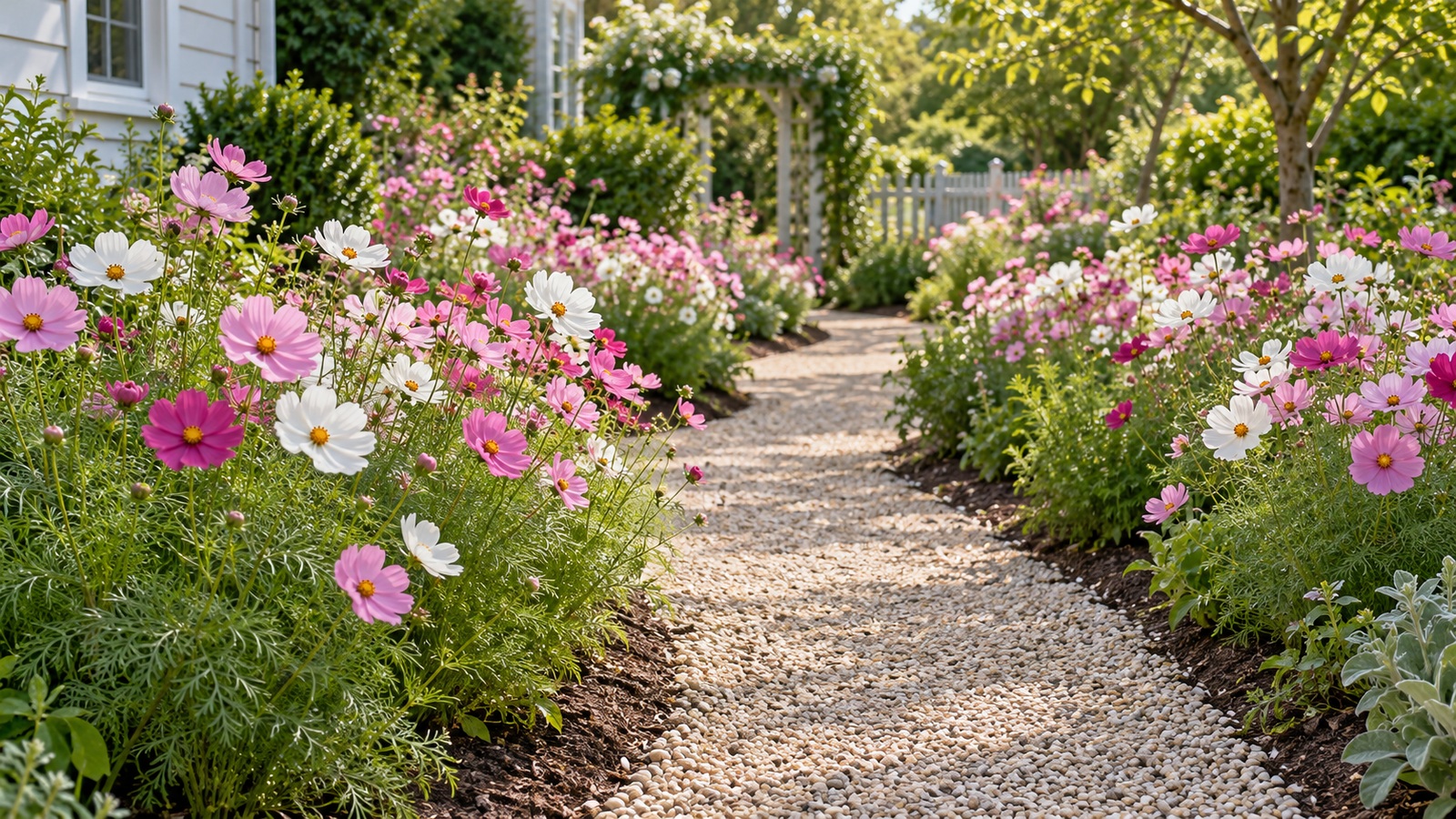
Repeated groups give familiar plants a visible role in the garden. A cluster of pink cosmos echoed along a path can create a more convincing scene than the same number of plants scattered among unrelated colors. Repetition makes the choice feel intentional and helps the eye move through the planting. Use enough plants in each group that the flower color remains noticeable from your normal viewpoint. A single small bloom may disappear into the surrounding leaves even when it looks impressive at close range.
Limit the main palette so your money builds a recognizable effect. You might use white and pink flowers across most of a bed, or choose warm marigold colors with a quieter green background. This does not require every plant to be identical. Different flower forms can share a color family, and one accent can create interest without turning the planting into a collection of samples. When the palette is clear, inexpensive plants often look more considered because their relationships remain visible as they grow.
Repetition can also make future care and replacement simpler. You know which cultivar was used, how much space it needs, and whether it performed reliably. If a small area fails after accidental damage, a replacement in the same palette is easier to integrate than an entirely new flower color. Save nursery labels and seed packet information until the season ends. That small habit prevents a successful low-cost planting from becoming difficult to repeat simply because the names of its useful plants were forgotten.
Cosmos for an Airy Border with Generous Presence
Cosmos can provide considerable height and movement from a modest seed purchase, making it useful where you want a loose, informal border. Pink and white types can look especially coherent when grown in repeated drifts instead of isolated specimens. Choose the species and cultivar carefully because mature height, flower color, and growth habit vary. Taller plants may need support in exposed positions, while compact varieties are easier near narrow paths. Give the selected plants suitable sun and drainage, and avoid forcing excessive lush growth with unnecessary feeding. Their light, open habit works best where it has space to move without leaning across a route you need to keep clear.
Zinnias and Marigolds for Strong Color Groups
Zinnias offer bold flowers in a broad range of colors, and seed-grown selections can fill a sunny bed affordably when the season is long enough. Their strong flower heads make them useful for repeated color blocks that remain legible from a distance. Match the cultivar to the purpose: tall cutting types create a different outline from compact branching selections near a patio. In humid areas, pay attention to disease resistance and spacing so the leaves support the display through summer. Good foliage is part of the overall impression, even when the flowers are the main attraction.
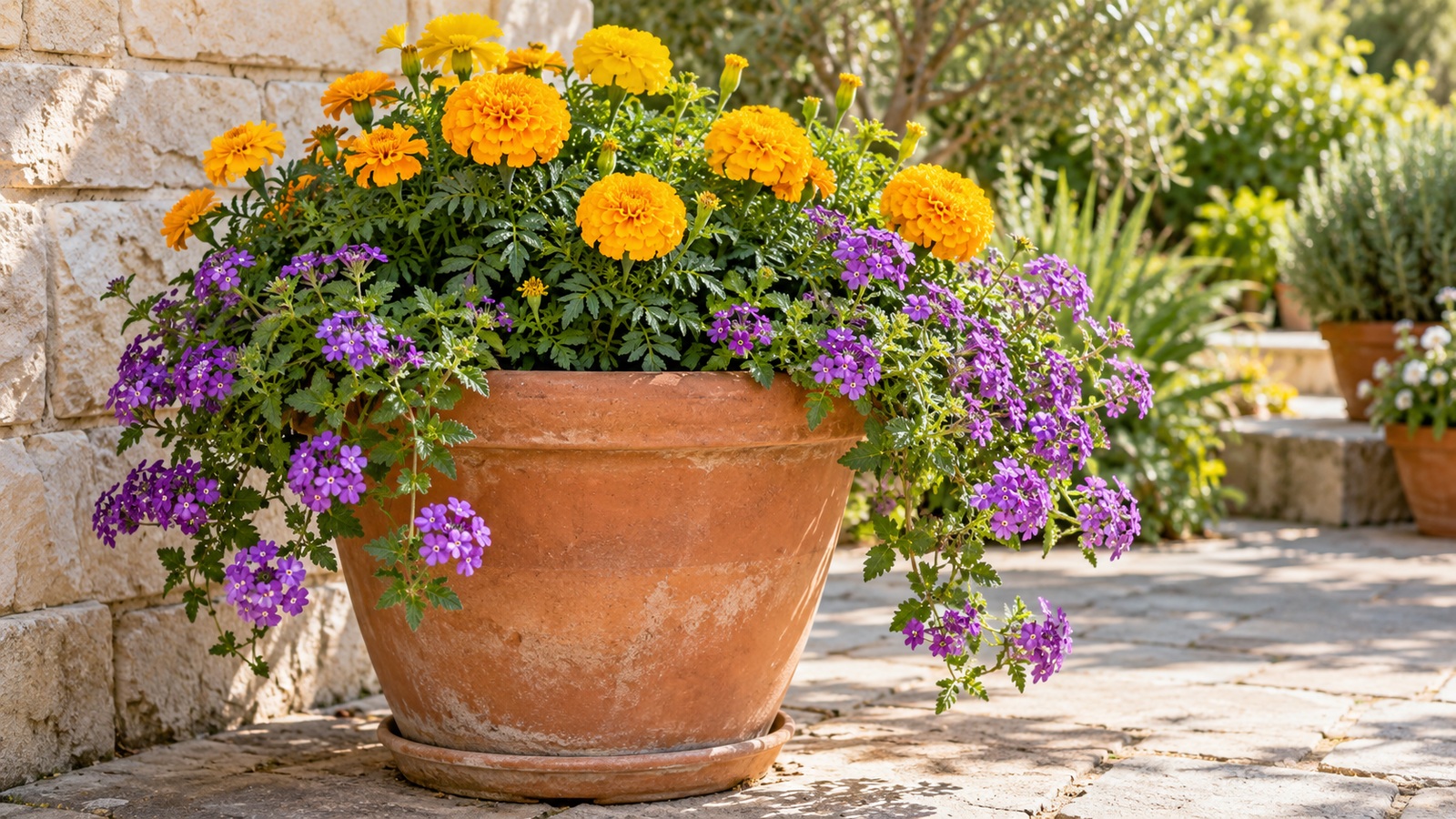
Marigolds are another familiar choice whose visual effect depends on how you use them. Compact French types can form a clear lower layer or edge, while larger types may act as substantial mounds or taller accents. Warm orange and gold flowers become especially effective when repeated against a simple background. Avoid choosing several nearly identical sizes and expecting a layered design to emerge by itself. A low band with a taller companion behind it is easier to read than a crowded patch in which every plant occupies the same visual level.
Grow from Seed Where the Savings Are Real
A seed packet can produce many plants, but it is economical only when you can give those seedlings a reasonable start. Direct sowing is attractive for annuals suited to the method and for beds where temperature, moisture, and the remaining season allow success. Indoor starting adds equipment, growing space, and daily attention, so it is not automatically the cheapest route for a few plants. Consider how many healthy plants you actually need. A small tray of sturdy starters may cost less than an elaborate indoor setup purchased to raise one modest container.
Read sowing instructions for each species rather than applying one method to all annual flowers. Depth, timing, germination requirements, and transplant tolerance differ. Thin seedlings to appropriate spacing even when removing them feels wasteful, because a crowded bed can produce weaker plants and a less attractive result. Prepare the seedbed so you can distinguish seedlings from weeds and water gently without washing the seed away. The aim is not the highest possible number of stems; it is a useful number of healthy plants that fill the planned area.
Compare seed mixes with named color selections according to your design goal. A mixed packet may be enjoyable in a casual cutting patch, but it can introduce colors that do not fit a restrained entrance bed. A named color series or a smaller group of consistent starters may produce a more controlled result. Saving seed can help in later years when the plant and variety are suitable, but offspring of hybrids may differ from the parent. Keep expectations realistic and do not base a future matching display on seed whose characteristics are uncertain.
Buy Starter Plants for the Places That Need an Immediate Finish
Some locations need flowers to look established quickly, and starter plants can be a sensible targeted expense. An entrance container, a gap beside a frequently used seat, or a short growing season may justify buying healthy plants rather than waiting for direct-sown seedlings. Look for compact growth, sound foliage, and roots appropriate to the pot instead of choosing solely by the largest open flower. A slightly smaller healthy starter often settles into the garden more usefully than a stressed plant with a dramatic temporary display. Shop with your plan in hand so each purchase solves a specific gap. If you visit clearance racks, evaluate condition carefully: a bargain that needs prolonged rescue can cost more time and replacement money than a sound plant at its normal price.
Give the Flowers a Clean Edge and a Quiet Background
A clear boundary between planting and path helps even a loose annual display feel organized. You can maintain a simple soil edge, use existing paving, or tidy the transition beside a gravel walk without installing costly new materials. Keep plants from swallowing the edge unless a deliberate spill is part of the design. When the line remains visible, abundant flowers can look generous instead of neglected. The edge provides a stable reference while the annuals change height and density through the season.
Mulch can reduce exposed-soil clutter and help with moisture and weed management where it suits the planting. Use a consistent material and avoid piling it against plant crowns or burying small seedlings. A modest, well-maintained surface usually contributes more to the impression than an unusually expensive decorative covering. Check where water will move before applying material beside a path or sloping bed. Keeping mulch inside the planting area and weeds out of it is part of the finished appearance, so choose a method you can maintain comfortably.
Add Height with Plants Rather Than Extra Purchases
A planting with more than one visible level often feels richer than a flat collection of equal-sized flowers. Taller annuals can provide a backdrop, medium-height plants can carry the main color, and compact selections can define the front. You do not need an elaborate accessory at every level. The plants themselves can create the structure when their mature dimensions are suitable. Before buying a decorative support, consider whether a shorter cultivar or a sheltered position would achieve the same purpose with less maintenance.
Tall growth deserves planning because it can become unstable or obscure neighboring plants. Install unobtrusive support early when the chosen annual needs it, and avoid leaving all corrective work until stems are already leaning. Sunflowers can create a striking vertical element, but their eventual size and cultivar habit must suit the bed. A few carefully placed tall plants can be more effective than a dense row that shades the rest. The aim is a layered view with healthy visible flowers at each level, not simply the greatest possible height.
Use a repeated pot or existing garden feature as a focal point if the space needs one. A plain container can look well considered when its shape and placement are consistent, even if it is inexpensive. Clean it, check drainage, and fill it with a simple planting that relates to nearby colors. Too many small accessories can fragment the scene and consume a budget better spent on soil preparation or healthy starters. Let one useful feature hold attention and allow the surrounding annuals to give it a generous setting.
Protect the Investment Through the Growing Season
Routine attention preserves the effect you planned more effectively than occasional emergency purchases. Water according to the soil and weather, remove weeds before they compete strongly, and deadhead annuals where that supports continued flowering. Watch for a plant that is occupying more space than expected and address it while neighboring growth is still accessible. If one group declines, diagnose the cause before buying more of the same plant. Poor drainage or an unsuitable exposure will not become economical simply because replacement flowers are cheap.
At season's end, compare the money spent with the part of the display you actually enjoyed. Record the varieties that filled their assigned space, the seed sowings that succeeded, and any purchases that were unnecessary. A convincing low-cost garden is built through these small informed choices, not through a promise that every annual will perform equally well everywhere. Repeat the strongest plants and improve one or two weak points next year. Familiar flowers, healthy growth, deliberate spacing, and a coherent setting can create an abundant seasonal garden whose appeal comes from thoughtful decisions rather than its price tag.
Make Each Garden Purchase Serve the Plan
Before adding an accessory, decide whether it solves a growing or maintenance problem in your planting. The site’s Garden Product Reviews can help with equipment research, while Illinois Extension’s landscape-design resource explains useful planning principles.