
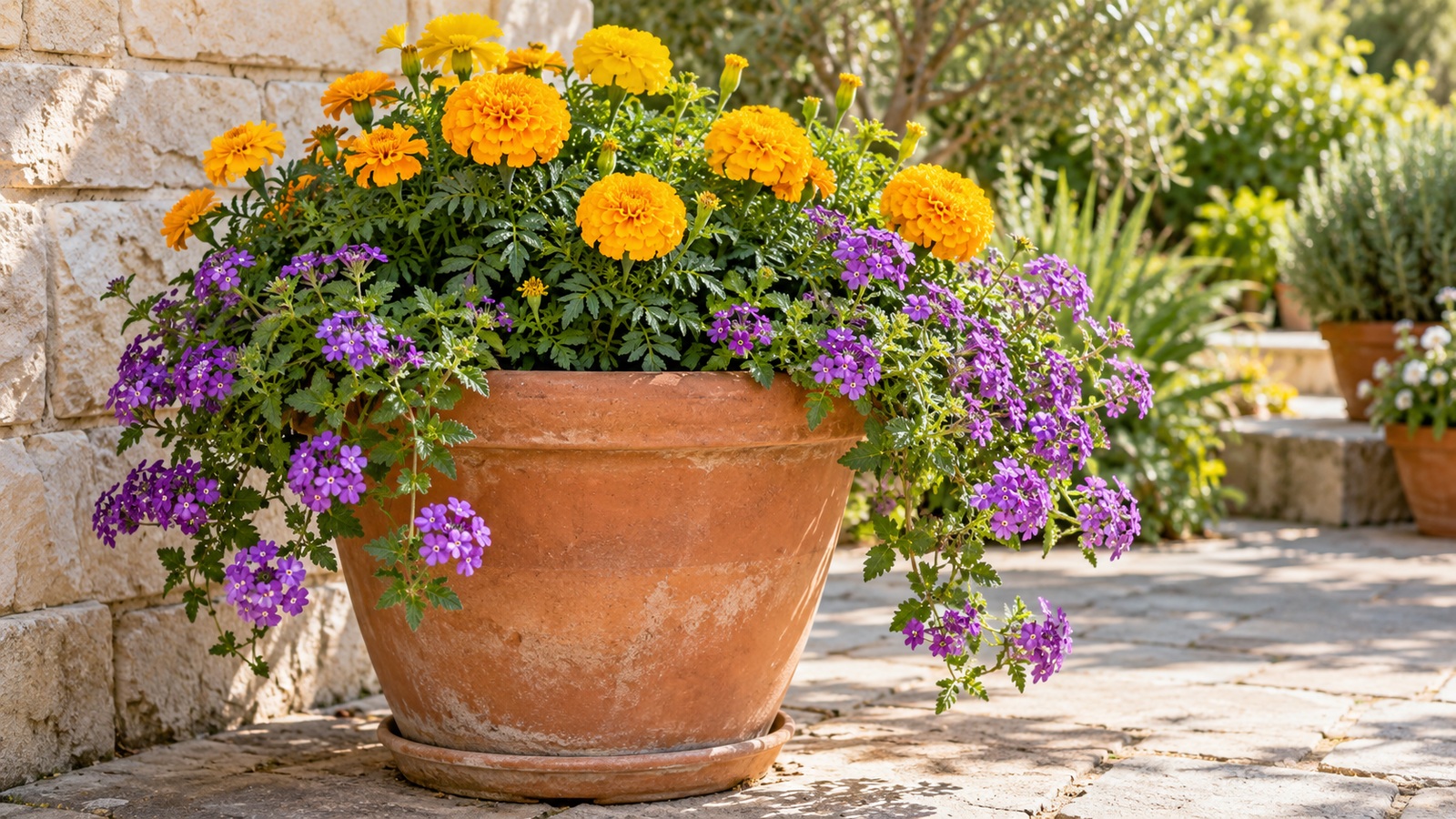
A Good Container Starts with a Forgiving Plant
The easiest flower pot is the one that keeps looking healthy through an ordinary week, including the afternoon you forget to check it. That does not mean a plant can live without water or that every popular annual suits every patio. It means choosing flowers whose habits match the light, heat, container, and care you can provide. A compact marigold can be a reliable choice on a sunny terrace, while a wax begonia may be more useful beside a porch with gentler light. Both become harder to manage in a tiny pot with blocked drainage. Before shopping, observe where the container will stand, think honestly about your watering routine, and give roots a generous volume of fresh potting mix. With those basics in place, a few well-chosen annuals can provide a long season of flowers without an elaborate feeding program or constant corrective pruning. The aim is a container you enjoy tending rather than one that demands rescue whenever the weather changes.
A: It suits the container's light, root space, moisture conditions, and the care time you can provide.
A: Small pots are lighter but often dry faster; choose manageable weight with sufficient room for mature roots.
A: Container potting mix generally works better because ordinary garden soil can become compacted inside flower pots.
A: Consider torenia or suitable wax begonia cultivars, matching their needs to the porch's actual afternoon light.
A: No, named petunia cultivars differ in vigor, shedding of old flowers, and the trimming they require.
A: No, check the mix and adjust watering to weather, container size, and the plant's growing demand.
A: Heat or poor root conditions can cause wilt in wet mix; inspect drainage before adding more water.
A: No, gravel provides no exit for water; use a draining inner pot and empty its outer cover.
A: Yes, one cultivar simplifies care decisions while its repeated flower color still creates an attractive container display.
A: Read the mix's nutrient information and fertilizer label, checking light and moisture before assuming a deficiency.
Make the Pot Easier to Manage Before Filling It
A substantial container generally gives you more room for error than a small decorative one. More growing mix holds a larger moisture reserve, accommodates roots, and slows sudden changes in temperature. That advantage does not make a pot self-watering, but it can reduce the speed at which a healthy plant moves from moist to severely wilted. Choose a container you can safely lift or place permanently, and consider whether its weight will be appropriate for a balcony or raised surface once the mix is wet.
Drainage holes are essential for ordinary containers unless you are using a specifically designed watering system. A pretty outer pot can serve as a cover, but standing water must not remain around the inner growing pot. Raising a container slightly can keep a hole from pressing tightly against a flat surface. Do not assume that a layer of gravel compensates for a pot without drainage. Roots still need a suitable growing medium and a route for excess water to leave the container after irrigation or heavy rain.
Use a commercial potting mix intended for containers rather than packing the pot with garden soil. The mix should hold usable moisture while retaining air spaces around the roots. Read the bag to see whether fertilizer is already included, because that affects the first weeks of feeding. Fill the container with enough depth for the selected plants, leaving room below the rim for watering. A good root environment makes a familiar annual much easier to grow than the same plant in a cramped, dense, or permanently soggy pot.
Measure the Light Where the Flowers Will Live
Watch the planting location at several times of day, including the afternoon when heat may be strongest. A porch can look bright to a person while receiving very little direct sun, and a western wall can make a sunny spot hotter than an open garden. Most sun-loving annuals need substantial direct light to flower well, while some begonias and other shade-tolerant choices perform better with protection. Read the cultivar's light recommendation and match it to the actual exposure, not the appearance of the patio at shopping time. If your container receives less sun than expected, choose plants suited to that limit rather than trying to compensate with extra fertilizer. The simplest care routine begins with a site where the plant can function normally.
Compact Marigolds and Zinnias for Sunny Pots
Compact marigolds offer sturdy branching, conspicuous warm-colored flowers, and a manageable size for many sunny containers. French marigolds are often useful where a taller African marigold would look oversized, but cultivar dimensions still matter. Give them room for their mature spread and avoid keeping the mix constantly saturated. Removing faded flower heads can keep the pot tidy and encourage continued flowering. If you want a straightforward first container, several plants of one compact cultivar are often easier to maintain than a crowded mixture of species with different growth rates.
Zinnias bring a wider range of flower colors and forms, but the easiest container choices are compact types bred to remain relatively short and branch well. Tall cutting-garden varieties may need more depth, support, and room than a patio pot provides. Choose selections with good disease resistance where humid weather commonly encourages leaf problems. Water the mix rather than repeatedly splashing the foliage, and allow air to move around the plants. A sunny, uncrowded pot gives zinnias a much better chance of retaining healthy leaves while the flowers keep opening.
Wax Begonias and Torenia for Gentler Exposure
Wax begonias can suit containers near porches, entrances, and patios where sunlight is less intense. Their rounded leaves and repeated small flowers create a full appearance without relying on very large blooms. Light tolerance varies among cultivars and climates, so a recommendation that works in a mild summer may need adjustment beside a hot reflective wall. Keep the root zone evenly moist enough to support growth while allowing excess water to drain. A healthy wax begonia should feel like a dependable leafy plant with flowers, rather than a delicate display that constantly needs its shape restored.
Torenia, often called wishbone flower, is another useful option for bright shade or appropriately sheltered locations. Its flowers add blue, violet, pink, or white tones where some sun-loving annuals would produce more leaves than blooms. Select a habit suited to the pot: some varieties form compact mounds, while others trail. Check moisture regularly because a shaded container can still dry during hot or windy weather. Protection from harsh afternoon exposure can help when local conditions are especially warm, but the plant still needs enough light and airflow to grow well.
Avoid treating all shade annuals as interchangeable. A deeply shaded corner, a bright north-facing porch, and a position with morning sun create different opportunities. Impatiens may be appropriate in some of these settings, but disease pressure and the choice between traditional and newer types deserve attention. Ask a local nursery about reliable selections for your area rather than buying only by flower color. Starting with one healthy, site-suited species makes it easier to learn how your particular container behaves before attempting a more complicated shade arrangement.
Heat-Friendly Options for Exposed Patios
In warm, sunny locations, annual vinca and suitable portulaca cultivars can be useful candidates, provided their drainage and temperature requirements are respected. Annual vinca generally prefers warmth and should not be installed in cold, wet growing mix simply because spring flowers are already available elsewhere. Portulaca is valued for sunny, relatively dry conditions, but its flowers may respond differently to cloudy weather or time of day depending on the selection. Neither choice belongs automatically in the same watering arrangement as plants that require consistently moist mix. Local climate can also make some plants perennial or potentially troublesome outside containers, so check regional guidance when choosing species. Match the plant's strengths to the exposure instead of expecting a heat-tolerant label to remove the need for observation.
Keep Trailing Flowers from Taking Over the Container
Verbena and scaevola can soften the edge of a sunny pot and extend the flower display beyond its rim. Their usefulness depends on selecting varieties that fit the available space and local weather. A strongly spreading plant may eventually hide its neighbors, especially if you begin with an overfilled arrangement. Allow the trailing plant a clear route over the edge and leave the center for a companion with an upright or mounding habit. You can also grow a single trailing species by itself when simplicity matters more than a mixed display.
Petunias are familiar container plants, but the amount of maintenance varies widely. Some modern types flower with relatively little removal of spent blooms, while others benefit from more attention and occasional trimming. Calibrachoa can be attractive as well, though it may be less forgiving when the growing medium, water chemistry, or feeding program is unsuitable. For a first attempt, choose a locally recommended cultivar and ask what routine it actually needs. An impressive nursery basket is useful inspiration, but it may have been maintained under conditions very different from those on your patio.
Water by the Growing Mix Instead of the Calendar
Check the root zone before watering rather than assuming every container needs the same daily drink. Feel beneath the surface where roots are active, and learn the difference between a pot that is adequately moist and one approaching dryness. Container material, plant size, wind, sun, and weather all influence how quickly water is used. An established pot in summer may need attention more often than newly planted annuals during cool weather. A fixed schedule becomes helpful only when it remains flexible enough to respond to these changes.
When the mix needs water, apply it thoroughly enough to wet the root volume, allowing surplus water to drain away. A small splash on the surface may leave deeper roots dry, especially after the mix has become difficult to rewet. Water slowly if it begins running immediately down the sides, and confirm that the pot becomes evenly moist. Empty water that collects around an ordinary growing pot inside a decorative cover. Consistent root-zone care is more useful than alternately allowing severe wilting and leaving the container submerged.
Wilting does not always mean the plant lacks water. Roots in saturated mix can lose the ability to supply the leaves, and extreme afternoon heat can cause temporary stress even when moisture is present. Inspect the mix before adding more. If the pot stays wet for long periods, check drainage, root condition, and whether the container is too large for a very small plant under cool conditions. The easiest annual cannot compensate indefinitely for a root environment that is either persistently dry or deprived of air.
Feed and Tidy with a Light, Consistent Hand
Container plants eventually use nutrients from their limited growing medium, but more fertilizer is not automatically better. Start with the potting-mix label and the product instructions, then consider the plant's actual growth. Apply fertilizer at the recommended dilution and interval for container flowers, avoiding the temptation to combine several products without understanding their contribution. Excess salts or overly strong solutions can damage roots. A steady, appropriate feeding routine supports the container more effectively than a large dose whenever the flowers appear less impressive.
Remove damaged leaves, inspect for pests, and tidy spent blooms when the plant benefits from it. This short routine helps you notice a problem while it is still confined to a few leaves or stems. Some annuals shed old blossoms efficiently, so they require much less deadheading than others. Trim leggy growth only when the species and cultivar tolerate the treatment, and leave enough healthy foliage for recovery. Maintenance should follow what the plant needs rather than become a collection of chores performed on every container regardless of its condition.
Begin with a Container You Can Learn From
For the first season, choose one generous pot and one or two compatible annuals instead of a crowded assortment. A sunny combination might use compact marigolds with an appropriately sized trailing verbena, while a sheltered planter could emphasize wax begonias alone. Keep a simple record of the cultivar, sunlight, watering behavior, and mature size, then photograph the pot after several weeks. Those observations reveal which choices are truly easy in your conditions. If a plant repeatedly struggles despite sensible care, change the selection or placement next time rather than assuming container gardening always requires more effort. A reliable flower pot grows from a good match between roots, weather, and daily life, and that match becomes easier to recognize with each season.
Choose Equipment for an Accessible Watering Routine
A well-placed watering tool and a sound container can make patio care easier to sustain. Browse Garden Product Reviews when comparing supplies, and use University of Maryland Extension’s flower-care guidance to review routine maintenance.


