Read the Stem Before You Remove the Flower
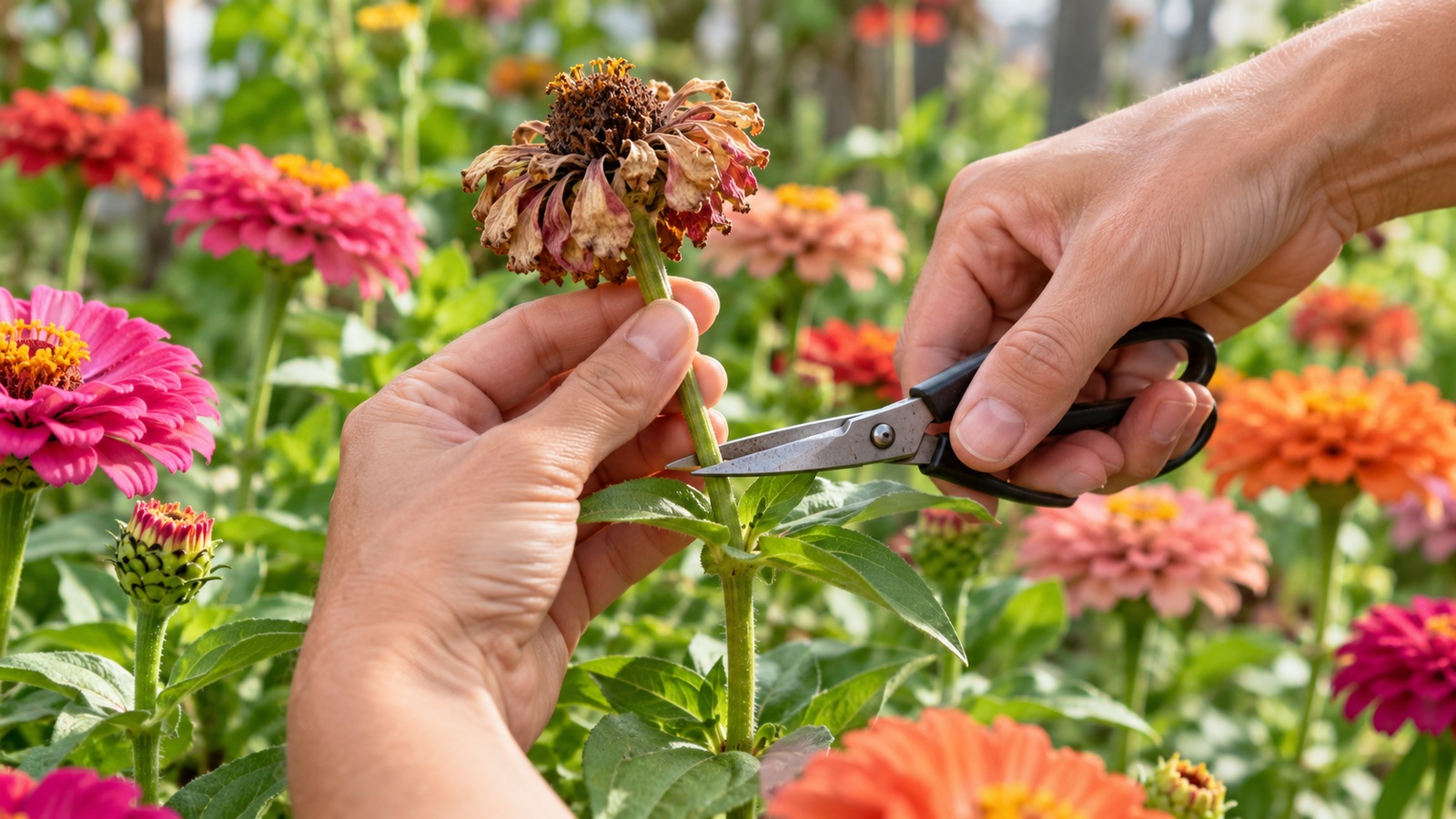
A faded flower tells you that one bloom has finished, but it does not tell you exactly where to cut. That distinction is the key to useful deadheading. Pulling away a few tired petals may improve the appearance for a moment while leaving a developing seed head behind; cutting too far down can remove the healthy buds that would have opened next. Annuals also differ in how much they benefit from the work. A zinnia with a spent head on a clear stem is not handled exactly like a branching flower spike, and some modern container annuals shed old blooms with little help. Before reaching for the scissors, look for the finished flower, trace its stem, and locate healthy leaves or new growth below it. A short, observant routine can keep suitable annuals flowering and the planting tidy, while still leaving room for seed saving, wildlife, and the natural end of a plant's season. The aim is a precise useful cut rather than removing everything that no longer looks fresh.
A: No, petals alone can leave the seed-bearing base attached; remove the finished head while preserving nearby buds.
A: Follow its stem to suitable healthy leaves or branching growth, keeping adjacent side shoots and unopened flowers.
A: No, inspect upper flowers and buds first because the spike may still have useful blossoms to develop.
A: Check during normal watering at a pace suited to the annual's flowering and your preferred tidiness.
A: No, correcting light, root, pest, or temperature problems matters more than removing additional flowers from stressed growth.
A: Switch to suitable sharp snips so a resistant attachment is cut cleanly without tearing the remaining stem.
A: They still require moisture checks, inspection, and occasional cleanup even though individual spent flowers need less picking.
A: Yes, mark selected healthy heads for seed and leave them intact while deadheading other finished flowers.
A: Nearby buds or side shoots may have been cut accidentally; inspect individual attachments before the next cleanup.
A: Consider the species, remaining favorable season, and plant health when deciding whether another flower flush is realistic.
Understand What Deadheading Can Change
After pollination, a flower may begin investing in seeds, and removing that structure can redirect a suitable annual's growth toward further flowering. The response varies with species, cultivar, plant health, and growing conditions, so deadheading does not guarantee an immediate new flush. It also improves appearance by taking away faded heads before they dominate the display. Those are related but separate benefits: a plant can look tidier without producing substantially more flowers. If it is struggling with inadequate light, damaged roots, or unsuitable temperatures, removing old blooms will not solve the underlying problem. Treat deadheading as one part of ordinary care, supported by healthy foliage and a growing environment that allows the plant to continue its season.
Identify a Finished Flower and the Growth Below It
Look for petals that have faded, dried, collapsed, or dropped and for a flower center that has begun developing into a seed structure. Do not rely on color alone, because some blossoms change color as they age while remaining attractive or usable to insects. Trace the individual flower's attachment instead of grabbing a handful of stems. You should be able to distinguish that spent head from a firm unopened bud. A close look prevents the common mistake of cutting away the next wave of flowers along with the old one.
Locate a healthy leaf junction or a suitable branching point below the finished bloom. On many branching annuals, that is the place where a cut can remove the old stem while retaining useful foliage and emerging growth. Leave the remaining plant with enough leaves to keep functioning. The exact cut depends on the annual's structure, so a rule such as removing every flower at the same height is unreliable. Once you learn the pattern of a particular plant, the job becomes quicker because you know what to look for before placing the blades.
Use Fingers for Soft Stems and Scissors for Cleaner Control
Tender spent flowers may be pinched off with fingers when the stem separates cleanly at the appropriate point. Support the plant so the action does not pull on roots or tear a longer section of stem. If the attachment resists or you cannot reach it accurately, use scissors or fine garden snips. The plant should be left with a clean, limited wound rather than a ragged strip of tissue. For thicker flower stems, a suitable sharp cutting tool usually provides better control than twisting until something breaks.
Keep the blades clean and check that they meet properly before starting. A dull or damaged tool can crush stems, while accumulated sap makes precise work harder. Where a plant shows suspicious disease symptoms, avoid moving immediately from it to healthy plants with dirty tools or hands. Follow appropriate tool-cleaning guidance and inspect the problem separately. Deadheading is often a close-contact task across many plants, so sensible hygiene helps keep that routine from distributing material you would rather contain.
Place the blades only after you can see the intended cut. Hold the finished head or stem away from nearby buds, and avoid blindly snipping inside a dense plant. Small scissors can be useful in a crowded container, while stronger stems may need sturdier snips. Work at a comfortable height when possible so you do not rush through a difficult posture. A few deliberate cuts generally produce a better result than an aggressive handful of flowers removed simply to make the job feel complete.
Remove Zinnia, Cosmos, and Marigold Heads with Their Used Stems
For a zinnia, follow the faded flower's stem down to a healthy leaf pair or appropriate branch point and remove the spent portion above it. Avoid leaving a long bare stalk topped by an empty receptacle, but do not cut through nearby unopened buds. Zinnias may also be harvested as cut flowers, and that removes flowering stems for a different purpose while influencing the plant's shape. If you are cutting for a vase, choose suitable stems and leave enough productive growth behind. Deadheading remains the simpler task of taking out a flower whose display has finished.
Cosmos and marigolds benefit from the same habit of tracing the individual head rather than removing only petals. On cosmos, inspect the airy branching stems carefully because small buds can sit close to the flower you are taking away. Marigold heads may be easy to pinch when tender, but a thicker attachment is better cut cleanly. Remove the developing seed structure when your goal is continued display. If you want seed later, deliberately retain selected healthy heads rather than accidentally leaving every old flower to mature.
Treat Flower Spikes as a Sequence Rather Than One Bloom
A flowering spike can carry open flowers, finished flowers, and developing buds at the same time. Cutting the entire spike as soon as the lowest blossoms fade may remove flowers that still have a useful future. Watch how the particular annual progresses along its stem, and wait until the spike is substantially finished when that is the appropriate method. Annual salvia and snapdragons, for example, require attention to the remaining flowering growth and their response to trimming. Cultivar and seasonal conditions can change what recovery you should expect.
When the used spike is ready to remove, find the healthy foliage or branching growth below it and cut in a way that preserves that growth. A bare stub may not contribute anything useful to the appearance, but cutting far into an already sparse plant can leave it with too little leaf area. Inspect several stems before doing the entire planting so you understand where new shoots are forming. If the annual is also heat-stressed or nearing the end of its favorable season, a tidy cut may be worthwhile even when another major flowering flush is unlikely.
Do not apply one spike-pruning rule to every plant with a vertical flower shape. Some produce repeated side growth readily, while others have different flowering habits or a shorter seasonal window. Use species-specific care information when you are unsure, especially before removing a substantial amount of foliage. The useful question is where the next growth will come from and whether the remaining plant is equipped to support it. That observation keeps deadheading selective rather than turning it into indiscriminate cutting.
Recognize Annuals That Need Less Help
Some annuals drop spent flowers efficiently or continue flowering without intensive deadheading, and modern breeding has increased those options. Certain petunias and other container selections are marketed for reduced flower cleanup, although their overall trimming, watering, and feeding requirements still vary. Check the cultivar rather than assuming the entire genus behaves identically. A self-cleaning plant can still accumulate damaged foliage or become leggy, but those are separate maintenance decisions. If the flower display stays strong and old heads do not persist, there may be little benefit in searching for something to remove every day. Spend that time checking roots, moisture, pests, and the plants whose seed formation or faded heads make deadheading more useful.
Choose a Routine That Fits the Flowering Pace
A short inspection several times during a week can be easier than allowing an entire bed to fill with old heads and then trying to restore it in one session. The right frequency depends on how rapidly the annual flowers and how much you care about a very polished appearance. Walk through the bed or check the patio pots and take out obviously finished blooms while you observe new growth. Avoid making the job a rigid daily obligation when the plants do not need it. Consistency matters more than a universal schedule.
Work when you can see the stems clearly and the foliage is reasonably dry, especially where disease spread is a concern. If the planting is severely wilted in heat, check moisture and give it a chance to recover before doing extensive cutting. A stressed plant is harder to assess because healthy leaves and buds may look temporarily poor. Keep your immediate goal modest: remove identifiable finished flowers and preserve productive growth. Larger corrective trimming can wait until you have determined whether the plant needs it and whether conditions favor recovery.
Collect the removed material so spent heads do not remain lodged among leaves or scattered across the path. Healthy flower debris can be handled according to your normal composting practice, while visibly diseased material deserves appropriate disposal. Keep a small container beside you if it makes cleanup simpler. This is also a good moment to inspect leaf undersides, damaged stems, and changes in vigor. The close attention that accompanies deadheading may be as useful as the flower removal itself when it helps you notice an emerging problem early.
Leave Selected Seeds and Wildlife Resources Deliberately
A garden does not need every flower removed as soon as it fades. You may want mature seed for a suitable open-pollinated variety or seed heads for birds and seasonal interest. Choose the plants and heads you will retain, then accept that they may have a different appearance and flowering rhythm from those maintained for continuous display. Label seed-saving choices so they are not accidentally cut during a later tidy-up. Hybrid plants may produce variable offspring, so seed saving does not automatically preserve the exact color or form you enjoyed.
Timing can help reconcile different goals. Early in the favorable growing season, you may emphasize flowers and appearance, then allow selected heads to mature later when another large bloom flush is less valuable. Retain healthy structures rather than using seed saving as a reason to ignore disease or damaged plants. Think about the whole bed: a few purposeful seed heads can add interest, while a dense collection of collapsed stems may obscure other useful plants. Selective management gives you more flexibility than a rule that every faded flower must always stay or always go.
Diagnose a Blooming Pause Before Cutting More
If flowers fail to return, inspect the growing conditions before assuming your deadheading technique needs to become more aggressive. The annual may lack adequate sun, have roots in overly wet or dry soil, be affected by pests, or be responding to temperatures outside its preferred range. Excessive leafy growth can also point toward a feeding imbalance rather than a shortage of cuts. Look for healthy new shoots and compare the plant with species-specific expectations for the time of year. A precise routine should support the natural flowering habit, not pressure a plant to continue beyond its limits. With an appropriate cut, sufficient remaining leaves, and a realistic view of the season, deadheading becomes a useful way to extend suitable annual displays while keeping the garden's care focused and manageable.
Match Cutting Tools to the Flower Stems
Comfortable sharp tools make selective work easier when you can see the growth you intend to preserve. Visit Garden Product Reviews for supply comparisons and University of Maryland Extension’s care guide for additional flower-maintenance context.