
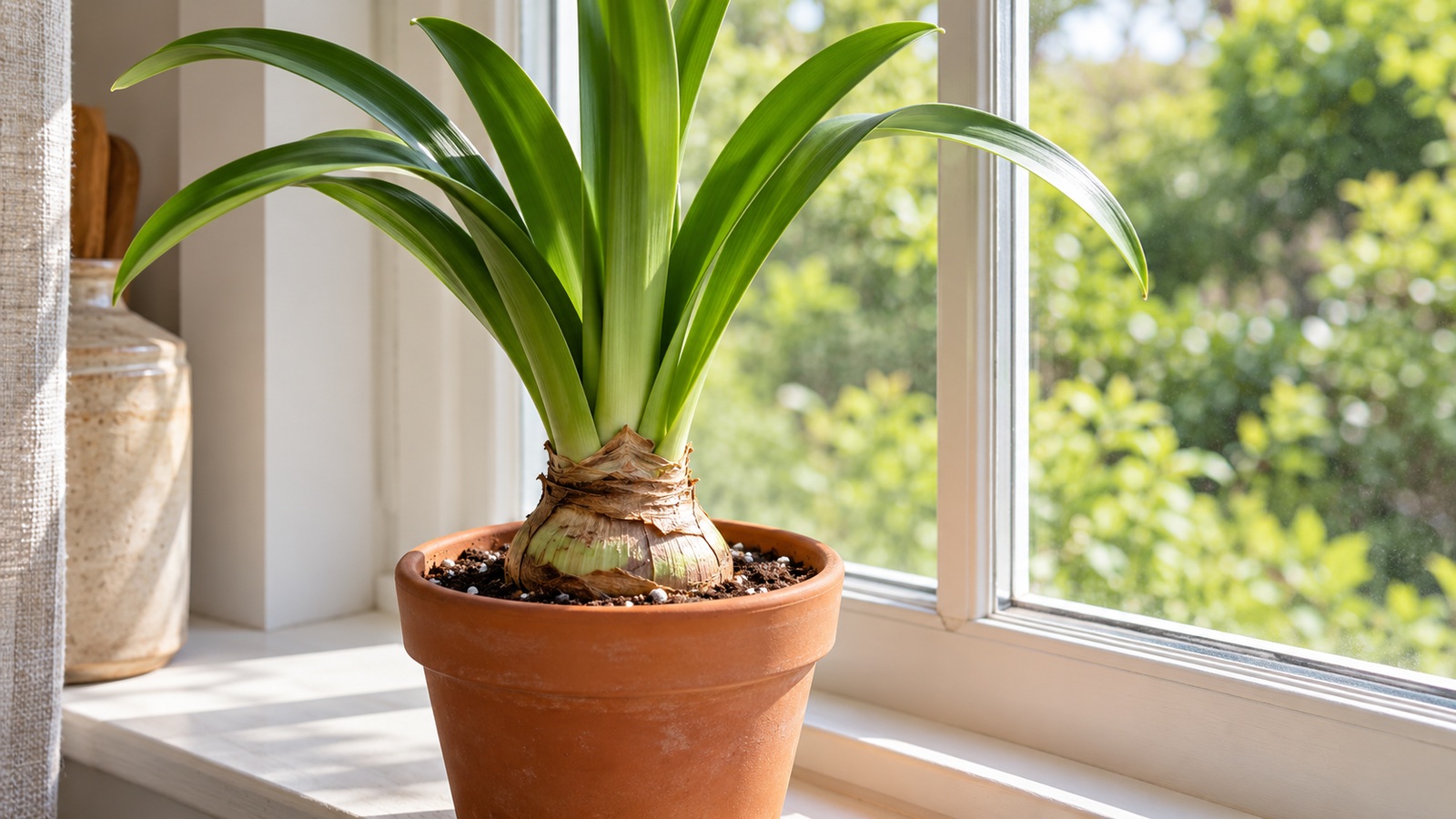
Next Year's Flowers Begin with This Year's Leaves
When the last amaryllis flower folds, the plant has finished its show but has not finished its work. The long green leaves that follow are the part most likely to determine whether you enjoy another flowering season. They capture light and help replenish the bulb after it has spent stored reserves on its tall stalk and large blossoms. Moving the pot into a dark corner or cutting away those leaves can interrupt that recovery, even if the bulb still looks substantial. For the common holiday amaryllis, a Hippeastrum hybrid, successful reblooming is a sequence of ordinary care decisions spread over several months: retain healthy foliage, provide strong light, manage water and feeding, protect the plant from cold, and use a suitable resting period when you want to influence flowering time. The sequence requires patience more than a special product. Follow the plant's condition as well as the calendar, and approach next year's bloom as the result of a healthy bulb rather than a date you can guarantee.
A: Keep healthy leaves to rebuild reserves; remove faded blossoms and wait for the finished stalk to yellow.
A: No, active summer foliage needs bright growing light; dark storage belongs only to a deliberate resting routine.
A: No, suitable indoor light can support recovery, while outdoor growing requires gradual acclimation and protection from cold.
A: No, freezing damages amaryllis; any cool resting interval must remain safely above temperatures that threaten the bulb.
A: Eight to ten weeks is a common optional planning range, although some bulbs rebloom without a dormant interval.
A: Leaf-first growth does not prove failure; preserve the foliage and observe the bulb's continuing development over time.
A: No, extra fertilizer cannot substitute for stored reserves or guarantee a Christmas display from the saved bulb.
A: Not always; their preparation and remaining healthy roots vary, so assess the individual bulb after flowering.
A: Support another healthy leafy season while reviewing light, root condition, moisture, and the bulb's maturity.
A: No, flowering remains variable even with careful timing, so prioritize healthy growth over a fixed display date.
Separate Flower Cleanup from Leaf Care
Remove faded blossoms so the plant does not put unnecessary effort into developing seeds. Once the flowering stalk is finished, it can be cut back carefully without damaging the bulb or surrounding leaves. Use a clean tool and keep the cut limited to the structure you intend to remove. A second stalk may still be developing, so inspect the plant before treating every upright shoot as part of the finished display. Flower cleanup should make the pot easier to manage while protecting the growth that remains useful.
Leave green leaves intact. They are active tissue, and their appearance is not a sign that the bulb has become an uninteresting plant that can be put away. Keep caring for the amaryllis as a leafy houseplant during its recovery period. A leaf damaged by handling is different from a healthy leaf that simply bends outward, so avoid cutting for cosmetic neatness alone. As you move the pot or add support, give the foliage room rather than repeatedly folding it against a wall or trapping it behind the container.
Find a Bright Place for the Recovery Months
The growing plant needs bright light, including appropriate direct light, to rebuild reserves effectively. A decorative position that suited the flowers during a holiday display may be too dim for months of leaf growth. Move the pot to a bright suitable window and observe how the leaves develop. Long weak growth leaning heavily toward the light can indicate that the position is inadequate. Rotate the pot modestly when useful, but do not mistake rotation for a substitute for enough light.
Indoor conditions vary substantially with window orientation, nearby buildings, curtains, and season. A south-facing window often offers more light in a northern winter, but heat near glass and sudden exposure changes still deserve attention. If the plant has been standing in low light, avoid immediately placing it in intense sun without a transition. Watch for bleaching or scorched areas rather than assuming any amount of sunshine must be beneficial. A good recovery position supplies reliable usable light without exposing the leaves to avoidable extremes.
You can keep the plant indoors through its active season if you have a suitable location. Outdoor summer care is an option, not a requirement that every household must follow. What matters is the duration and quality of healthy leaf growth. If indoor foliage remains weak and the bulb gradually loses firmness, reassess light, roots, and moisture instead of relying on a future resting period to restore everything. Rest can help coordinate the flowering cycle, but it does not replace the months in which the bulb gathers resources.
Water the Roots Without Keeping the Bulb Wet
Use a pot with drainage and a suitable houseplant potting mix, allowing the upper portion of the bulb to remain exposed rather than burying it completely. During active growth, water according to the mix and let excess moisture leave the pot. The surface can dry somewhat between waterings, but the plant should not undergo repeated severe drying while its leaves are doing the work of recovery. Keep water from collecting in a decorative outer container, and avoid maintaining a wet pocket around the bulb's neck. A pot that remains saturated for long periods needs investigation rather than more water. Root health, drainage, and the size of the container all affect how safely the plant can use the moisture you provide.
Feed During Active Growth, Not as a Last-Minute Bloom Trick
After flowering, an actively growing amaryllis can benefit from a suitable houseplant fertilizer used according to its label. Start with the nutrient content of the growing mix and the plant's condition instead of combining several products. Fertilizer supplies mineral nutrients, while light allows leaves to build the reserves that support future growth. One cannot compensate fully for the absence of the other. A measured routine over the growing season is more useful than a strong dose when you realize a holiday date is approaching.
Do not interpret every pale or weak leaf as proof that the plant needs more fertilizer. Poor light, damaged roots, persistent saturation, or other stress can produce similar changes. Check those conditions first, and avoid feeding a resting bulb as though it were producing vigorous leaves. Excessively concentrated fertilizer can damage roots and make recovery harder. The practical goal is steady healthy growth, not the fastest possible appearance of new foliage or a promise that a particular nutrient ratio will force a flower.
Move Outdoors Gradually When the Climate Allows
If you want the amaryllis to spend summer outdoors, wait until frost danger has passed and conditions are suitably warm. Begin in a sheltered shaded or indirectly lit position, then increase exposure gradually according to the plant's response and local conditions. Indoor leaves can scorch when moved abruptly into strong outdoor sun. A protected location also helps while the pot adjusts to wind and different drying patterns. The transition should improve the growing environment without damaging the foliage you are trying to preserve.
Outdoor pots need monitoring because rainfall and evaporation change the watering routine. A period of frequent rain can leave mix wetter than expected, while wind and sun can dry it quickly. Keep the drainage route clear and avoid placing the pot where runoff from a roof repeatedly fills it. Inspect for pests and damaged leaves as part of normal care. A vigorous summer plant still depends on roots that receive both water and air, so treat the outdoor setting as a new environment rather than a place where the plant can be forgotten.
Bring the plant indoors before frost and before temperatures become unsuitable for the tender bulb. Check the container and foliage for unwanted insects, and choose an indoor location consistent with the next stage you intend. If you are continuing active leaf growth, provide suitable light and care. If you are beginning a planned rest, transition deliberately rather than exposing the plant to cold injury first. Local weather, not a fixed national calendar date, determines when an outdoor amaryllis needs protection.
Use a Rest Period to Help Coordinate the Next Bloom
For a common household reblooming routine, allow a mature well-grown bulb a cool, dry rest of roughly eight to ten weeks, following guidance appropriate to the cultivar and your conditions. This is not freezing or refrigerator-style chilling, and the storage location must remain safely above freezing. Gradually reduce watering and stop feeding as you move into the rest phase, allowing leaves to yellow and dry rather than cutting off a vigorous green canopy at the first convenient date. Keep the bulb dry enough to avoid rot and inspect it periodically. Some Hippeastrum types can remain evergreen or flower on a less tightly controlled schedule, so do not assume every amaryllis needs an identical calendar. The purpose of a planned rest is to organize a healthy plant's cycle, not to rescue a bulb that never recovered after its last display.
Restart Growth with Modest Water and Useful Light
After the planned resting interval, move a sound bulb into a warm bright growing location. Inspect the bulb and container before restarting care, removing dry dead foliage carefully when appropriate. If the existing pot and mix remain suitable, avoid unnecessary disturbance simply because a new cycle is beginning. Repot when the root space, condition of the mix, or bulb health gives you a reason to do so. Use a container only modestly larger than the bulb, with sound drainage and the upper portion of the bulb above the mix.
Water sparingly at first, then increase moisture as active growth develops and the plant begins using more water. A resting bulb without substantial growth should not sit in saturated mix while you wait for a stalk. Leaves and a flower stalk may appear in different sequences, and the emergence of leaves first does not automatically prove failure. Watch the actual growth instead of watering by the expectation of an immediate bloom. Warmth, light, and careful moisture management support the restart without guaranteeing that every bulb has enough reserves to flower.
Once a stalk develops, turn the pot occasionally if it leans strongly toward the window and provide support when needed. Place a stake carefully so it does not injure the bulb, and use a gentle tie that does not constrict the stem. A broad stable container position helps prevent the flowering plant from tipping. When flowers open, a cooler comfortable location away from excessive heat may prolong the display. Continue to distinguish flower presentation from long-term leaf care so the next cycle starts with the same attention to recovery.
Understand Why a Healthy-Looking Bulb May Skip a Year
A bulb can remain alive without having enough reserves or maturity to produce the flower display you expect. Short leaf-growth periods, insufficient light, repeated moisture stress, or root damage may limit its recovery. A small offset needs time to reach flowering size, even when it produces attractive leaves. Compare the plant's actual growing history with the requirements of the cycle before blaming the final weeks of care. A skipped bloom can be information about the previous season rather than evidence that the restart itself was performed incorrectly.
Waxed gift bulbs add another complication because they are often sold to flower from stored reserves with little or no functioning root system. Their potential for long-term recovery depends on how the bulb was prepared and whether healthy rooting tissue remains. Do not assume that removing decorative wax automatically turns every gift bulb into a normal established plant. Inspect carefully and use reliable guidance for that particular situation. A sound potted bulb with healthy roots is a more predictable starting point for repeated care than one designed chiefly for a single waterless display.
Plan for the Season Instead of Promising a Holiday Date
Record when flowers finished, how long the plant carried healthy leaves, when you began its rest, and when growth resumed. That record helps you adjust the next cycle to the particular bulb rather than follow a schedule that happened to work for someone else. Keep the cultivar name too, so you can compare its behavior with guidance for that selection rather than treating every holiday bulb as identical.
Flowering after restart can take several weeks and varies with the plant, so an exact holiday date remains uncertain. If the timing matters, keep that uncertainty in mind instead of trying to accelerate the process through extra water or fertilizer. A second healthy bulb following its own cycle can extend the season of enjoyment without forcing either plant to meet an artificial deadline.
The most useful long-term habit is to value the leafy phase as much as the dramatic flowers. Protect it with sufficient light, sensible moisture, appropriate feeding, and enough growing time, then provide a suitable transition into the next cycle. Inspect the bulb's condition and respond to the plant you have rather than a rigid deadline. A reblooming amaryllis becomes rewarding because you understand its rhythm and can support it through quiet months as well as its showiest days. Those ordinary months are where next year's flowers begin.
Keep Reliable Bulb-Care References Nearby
For additional species guidance, consult University of Minnesota Extension’s amaryllis guide and Iowa State University’s amaryllis resource. When the bulb needs a better pot or support, compare relevant supplies through Garden Product Reviews.


