
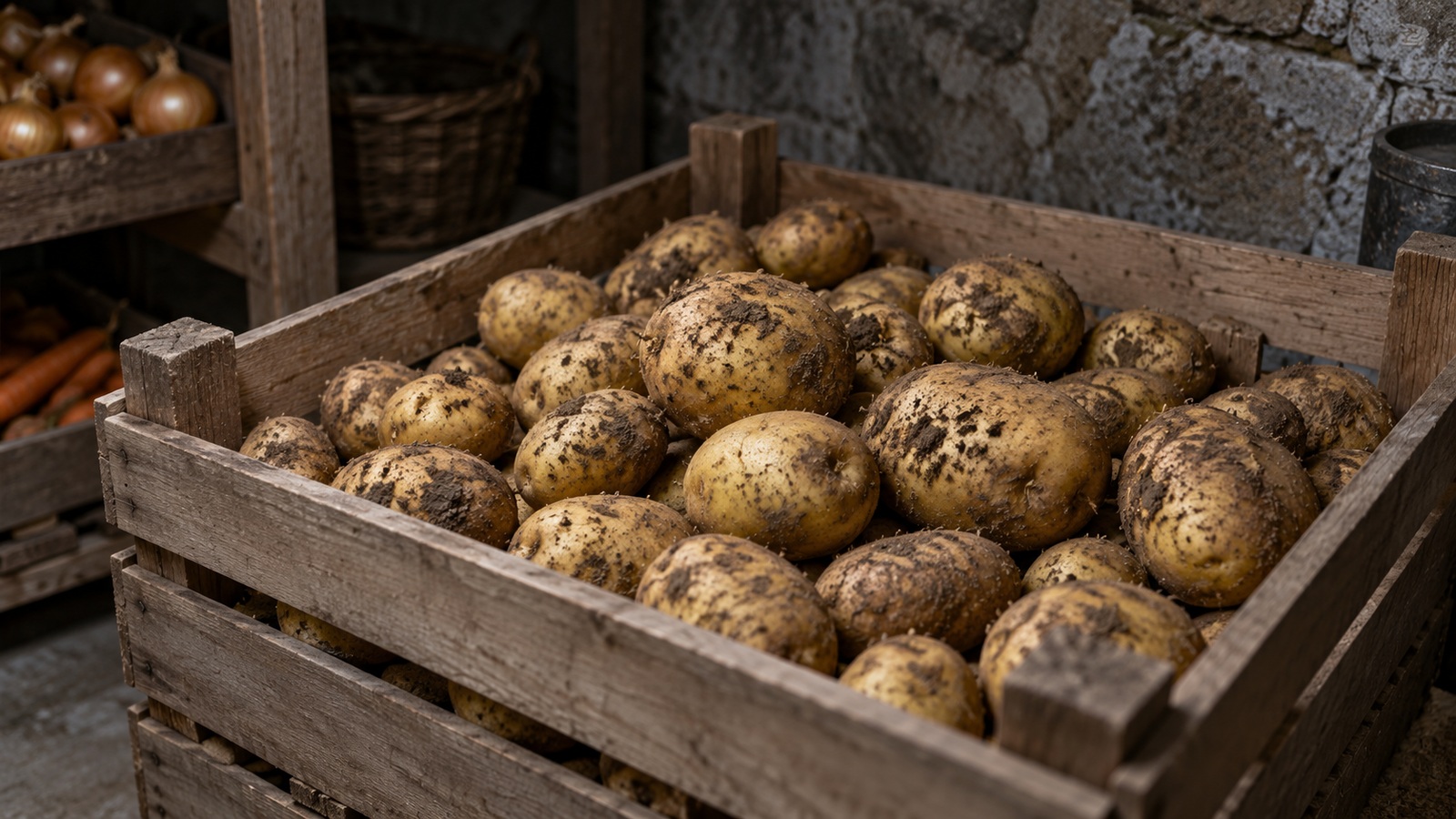
Prepare the Harvest Before It Enters Storage
A crate of potatoes can look ready for winter the moment it comes out of the garden, yet its storage life has already been influenced by harvest timing, weather, and handling. Newly dug tubers have vulnerable skins, and small injuries can become entry points for decay. Curing gives suitable mature potatoes time to strengthen their skin and heal minor wounds before they move into a cooler long-term space. It does not repair serious damage or make diseased potatoes safe to keep. The most dependable home-storage routine therefore begins with sorting, continues through a controlled curing period, and relies on darkness, appropriate temperature, ventilation, and regular inspection afterward. You do not need a traditional root cellar to improve your results, but you do need to understand the conditions your available space actually provides. Months of useful storage are possible with sound storage varieties and a suitable environment, rather than guaranteed for every potato you harvest.
A: Their delicate skins favor prompt use; keep new potatoes separate from mature tubers intended for winter storage.
A: No, curing requires darkness, ventilation, humidity, and moderate temperatures rather than exposing potatoes to sunshine.
A: No, deep punctures remain unsuitable for dependable storage even after minor wounds on sound potatoes have healed.
A: Around 40–45°F is common for home table potatoes; prevent freezing and measure conditions at the stored crop.
A: No, appropriate humidity must coexist with ventilation; sealed bins can trap condensation around the stored tubers.
A: Dry storage air can remove moisture without wet rot, so review humidity rather than spraying the potatoes.
A: Keep onions separately with suitable humidity; sharing a room does not require sharing the same package.
A: No, boiling cannot reliably make a heavily green potato suitable; discard it and improve storage darkness.
A: Remove it promptly, inspect contacting tubers and lower layers, and correct moisture problems around the remaining crop.
A: No, keeping duration depends on variety, harvest condition, and the storage environment maintained through winter.
Harvest Potatoes Whose Skins Are Ready
Potatoes harvested young for immediate eating are different from a mature crop intended for keeping. New potatoes have delicate skins that rub away easily, and they should usually enter the kitchen's short-term routine instead of being treated as a winter reserve. For storage, allow the selected variety to reach maturity and the skins to become firmer. The foliage often declines as the crop finishes, but disease or drought can also damage tops prematurely. Combine the plant's condition with variety information and a sample tuber rather than interpreting every brown leaf as proof of maturity.
Choose reasonably dry harvesting conditions when possible so the tubers are not coated with wet mud. Loosen soil carefully outside the main cluster and lift rather than driving a fork directly through the potatoes. A punctured tuber will not become a sound long-term candidate simply because it is left beside intact ones during curing. Collect the harvest into shallow containers and avoid dropping it from a height. Bruises may be hidden beneath apparently good skin, making gentle handling useful even when no cut is visible.
Keep harvested potatoes out of direct sunlight while you work. Light exposure encourages greening, and a hot exposed surface adds avoidable stress. A shaded sheltered staging area is more appropriate than leaving the crop spread across a sunny driveway. Brush away loose dry soil gently when practical, but save thorough washing for preparation before cooking. The first goal is to move intact tubers from the soil into a controlled environment, not to make the entire harvest look like a polished supermarket display.
Sort for Storage, Prompt Use, and Disposal
Examine each tuber before it joins the main storage lot. Intact, mature, firm potatoes are the strongest candidates. Set aside lightly damaged but otherwise sound tubers for prompt use after appropriate trimming and assessment, rather than allowing them to determine the fate of a large crate. Deep cuts, extensive bruising, wet breakdown, mold, or suspicious disease symptoms deserve a more cautious decision. Do not store questionable potatoes with the expectation that a later inspection will somehow reverse deterioration already underway.
Green potatoes need special attention because greening can accompany increased glycoalkaloids, natural compounds that can be harmful at sufficiently high levels. Color alone does not measure the amount present, and cooking is not a dependable solution to that problem. Discard extensively green, bitter, badly sprouted, or deteriorating tubers rather than trying to rescue a visibly unsuitable potato for long-term use. Keep sprouts out of food preparation. Sensible sorting protects the stored crop and makes it easier to judge sound potatoes without searching through material that should never have entered the reserve.
Give Curing Its Own Conditions and Timeline
For mature homegrown potatoes, a commonly recommended curing period is about two weeks at roughly 50–60°F with high relative humidity, around 85–90 percent, good ventilation, and darkness. This stage favors wound healing and skin development; it is warmer than ideal long-term storage. Use reliable local extension guidance when your variety or harvest circumstances require adjustments. Arrange tubers so they are not compressed into a poorly ventilated heap, and inspect the space with a thermometer rather than trusting that a room feels cool. High humidity does not mean spraying tubers until they are wet or enclosing them in a sealed plastic bag. If condensation or surface moisture persists, improve conditions promptly. Curing should give sound potatoes a better start, while visible decay during the process remains a reason to remove affected tubers.
Choose a Storage Temperature You Can Maintain
After curing, move keeping potatoes into a darker, cooler environment, commonly around 40–45°F for home storage, with high humidity and air circulation. Temperature recommendations can vary with intended use and storage system, so choose a practical range from suitable extension guidance and observe the crop. A space consistently warmer than about 50°F tends to shorten dormancy and encourage sprouting sooner. A space that freezes can ruin tubers even when it is otherwise dark and well ventilated. The appropriate room is one that remains usable through the actual winter conditions.
Measure temperature at the crate's location and repeat the check during changes in weather. A basement shelf near a furnace can be warmer than the opposite wall, and a garage may swing between suitable conditions and damaging cold. Inspect the coldest and warmest periods instead of making a decision from a single mild afternoon. Refrigerators often run colder than the preferred potato-storage range and can alter starch and sugar balance, affecting flavor and cooking performance. For a household crop, a consistently suitable unheated room may be more useful than an improvised system whose temperature varies widely.
Keep Humidity High Without Trapping Liquid Water
Potatoes lose moisture in very dry surroundings, becoming shriveled or rubbery even when they do not rot. Relatively humid storage helps limit that loss, but the tuber surfaces should not remain wet. The distinction matters because damp enclosed conditions can favor decay. Use a hygrometer if you are evaluating a space for a substantial harvest. A measurement does not replace observation, but it helps you distinguish a genuinely dry environment from a problem caused by poor ventilation or excessive temperature.
Choose breathable containers such as suitable ventilated crates, perforated bins, or paper sacks arranged so air can circulate. Do not pack the harvest into an airtight plastic tote simply to retain moisture. Shallow layers make inspection easier and reduce pressure on the potatoes at the bottom. Keep containers away from wet floors and from surfaces that repeatedly develop condensation. If you use a cover to exclude light, ensure that it does not seal the crop inside a humid pocket with no air exchange.
Avoid trying to correct low humidity by routinely wetting the potatoes themselves. Adjust the storage environment in a way that does not expose food to standing water or contamination, and keep watching for condensation. A small harvest may be more manageable in several breathable packages than in one large deep container. The packaging should support the conditions you need, not conceal them. When you can see and reach the potatoes easily, it is simpler to notice early changes before moisture loss or rot spreads through a substantial part of the crop.
Make Darkness a Continuous Habit
Darkness should continue beyond the curing period. Light from a cellar window, a frequently illuminated shelf, or a translucent container can reach the crop even when the room seems dim most of the day. Check the actual path of light and choose an opaque breathable cover or a darker position where necessary. An uncovered crate beside a bright basement window is not equivalent to a dark root cellar. Brief inspection is useful, but long routine exposure defeats the purpose of storing potatoes away from light.
Keep the arrangement simple enough that darkness does not interfere with ventilation and inspection. An opaque paper sack can protect a modest quantity, while a ventilated crate may need a loosely arranged suitable cover. Open the package when checking the crop and restore the light protection afterward. Avoid decorating a storage area in a way that encourages displaying the harvest continuously under room lighting. The potatoes are being protected for later eating, so ease of inspection and stable conditions matter more than the appearance of the full crate.
Separate Storage Potatoes from Other Household Produce
Different crops do not necessarily belong together just because they all came from the same garden. Onions prefer comparatively dry storage, whereas potatoes benefit from higher humidity; combining them can force an unsuitable compromise. Ethylene-producing fruit can also affect nearby stored produce, so keep potatoes away from apples and other such fruit where practical. Avoid using a food-storage corner for household chemicals, fuel, or containers with unknown contamination. Give the potato crop its own clean, dark, accessible space and suitable packaging. Clear separation makes it easier to manage the environment, track how the tubers are changing, and prevent a problem in one collection from becoming hidden among several unrelated harvests.
Inspect the Crop Before Small Problems Become Large Losses
Check the potatoes regularly, with closer attention soon after they enter storage and whenever the room's conditions change. Remove a deteriorating tuber promptly and inspect the potatoes touching it. Moisture, odor, staining, and soft patches may reveal a problem before it becomes obvious across the whole crate. Do not simply close a package that smells wrong and hope the cool room will solve it. A sound storage system includes a route for unsuitable tubers to leave the lot as soon as they are identified.
Use the most vulnerable sound potatoes first and keep the best keeping candidates for later. Label lots by variety and harvest date so you can learn which ones remain useful longest in your conditions. Small household labels are for your own storage organization; they do not change the crop's biology. If one variety shrivels earlier or begins sprouting sooner, record the observation. The result may reflect its natural dormancy, the maturity at harvest, handling damage, or a room condition rather than a single universal mistake.
When potatoes sprout, assess the entire tuber rather than judging only the length of the shoot. A firm potato with limited sprouting is different from one that is extensively sprouted, green, bitter, or badly shriveled. Remove sprouts before preparation and follow reliable food-safety guidance about whether the remaining tuber is suitable. Never use taste as an experiment to establish the safety of a suspicious potato. As storage progresses, a smaller lot of sound usable tubers is more valuable than preserving the appearance of a full container.
Set a Realistic Goal for Your Available Space
Months of storage depend on the cultivar, crop health, curing, temperature, humidity, darkness, and inspection working together. If your home offers only a warm pantry, plan a shorter keeping period and grow or keep a quantity you can use within that limit. A thermometer and a modest trial lot can teach you more than filling an untested cellar with the entire harvest. Record the conditions and the date at which quality begins to decline, then adjust the next crop and storage arrangement accordingly. Successful potato keeping is a continuation of careful gardening: protect the sound tubers, respond to deterioration, and match the harvest to the environment you can actually maintain.
Check the Conditions Before Choosing Storage Equipment
Consult Iowa State University’s potato-storage guidance for curing and temperature recommendations. A useful crate or monitoring tool should support those conditions; compare supplies through Garden Product Reviews.


