Turn a Shaded Vertical Space Into a Suitable Growing Site
A shaded fence or north-facing garden corner can seem like an obvious place for a vine, yet shade is only the beginning of the selection process. Bright filtered light beneath an open canopy differs greatly from a narrow passage that receives almost no useful daylight. Soil near a wall may be dry even when the air feels cool, and tree roots can compete with a new climber for moisture. Some vines tolerate these conditions better than sun-loving flowering plants, but tolerance does not guarantee a heavy bloom display or rapid coverage. Choose a plant for the light, root space, support, and mature dimensions the site actually offers. A climbing hydrangea or an appropriate foliage vine can contribute useful structure where it fits, while very dark sites may need a different solution. The most dependable shaded planting begins with observation and a realistic role rather than a promise that one vigorous vine will thrive anywhere out of the sun.
A: Very dark passages can exceed its useful tolerance, so confirm that enough daylight reaches the intended growing route.
A: Light, maturity, species habit, and pruning can limit flowering even when the vine maintains healthy leaves.
A: No, it becomes a substantial woody climber and may require several seasons to establish and flower reliably.
A: Check Hydrangea hydrangeoides and the older Schizophragma hydrangeoides name, retaining the cultivar identity with its care records.
A: No, its vigorous developed growth needs suitable room and clear boundaries rather than a delicate small-bed assignment.
A: Large foliage and twining stems provide the main effect, while its comparatively concealed flowers contribute less visible emphasis.
A: Walls may intercept rainfall while nearby established roots compete for moisture beneath the apparently sheltered shaded planting.
A: No, assess the surface condition, attachment method, repairs, and continuing access before allowing a woody vine to cling.
A: No, nutrients cannot replace insufficient light; review the growing conditions before trying to increase flowering through feeding.
A: Check regional invasiveness, mature scale, attachment, and containment needs before installing the vine on a permanent structure.
Describe the Shade Before You Buy a Climber
Observe the intended planting area at several times of day and through the growing season. Dappled shade allows shifting patches of light, bright shade receives useful indirect daylight, and deep shade can remain dim for much of the day. These descriptions are more informative than simply labeling the bed shady. A deciduous tree may allow spring light and then block it when leaves expand. A wall casts a different pattern that depends on its direction and neighboring buildings, so use the actual site as the starting point.
Think about the vine's root zone and future upper growth separately. A shaded base may lead to a brighter support above it, whereas a vine inside a confined passage may remain in poor light from soil to tip. That distinction affects the plant's potential even when the nursery label says partial shade. Check whether new stems will be able to grow toward a suitable light level without crossing into an unwanted area. A plant should not have to escape the intended design simply to obtain the conditions it needs.
Set expectations for foliage, flowers, and speed independently. A vine may maintain useful leaves in shade while flowering less than it would in brighter conditions. Another may be appropriate but slow to establish. Decide which contribution matters most to your garden before rejecting a healthy plant for failing to produce an imagined display. The title shade-loving is a practical shorthand, not evidence that darkness improves every aspect of growth. A realistic plan can value attractive foliage and gradual coverage without promising abundant blooms in a very dim corner.
Consider Climbing Hydrangea for a Long-Term Shaded Structure
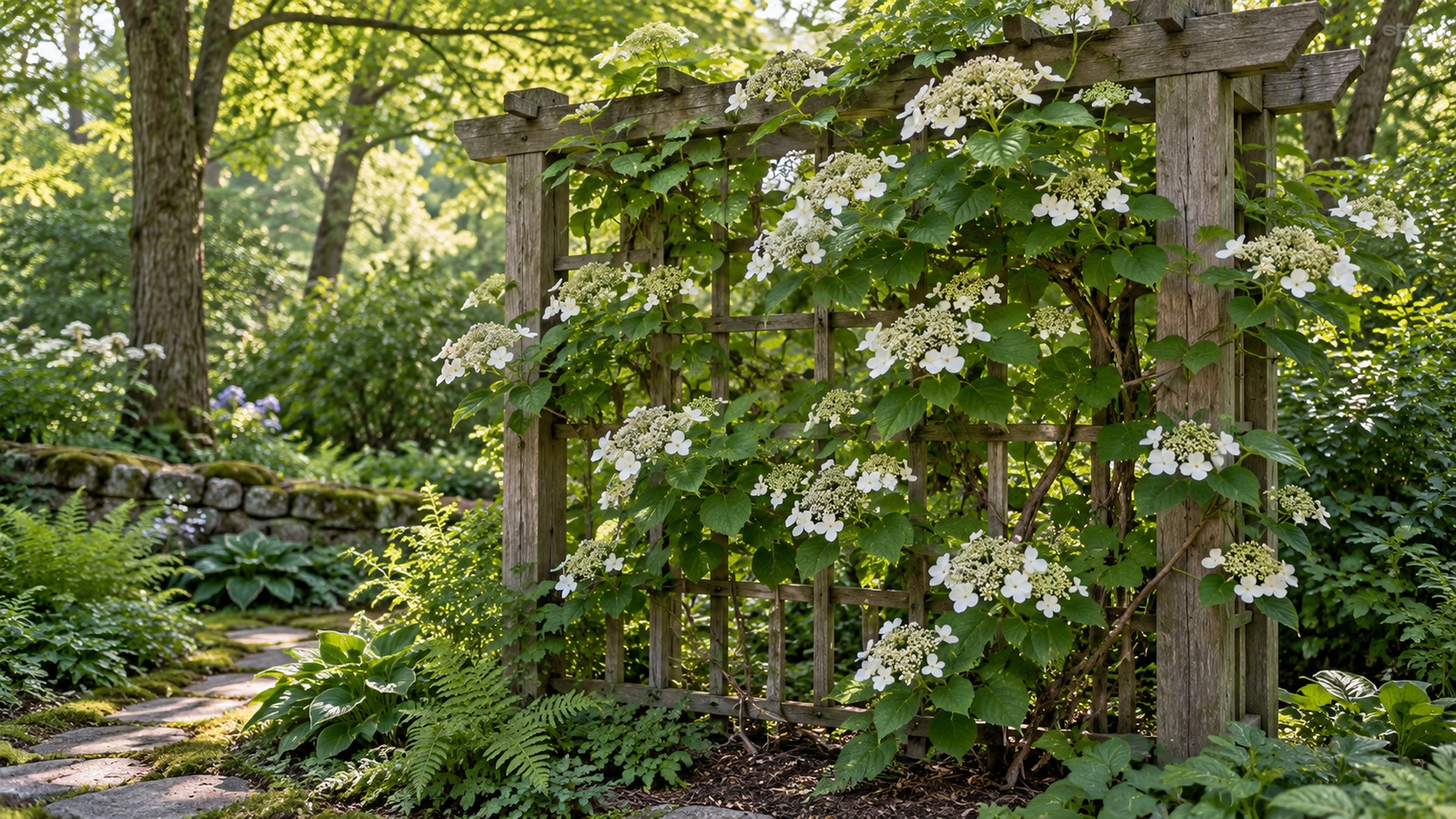
Deciduous climbing hydrangea, commonly sold as Hydrangea anomala subsp. petiolaris or Hydrangea petiolaris, is a familiar option for suitable shaded walls or strong supports. It produces woody growth and white lacecap-style flowers when established under appropriate conditions. Its mature scale is substantial, so a small temporary trellis is not a dependable long-term structure. Check local hardiness and regional growing advice before installation. Treat it as a lasting woody climber rather than a light seasonal vine that can be moved casually every year.
Allow for a patient establishment period and recognize that flowering may take time. Bright or dappled shade can support a better flower display than very dark conditions, though site and plant maturity still matter. Provide suitable moisture with drainage and avoid assuming that a cool location cannot dry out. A new plant near a wall may need attention because the structure keeps rain away from its roots. Healthy gradual growth is a useful sign even when the first few seasons do not deliver the full flowering effect of a mature specimen.
Compare Japanese Hydrangea Vine by Its Actual Identity
Japanese hydrangea vine, now often listed as Hydrangea hydrangeoides and formerly Schizophragma hydrangeoides, is another woody shade-tolerant option in appropriate regions. Cultivars vary in leaf and flower appearance, and the changed botanical naming can make shopping confusing. Preserve both the nursery name and the currently accepted identity in your records when useful.
Check its mature dimensions, hardiness, moisture needs, and support requirements. It should be chosen for the particular site rather than treated as an interchangeable smaller version of every climbing hydrangea.
Like other substantial woody vines, it benefits from patient establishment and a structure designed for its developed size. Look for healthy planting stock and ask the supplier how the named cultivar performs locally. A promising photograph may show a long-established plant under conditions unlike your garden.
Use that image to understand the eventual character, while basing the purchase on verified requirements. This distinction helps you appreciate the vine's gradual development without expecting a young specimen to reproduce a mature display immediately after installation.
Use Foliage Vines Where Leaves Are the Main Goal
Virginia creeper, Parthenocissus quinquefolia, can grow in a range of light conditions and provides foliage with seasonal color where regional suitability and space permit. Its vigorous behavior makes it more appropriate for a controllable substantial area than a delicate mixed border. Choose it for an understood foliage role, not as a gentle substitute for a flowering climber. Check how it attaches and where its stems can travel. A plant native within your region can still require active garden management when placed beside small shrubs, gutters, or structures you need to access.
Pipevine, Isotrema macrophyllum, formerly Aristolochia macrophylla, can offer large leaves on twining woody stems in suitable sites. Regional descriptions may list sun to partial sun while also recognizing shade tolerance, so verify what performance to expect under your actual light. Its flowers are not the main showy feature most gardeners choose it for. Provide an appropriate support and room for the developed foliage. An identified locally suitable plant can supply a useful leafy surface without making unrealistic promises about flowers in darkness.
Avoid confusing a foliage-first planting with a no-care screen. Dense leaves can conceal attachment points, neighboring stems, or developing problems on the support. Keep the boundaries visible and leave access for inspection. If the vine's job is simply to soften a shaded fence, select a size and habit that you can maintain there. A smaller suitable grouping elsewhere or a different planting type may be preferable when the site cannot accommodate a vigorous woody vine safely and conveniently.
Choose the Support by the Vine's Attachment Method
Twining vines wrap stems around suitable supports, while some climbers use tendrils or leaf stalks and others attach through aerial roots or adhesive structures. These methods require different surfaces and dimensions. A broad smooth post may not offer the same grip as a suitable slender framework. Read the selected plant's attachment behavior before buying a trellis. Installing a structure that works from the beginning prevents repeated tying or improvised additions after growth has already become tangled.
Clinging woody vines deserve particular thought near buildings. Existing masonry condition, coatings, wooden surfaces, and access for repairs influence whether direct attachment is appropriate. A strong independent support can keep growth away from a surface you need to inspect, although it still needs sound installation and ongoing care. Do not let a vine enter rooflines, vents, or gutters. Its shaded-site tolerance does not remove the practical consequences of attaching a mature plant to a structure.
Address Dry Shade and Competing Roots
Examine the soil before assuming that shade provides a moist growing environment. Walls can create rain shadows, and established trees or shrubs can draw heavily on available water. A plant chosen for moist shaded conditions may struggle in that dry root zone. Improve suitable soil where appropriate and determine whether you can provide establishment water reliably. Avoid deep excavation or damaging major tree roots simply to fit a vine into an inconvenient spot.
Keep new planting roots appropriately moist while they develop, adjusting to weather and drainage. Surface mulch can help where suitable, but it should not bury the vine's crown or press against woody stems. Check the original root ball as well as nearby soil, because they may dry differently. Repeated wilting or persistently wet conditions deserve investigation rather than automatic extra watering. A useful routine responds to what the root zone is doing, not to a fixed assumption about shady gardens.
If the site is very dark, dry, and confined, acknowledge that its limitations may exceed the selected vine's tolerance. A plant that merely survives with constant rescue will not create the dependable display you want. Consider a less demanding locally suitable planting, a change in the structure, or an intentionally unplanted surface where appropriate. Making that decision before a large woody vine establishes is easier than removing it later. A shaded corner can still be attractive without supporting every imagined form of coverage.
Avoid Problem Vines Sold as Easy Shade Solutions
Check current regional invasive guidance before choosing widely marketed vines such as English ivy, wintercreeper, or other vigorous ground-cover climbers. Their ability to cover a dark-looking area can be part of the same behavior that makes them troublesome beyond the garden. A nursery listing is not a guarantee of local suitability. Verify botanical identity, spread, and removal difficulty before purchase. Choose an appropriate alternative where a candidate is invasive or likely to become an unreasonable control job.
Keep the chosen vine from growing into nearby woody plants unless that relationship has been assessed carefully. Stems can smother or conceal branches and make inspection harder, even when the vine itself is desirable elsewhere. A freestanding structure is often easier to monitor than an informal scramble through an existing tree. Leave a practical boundary and inspect it during active growth. The best shade-tolerant vine is one whose full behavior fits the site, not simply the one that grows fastest in the available light.
Maintain the Shaded Display as It Develops
Train young stems deliberately and inspect ties or attachment points as growth expands. Remove or redirect shoots that enter unwanted areas before they become thick and difficult to manage. Pruning timing should follow the species and its flowering habit rather than a uniform annual haircut. Cutting flowering wood at the wrong time can reduce the display you hoped to improve. Keep the plant's identity available so future care decisions are based on its actual requirements.
Assess performance after a full growing cycle and allow suitable slow-establishing vines reasonable time. Look for healthy new growth, sound foliage, and a manageable relationship with the support. If flowering is limited, review light, maturity, pruning, and moisture before changing the fertilizer routine. A shaded planting may fulfill a foliage role successfully while providing fewer flowers than a sunny specimen. Judge it against the contribution you selected it to make.
A successful low-light vine planting combines realistic expectations with a usable structure and appropriate roots. Climbing hydrangeas, a suitable Japanese hydrangea vine, or an identified foliage climber can each contribute under the right conditions. Protect access, keep growth within its planned area, and respond to the site's limits as they become clear. The garden then gains a living vertical layer that fits its light rather than continually fighting it. That dependable fit is more valuable than an exaggerated promise of effortless coverage in deep shade.
Check the Vine’s Full Growing Requirements
Consult the RHS climbing-hydrangea growing guide and regional vine guidance before installation. Compare support and care supplies at Garden Product Reviews after identifying the plant’s mature demands.