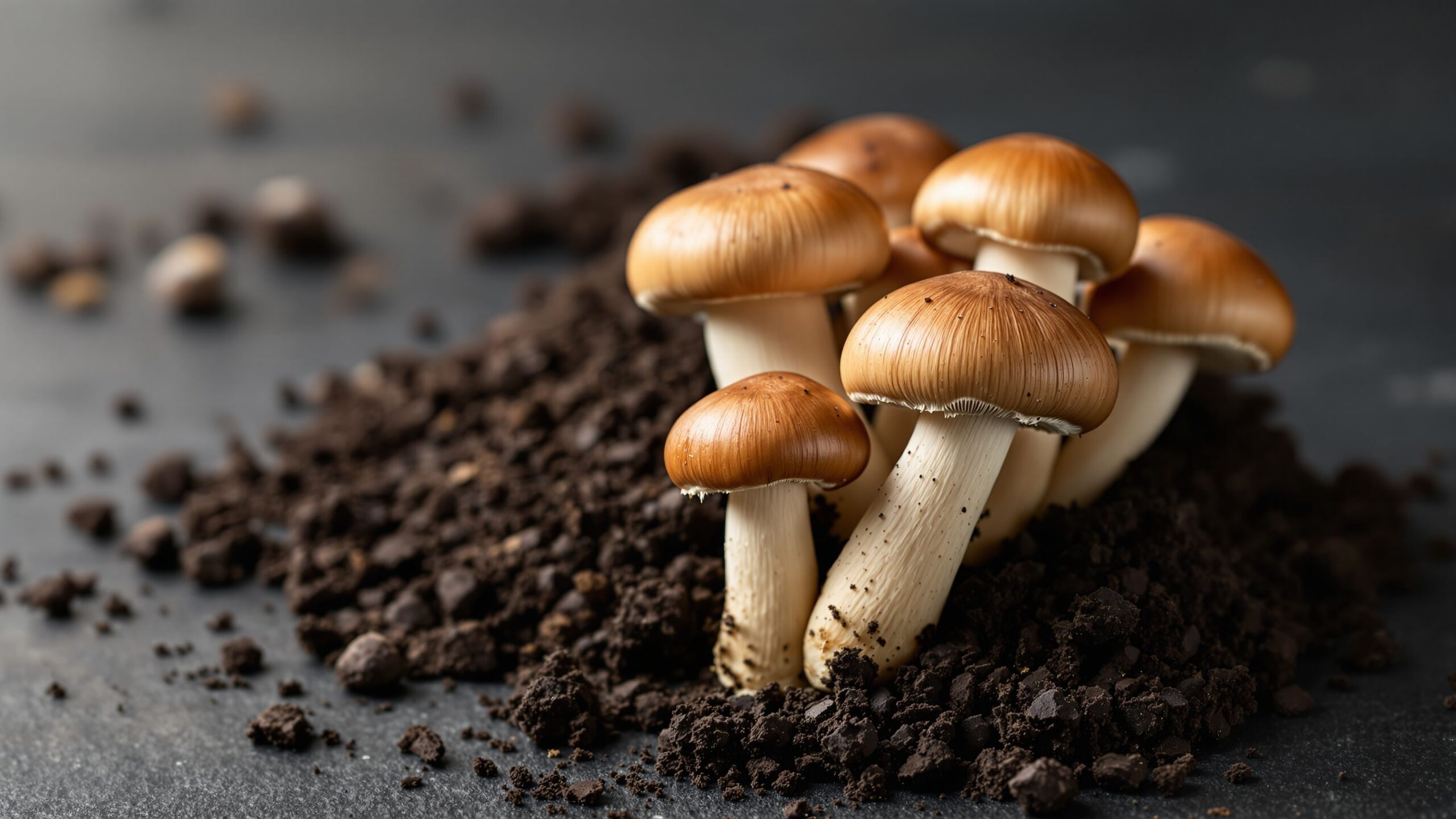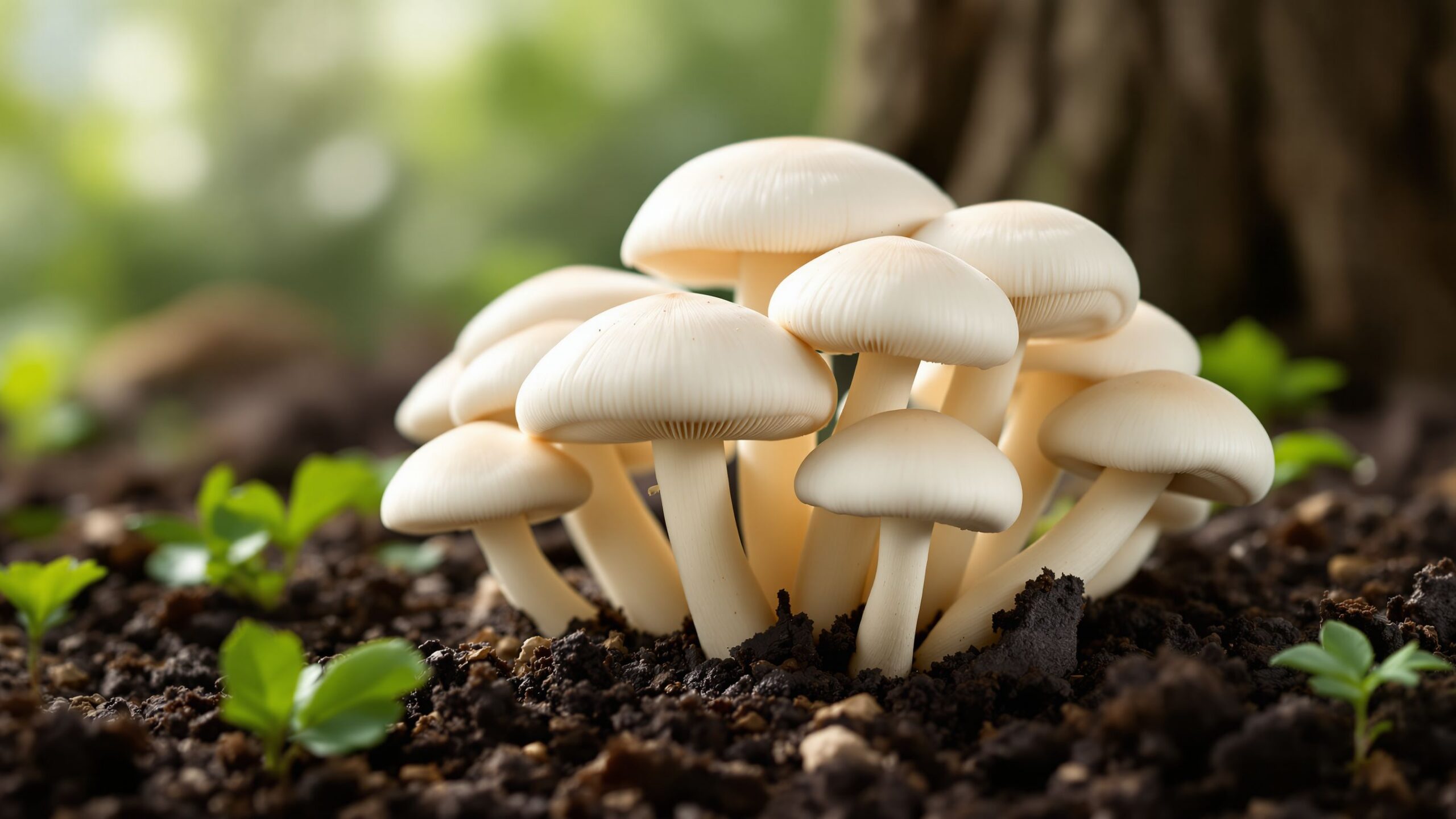
The white button mushroom may look simple, but it represents one of the most successful cultivated fungi in the world. Its smooth white cap, short sturdy stem, mild flavor, and familiar appearance have made it a staple in grocery stores, restaurants, home kitchens, and mushroom farms. Botanically, the white button mushroom is Agaricus bisporus. What surprises many people is that white button mushrooms, cremini mushrooms, and portobello mushrooms are all essentially the same species. Their differences come largely from cultivar, color, and maturity. White button mushrooms are typically harvested young, while portobellos are allowed to mature much further. This means the small mushroom sliced onto a salad and the large mushroom used as a grilled sandwich filling can belong to the same species. White button mushrooms are fungi rather than plants. They do not perform photosynthesis, do not have roots, and do not produce flowers or seeds. Instead, they grow from a hidden network of threadlike fungal structures called mycelium. The mushroom we eat is only the fruiting body produced by that much larger organism.
A: Yes. They can be grown indoors using mushroom spawn, prepared compost, and controlled moisture and temperature.
A: No. They do not photosynthesize, although some indirect light can make it easier to monitor a growing area.
A: They are typically cultivated in specially prepared compost covered with a casing layer.
A: Keep the casing layer consistently moist with light misting rather than soaking the growing medium.
A: They generally fruit best under relatively cool indoor conditions, although exact needs vary by strain and growing stage.
A: Harvest when the caps are firm, rounded, and still fairly closed for the classic white button appearance.
A: Yes. They are different growth stages and cultivated forms of Agaricus bisporus.
A: Improper moisture, temperature, airflow, casing conditions, or contamination can interfere with fruiting.
A: After production slows, spent substrate may be added to compost or used as an organic soil amendment where appropriate.
A: They can be rewarding, but they usually require more controlled conditions than simply planting a seed in garden soil.
What Does a White Button Mushroom Look Like?
White button mushrooms are named for their rounded, button-like appearance when young.
The cap is usually smooth, pale white to creamy white, and tightly curved around the stem.
Young mushrooms often have a closed veil that hides the gills beneath the cap.
As the mushroom matures, the cap expands and the veil begins to break.
The gills underneath may become visible and gradually darken from pinkish tones to brown.
The stem is typically short, thick, and pale.
Commercial white button mushrooms are usually harvested before the cap opens fully because this compact stage has the appearance and texture consumers expect.
White Button Mushrooms Are Not Plants
Mushrooms belong to the kingdom Fungi.
Although they grow from the ground or a cultivation substrate, fungi are biologically very different from plants.
Plants generally produce their own energy through photosynthesis.
Mushrooms do not.
Fungi obtain nutrients by breaking down organic material and absorbing compounds from their surroundings.
White button mushrooms are cultivated on carefully prepared organic substrates that provide the nutrients their mycelium needs.
This biological difference explains why mushroom cultivation looks so different from growing vegetables or herbs.
Sunlight is not the primary energy source.
Moisture, temperature, humidity, substrate quality, air exchange, and microbial conditions are much more important.
Where Do White Button Mushrooms Come From?
Agaricus bisporus occurs naturally in temperate regions and has been associated historically with grasslands, fields, and areas rich in decomposing organic matter.
Commercial cultivation developed in Europe several centuries ago.
France became especially famous for mushroom production, including cultivation in underground caves and quarry spaces where cool temperatures and high humidity created favorable conditions.
Over time, growers learned how to control the mushroom’s environment more precisely.
Modern white button mushroom farms use carefully prepared compost, controlled humidity, ventilation, temperature management, and specialized harvesting systems.
Today, the species is cultivated internationally on an enormous scale.
Why Are White Button Mushrooms So Popular?
Part of their success comes from their mild flavor.
White button mushrooms do not overpower most foods.
They absorb seasonings well and can be eaten raw in appropriate food-safety contexts or cooked through many different methods.
They can be sautéed, roasted, grilled, stuffed, baked, added to soups, mixed into sauces, placed on pizza, cooked into casseroles, or incorporated into pasta.
Their compact shape also makes them easy to package and transport.
Another major advantage is reliable commercial cultivation.
Growers have spent generations refining methods that allow large crops to be produced indoors under controlled conditions.
This means white button mushrooms can be available year-round rather than only during a short wild mushroom season.
White Button Mushrooms, Cremini, and Portobello
One of the most fascinating facts about Agaricus bisporus is that several supermarket mushrooms are closely related forms of the same species.
White button mushrooms are usually pale cultivars harvested young.
Cremini mushrooms, sometimes called baby bellas, are brown-colored forms harvested at a similarly immature stage.
Portobello mushrooms are mature brown forms allowed to grow until their caps become large and open.
As mushrooms mature, their texture and flavor change.
Young buttons tend to be mild and firm.
Cremini mushrooms usually have a somewhat deeper flavor.
Portobellos develop broad caps, visible dark gills, and a meatier texture.
Understanding this relationship makes the mushroom aisle much more interesting.
What Is Mushroom Mycelium?
Mycelium is the hidden body of the fungus.
It consists of microscopic threads called hyphae that grow throughout the substrate.
When conditions are favorable, the mycelium expands through organic material and absorbs nutrients.
Eventually, environmental signals encourage it to form small knots of tissue.
These develop into tiny mushroom initials known as pins.
Pins then grow into recognizable mushrooms.
The visible mushroom exists mainly to produce and release spores.
After harvest, mycelium can remain alive in the substrate and produce additional mushrooms in later flushes.
This is why mushroom cultivation is often described in terms of colonization and fruiting rather than planting and flowering.
How White Button Mushrooms Grow
Commercial white button mushroom production begins with a prepared substrate rather than ordinary garden soil.
Traditionally, growers use composted materials formulated to support Agaricus bisporus.
The compost must be properly conditioned before mushroom spawn is introduced.
Spawn is material already colonized by mushroom mycelium.
Once mixed into the prepared substrate, the mycelium begins spreading.
After colonization, growers apply a casing layer over the surface.
This casing is not primarily a nutrient source.
Instead, it helps regulate moisture and creates environmental conditions that encourage fruiting.
When temperature, humidity, and air conditions are adjusted correctly, tiny mushroom pins begin appearing.
These eventually enlarge into harvestable white button mushrooms.
What Is Mushroom Spawn?
Spawn is essentially the starting material used to establish mushroom mycelium in a growing substrate.
It serves a purpose somewhat comparable to seed in plant cultivation, although biologically it is very different.
Commercial spawn may consist of sterilized grain or other material colonized by the desired mushroom strain.
Using established spawn allows growers to introduce vigorous mycelium into prepared compost efficiently.
Starting mushrooms from spores is possible in controlled laboratory or breeding situations, but it is far more complicated.
For home growers, purchased mushroom spawn or a complete mushroom-growing kit is usually the easiest starting point.
What Is Mushroom Compost?
Mushroom compost is a specially prepared growing substrate.
It is often made from combinations of materials such as straw, manure, gypsum, and other organic ingredients, although formulations vary by producer and production system.
The materials are composted under controlled conditions.
This process changes their physical and chemical characteristics and helps create an environment suitable for mushroom mycelium.
Preparing proper mushroom compost is much more complicated than simply mixing organic scraps together.
Temperature, moisture, aeration, microbial activity, and conditioning all influence the final substrate.
Commercial farms carefully manage this process because poor compost can dramatically reduce production.
Why White Button Mushrooms Need a Casing Layer
After the compost becomes colonized by mycelium, a moist casing layer is applied over the surface.
The casing layer plays an important role in triggering and supporting mushroom formation.
It helps maintain moisture around the developing mushrooms while also creating the right physical and microbial environment for pinning.
The casing itself is not intended to serve as the main food source for the fungus.
Its job is environmental.
Maintaining the correct casing moisture is important.
If the surface dries excessively, pins may fail to develop.
If conditions remain overly wet and stagnant, diseases and malformed mushrooms may become more likely.
Do White Button Mushrooms Need Sunlight?
White button mushrooms do not require sunlight for photosynthesis because fungi do not photosynthesize.
They can therefore be grown in spaces much darker than those required by vegetables or herbs.
This does not necessarily mean mushrooms must be grown in complete darkness.
Indirect light generally does not harm them.
Commercial mushroom houses prioritize temperature, humidity, airflow, and sanitation far more than light intensity.
For home growers, a shaded indoor location can work well when environmental conditions are suitable.
Avoid placing a mushroom kit in hot direct sunlight because the substrate can dry rapidly and overheat.
The Best Temperature for White Button Mushrooms
Temperature control is central to white button mushroom cultivation.
The ideal temperature changes depending on whether the mycelium is colonizing the substrate or mushrooms are actively fruiting.
Mycelium generally tolerates warmer conditions than developing fruiting bodies.
Once growers want mushrooms to form, temperatures are lowered into a cooler range.
Precise commercial recommendations depend on strain and production stage, but white button mushrooms generally perform best under cool, carefully controlled fruiting conditions.
Excessive heat can weaken production and increase disease risk.
For home growers, following the specific temperature recommendations provided with purchased spawn or kits is more reliable than applying one temperature to every stage.
Humidity and White Button Mushrooms
Developing mushrooms contain a large amount of water.
High relative humidity helps prevent them from drying out as they grow.
However, high humidity does not mean the mushrooms should constantly be covered with standing water.
The goal is a moist atmosphere combined with appropriate air movement.
Extremely dry air can cause caps to crack, pins to abort, or growth to slow.
Excessive surface wetness can encourage bacterial and fungal problems.
Commercial growers carefully balance humidity with ventilation.
Home growers can mimic these conditions on a smaller scale by maintaining moisture around the substrate while preventing stagnant, dripping conditions.
Why Fresh Air Matters
Mushrooms release carbon dioxide as the fungus grows.
If carbon dioxide accumulates excessively around developing white button mushrooms, growth and shape can be affected.
Fresh-air exchange becomes especially important during fruiting.
However, too much dry airflow can remove moisture rapidly.
Successful cultivation therefore requires balance.
The environment needs enough ventilation to maintain appropriate gas levels without drying the substrate and mushrooms.
This balance between humidity and fresh air is one of the reasons mushroom growing can feel more technical than growing ordinary garden plants.
How Long Do White Button Mushrooms Take to Grow?
The full cultivation process requires more time than the rapid growth of the visible mushrooms suggests.
Mycelium first needs to colonize the prepared substrate.
After casing and environmental changes encourage fruiting, tiny pins begin developing.
Once visible mushrooms appear, they can grow surprisingly quickly.
A mushroom that looks tiny one day may become harvestable only a few days later.
Commercial farms monitor crops frequently because buttons can quickly pass the preferred harvesting stage.
Total production timing varies depending on substrate preparation, spawn, environmental conditions, strain, and cultivation method.
What Is a Mushroom Flush?
Mushrooms often appear in waves known as flushes or breaks.
Instead of every mushroom developing simultaneously, a group of fruiting bodies emerges over a relatively short period.
After that group is harvested, the growing bed may rest briefly before another flush develops.
White button mushroom crops can produce multiple flushes.
Later flushes may be smaller than earlier ones as available nutrients and productive capacity decline.
For home growers, this means a kit may continue producing mushrooms even after the first harvest appears finished.
Keeping the substrate appropriately moist and following care instructions can encourage subsequent flushes.
How to Harvest White Button Mushrooms
White button mushrooms are usually harvested while their caps remain relatively closed and rounded.
Growers often remove them by gently twisting and lifting from the substrate.
The exact method varies by production system.
Harvesting at the right time preserves the classic button shape and firm texture.
If mushrooms remain unharvested, their caps expand.
The veil beneath the cap eventually breaks and exposes the gills.
The mushroom is still the same species, but its appearance becomes more mature.
Commercial producers harvest frequently because mushroom development can occur rapidly under ideal conditions.
Can White Button Mushrooms Get Too Big?
Yes.
If allowed to continue growing, button mushrooms no longer look like compact buttons.
The caps enlarge and flatten while the gills become exposed.
This maturation is natural and not automatically a sign something has gone wrong.
However, growers producing white button mushrooms usually harvest before this stage because consumers expect small closed caps.
Mature mushrooms may develop stronger flavor and different texture.
On brown strains of Agaricus bisporus, allowing the mushroom to reach a very large mature stage produces the familiar portobello form.
Why Mushroom Caps Open
The cap opens as the mushroom matures and prepares to release spores.
A thin veil initially stretches between the cap and stem, covering the developing gills.
As the cap expands, this veil breaks.
The exposed gills eventually darken as spores mature.
In wild fungi, this is part of reproduction.
In commercial production, growers frequently harvest before major cap opening.
The tightly closed cap gives white button mushrooms their familiar appearance and improves shelf presentation.
White Button Mushroom Spores
Mushrooms reproduce through microscopic spores rather than seeds.
Agaricus bisporus produces brown spores.
As a mature cap opens, the gills beneath it release enormous numbers of these tiny reproductive structures.
A mushroom spore can germinate under suitable conditions and contribute to new fungal mycelium.
However, producing a predictable commercial strain from spores is much more complex than starting from established spawn.
This is why home mushroom cultivation generally begins with purchased culture or spawn rather than spores collected from supermarket mushrooms.
Can You Grow White Button Mushrooms at Home?
Yes, although they can be more demanding than some beginner mushrooms.
White button mushrooms require an appropriate composted substrate, casing material, careful moisture management, and suitable temperature conditions.
A prepared growing kit removes much of this complexity.
The substrate in a kit is often already colonized or partially prepared, allowing the grower to focus mainly on moisture and fruiting conditions.
Growing from scratch is a more advanced project because the substrate preparation process must be handled correctly.
For beginners, a reputable kit is usually the easiest introduction to the species.
Growing White Button Mushrooms From a Kit
A mushroom kit provides a convenient way to experience the fruiting process without managing every production step.
Instructions vary, so follow the directions provided with the specific kit.
Typically, the goal is to maintain appropriate moisture, temperature, and airflow.
Avoid letting the growing surface dry completely.
At the same time, do not flood it.
Tiny pins eventually appear.
Once mushrooms begin developing, check the kit frequently because growth can accelerate rapidly.
Harvest at the recommended stage and continue caring for the substrate.
Additional flushes may follow.
Can You Grow White Button Mushrooms From Store-Bought Mushrooms?
Trying to grow new white button mushrooms directly from supermarket mushrooms is unreliable.
The mushroom itself is a fruiting body, not the main fungal organism.
While tissue culture techniques can theoretically clone mushrooms, doing so successfully requires sterile methods and suitable growing media.
Simply placing mushroom pieces into soil or compost usually does not create a healthy cultivated mushroom colony.
For home cultivation, purchased spawn or a prepared kit is significantly more dependable.
White Button Mushrooms Versus Oyster Mushrooms
White button mushrooms and oyster mushrooms have very different appearances and cultivation habits.
White buttons have round caps and grow from compost-based substrates.
Oyster mushrooms develop broader, fan-shaped caps and commonly grow on materials rich in cellulose such as straw or wood-based substrates.
Oyster mushrooms are often considered easier for beginners because they colonize aggressively and can fruit from relatively simple prepared substrates.
White button mushrooms require more specialized composting and casing.
Both can be excellent edible mushrooms, but the cultivation experience differs significantly.
White Button Mushrooms Versus Shiitake
Shiitake mushrooms, Lentinula edodes, naturally grow on wood.
They are commonly cultivated on hardwood logs or supplemented sawdust blocks.
White button mushrooms use compost-based substrates instead.
The flavors are also different.
White buttons are mild and versatile.
Shiitake mushrooms have a stronger savory flavor and firmer texture.
Their appearance is easily distinguished, with shiitake caps typically developing brown coloration and a broader shape.
These differences show how diverse edible mushroom biology can be.
There is no universal mushroom-growing method because different fungi evolved to use different ecological resources.
Can White Button Mushrooms Grow in Garden Soil?
Ordinary garden soil is not the ideal substrate for commercial-style white button mushroom production.
The fungus performs best in properly prepared compost combined with an appropriate casing layer.
Garden soil may contain competing microorganisms and may not have the nutrient structure the fungus needs.
Wild relatives of Agaricus can appear naturally in lawns and rich soils, but that does not mean supermarket white button mushrooms can simply be planted into a garden bed.
Cultivation requires a more controlled approach.
Why Mushrooms Suddenly Appear in Lawns
Mushrooms appearing in lawns often surprise homeowners, but the visible mushrooms are only evidence of fungal mycelium already living within the soil or decomposing organic material.
Rain, humidity, and suitable temperatures can trigger fruiting.
Not every white lawn mushroom is a white button mushroom.
Many unrelated mushroom species can look deceptively similar.
Some are poisonous.
Wild mushroom identification should therefore never be based only on color, shape, or resemblance to grocery-store mushrooms.
If a mushroom has not been positively identified by a qualified expert, it should not be eaten.
Never Assume a Wild White Mushroom Is Edible
This is one of the most important rules of mushroom safety.
Numerous mushrooms have pale or white caps.
Some toxic species can superficially resemble edible mushrooms.
Certain dangerous Amanita species, for example, may appear pale or white.
A grocery-store button mushroom has been cultivated from a known edible species under controlled conditions.
A random white mushroom growing in a lawn is completely different.
Color alone does not identify mushrooms.
Cap shape, gills, spores, stem structures, habitat, developmental stage, microscopic features, and many other characteristics may be required.
Wild mushroom identification is a specialized skill.
Common White Button Mushroom Growing Problems
Cultivated mushrooms are sensitive to environmental imbalances and contamination.
Poor pinning may result from incorrect moisture, temperature, casing conditions, or ventilation.
Mushrooms may become unusually long-stemmed when air exchange is insufficient.
Dry conditions can produce cracked or undersized caps.
Overly wet environments increase the risk of bacterial problems.
Competing molds may appear when sanitation or substrate conditions are poor.
Commercial farms use careful hygiene and environmental controls because diseases can spread quickly in dense mushroom crops.
Why White Button Mushrooms Turn Brown
White button mushrooms naturally darken as they age.
Bruising can also create brown areas.
After harvest, exposure to oxygen gradually causes discoloration.
Mushrooms that have been stored too long may become darker, softer, or slimy.
In cultivation, some brown spotting can also be associated with physical damage or disease.
A small amount of harmless surface browning differs from advanced spoilage.
Fresh mushrooms should generally feel firm rather than excessively soft or slimy.
Why White Button Mushrooms Become Slimy
Sliminess is usually a sign that harvested mushrooms are deteriorating.
High moisture combined with storage time allows tissue breakdown and microbial growth.
Fresh mushrooms should feel relatively dry and firm.
Once the surface becomes heavily slimy, sticky, or unpleasant-smelling, quality has declined significantly.
Proper refrigeration helps slow deterioration.
Avoid washing mushrooms long before storage because added surface moisture can shorten shelf life.
How to Store White Button Mushrooms
Fresh white button mushrooms should generally be refrigerated.
Airflow is useful because completely sealed wet environments can encourage condensation and sliminess.
Commercial mushrooms are often sold in packaging designed to balance protection and ventilation.
At home, a paper bag can sometimes help manage excess moisture better than an airtight plastic container.
Keep mushrooms dry until shortly before use.
Storage life varies with freshness at purchase and refrigerator conditions.
Use mushrooms while they remain firm and smell fresh.
Should White Button Mushrooms Be Washed?
Mushrooms can be cleaned with a soft brush, damp cloth, or brief rinse depending on how dirty they are.
The old idea that mushrooms instantly absorb enormous amounts of water during quick washing is often exaggerated.
However, soaking them unnecessarily is still not ideal.
A quick rinse followed by drying is usually sufficient.
Wash shortly before cooking rather than before long-term storage.
The goal is removing compost or surface debris without leaving the mushrooms wet for extended periods.
Can You Eat White Button Mushrooms Raw?
White button mushrooms are commonly served raw in salads and vegetable trays.
However, cooking changes their texture and flavor and may make some compounds easier to digest.
Raw mushrooms can occasionally cause digestive discomfort in sensitive individuals.
As with other fresh produce, cleanliness and food handling matter.
People at increased risk from foodborne illness may prefer cooked mushrooms depending on their medical guidance.
Cooking is also the best way to develop the deeper savory flavor that makes Agaricus bisporus so popular.
How White Button Mushrooms Taste
White button mushrooms have a mild earthy flavor.
Young raw mushrooms are relatively subtle and slightly crisp.
Cooking transforms them.
Heat causes moisture to evaporate and allows flavors to become more concentrated.
Browning mushrooms in a pan can create a much richer savory taste than steaming them in excess water.
This mildness is one reason white buttons are so versatile.
They can accompany strong ingredients without dominating them.
How to Sauté White Button Mushrooms
A hot pan is one of the easiest ways to bring out mushroom flavor.
Clean and slice the mushrooms.
Cook them in a wide pan with enough space so moisture can evaporate.
If the pan is overcrowded, mushrooms release water and steam rather than brown.
As moisture cooks away, their surfaces begin developing golden-brown color.
Salt, pepper, garlic, herbs, butter, or olive oil can be added depending on the recipe.
Rosemary, thyme, parsley, and garlic pair particularly well with sautéed mushrooms.
Can White Button Mushrooms Be Roasted?
Yes.
Roasting creates concentrated flavor and browned edges.
Whole small mushrooms or halved larger buttons can be tossed lightly with oil and seasonings before being placed in a hot oven.
Spacing helps moisture evaporate.
Crowded mushrooms tend to steam.
Roasted mushrooms work well as side dishes, pizza toppings, pasta additions, and components of grain bowls.
Their mild flavor makes them adaptable to many seasoning combinations.
Stuffed White Button Mushrooms
Larger white button mushrooms are excellent for stuffing.
The stems can be removed to create space inside the caps.
Fillings may include cheese, herbs, breadcrumbs, vegetables, sausage, seafood, or other savory ingredients.
Because mushrooms release moisture while cooking, stuffing recipes should account for liquid.
Stuffed mushrooms are popular appetizers because the caps create naturally portioned bites.
Cremini mushrooms can be used in the same way for a slightly deeper flavor.
White Button Mushrooms in Soups
White button mushrooms work especially well in soups because they add savory depth without overwhelming other ingredients.
They can be sliced into vegetable soups, chicken soups, cream-based soups, noodle dishes, or stews.
Browning them before adding liquid can create a richer flavor.
The mushrooms absorb surrounding seasonings as they cook.
Classic cream of mushroom soup is perhaps the most famous example of their versatility.
White Button Mushrooms on Pizza
Mushrooms are one of the most popular pizza toppings.
White buttons provide a mild earthy flavor that works with cheese, tomato sauce, peppers, onions, sausage, olives, and countless other ingredients.
Thinly sliced raw mushrooms can cook directly on pizza.
However, mushrooms contain considerable moisture, so using too many can contribute excess water.
Pre-cooking them can create deeper flavor and reduce moisture when desired.
White Button Mushrooms in Pasta
White button mushrooms pair beautifully with pasta.
They can be sautéed with garlic and olive oil, folded into cream sauces, combined with tomatoes, or mixed with spinach and herbs.
Their texture absorbs sauces effectively.
Browning the mushrooms before adding sauce helps maximize flavor.
Because buttons are mild, they can be combined with stronger mushroom varieties to create a more complex dish while keeping costs manageable.
Nutritional Profile of White Button Mushrooms
White button mushrooms are low in calories and contain several useful nutrients.
They provide B vitamins, minerals such as selenium and copper, and small amounts of protein and fiber.
They also contain potassium and other micronutrients.
Like many mushrooms, their exact nutrient profile varies with cultivation and preparation.
Mushrooms exposed to ultraviolet light can contain increased vitamin D because fungal sterols can convert into vitamin D2.
Packages may sometimes specifically indicate that mushrooms have been treated with UV light to increase vitamin D content.
Are White Button Mushrooms a Vegetable?
Culinarily, mushrooms are often grouped with vegetables because they are used similarly in meals.
Biologically, however, they are fungi.
They belong to a completely separate kingdom of life.
This distinction is more than botanical trivia.
Fungal cells, nutrition, reproduction, and growth differ fundamentally from plants.
So while calling mushrooms vegetables in a culinary setting is convenient, scientifically a white button mushroom is not a vegetable.
Why Mushrooms Produce Umami
Mushrooms are well known for umami, the savory flavor associated with compounds such as glutamates and certain nucleotides.
Cooking can intensify this flavor.
This makes mushrooms useful for adding depth to dishes without relying entirely on meat.
White button mushrooms are milder than some species but still contribute meaningful savory character.
Browning them concentrates flavor further.
This quality has made mushrooms increasingly popular in blended dishes where finely chopped mushrooms are combined with ground meat or plant-based ingredients.
White Button Mushrooms as a Meat Substitute
White button mushrooms can replace or supplement meat in some recipes because of their savory flavor and satisfying texture.
They work particularly well when finely chopped and browned.
Mixing mushrooms with ground beef, turkey, or other proteins can add moisture and flavor while changing the overall composition of a meal.
However, mushrooms are not nutritionally identical to meat.
They generally contain much less protein.
They should therefore be viewed as a versatile ingredient rather than a direct nutritional replacement in every situation.
Can White Button Mushrooms Be Frozen?
Yes, but cooking them first generally produces better results.
Raw mushrooms contain substantial water and can become soft after freezing and thawing.
Sautéing, steaming, or blanching them before freezing can improve quality.
Frozen mushrooms are best used in cooked dishes such as soups, sauces, casseroles, and pasta because their texture will not be as firm as fresh mushrooms.
Can White Button Mushrooms Be Dried?
Yes.
Drying removes moisture and dramatically extends storage life.
Thin slices dry more evenly than whole large mushrooms.
Once completely dried, store them in an airtight container away from humidity.
Dried mushrooms can be rehydrated in water before cooking.
The soaking liquid may develop mushroom flavor and can sometimes be incorporated into recipes after appropriate straining.
Drying concentrates flavor, so rehydrated mushrooms may taste stronger than fresh buttons.
Can White Button Mushrooms Be Canned?
Commercially canned mushrooms are widely available.
Home canning mushrooms requires following tested food-safety procedures because mushrooms are low-acid foods.
They cannot safely be preserved using casual boiling-water canning methods.
Anyone canning mushrooms at home should follow current tested pressure-canning guidance from a reputable food-preservation authority.
For most home cooks, freezing or drying is simpler.
Common Cultivation Contaminants
Mushroom cultivation involves creating a nutrient-rich environment, which unfortunately can also support unwanted organisms.
Molds, bacteria, insects, and competing fungi may invade poorly managed substrates.
Green mold can be particularly destructive in commercial mushroom production.
Sanitation is therefore essential.
Clean tools, properly prepared substrate, suitable environmental conditions, and quality spawn reduce contamination risk.
A heavily contaminated home growing kit is usually better discarded than consumed.
Mushroom Flies
Small flies can become pests in mushroom-growing areas.
Fungus gnats and related flies may be attracted to moist organic substrates.
Their larvae can feed within growing material and potentially damage fungal tissue.
Commercial farms use sanitation, environmental management, physical exclusion, and other integrated methods to reduce pest pressure.
Home growers should avoid allowing decaying organic material to accumulate around mushroom-growing areas.
Fine screening and good cleanliness can help prevent infestations.
Why Mushroom Pins Stop Growing
Tiny mushroom pins sometimes begin forming but then stop growing.
These are often called aborted pins.
Low humidity, surface drying, temperature problems, inadequate air exchange, or competition within a dense cluster can contribute.
Not every pin is destined to become a full-sized mushroom.
The fungus naturally produces more initials than it ultimately matures.
Maintaining stable conditions gives the strongest pins the best opportunity to develop.
Why White Button Mushrooms Grow Long Stems
Abnormally long stems and small caps can indicate excessive carbon dioxide around developing mushrooms.
The fruiting bodies may elongate under low fresh-air conditions.
Poor lighting is usually not the main issue because white button mushrooms do not rely on light for photosynthesis.
Improving air exchange while maintaining adequate humidity can help produce more typical shapes.
Commercial mushroom farms monitor carbon dioxide carefully for this reason.
Why Mushroom Caps Crack
Cracking can occur when developing mushrooms lose moisture too rapidly.
Low humidity or strong dry airflow may contribute.
Rapid changes in environmental conditions can also stress the caps.
Maintaining steady humidity without creating standing surface moisture provides more consistent development.
Cracked mushrooms may still be usable if otherwise healthy, but their commercial appearance is reduced.
White Button Mushroom Shelf Life
Freshness depends on how recently mushrooms were harvested and how they are stored.
Fresh buttons should feel firm and relatively dry.
As they age, caps may open, surfaces darken, and texture soften.
Eventually, they may develop sliminess or unpleasant odors.
Keeping mushrooms refrigerated and avoiding excess moisture helps extend their usable life.
Purchasing smaller amounts more frequently often gives better results than storing a large package for an extended period.
Are White Button Mushrooms Safe for Pets?
Mushrooms intended for human consumption are not automatically appropriate treats for every animal.
Plain cooked edible mushrooms may be tolerated by some pets, but seasonings such as garlic, onion, butter, and heavy salt can create additional concerns.
Wild mushrooms are especially dangerous because some toxic species can cause severe poisoning.
Pets that eat unidentified outdoor mushrooms should be evaluated promptly by a veterinarian or animal poison-control service.
Never assume a lawn mushroom is safe because it resembles a white button mushroom.
Fascinating White Button Mushroom Facts
White button mushrooms, cremini mushrooms, and portobellos are all forms of Agaricus bisporus.
The mushroom we eat is only the fruiting body of a much larger fungal network.
The main body of the fungus grows invisibly through the substrate as mycelium.
White buttons produce brown spores despite their pale caps.
Their gills begin lighter and darken as the mushroom matures.
The species has been cultivated commercially for centuries.
Some mushrooms can increase their vitamin D content when exposed to ultraviolet light.
A tiny mushroom pin can grow into a harvestable button remarkably quickly.
Perhaps the most surprising fact is that one of the world’s most ordinary-looking grocery-store foods represents an organism biologically more closely related to animals than to plants.
How Long Does a White Button Mushroom Live?
The visible mushroom is temporary.
Once a fruiting body forms, it expands, matures, releases spores if allowed, and eventually decomposes.
Its life is measured in days rather than years.
The mycelium beneath it can live much longer.
Under suitable cultivation conditions, that hidden network can produce multiple flushes of mushrooms over several weeks.
In natural ecosystems, fungal mycelium may persist even longer as long as resources and environmental conditions remain suitable.
Thinking only about the mushroom cap is therefore like thinking of an apple without considering the tree.
The fruiting body is only one temporary stage in a larger organism’s life.
Creating the Perfect White Button Mushroom Growing Routine
Successful white button mushroom cultivation begins with an appropriate prepared substrate.
Use healthy mushroom spawn or a quality growing kit.
Allow the mycelium to colonize under the recommended conditions.
Maintain a properly prepared casing layer.
Keep humidity high enough to prevent drying while avoiding standing water.
Provide adequate fresh-air exchange.
Maintain temperatures appropriate for the specific stage of cultivation.
Watch for contamination, insects, unusual odors, or colored molds.
Once pins appear, check them frequently.
Harvest compact mushrooms before the caps open if traditional white buttons are the goal.
Continue maintaining the substrate after the first harvest because additional flushes may develop.
Most importantly, remember that mushroom cultivation is fundamentally different from plant gardening.
The goal is not to provide sunshine and fertilizer.
It is to create an environment where fungal mycelium can thrive and then receive the signals necessary to produce fruiting bodies.
Why White Button Mushrooms Remain One of the World’s Favorite Edible Mushrooms
White button mushrooms are easy to underestimate precisely because they are so familiar.
They sit quietly in produce sections beside onions, lettuce, peppers, and tomatoes, yet their biology could hardly be more different.
They do not grow from seeds.
They do not need sunlight to make food.
They do not have roots or leaves.
Instead, they emerge from an invisible web of mycelium feeding within carefully prepared organic material.
Their culinary story is equally impressive.
The mild flavor makes them approachable for people who may find stronger mushrooms overwhelming. They can disappear effortlessly into sauces or become the centerpiece of stuffed appetizers. They can be eaten fresh, sautéed until golden, roasted, grilled, dried, frozen, or incorporated into countless cuisines.
Then there is their most famous secret.
Allow the same species to mature differently, and the humble white button’s relatives become cremini and portobello-style mushrooms.
Few foods illustrate the relationship between biological maturity and culinary identity so clearly.
For anyone interested in mushrooms, Agaricus bisporus is an ideal place to begin.
It may be common, but it is far from ordinary.
Behind every smooth white cap lies an intricate fungal organism, centuries of cultivation history, carefully controlled growing conditions, and one of the most successful edible mushroom industries in the world.
Garden Product Reviews
Step into Mossy Streets’ Garden Product Reviews — your go-to guide for the best tools, gear, gifts, books, and garden gadgets rooted in nature. From blooming backyard beauties to lush indoor jungles, from heirloom seeds to high-tech composters, we dig into top-rated products for green thumbs, beginners, educators, and plant lovers alike. Whether you’re planting, pruning, decorating, or simply enjoying your green space, we’ve unearthed the best so you can grow, bloom, and thrive — all in one vibrant place!