Rosemary is one of the most distinctive herbs in the garden. Its narrow evergreen leaves, woody stems, powerful fragrance, and ability to thrive in sunny, relatively dry conditions make it both useful and beautiful. Botanically, rosemary is known as Salvia rosmarinus. For many years it was classified as Rosmarinus officinalis, and that older name is still widely recognized. Modern botanical research placed rosemary within the genus Salvia, making it a close relative of culinary sage. Rosemary belongs to the mint family, Lamiaceae, alongside basil, mint, oregano, thyme, lavender, and many other aromatic herbs. Unlike soft annual herbs such as basil, rosemary is a woody perennial shrub. In favorable climates, it can live for many years and develop into a substantial landscape plant. Some varieties remain fairly compact, while others can grow several feet tall and wide. Rosemary is equally at home in a herb garden, raised bed, patio container, Mediterranean landscape, kitchen garden, or sunny border. Its appeal goes far beyond cooking. When in bloom, rosemary produces small blue, purple, pink, or white flowers that can attract bees and other pollinating insects.
A: Rosemary performs best in full sun and generally benefits from at least six hours of direct sunlight each day.
A: Allow the soil to dry somewhat between waterings rather than keeping it constantly wet. Containers may need more frequent checks than established garden plants.
A: Yes, but it needs very bright light, excellent drainage, and good air circulation to perform well indoors.
A: Browning can result from overwatering, poor drainage, severe drought, cold damage, insufficient light, pests, or disease.
A: Yes. Rosemary is an excellent container herb when planted in a well-draining mixture and a pot with drainage holes.
A: Clip healthy young stems as needed, avoiding removal of too much of the plant at one time.
A: Yes. Stem cuttings are a popular and relatively easy way to propagate favorite Rosemary varieties.
A: Yes. Light regular pruning helps maintain shape, encourages branching, and provides fresh stems for harvesting.
A: Rosemary is a perennial evergreen shrub, but whether it survives outdoors year-round depends on the cultivar and local winter temperatures.
A: Yes, especially in sunny locations with excellent drainage. The most important beginner mistake to avoid is keeping the soil constantly wet.
What Does Rosemary Look Like?
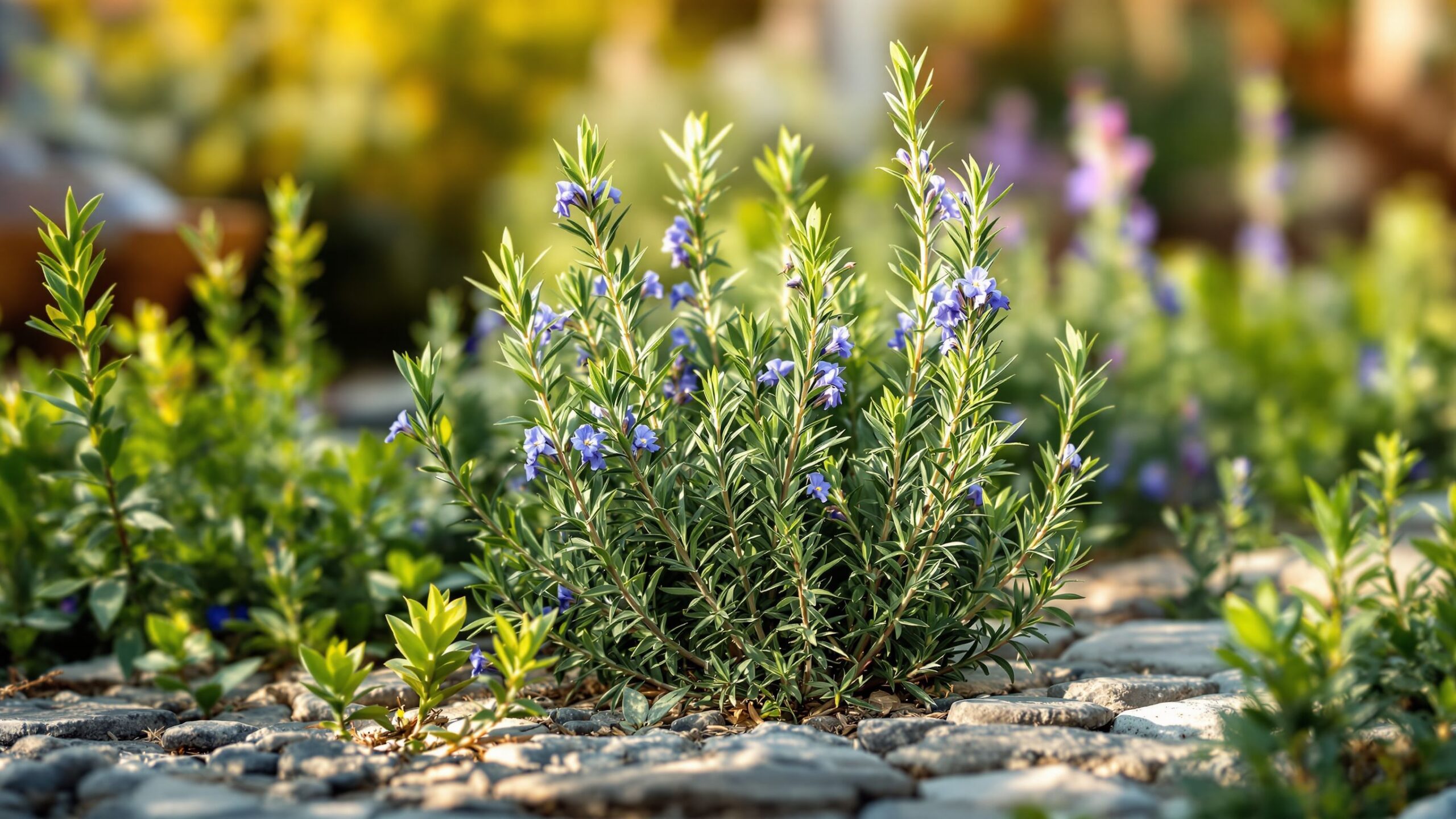
Rosemary produces narrow, needle-like leaves arranged along woody stems.
The upper surface of the foliage is usually deep green, while the underside often appears lighter or silvery.
Leaves are relatively tough compared with soft herbs such as basil.
This structure helps rosemary conserve moisture in dry environments.
Young stems are flexible and green, while older stems gradually become brown and woody.
Growth habit depends on variety.
Some rosemary plants grow upright and can become shrub-like.
Others trail or cascade, making them excellent choices for walls, raised beds, hanging containers, and slopes.
During flowering periods, small blossoms appear along the stems.
Blue is the most familiar flower color, although cultivars with lavender, pink, or white blooms also exist.
Where Does Rosemary Come From?
Rosemary is native to the Mediterranean region and nearby areas.
Its natural habitat includes sunny, rocky, relatively dry landscapes where soils drain quickly and summers can be hot.
These origins explain nearly every major rosemary-care requirement.
It loves sunlight.
It dislikes waterlogged roots.
It tolerates dry conditions better than many common herbs.
It prefers soil that drains freely.
For centuries, rosemary has been grown throughout Mediterranean cultures for culinary, aromatic, ornamental, and traditional uses.
It later spread through Europe and eventually to gardens around the world.
Today, rosemary is one of the most recognizable herbs in both home gardens and professional kitchens.
Why Rosemary Smells So Strong
Rosemary leaves contain aromatic volatile compounds that create its unmistakable fragrance.
The aroma can be resinous, pine-like, woody, slightly citrusy, and camphoraceous.
Compounds such as 1,8-cineole, camphor, and alpha-pinene contribute to its characteristic scent, although exact chemistry varies between plants and cultivars.
The fragrance becomes particularly noticeable when leaves are rubbed, chopped, heated, or brushed against.
These aromatic oils are part of the plant’s natural chemistry and may help defend it against certain herbivores and environmental stresses.
For gardeners, fragrance is one of rosemary’s greatest pleasures.
A large plant placed beside a walkway can release scent whenever someone brushes against its foliage.
The Best Sunlight for Rosemary
Rosemary loves sun.
For the strongest, healthiest growth, provide at least six hours of direct sunlight per day, with even more often being beneficial.
Plants grown in full sun usually remain compact and develop stronger aromatic foliage.
Insufficient light causes rosemary to stretch.
Stems become long and weak, foliage becomes sparse, and the plant may become more vulnerable to problems associated with excess moisture.
Indoor rosemary often struggles specifically because of low light.
A sunny south- or west-facing window may work, but supplemental grow lights can significantly improve performance during winter.
If rosemary is being grown outdoors, choose one of the brightest locations available.
The Best Soil for Rosemary
Excellent drainage is one of rosemary’s most important requirements.
The plant naturally grows in rocky Mediterranean soils where excess water drains away quickly.
Heavy clay or constantly wet soil can cause serious root problems.
Rosemary generally performs well in loose, well-drained soil with moderate fertility.
It does not need extremely rich ground.
In fact, overly fertile soil combined with excessive moisture can encourage soft growth rather than the compact, aromatic structure gardeners usually want.
Container plants should be grown in a free-draining potting mixture.
Drainage holes are essential.
Never place rosemary in a decorative container with no way for excess water to escape.
How Much Water Does Rosemary Need?
Established rosemary is relatively drought tolerant.
However, drought tolerant does not mean it should never be watered.
Newly planted rosemary requires more consistent moisture while roots become established.
Once mature, allow the upper portion of the soil to dry before watering again.
When irrigation is needed, water thoroughly so moisture reaches the root zone.
Then allow excess water to drain.
Constant light watering can encourage shallow roots and keep the soil surface unnecessarily damp.
Container rosemary must be checked more frequently because pots dry faster than garden beds.
At the same time, containers are also more vulnerable to overwatering if drainage is poor.
The Biggest Rosemary Mistake: Overwatering
Many rosemary plants die from too much water rather than too little.
The plant’s Mediterranean heritage makes it poorly suited to constantly saturated soil.
When roots remain wet for extended periods, oxygen levels decrease.
Damaged roots may begin rotting and can no longer absorb water effectively.
Ironically, an overwatered rosemary plant may wilt.
This can cause gardeners to water even more, making the problem worse.
Always check the soil before watering.
If the soil remains wet several days after irrigation, drainage may be inadequate.
Allowing the root zone to dry moderately between waterings is generally much safer for rosemary than keeping it continuously damp.
Why Rosemary Wilts
Wilting can result from both drought and excess moisture.
If the soil is completely dry and the plant has been exposed to intense heat, lack of water may be responsible.
If the soil is wet and the rosemary still droops, root stress is more likely.
Recent transplanting can also cause temporary wilt.
Extreme heat, cold damage, and root disturbance may contribute.
Look at the entire situation rather than treating wilting as a simple request for water.
Healthy rosemary should feel relatively firm and resilient.
Persistent limp growth, blackened roots, and wet soil are warning signs of possible root rot.
Growing Rosemary in Containers
Rosemary is exceptionally well suited to containers when drainage is excellent.
Container growing is particularly valuable in climates with cold winters because the plant can be moved to a protected location.
Choose a pot with drainage holes.
Terracotta containers are popular because their porous walls allow moisture to evaporate more readily, although other materials can work well too.
Avoid using an oversized pot filled with heavy, water-retentive soil.
A slightly snug container often dries more predictably.
Place the plant in full sun.
Rotate indoor containers occasionally so all sides receive light.
As the rosemary grows, repot only when the root system genuinely needs additional room.
Growing Rosemary Indoors
Rosemary can be grown indoors, but it is not always easy.
The main challenges are insufficient light, poor airflow, and watering mistakes.
Place the plant in the brightest location possible.
A sunny window may be sufficient during part of the year, but a grow light can help during darker seasons.
Indoor rosemary often prefers slightly cooler conditions than many tropical houseplants.
Good airflow also reduces the risk of fungal problems.
Do not keep the soil constantly moist.
Indoor plants grow more slowly than outdoor summer rosemary, so they use water more slowly as well.
Check soil before watering rather than assuming the plant needs a drink on a fixed schedule.
When to Plant Rosemary Outdoors
Rosemary can be planted outdoors once severe cold weather has passed.
In warm climates where winter temperatures remain mild, planting can often be done during cooler seasons.
In colder regions, spring planting provides the entire growing season for roots to establish before winter.
Young rosemary plants should be hardened off before moving from indoor conditions directly into intense outdoor sun.
Gradually increase their exposure to sunlight and wind over several days.
Plant in a sunny location with excellent drainage.
Avoid low spots where rainwater collects.
Rosemary planted on a slight slope or raised bed often performs particularly well because excess moisture drains away naturally.
How Cold Hardy Is Rosemary?
Cold tolerance varies by cultivar and growing conditions.
Many rosemary plants can handle light frost, but prolonged severe freezes may damage or kill them.
Some cultivars are bred for improved cold hardiness and can survive lower winter temperatures than typical Mediterranean types.
Even cold-tolerant varieties benefit from well-drained soil because cold, wet roots can be especially damaging.
In colder climates, gardeners often grow rosemary in containers and move it indoors or into a protected space for winter.
Local climate matters significantly.
A rosemary plant that behaves as a permanent shrub in a mild coastal region may need to be treated almost like an annual or tender container plant in a much colder area.
Can Rosemary Survive Winter?
In mild climates, rosemary can remain outdoors year-round.
The plant stays evergreen and may even flower during cool periods.
In colder climates, survival depends on cultivar, winter temperature, soil drainage, exposure, and protection.
Mulch can help moderate soil temperature, but avoid piling wet material against the woody crown.
Container rosemary experiences colder roots than plants in the ground because pots provide less insulation.
If hard freezes are expected, moving the pot to a protected location is often wise.
Indoor overwintering works best when the plant receives excellent light and is not overwatered.
How Fast Does Rosemary Grow?
Rosemary grows at a moderate rate.
Young plants may appear slow at first while roots establish.
Once settled into favorable conditions, growth can become considerably stronger.
Warm temperatures, abundant sunlight, and appropriate watering encourage new shoots.
Variety also matters.
Some cultivars naturally grow much larger and faster than compact forms.
Unlike basil, rosemary does not transform from seedling to enormous bush within a few weeks.
It is a long-term perennial.
Patience during the first year can eventually result in a large shrub capable of producing herbs for many seasons.
How Big Does Rosemary Get?
Size depends heavily on cultivar and climate.
Upright rosemary varieties can eventually reach several feet tall and wide under favorable conditions.
Large old plants may become impressive landscape shrubs.
Compact cultivars remain much smaller.
Trailing rosemary grows outward and downward rather than forming a tall upright bush.
This makes it excellent for retaining walls, raised planters, and containers.
Gardeners should check the expected mature size before planting.
A tiny nursery rosemary placed directly beside a walkway can eventually become surprisingly large.
Providing enough room from the beginning reduces the need for severe pruning later.
How to Prune Rosemary
Regular pruning keeps rosemary compact and productive.
Use clean, sharp pruners or scissors.
Trim tender green growth just above a branching point.
This encourages additional shoots and creates a bushier plant.
Avoid cutting deeply into old bare wood whenever possible.
Rosemary does not always regenerate reliably from completely leafless woody stems.
Light regular pruning is therefore safer than allowing the plant to become enormous and then cutting it back severely.
Harvesting for cooking can perform much of the necessary pruning.
Each time you remove tender stems, you are helping shape the plant.
How to Make Rosemary Bushier
Begin pruning while the plant is young.
Pinch or clip the tips of growing stems.
The plant often responds by producing new side shoots near the cut.
Repeating this process encourages a dense branching structure.
Plants that are never pruned may become tall, open, and woody.
Adequate sunlight also matters.
A rosemary plant growing in weak light may remain sparse no matter how frequently it is trimmed.
Combine strong light with regular tip pruning for the best shape.
How to Harvest Rosemary
Rosemary can be harvested throughout the growing season.
Cut healthy stems several inches long rather than removing individual leaves one by one.
Young green tips are generally more tender than old woody growth.
Do not remove excessive amounts from a small plant at once.
A mature healthy shrub can tolerate much heavier harvesting.
Morning can be an excellent harvest time once moisture has dried from the leaves.
Fresh rosemary can be used immediately or preserved for later.
Because the plant is evergreen in mild climates, harvest may continue through much of the year.
How Often Can Rosemary Be Harvested?
Established rosemary can tolerate frequent light harvesting.
Cutting a few stems regularly is usually healthier than removing a massive portion of the shrub at one time.
Allow young plants to establish before harvesting heavily.
As stems regrow, repeated trimming can maintain a compact form.
If a plant is growing slowly because of winter, low light, or recent transplanting, harvest more conservatively.
The amount removed should reflect how actively the plant is replacing foliage.
In peak growing conditions, mature rosemary can provide an impressive quantity of herbs without looking noticeably reduced.
Rosemary Flowers
Rosemary produces small two-lipped flowers typical of the mint family.
Blue and lavender are the most familiar colors.
Pink and white flowering cultivars also exist.
Flowers often appear during cool seasons or spring, although exact timing varies with climate and variety.
In mild Mediterranean-type climates, rosemary may bloom for extended periods.
The blossoms are not only attractive.
They can be highly appealing to bees and other pollinators.
A mature flowering rosemary shrub can become one of the busiest plants in a sunny herb garden.
Rosemary and Pollinators
Rosemary flowers provide nectar during periods when relatively few other garden plants may be blooming.
This can make the shrub valuable to bees, especially in mild winter and early spring climates.
Pollinator activity does not prevent gardeners from harvesting leaves.
The plant can serve both purposes simultaneously.
If attracting pollinators is important, avoid cutting off every flowering stem immediately.
Allow at least part of the shrub to bloom.
Because rosemary is evergreen, it also provides year-round structure and habitat within the garden.
Propagating Rosemary From Cuttings
Stem cuttings are one of the easiest and most reliable ways to propagate rosemary.
Select a healthy non-flowering shoot.
Cut a section several inches long and remove leaves from the bottom portion.
The cutting can be inserted into a light, moist, well-draining growing medium.
Keep humidity moderate while avoiding saturated soil.
Roots may develop over several weeks.
Some gardeners root rosemary in water, but direct rooting in a suitable medium often produces roots already adapted to soil conditions.
Once established, the young plant can be gradually moved into brighter light.
Growing Rosemary From Seed
Rosemary can be grown from seed, but it requires more patience than many common herbs.
Germination may be slow and inconsistent.
Seedlings also take significantly longer to become substantial plants compared with cuttings or nursery starts.
Sow seeds in a light growing medium and keep them warm and moderately moist.
Avoid burying them excessively.
Because germination rates may be lower than expected, planting extra seed is common.
For gardeners who simply want rosemary for cooking, purchasing a plant or rooting a cutting is usually faster.
Growing from seed can still be rewarding for anyone interested in the complete life cycle of the herb.
Upright Rosemary
Upright rosemary varieties grow vertically and eventually form shrub-like plants.
These are excellent choices for herb gardens, borders, hedges, and large containers.
Their stems are convenient for harvesting because long straight sprigs can be cut easily.
Upright forms may become several feet tall in favorable climates.
They can also be shaped through regular pruning.
When planted in rows, rosemary can form a fragrant evergreen boundary.
Choose a cultivar appropriate for the mature size you want rather than assuming every rosemary remains compact.
Trailing Rosemary
Trailing rosemary has a completely different growth habit.
Instead of growing primarily upward, stems cascade outward and downward.
This makes it ideal for retaining walls, raised planters, window boxes, hanging baskets, slopes, and containers.
The same needle-like foliage and fragrant oils are present.
Trailing types also flower beautifully.
In warm dry climates, cascading rosemary can create dramatic sheets of evergreen foliage over stone walls.
It remains edible as well as ornamental, although exact culinary intensity varies among cultivars.
Tuscan Blue Rosemary
‘Tuscan Blue’ is a well-known upright rosemary cultivar.
It can develop into a relatively tall, substantial shrub under favorable conditions.
The plant is known for strong vertical growth, aromatic foliage, and attractive blue flowers.
Its long stems are convenient for culinary harvesting.
Because it can become large, adequate spacing is important.
‘Tuscan Blue’ works particularly well in Mediterranean-style gardens, herb borders, and large containers.
Arp Rosemary
‘Arp’ is famous for its improved cold tolerance compared with many traditional rosemary cultivars.
It was named after the community of Arp, Texas, where it was identified.
Gardeners in colder climates often choose it when attempting to overwinter rosemary outdoors.
Cold hardiness is still influenced by drainage, exposure, and winter severity.
Even a hardy cultivar can struggle in wet frozen soil.
‘Arp’ generally develops an upright growth habit and can become a substantial shrub when conditions are favorable.
Prostrate Rosemary
Prostrate rosemary refers to low-growing trailing forms that spread horizontally and cascade over edges.
These plants can make attractive drought-tolerant groundcovers in suitable warm climates.
They look especially dramatic spilling across rock walls.
Because stems remain lower, they create a softer landscape form than upright cultivars.
Prostrate rosemary still requires good drainage and abundant sunlight.
In cold climates, it may need winter protection just like upright types.
Rosemary as a Landscape Shrub
Rosemary is far more than a kitchen herb.
In warm climates, it can function as an evergreen landscaping shrub.
Plants can be shaped into informal hedges, borders, mounds, or structural accents.
The gray-green foliage combines beautifully with lavender, thyme, sage, ornamental grasses, succulents, and other drought-tolerant plants.
Its resistance to dry conditions makes it especially valuable in water-conscious landscapes when established.
However, drought tolerance should not be confused with suitability for every desert condition.
New plants still need irrigation while establishing, and extreme heat combined with reflected sunlight can stress poorly positioned specimens.
Rosemary in Mediterranean Gardens
Few plants create a Mediterranean atmosphere as effectively as rosemary.
Its evergreen foliage, fragrance, drought tolerance, and blue flowers pair naturally with stone, gravel, terracotta, lavender, sage, thyme, and olive trees.
The plant’s care requirements also match Mediterranean-style landscaping.
These gardens typically emphasize excellent drainage, abundant sunlight, and plants adapted to relatively dry summers.
A large rosemary shrub beside a stone path can create both visual and sensory interest.
Rosemary as a Hedge
In mild climates, upright rosemary can be used as a low to medium hedge.
Regular pruning encourages dense growth.
A rosemary hedge provides evergreen structure while remaining edible.
When flowering, it can become covered in tiny blue blossoms.
Spacing should account for the cultivar’s mature width.
Plants crowded too tightly may develop poor airflow and bare interior growth.
Hedges also need enough sunlight on all sides to remain dense.
Rosemary is best suited to informal or lightly shaped hedging rather than extreme formal shearing into old bare wood.
Growing Rosemary in Raised Beds
Raised beds can provide ideal rosemary conditions.
They often drain more quickly than ground-level clay soil.
This helps prevent one of the herb’s most common problems: wet roots.
Place rosemary where it will not be shaded by taller vegetables or herbs.
Because it is perennial, consider its long-term size before planting it among annual crops.
A mature rosemary shrub may occupy a substantial amount of bed space.
Placing it near an edge or in a dedicated perennial herb section often works better than planting it in the middle of frequently rotated vegetables.
Rosemary and Companion Planting
Rosemary is frequently recommended as a companion for vegetables and other herbs.
Its flowers can support pollinators, and the evergreen shrub adds diversity to the garden.
Strong aromatic compounds may influence some insects, but claims that rosemary completely repels specific pests should be viewed realistically.
No aromatic herb creates guaranteed protection for nearby crops.
Rosemary is most useful as part of a diverse, well-managed garden.
It combines especially well with other sun-loving herbs that prefer relatively dry soil.
Rosemary and Other Mediterranean Herbs
Rosemary pairs naturally with thyme, sage, oregano, and lavender because their growing requirements are similar.
All generally appreciate abundant sunlight and good drainage.
This makes it easier to design a herb bed where every plant receives appropriate care.
Basil and mint, by contrast, usually appreciate more consistent moisture.
Growing them immediately beside rosemary can make watering decisions more difficult.
Grouping plants by similar water needs is often more successful than grouping them simply because they are all culinary herbs.
Common Rosemary Pests
Rosemary is relatively resistant to many pests because of its aromatic foliage.
However, problems can still occur.
Spider mites may attack indoor or drought-stressed plants.
Aphids can gather on tender shoots and flower stems.
Whiteflies may occasionally appear.
Spittlebugs are sometimes found on outdoor rosemary.
Scale insects can also infest woody stems.
Strong healthy plants can tolerate minor pest populations.
Regular inspection allows problems to be detected before they become severe.
Spider Mites on Rosemary
Spider mites are particularly troublesome on rosemary grown indoors.
These tiny pests thrive in warm, dry environments and may be difficult to see without close inspection.
Leaves can develop pale speckling or a dull appearance.
Fine webbing may become visible during heavy infestations.
Increasing general plant health and removing severely infested material can help.
Indoor rosemary should have adequate airflow and should not be allowed to remain severely drought-stressed.
If pest-control products are required, only use treatments appropriate for edible herbs and follow label directions carefully.
Common Rosemary Diseases
Rosemary’s biggest disease problems are often connected to excess moisture.
Root rot can occur when soil remains saturated.
Powdery mildew may develop when airflow is poor and foliage remains humid.
Certain fungal pathogens can also cause stem dieback.
Prevention begins with proper placement.
Full sun, good drainage, reasonable spacing, and careful watering eliminate many common problems before they begin.
A rosemary plant struggling repeatedly in heavy wet soil may never thrive no matter how many treatments are applied.
Improving the environment is usually more effective than repeatedly treating symptoms.
Root Rot in Rosemary
Root rot is one of the most serious problems rosemary can experience.
Affected roots may become dark, soft, and unhealthy.
Above ground, the plant may wilt, yellow, brown, or decline even though the soil remains moist.
This happens because damaged roots can no longer transport water efficiently.
Early intervention may save mildly affected plants.
Reduce watering, improve drainage, and remove severely damaged roots when repotting if appropriate.
Advanced rot can be difficult to reverse.
Prevention is far easier.
Use containers with drainage holes, avoid permanently wet soil, and never water rosemary simply because a calendar says it is time.
Powdery Mildew on Rosemary
Powdery mildew can appear as a pale or white coating on leaves and stems.
Crowded plants with limited airflow are more vulnerable.
Indoor rosemary can be particularly susceptible when warm air and dense foliage create stagnant conditions.
Improving spacing and airflow can help.
Avoid repeatedly splashing foliage with water.
Remove heavily affected material if practical.
The appearance of powdery mildew should also prompt an evaluation of growing conditions.
A plant receiving weak light and poor ventilation will continue to struggle even if surface symptoms are temporarily treated.
Why Are Rosemary Leaves Turning Brown?
Brown rosemary leaves can have several causes.
Overwatering is one of the most common.
Root damage from waterlogged soil eventually causes foliage to brown and die.
Severe drought can also create brown leaves, particularly on container plants.
Cold injury may damage exposed tips.
Old interior foliage sometimes browns naturally as the plant becomes larger.
If entire branches suddenly turn brown, inspect for stem damage, disease, or root problems.
The pattern of browning can help identify the cause.
Why Is Rosemary Turning Yellow?
Yellow foliage may indicate excess moisture, nutrient imbalance, low light, or root problems.
Rosemary growing in rich but poorly drained soil can become pale despite having access to nutrients.
Indoor plants may yellow when they receive insufficient sunlight.
Do not automatically fertilize yellow rosemary.
First check moisture and drainage.
If the roots are stressed by saturated soil, adding fertilizer will not correct the underlying problem.
A soil test may be useful for outdoor plants with persistent unexplained discoloration.
Why Is My Rosemary Plant Dry and Crispy?
Crispy foliage often suggests severe dehydration, but appearances can be deceptive.
A plant with badly rotted roots may also dry out above ground because roots can no longer deliver water.
Check the soil.
If it is bone dry and pulling away from the container, drought is likely.
If it is wet and smells sour or roots appear dark and mushy, overwatering may be responsible.
Severe frost can also leave foliage dry and brittle.
Once large portions of a rosemary plant become completely brown and crispy, those stems may not recover.
Look for healthy green tissue closer to the base.
Why Is Rosemary Becoming Woody?
Woody stems are natural.
Rosemary is a shrub, not a soft annual herb.
As stems age, they gradually develop woody tissue to support larger growth.
Regular pruning keeps more young green shoots available for harvesting.
A rosemary plant that is never trimmed can become increasingly woody and sparse near the center.
Avoid trying to solve this by cutting every branch back into bare old wood.
Instead, maintain the plant gradually through frequent light pruning while green foliage is still present.
Fertilizing Rosemary
Rosemary generally does not need heavy fertilization.
Plants growing in ordinary garden soil may perform well with little additional feeding.
Excess nitrogen can encourage soft growth and reduce the compact form associated with well-grown rosemary.
Container plants eventually deplete nutrients from their potting mix and may benefit from occasional light feeding during active growth.
More fertilizer is not always better.
Strong sunlight, proper drainage, and correct watering have a much greater influence on rosemary health than constant feeding.
Can Rosemary Grow in Poor Soil?
Rosemary can perform surprisingly well in relatively lean soil.
Its Mediterranean origins allow it to tolerate conditions that would limit more demanding herbs.
The most important factor is often drainage rather than fertility.
A moderately poor but well-drained soil may support healthier rosemary than extremely rich soil that stays waterlogged.
This makes the plant useful for rocky gardens and low-input landscapes.
However, “poor soil” should not mean completely lifeless compacted subsoil.
Roots still need air, water, and access to basic nutrients.
Culinary Uses for Rosemary
Rosemary has a strong flavor, so a relatively small amount can transform a dish.
It pairs especially well with roasted potatoes, chicken, lamb, pork, beef, breads, soups, beans, vegetables, and olive oil.
Whole sprigs can be added during cooking and removed before serving.
Finely chopped leaves can be mixed into marinades, bread dough, sauces, and seasoning blends.
Rosemary also pairs beautifully with garlic and lemon.
Because the leaves are tough, large whole pieces are not always pleasant to chew.
Chopping them finely or using whole removable sprigs often produces the best results.
Fresh Rosemary Versus Dried Rosemary
Both fresh and dried rosemary are useful, but their flavors differ.
Fresh leaves have a bright resinous fragrance.
Dried rosemary becomes more concentrated and can taste stronger.
Recipes may therefore require less dried rosemary than fresh.
Fresh sprigs work particularly well for roasting and infusing oils during cooking.
Dried rosemary is convenient for seasoning blends, soups, sauces, and baked dishes.
Homegrown rosemary allows gardeners to use fresh leaves during the growing season and preserve excess stems for winter.
How to Dry Rosemary
Rosemary is one of the easiest herbs to dry.
Harvest healthy stems and remove any damaged foliage.
Small bundles can be hung in a dry, well-ventilated location away from intense direct sunlight.
Leaves can also be dried using other safe herb-drying methods.
Once completely dry, strip leaves from stems and store them in an airtight container.
Keep dried herbs away from heat, humidity, and strong light.
Crushing the leaves immediately before use helps release more aroma.
Can Rosemary Be Frozen?
Rosemary can be frozen.
Sprigs can be placed in freezer-safe containers or bags.
Leaves may also be chopped and frozen with water or oil in ice-cube trays for convenient cooking portions.
Freezing changes texture but preserves enough flavor for cooked dishes.
Because rosemary dries so well, many gardeners prefer drying, but freezing is equally practical when a slightly fresher flavor is desired.
Is Rosemary Safe to Eat?
Culinary rosemary is widely consumed as a food herb.
Leaves are strongly flavored, so relatively small amounts are normally used.
Flowers are also edible and can provide a mild rosemary flavor.
As with any edible garden plant, identification matters.
Do not eat an unknown ornamental shrub simply because it resembles rosemary.
Avoid consuming plants treated with pesticides or other products not labeled for edible crops.
Highly concentrated rosemary essential oil is very different from ordinary culinary use and should not be treated as equivalent to eating fresh leaves.
Rosemary in Traditional History
Rosemary has a long cultural history.
Ancient Mediterranean societies associated the herb with memory, ceremony, food, fragrance, and symbolic traditions.
It became connected with weddings, remembrance, funerals, hospitality, and household uses.
Historical herbal traditions also assigned rosemary numerous medicinal roles.
These uses are culturally interesting, but traditional use should not automatically be interpreted as proof that rosemary can prevent or cure disease.
The plant’s history is remarkable even when separated from exaggerated health claims.
Rosemary and Memory Symbolism
Rosemary has been associated with remembrance for centuries.
It appears in European literature, folklore, ceremonies, and memorial traditions.
This symbolic connection became especially famous through literature, including references to rosemary as an herb of remembrance.
The relationship between plant and symbolism helped rosemary move beyond the kitchen.
A simple evergreen shrub became part of cultural traditions surrounding memory, loyalty, love, and mourning.
Few culinary herbs have accumulated such a rich symbolic history.
Is Rosemary Safe for Pets?
Ordinary culinary rosemary is generally considered relatively low risk in small amounts for many common pets, but large ingestion can still cause digestive upset.
Essential oils are far more concentrated and should not be treated like fresh herbs.
Pet owners should not give concentrated rosemary products to animals without veterinary guidance.
If a pet consumes a large quantity of plant material or develops unusual symptoms, contacting a veterinarian or animal poison-control service is appropriate.
Rosemary as a Bonsai-Style Plant
Rosemary’s woody trunk and small evergreen leaves make it suitable for bonsai-inspired training.
Older plants can develop rugged, textured stems that resemble miniature trees.
Regular pruning can shape the canopy.
However, rosemary responds differently from traditional bonsai species and may not reliably sprout from old bare wood.
Training should therefore be gradual.
Excellent light and drainage remain essential even when the plant is grown for ornamental shaping.
Rosemary Topiary
Rosemary is also commonly sold as a living topiary.
Plants may be shaped into cones, balls, wreaths, or miniature tree forms.
These are especially popular around holidays.
The challenge is keeping them healthy indoors.
Decorative rosemary topiaries are often placed in dim rooms and overwatered, creating poor conditions.
To survive long term, the plant still needs strong sunlight, drainage, and careful watering.
A rosemary topiary may look like indoor décor, but biologically it remains a sun-loving Mediterranean shrub.
Fascinating Rosemary Facts
Rosemary was once botanically known as Rosmarinus officinalis but is now generally classified as Salvia rosmarinus.
It belongs to the same genus as sage.
The plant is a member of the mint family despite looking nothing like traditional mint.
Its narrow leaves help conserve moisture.
Rosemary can live for many years and develop into a woody shrub.
Some varieties grow upright while others trail dramatically over walls.
The flowers can be blue, purple, pink, or white.
Bees frequently visit blooming plants.
Its powerful fragrance has made rosemary important in cooking, perfumes, cultural ceremonies, and gardens for centuries.
How Long Does Rosemary Live?
Rosemary is a perennial shrub and can live for many years under suitable conditions.
In mild climates, old plants can become large and woody.
Their trunks may thicken significantly with age.
Longevity depends on drainage, climate, pruning, and general care.
Chronically wet soil can kill even a mature plant surprisingly quickly.
Cold winters can shorten life in climates outside rosemary’s preferred range.
Container rosemary may need periodic repotting or root pruning as it ages.
With excellent conditions, however, one rosemary plant can provide culinary harvests and garden beauty for many seasons.
Creating the Perfect Rosemary Care Routine
Give rosemary as much sunlight as possible.
Plant it in soil that drains quickly.
Water young plants consistently while they establish, but allow mature plants to dry moderately between waterings.
Never leave roots constantly saturated.
Prune tender growth regularly to encourage branching and prevent the plant from becoming excessively woody.
Harvest stems throughout the growing season.
Grow rosemary in containers if winter temperatures are too cold for reliable outdoor survival.
Provide excellent light if bringing the plant indoors.
Watch for spider mites, root rot, powdery mildew, and unexplained browning.
Avoid heavy fertilization.
Most importantly, remember where rosemary comes from.
A bright, airy, sunny environment with relatively dry roots will usually produce a much happier plant than a dark, wet location.
Why Rosemary Deserves a Place in Every Herb Garden
Rosemary combines the qualities of a culinary herb, flowering plant, evergreen shrub, pollinator plant, and aromatic landscape feature in one remarkably versatile species.
A single plant can season dinner while also providing structure to the garden.
Its stems can flavor roasted vegetables one day and become covered in tiny blue flowers visited by bees the next.
Unlike annual herbs that disappear after frost, rosemary can become a permanent part of the landscape where winters are mild enough.
Over time, a small nursery plant may mature into a substantial shrub with thick woody stems and hundreds of fragrant branches.
Its resilience is equally appealing.
Once established, rosemary can tolerate dry conditions that would quickly wilt many common herbs.
The key is resisting the temptation to treat it like basil or mint.
Rosemary does not want constantly wet soil.
It wants sun, air, drainage, and enough room for its woody roots and stems to mature.
Provide those conditions and Salvia rosmarinus can become one of the longest-lasting and most useful plants in the herb garden.
Whether grown for roasted potatoes, fresh bread, pollinators, Mediterranean landscaping, or simply the pleasure of brushing against fragrant foliage, rosemary earns its place as one of the world’s great garden herbs.
Garden Product Reviews
Step into Mossy Streets’ Garden Product Reviews — your go-to guide for the best tools, gear, gifts, books, and garden gadgets rooted in nature. From blooming backyard beauties to lush indoor jungles, from heirloom seeds to high-tech composters, we dig into top-rated products for green thumbs, beginners, educators, and plant lovers alike. Whether you’re planting, pruning, decorating, or simply enjoying your green space, we’ve unearthed the best so you can grow, bloom, and thrive — all in one vibrant place!