Annual ryegrass is the kind of grass that does not waste much time getting started. When temperatures and moisture conditions are right, seed can germinate rapidly and begin covering bare soil in a matter of days. That speed has made annual ryegrass useful for everything from temporary lawns and erosion control to agricultural fields, winter overseeding, roadside stabilization, and pasture systems. Botanically, annual ryegrass is usually classified as Lolium multiflorum. It belongs to the grass family, Poaceae, and is closely related to perennial ryegrass, Lolium perenne. The two species share several similarities, including rapid germination and cool-season growth, but their long-term behavior is very different. Annual ryegrass is generally grown as a short-lived grass. Depending on climate and management, it may behave as an annual, winter annual, or occasionally survive somewhat longer under favorable conditions. In many applications, however, it is planted specifically because growers want fast temporary coverage rather than a permanent turf. This makes annual ryegrass an incredibly practical plant. It may not always be the ideal grass for a long-term luxury lawn, but when rapid establishment matters, few commonly available grasses can compete with it.
A: Under favorable temperatures and moisture, seed can begin germinating in roughly 5 to 10 days.
A: It is commonly planted in late summer or fall for cool-season growth, although timing depends on local climate and intended use.
A: Usually not as a dependable permanent lawn. It is typically grown as a short-lived annual or seasonal grass.
A: Yes. Its fast germination makes it popular for adding temporary winter color to dormant warm-season lawns.
A: Full sun is best, although it can tolerate some light shade.
A: A height of roughly 2 to 3 inches works well for many temporary lawn applications.
A: Hot weather naturally stresses this cool-season grass, and many plantings decline as summer temperatures rise.
A: Yes. Rapid germination and dense fibrous roots make it useful for quickly covering exposed soil.
A: No. They are related grasses, but Annual Ryegrass is generally shorter lived and more commonly used for temporary or seasonal purposes.
A: Yes. It is easy to establish, germinates rapidly, and provides quick results when temporary green coverage is the goal.
What Does Annual Ryegrass Look Like?
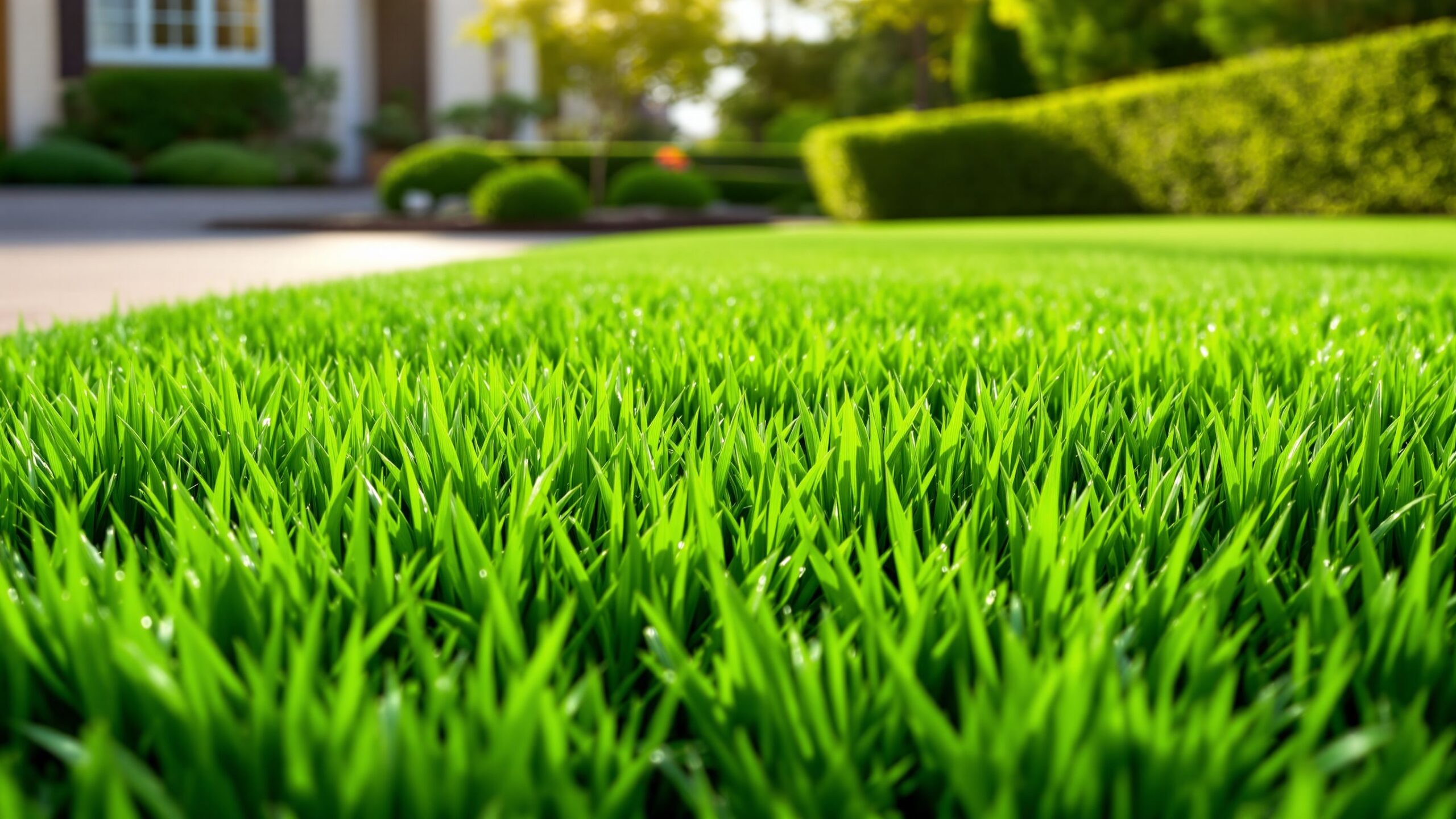
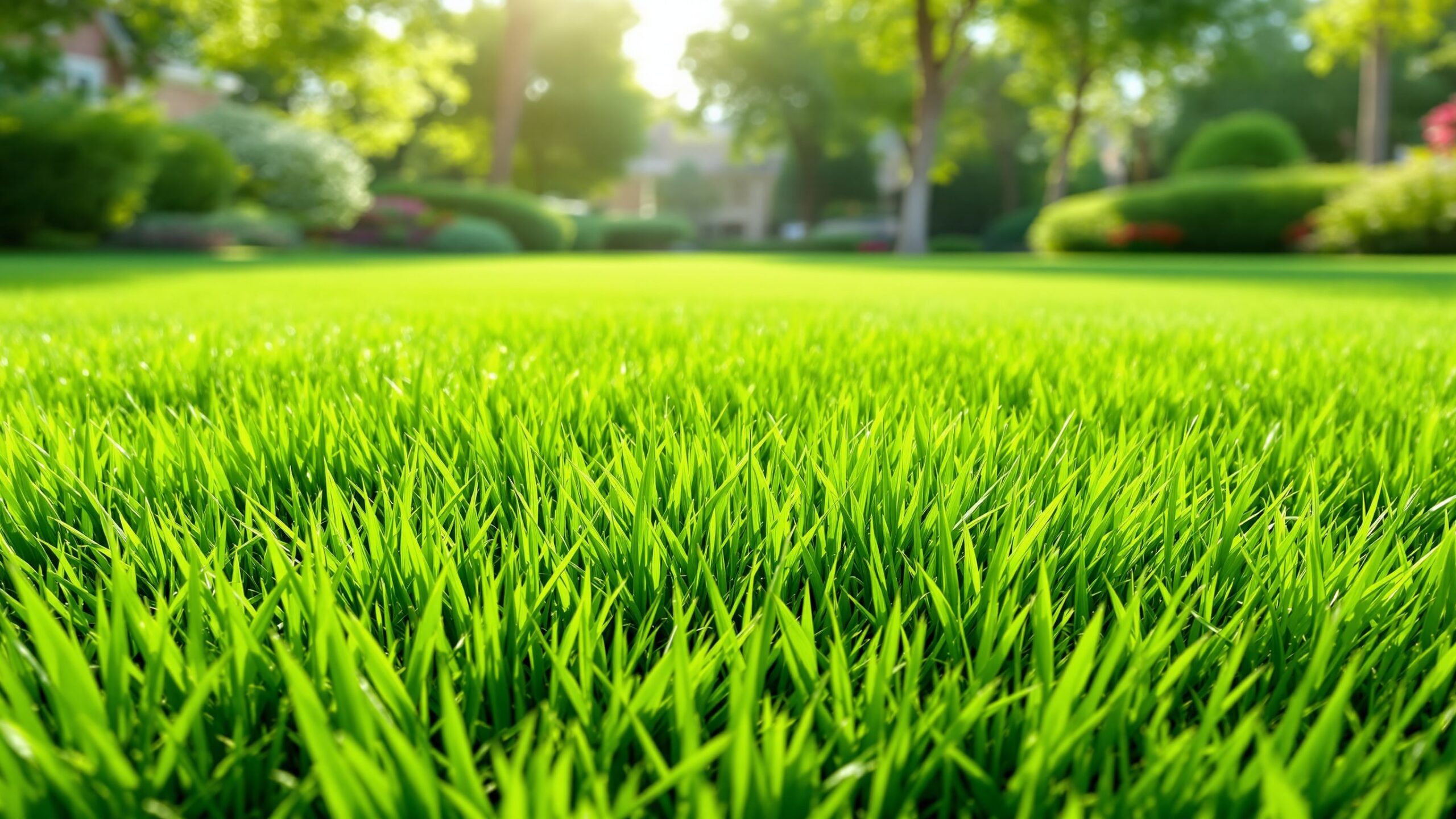
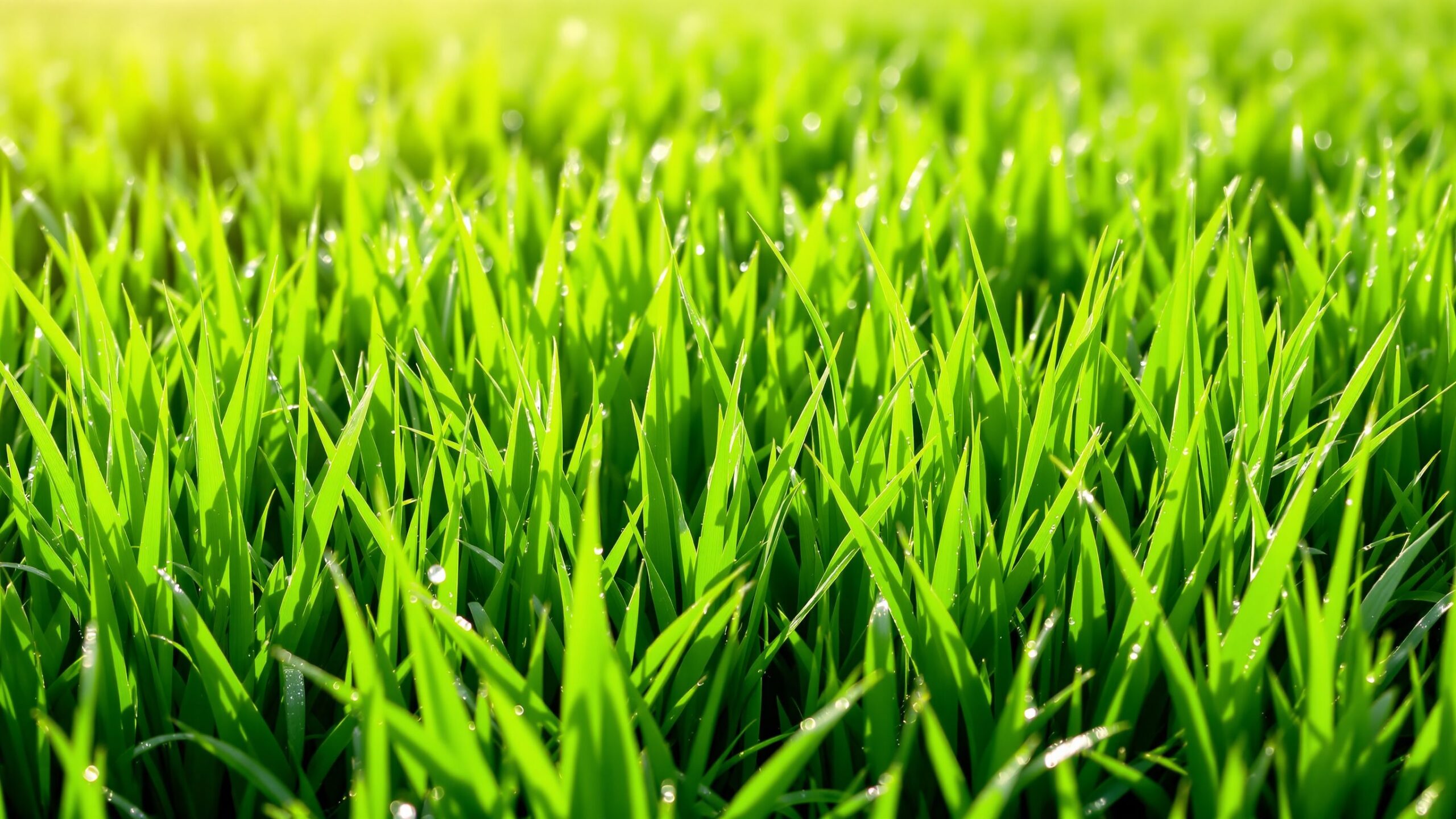
Annual ryegrass produces upright green leaves with a medium to somewhat coarse texture compared with many fine-textured turfgrasses.
Young stands can appear bright green and dense, especially when seeded heavily.
The blades are typically narrow and glossy, particularly on one surface, giving the grass a fresh appearance when sunlight reflects across it.
As plants mature, annual ryegrass produces upright flowering stems topped with narrow seed heads.
These seed heads are arranged along a central spike, with individual spikelets positioned along the stem.
The plant grows primarily in bunches rather than spreading aggressively through underground rhizomes.
This means individual plants become denser through tillering, but damaged areas are not automatically repaired by underground runners in the same way they might be with Kentucky bluegrass.
Where Does Annual Ryegrass Come From?
Annual ryegrass originated in parts of Europe, North Africa, and western Asia.
It has since been introduced and cultivated across many temperate agricultural regions worldwide.
Its adaptability, quick growth, and usefulness as forage helped spread it far beyond its native range.
Today, annual ryegrass can be found in lawns, pastures, cover-crop systems, fields, roadsides, disturbed soils, and agricultural landscapes.
In some regions, it can also escape cultivation and behave as a weed.
This is particularly important in crop-producing areas where herbicide-resistant annual ryegrass populations have become a major agricultural management challenge.
For home gardeners, the key lesson is that annual ryegrass is vigorous and capable of producing large quantities of seed if allowed to mature.
Why Is It Called Annual Ryegrass?
The name reflects its relatively short life cycle.
Unlike perennial ryegrass, which is intended to survive for multiple growing seasons under favorable conditions, annual ryegrass is generally grown for temporary seasonal coverage.
In many cool climates, it can germinate during cool weather, grow actively through spring, produce seed, and decline as summer heat arrives.
In milder climates, it may be planted in autumn and behave as a winter annual.
The plant is also sometimes called Italian ryegrass.
To make things slightly more confusing, certain ryegrass types have intermediate life cycles and may be classified as annual, biennial, or short-lived perennial depending on genetics and environment.
For practical lawn and garden purposes, annual ryegrass should generally be viewed as a fast-establishing temporary grass rather than a permanent lawn foundation.
Annual Ryegrass Versus Perennial Ryegrass
Annual ryegrass and perennial ryegrass are frequently confused because their names and appearances are similar.
The biggest difference is longevity.
Perennial ryegrass is selected to persist for several years and is widely used in permanent cool-season lawns.
Annual ryegrass is usually planted for short-term coverage.
Annual ryegrass also tends to have a somewhat coarser appearance than modern turf-type perennial ryegrass.
Both species germinate rapidly.
Both grow well during cool weather.
Both can tolerate mowing.
However, perennial ryegrass is generally the better choice when homeowners want an attractive permanent lawn, while annual ryegrass is better suited to temporary cover, erosion control, quick repairs, winter overseeding, and agricultural uses.
Knowing which one is in a seed mixture can prevent disappointment later.
How Fast Does Annual Ryegrass Germinate?
Speed is one of annual ryegrass’s defining characteristics.
Under favorable conditions, seed may begin germinating in approximately five to ten days, sometimes even sooner when soil temperature and moisture are ideal.
This rapid germination is one reason annual ryegrass has been used so extensively for erosion control.
Bare soil can begin developing a protective layer of vegetation much faster than with slower grasses.
Rapid emergence also gives annual ryegrass a competitive advantage against some weeds.
However, fast germination should not be confused with instant maturity.
Young seedlings are still fragile.
They need consistent moisture and time to establish enough roots to tolerate mowing, traffic, drought, and other stress.
The Best Time to Plant Annual Ryegrass
Planting time depends largely on how the grass will be used.
In cool-season regions, annual ryegrass can be planted during late summer or fall for cool-weather growth.
It may also be seeded in early spring for temporary coverage.
In warmer regions, annual ryegrass is frequently planted in autumn to create green winter turf over dormant warm-season grasses.
Soil temperature must be warm enough for germination while air temperatures remain suitable for cool-season growth.
Planting too late may not give seedlings enough time to establish before severe cold.
Planting too early during hot weather can expose new grass to heat stress.
Local climate should therefore guide exact timing.
How to Plant Annual Ryegrass Seed
Annual ryegrass is relatively easy to establish when seed can contact the soil.
Begin by removing excessive debris, dead vegetation, and thick layers of thatch.
Loosen compacted soil when necessary.
Spread seed evenly across the prepared area.
For larger spaces, a broadcast spreader can help create more uniform coverage.
The seed should remain close to the soil surface rather than being deeply buried.
Light raking can improve contact.
After seeding, water gently but thoroughly enough to moisten the upper soil layer.
During germination, keep the seedbed consistently moist.
Once seedlings become established, transition toward deeper and less frequent watering.
The Best Soil for Annual Ryegrass
Annual ryegrass can grow in a wide range of soil conditions.
Its adaptability is one reason it is used for disturbed sites and erosion-control projects.
However, best growth occurs in fertile, well-drained soils with adequate moisture.
Extremely waterlogged soil can reduce root oxygen and cause poor growth.
Severely dry or infertile soil may also limit establishment.
Annual ryegrass can tolerate somewhat heavier soils, but compaction can still interfere with root development.
A soil test can help determine whether pH or nutrients need adjustment.
When annual ryegrass is being used as a temporary cover crop, improving soil may be part of the goal rather than simply a requirement.
Its root system can help stabilize the surface and contribute organic material when the grass eventually decomposes.
The Best Sunlight for Annual Ryegrass
Annual ryegrass performs best in full sun.
Strong light encourages dense growth and helps plants develop enough energy for rapid establishment.
It can tolerate some partial shade, but dense shade usually leads to thinner, weaker growth.
Areas beneath large trees may be especially difficult because the grass is competing not only for light but also for water and nutrients.
Temporary germination in a shady location does not necessarily mean the grass will remain healthy long term.
If annual ryegrass is repeatedly failing in the same dark area, the site may simply be better suited to a shade-tolerant groundcover or landscape bed.
How Much Water Does Annual Ryegrass Need?
Newly seeded annual ryegrass needs consistent moisture.
Because germinating seeds and tiny seedlings have shallow roots, the surface cannot be allowed to dry repeatedly during establishment.
Light, frequent irrigation may be necessary at first.
As roots grow deeper, watering should become less frequent and more thorough.
Established annual ryegrass still performs best when adequate moisture is available.
Extended drought can slow growth dramatically and cause the grass to decline.
Water demand also increases as temperatures rise.
However, because annual ryegrass is often used as a temporary seasonal grass, homeowners may choose not to maintain it through hot summer weather.
Can Annual Ryegrass Handle Drought?
Annual ryegrass is not highly drought tolerant.
It prefers consistent moisture and cool temperatures.
During extended dry weather, growth slows and leaves may begin turning pale, brown, or dormant.
Severe drought can kill the grass.
Its relatively shallow root system makes it less capable of accessing deep soil moisture than some drought-tolerant turf species.
For temporary cool-season applications, this may not be a major concern.
If annual ryegrass is expected to provide long-term summer turf in a hot, dry climate, however, disappointment is likely.
Choosing a grass naturally adapted to the climate is usually more effective than trying to force annual ryegrass through conditions it dislikes.
How to Mow Annual Ryegrass
Annual ryegrass responds well to mowing when it is established.
For temporary lawns, mowing at approximately 2 to 3 inches can create a tidy appearance.
Avoid mowing newly emerged seedlings too early.
Wait until the grass has enough height and root strength to tolerate cutting.
A sharp mower blade is important.
Dull blades shred the leaves, leaving ragged tips that dry and turn brown.
Do not remove an excessive amount of growth at one time.
Following the one-third rule helps reduce stress by limiting each mowing to roughly one-third of the total blade height.
Frequent mowing also discourages seed-head formation when preventing unwanted reseeding is a priority.
Does Annual Ryegrass Make a Good Lawn?
Annual ryegrass can create a surprisingly attractive temporary lawn.
Its bright green color and rapid germination provide fast visual results.
However, it is generally not the best choice for a permanent residential lawn.
As temperatures become unfavorable or the plants complete their life cycle, the turf may thin and die.
This can leave homeowners with bare soil later unless another permanent grass species is present.
For permanent lawns, perennial ryegrass, Kentucky bluegrass, tall fescue, or locally appropriate warm-season grasses are usually better choices.
Annual ryegrass is most useful when temporary coverage is exactly what the gardener wants.
Annual Ryegrass for Temporary Lawns
Temporary lawns are one of annual ryegrass’s most practical uses.
Suppose construction has left a yard bare but permanent landscaping will not be installed for several months.
Annual ryegrass can provide fast green coverage and help reduce erosion in the meantime.
It can also make muddy areas more manageable.
Because the grass establishes quickly, temporary landscapes can look significantly more finished without requiring a long-term commitment.
When the permanent lawn or garden is ready to be installed, annual ryegrass can be removed, tilled under, or allowed to decline depending on the project.
This flexibility makes it extremely useful during landscape transitions.
Annual Ryegrass for Erosion Control
Bare soil is vulnerable to wind and water erosion.
Annual ryegrass helps protect exposed ground by quickly producing roots and foliage.
Roots hold soil particles in place, while leaves help reduce the impact of raindrops hitting the surface.
This makes annual ryegrass useful on disturbed sites, road construction projects, slopes, recently graded landscapes, and agricultural fields.
Fast germination is particularly valuable because erosion can begin immediately after soil is disturbed.
However, steep slopes may require additional erosion-control methods while the grass establishes.
Straw blankets, erosion-control fabric, mulch, or other stabilization techniques may be necessary depending on the site.
Annual Ryegrass as a Cover Crop
Annual ryegrass is widely used as an agricultural cover crop.
Rather than being grown primarily for harvest, cover crops are planted to protect or improve soil between major crop seasons.
Annual ryegrass produces a dense fibrous root system that can help reduce erosion.
Its roots may also improve soil structure and capture nutrients that might otherwise move out of the root zone.
When the grass is terminated and decomposes, its organic material can contribute to the soil.
Cover-crop management must be carefully timed, however.
Allowing annual ryegrass to become overly mature can make termination more difficult.
Farmers using it as a cover crop typically follow specific management strategies based on crop rotation, climate, and production goals.
Annual Ryegrass in Pastures
Annual ryegrass is also an important forage grass.
Livestock producers may plant it for grazing or hay because it can produce nutritious, palatable growth during cool seasons.
In mild climates, fall-planted annual ryegrass may provide valuable forage through winter and spring.
Growth depends on fertility, soil moisture, temperature, and grazing management.
Pastures must be managed carefully to prevent livestock from grazing the plants so short that recovery becomes difficult.
Agricultural varieties may be selected for traits such as forage yield rather than the fine texture desired in a residential lawn.
This is another reason homeowners should purchase seed specifically intended for their project.
Annual Ryegrass for Winter Overseeding
One of the most recognizable uses of annual ryegrass is winter overseeding.
Warm-season grasses such as bermudagrass become dormant and brown when temperatures cool.
In warmer parts of the United States, homeowners, golf courses, and sports facilities may spread ryegrass seed over dormant warm-season turf.
The ryegrass germinates in autumn and produces green color through cooler months.
As spring temperatures rise, the warm-season grass begins growing again while the ryegrass eventually declines.
Perennial ryegrass is often preferred when finer turf quality is required, but annual ryegrass may be used where cost and temporary coverage are greater priorities.
Overseeding Bermudagrass With Annual Ryegrass
Bermudagrass is one of the most common warm-season grasses overseeded with ryegrass.
Timing is important.
If ryegrass is planted while bermudagrass is still growing aggressively, competition may interfere with establishment.
If planting occurs too late, cool temperatures may slow germination.
The bermudagrass lawn is often mowed lower before overseeding to help the ryegrass seed reach the soil surface.
Consistent moisture is then required during germination.
The challenge arrives again in spring.
Ryegrass that remains too vigorous can compete with bermudagrass as the warm-season lawn tries to emerge from dormancy.
Professional turf managers carefully manage this transition.
Annual Ryegrass Versus Perennial Ryegrass for Overseeding
Both grasses can be used for overseeding, but the final appearance can differ.
Perennial ryegrass generally has finer blades, darker color, and improved turf quality.
Annual ryegrass is often coarser but can be less expensive and equally fast to establish.
For high-visibility lawns, athletic fields, or golf courses, turf-type perennial ryegrass may be preferred.
For temporary coverage or lower-cost applications, annual ryegrass can be practical.
The decision should also consider spring transition.
Neither grass should interfere excessively with the permanent warm-season turf as temperatures rise.
The appropriate choice depends on appearance goals, budget, climate, and maintenance capacity.
Fertilizing Annual Ryegrass
Annual ryegrass responds strongly to nitrogen.
Adequate fertility encourages rapid green growth and dense foliage.
However, excessive fertilizer is rarely beneficial.
Too much nitrogen can create soft, lush growth that requires frequent mowing and may be more vulnerable to certain diseases.
Fertilizer also becomes an environmental concern when nutrients are applied beyond what plants can use.
A soil test provides the most accurate starting point.
For temporary lawns or cover-crop situations, fertilizer needs may be quite different from those of highly managed recreational turf.
Feed according to the actual purpose of the grass rather than assuming every annual ryegrass planting requires an intensive lawn-care program.
Does Annual Ryegrass Spread?
Annual ryegrass grows primarily through tillering.
New shoots develop from the base of individual plants, making each clump denser.
It does not normally spread through the extensive underground rhizomes associated with Kentucky bluegrass.
This means completely bare areas may not repair themselves rapidly unless surrounding plants expand or new seed germinates.
However, annual ryegrass can spread through seed.
If plants are allowed to mature and produce seed heads, seedlings may appear later.
This self-seeding ability can be helpful in some agricultural systems but undesirable in carefully maintained lawns or crop fields.
Regular mowing can reduce seed production when reseeding is not wanted.
Annual Ryegrass Seed Heads
As annual ryegrass matures, it produces upright flowering stems.
Seed heads develop along a narrow central spike.
Once seed production begins, the appearance changes considerably from the soft leafy turf of younger plants.
This stage signals that the grass is shifting energy toward reproduction.
Homeowners wanting a manicured temporary lawn typically mow frequently enough to prevent prominent seed heads.
Agricultural producers may have very different goals.
For hay, forage, or seed production, mature growth can be desirable.
The same plant can therefore look and behave very differently depending on how it is managed.
Does Annual Ryegrass Come Back Every Year?
Not reliably.
Annual ryegrass is not a true long-term perennial lawn grass.
Individual plants generally decline after completing their life cycle or experiencing unfavorable seasonal conditions.
However, new seedlings can emerge from dropped seed.
This can create the appearance that the same grass “came back” the following year when it is actually a new generation.
Climate also affects longevity.
In certain mild environments, plants may persist longer than expected.
For lawn planning purposes, however, annual ryegrass should be considered temporary.
Anyone wanting dependable year-after-year turf should choose an appropriate perennial grass instead.
Is Annual Ryegrass Invasive?
Annual ryegrass can behave aggressively in some environments.
Because it grows rapidly and produces abundant seed, it may spread beyond intended planting areas.
In agricultural regions, escaped ryegrass can compete with crops.
Herbicide-resistant populations have become a significant issue in some farming systems.
Residential gardeners generally face a much smaller management challenge, but preventing unwanted seed production can still be wise.
Regional recommendations should be checked before planting large amounts near natural areas or agricultural land.
A plant’s usefulness in one setting does not automatically mean it is harmless in every environment.
Annual Ryegrass and Weeds
Rapid germination allows annual ryegrass to occupy bare soil quickly.
This can help suppress some weeds by reducing available light and growing space.
Dense grass coverage may prevent certain weed seedlings from establishing as easily.
However, annual ryegrass itself can become unwanted if it persists or reseeds into areas where another plant is desired.
Weed management therefore depends on context.
In a temporary erosion-control planting, annual ryegrass may be part of the solution.
In a permanent fine-turf lawn where coarse clumps remain after the intended season, it may be viewed as a weed.
Understanding the goal of the planting makes all the difference.
Common Annual Ryegrass Diseases
Annual ryegrass can be affected by several fungal diseases.
Rust, gray leaf spot, leaf spot, and other turf diseases may develop under favorable environmental conditions.
Warm temperatures, prolonged moisture on leaves, heavy nitrogen fertilization, and dense growth can increase disease pressure.
Symptoms can include yellowing, spotting, thinning, or reddish-orange spores.
Not every discolored patch is caused by disease.
Drought, fertilizer injury, insects, mowing stress, or compacted soil can produce similar symptoms.
Before treating with fungicides, identify the actual cause.
Good cultural practices remain the first line of defense.
Rust on Annual Ryegrass
Rust diseases can create noticeable orange or yellow spores on ryegrass leaves.
During severe outbreaks, these spores may rub onto shoes, pets, or lawn equipment.
Rust often becomes more obvious when grass is growing slowly because of nutrient deficiency, drought, or other stress.
Regular mowing can remove infected foliage.
Balanced fertilization may improve growth when nutrient deficiency is contributing.
Better airflow and proper irrigation timing may also help.
The disease is often more visually alarming than permanently destructive, particularly when overall grass health remains good.
Annual Ryegrass and Lawn Pests
Like other grasses, annual ryegrass can be damaged by insects.
Armyworms, cutworms, sod webworms, and other caterpillars may feed on foliage.
White grubs can damage roots.
Regional pest pressure varies significantly.
The presence of insects alone does not automatically justify treatment.
Many beneficial insects and harmless organisms live within healthy turf.
Treatment decisions should be based on actual damage and correct identification.
Large sudden areas of disappearing foliage can sometimes indicate armyworm feeding, especially during outbreak years.
Local extension resources can be valuable when unusual damage appears rapidly.
Why Is My Annual Ryegrass Turning Yellow?
Yellow annual ryegrass can signal several different problems.
Nitrogen deficiency is one possibility.
Waterlogged soil can also produce yellowing because roots are unable to access sufficient oxygen.
Heat stress, drought, disease, compaction, and poor soil conditions may cause similar symptoms.
If discoloration appears shortly after fertilizer application, chemical injury may also be involved.
Rather than reacting immediately with more fertilizer or water, examine the growing environment.
Check the soil moisture several inches below the surface.
Consider recent weather and maintenance.
Look closely at leaves for spots, insects, or unusual growth.
Diagnosing the cause first prevents treatments from making the problem worse.
Why Does Annual Ryegrass Die in Summer?
Annual ryegrass is adapted to cool-season growth.
As temperatures rise, the grass experiences increasing heat stress.
Plants that have already begun flowering and producing seed are also naturally approaching the end of their annual life cycle.
The combination of maturity, heat, and sometimes drought causes many stands to decline rapidly during late spring or summer.
This is often intentional.
When annual ryegrass is being used for winter overseeding, summer decline allows the permanent warm-season turf underneath to regain dominance.
If a homeowner expected the ryegrass to remain a permanent summer lawn, however, the decline can come as a surprise.
How to Remove Annual Ryegrass
Removing annual ryegrass depends on what will replace it.
Temporary grass may simply be allowed to die naturally as temperatures change.
For garden beds or new landscape installations, the vegetation may be cut down and incorporated into the soil where appropriate.
Warm-season lawns overseeded with ryegrass require careful spring transition so the permanent turf can resume growth.
Mowing practices, irrigation changes, and fertilizer adjustments may help reduce competition.
Herbicides may be used in certain professional or agricultural situations, but they must be selected carefully to avoid damaging desirable plants.
Always follow product labels and local regulations.
Annual Ryegrass in New Construction Areas
Construction frequently leaves soil exposed and disturbed.
Annual ryegrass is useful because it can cover those areas quickly while permanent landscaping plans are still being developed.
Fast-growing roots reduce soil movement.
Green foliage also improves the appearance of an otherwise muddy or dusty site.
However, construction soil is often heavily compacted.
Simply spreading ryegrass seed over compacted subsoil may provide temporary green coverage without solving deeper soil problems.
Before installing the permanent landscape, soil structure, drainage, and organic matter may need significant improvement.
Annual ryegrass can stabilize the site, but it cannot replace proper long-term soil preparation.
Annual Ryegrass for Slopes
Slopes are especially vulnerable to erosion because rainfall can carry exposed soil downhill.
Annual ryegrass can help stabilize gentle to moderate slopes once its roots become established.
Seed should be distributed evenly and kept in place long enough to germinate.
On steeper slopes, rainfall or irrigation can wash seed away before roots develop.
Mulch, straw, hydroseeding materials, or erosion-control blankets may help protect the surface.
Water gently rather than applying heavy streams that move soil.
Once established, the dense root system provides significantly more protection than bare ground.
Can Annual Ryegrass Grow in Containers?
Annual ryegrass can grow surprisingly well in containers.
It is sometimes planted decoratively for fresh green texture or used in educational projects to demonstrate rapid seed germination.
A shallow but adequately drained container can support a temporary stand.
Because the grass grows quickly, it may require regular trimming.
Containers also dry much faster than garden soil, so moisture should be monitored closely.
Although annual ryegrass is not normally thought of as an ornamental container plant, its fast growth makes it useful for temporary seasonal arrangements.
It can create a miniature meadow-like texture within only a short period.
Annual Ryegrass for Backyard Chickens and Livestock
Annual ryegrass can provide forage for various livestock when properly managed.
Chickens may peck at tender growth, while grazing animals can consume it as part of a managed pasture system.
However, animal nutrition should never be based on a single lawn grass without considering the species, overall diet, and forage quality.
Pasture annual ryegrass is often specifically managed for livestock production.
Seed varieties intended for agricultural use may differ from varieties marketed for erosion control or lawn purposes.
Anyone establishing significant forage plantings should follow region-specific agricultural recommendations.
Fascinating Annual Ryegrass Facts
Annual ryegrass is one of the fastest-establishing commonly planted cool-season grasses.
Its botanical name, Lolium multiflorum, refers in part to its flowering characteristics.
It is closely related to perennial ryegrass but generally has a much shorter life cycle.
The grass is known internationally as an important forage and cover-crop species.
It can stabilize disturbed soil rapidly and develop a dense network of fibrous roots.
Annual ryegrass is also widely used to provide temporary winter color over dormant warm-season lawns.
Its strengths and weaknesses come from the same trait: speed.
It germinates quickly, grows quickly, reproduces quickly, and often disappears much sooner than permanent turfgrasses.
How Long Does Annual Ryegrass Live?
Annual ryegrass generally survives for one growing season.
Depending on planting time, it may grow through fall, winter, and spring before dying during summer.
In other situations, spring-planted plants may complete their life cycle within the same year.
Climate can extend or shorten this period.
Mild temperatures may allow plants to persist longer, while extreme heat or cold can accelerate decline.
Individual plants may disappear, but seeds left behind can germinate and create new plants.
This distinction is important.
A patch that appears year after year may not represent long-lived plants. Instead, it may be a repeating cycle of germination, seed production, and new generations.
Creating the Perfect Annual Ryegrass Routine
Successful annual ryegrass begins with understanding its purpose.
If you need fast temporary coverage, erosion control, winter color, pasture forage, or a short-term lawn, annual ryegrass can be extremely useful.
Prepare the soil so seed can make direct contact.
Plant during cool-season weather.
Keep the soil surface consistently moist during germination.
Once roots develop, transition toward deeper watering.
Mow regularly if a lawn-like appearance is desired and prevent seed heads if unwanted reseeding is a concern.
Use fertilizer thoughtfully rather than forcing excessive growth.
Watch for disease, insects, and heat stress.
Most importantly, plan for what happens after the annual ryegrass disappears.
A temporary grass should always be part of a larger landscape plan rather than an unexpected surprise.
Why Annual Ryegrass Is One of the Most Useful Temporary Grasses
Annual ryegrass is not famous because it lasts forever.
It is famous because it gets to work quickly.
A bare patch of soil can begin turning green within days. A newly graded slope can develop stabilizing roots before heavy seasonal rains arrive. A dormant warm-season lawn can suddenly become green during winter. A pasture can produce valuable cool-season forage. A construction site can gain temporary protection while permanent landscaping is being planned.
Few grasses combine speed, affordability, adaptability, and versatility quite as effectively.
That makes annual ryegrass one of the most practical plants in the grass world.
Its limitations are equally important to understand. It is generally temporary, can become coarse as it matures, may produce abundant seed, and does not provide the permanent self-repairing lawn structure associated with grasses such as Kentucky bluegrass.
Yet those limitations do not reduce its value when it is used for the right purpose.
The secret is expectation.
Plant annual ryegrass when you need rapid establishment rather than permanent turf. Use it to cover, protect, stabilize, feed, overseed, or temporarily beautify an area. Manage it before seed production if spreading is unwanted, and have a transition plan for the next season.
When treated as the fast-growing seasonal grass it is, Lolium multiflorum becomes an incredibly effective landscape and agricultural tool.
It may only stay for a season, but during that season, annual ryegrass can accomplish an impressive amount.
Garden Product Reviews
Step into Mossy Streets’ Garden Product Reviews — your go-to guide for the best tools, gear, gifts, books, and garden gadgets rooted in nature. From blooming backyard beauties to lush indoor jungles, from heirloom seeds to high-tech composters, we dig into top-rated products for green thumbs, beginners, educators, and plant lovers alike. Whether you’re planting, pruning, decorating, or simply enjoying your green space, we’ve unearthed the best so you can grow, bloom, and thrive — all in one vibrant place!