Few lawn grasses are as closely associated with the traditional American yard as Kentucky bluegrass. Its dense green turf, relatively fine blades, and ability to create a soft, uniform lawn have made it a favorite across much of the northern United States. Botanically known as Poa pratensis, Kentucky bluegrass is a cool-season perennial grass in the family Poaceae. Despite its famous name, the species did not originate in Kentucky. It is native across large portions of Europe and Asia and has also become widely naturalized in North America. Kentucky bluegrass performs best in climates with cool to moderate temperatures, particularly where spring and fall provide long periods of active growth. It is commonly used throughout the northern and transition regions of the United States, although its performance declines where summers become extremely hot and winters remain too mild for its preferred seasonal growth pattern. One of the greatest advantages of Kentucky bluegrass is its ability to spread underground through structures called rhizomes. These underground stems allow the grass to fill small bare areas naturally, creating the dense, connected turf for which it is famous. That same beauty, however, comes with maintenance requirements. Kentucky bluegrass generally needs more water, fertilizer, mowing, and seasonal attention than many low-input lawn alternatives.
A: Full sun generally produces the densest turf, although some cultivars can tolerate moderate shade.
A: Late summer into early fall is often ideal in cool-season regions because soil remains warm while air temperatures become cooler.
A: Germination is relatively slow compared with some lawn grasses and commonly takes around two to three weeks under favorable conditions.
A: A mowing height of roughly 2.5 to 3.5 inches works well for many home lawns, depending on season and local conditions.
A: Yes. Underground rhizomes allow healthy plants to spread laterally and fill small bare areas.
A: Heat and drought can cause summer dormancy, although browning can also result from irrigation problems, pests, or disease.
A: It generally requires consistent moisture for its best green appearance and is less drought tolerant than some lower-water turfgrasses.
A: Yes. Excellent cold tolerance is one of its major strengths as a cool-season turfgrass.
A: Yes. Its rhizomes allow it to gradually recover from small damaged areas when growing conditions are favorable.
A: Yes. In suitable cool-season climates, it can produce a dense, attractive, soft, blue-green lawn with excellent recovery ability.
What Does Kentucky Bluegrass Look Like?
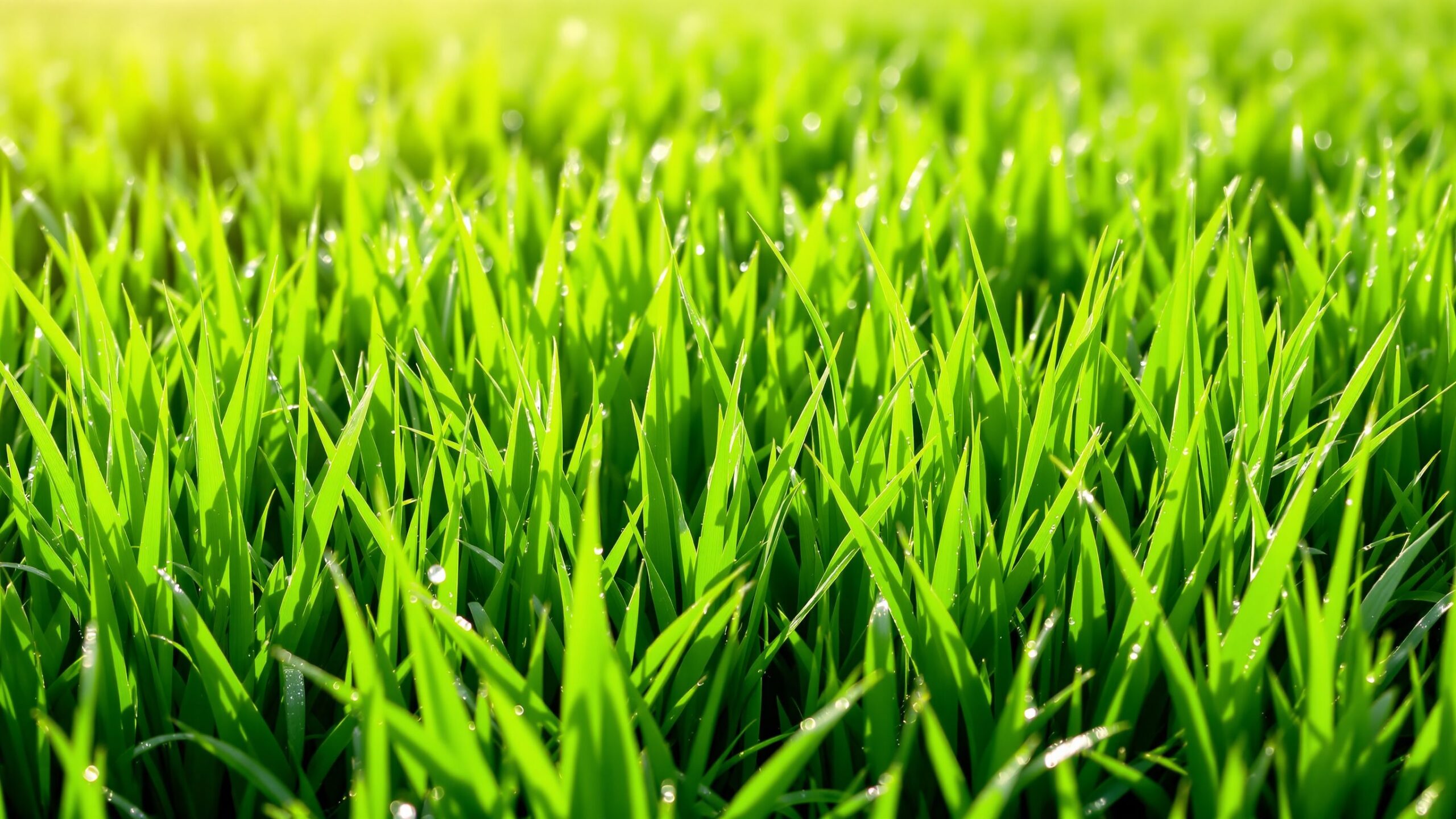
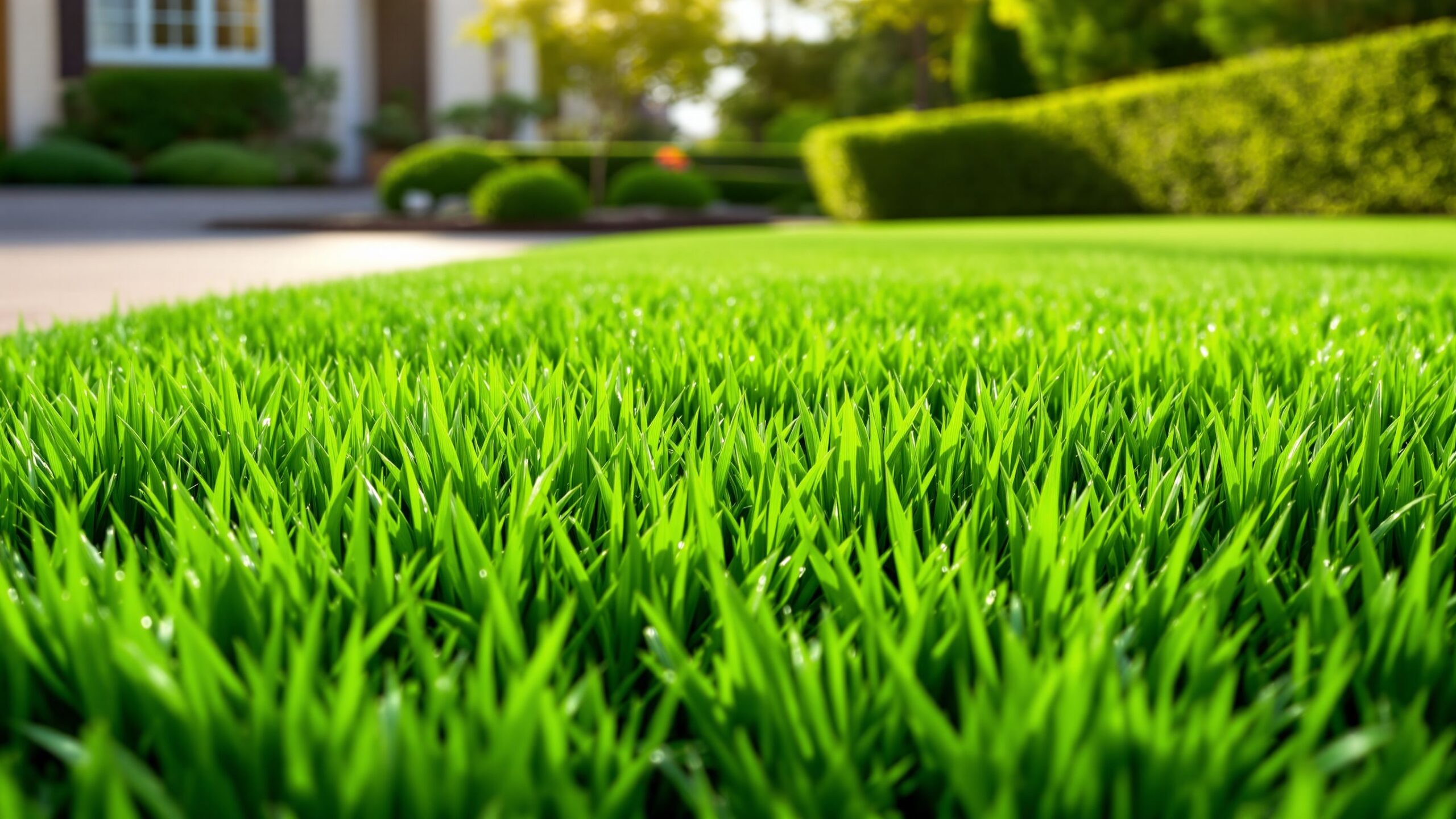
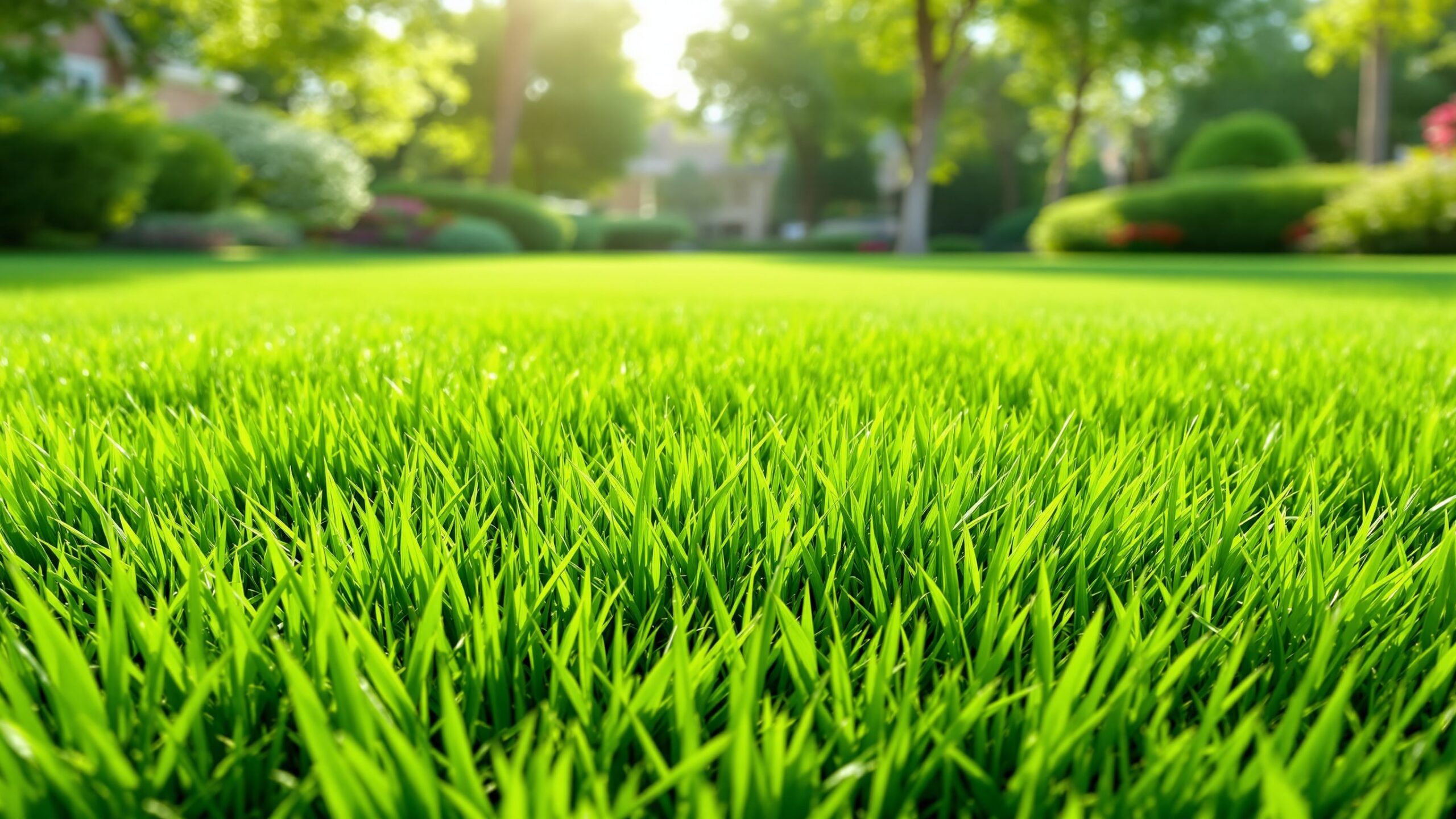
Kentucky bluegrass produces relatively fine to medium-textured blades that form a dense, soft lawn when conditions are favorable.
One of its identifying features is the tip of the leaf blade, which is often described as boat-shaped. If examined closely, the end can resemble the bow of a tiny canoe.
The leaves usually have a rich green to blue-green appearance, although exact color depends on cultivar, fertility, weather, soil conditions, and water availability.
Individual plants develop underground rhizomes that spread horizontally beneath the soil. New shoots can emerge from these rhizomes, gradually expanding the turf.
This growth habit distinguishes Kentucky bluegrass from bunch-forming grasses that grow primarily in individual clumps.
When properly maintained, the rhizomes help produce a continuous carpet of grass with relatively few visible gaps.
Why Is It Called Kentucky Bluegrass?
The name is somewhat misleading.
Kentucky bluegrass is not originally from Kentucky, and a healthy lawn does not normally appear bright blue.
The “bluegrass” portion of the name is associated with the subtle blue-green coloration that can appear in its foliage and flowering structures.
Kentucky became strongly associated with the grass because it flourished in the state’s fertile soils and cool-season growing conditions. Over time, expansive fields and pastures helped make bluegrass part of Kentucky’s visual identity.
The association became so strong that Kentucky eventually earned the nickname “the Bluegrass State.”
Today, Kentucky bluegrass is grown far beyond Kentucky and remains one of the most widely recognized turfgrasses in cooler parts of the United States.
Where Does Kentucky Bluegrass Grow Best?
Kentucky bluegrass performs best in cool-season lawn regions.
These areas generally experience cold winters, mild to warm springs and falls, and summers that may become hot but are not relentlessly tropical.
It is widely grown throughout the Upper Midwest, Northeast, northern Great Plains, Rocky Mountain regions, and other cooler areas of the United States.
The grass typically grows most actively during spring and autumn when temperatures are favorable.
During hot summer conditions, growth can slow dramatically. Without sufficient moisture, Kentucky bluegrass may enter dormancy and turn brown.
This does not necessarily mean the lawn is dead.
Dormant grass can often recover when cooler weather and moisture return, provided the crowns and root systems remain alive.
Kentucky Bluegrass and Cool-Season Growth
Understanding the cool-season nature of Kentucky bluegrass is essential to managing it successfully.
Unlike warm-season grasses that thrive during peak summer heat, Kentucky bluegrass prefers cooler temperatures.
Its strongest growth usually occurs in spring and fall.
During these seasons, roots and shoots can develop vigorously, making them ideal times for many lawn-care activities such as fertilization, seeding, aeration, and repair.
Summer presents the greatest challenge.
Heat increases water demand while simultaneously slowing the grass’s natural growth. This combination can create stress, especially in areas with limited rainfall.
Recognizing these seasonal rhythms allows gardeners to work with the grass rather than against it.
The Best Sunlight for Kentucky Bluegrass
Kentucky bluegrass performs best in full sun.
Lawns receiving abundant direct sunlight generally develop denser turf and stronger growth than those growing under heavy shade.
Some modern cultivars have improved shade tolerance, but Kentucky bluegrass is still not considered the best choice for deeply shaded yards.
Under trees, along the north sides of buildings, or in areas receiving only a few hours of weak sunlight, turf may become thin and weak.
The problem is often made worse by competition from tree roots for water and nutrients.
If a portion of the lawn consistently fails because of deep shade, simply adding more Kentucky bluegrass seed may not solve the problem.
Alternative shade-tolerant grasses, groundcovers, mulch, or landscape beds may be more appropriate.
The Best Soil for Kentucky Bluegrass
Kentucky bluegrass grows best in fertile, well-drained soil with adequate organic matter.
It can adapt to a variety of soil types, but extremely compacted or poorly drained soil can limit root development and reduce turf quality.
A slightly acidic to neutral soil range is generally favorable, although exact nutrient recommendations should ideally be based on a soil test.
Before establishing a new lawn, improving poor soil can make a dramatic difference.
Adding appropriate organic matter, correcting severe compaction, and ensuring proper grading and drainage all create better conditions for long-term success.
Good soil is far more effective than repeatedly trying to rescue unhealthy turf with extra fertilizer.
How to Plant Kentucky Bluegrass Seed
Kentucky bluegrass is commonly established from seed, although sod is also widely available.
Successful seeding begins with good soil preparation.
The soil surface should be relatively smooth, loose enough for root development, and free from excessive weeds and debris.
Seed should have good contact with the soil without being buried too deeply.
Kentucky bluegrass seed can germinate more slowly than some other common lawn grasses. Depending on temperature and moisture, emergence may take several weeks.
This slow establishment means patience is essential.
The seedbed must remain consistently moist during germination without being flooded.
Once seedlings emerge, watering can gradually become deeper and less frequent as roots develop.
When Is the Best Time to Seed Kentucky Bluegrass?
Late summer through early fall is often the best period for establishing Kentucky bluegrass in many regions.
Soil temperatures are still warm enough to support germination, while cooler air temperatures reduce heat stress.
Weed pressure may also be lower than it is during spring.
Most importantly, young grass has time to establish before the following summer.
Spring seeding can also work, but seedlings may face increasing heat and competition from annual weeds before developing strong root systems.
Regional weather differs, so exact timing should be adjusted for local conditions.
The goal is to give seedlings as much favorable cool-season growing time as possible before extreme heat or cold arrives.
Kentucky Bluegrass Germination
Kentucky bluegrass has a reputation for slower germination compared with some other turf species.
Under favorable conditions, seedlings may begin emerging in roughly two to three weeks, although germination can vary based on temperature, moisture, seed quality, planting depth, and cultivar.
During this period, the upper layer of soil should remain evenly moist.
Allowing newly planted seed to dry repeatedly can severely reduce establishment.
Once grass begins developing roots, irrigation should gradually transition from frequent light watering toward deeper watering.
This encourages roots to move farther into the soil.
A mature lawn managed with deeper roots is generally more resilient than one trained to depend on constant surface moisture.
Using Kentucky Bluegrass Sod
Sod provides an alternative for homeowners who want a finished lawn quickly.
Kentucky bluegrass sod arrives as mature turf with an established root and soil layer.
Proper soil preparation remains necessary because sod cannot perform well indefinitely over compacted, poorly graded, or unhealthy soil.
After installation, consistent irrigation is critical while the sod roots into the underlying ground.
The edges and seams are particularly vulnerable to drying.
Once the roots have established, watering frequency can be reduced.
Sod creates immediate visual coverage, but it still requires a period of establishment before it can tolerate normal traffic and maintenance.
How Much Water Does Kentucky Bluegrass Need?
Kentucky bluegrass generally has moderate to relatively high water needs when homeowners want it to remain actively green during hot summer weather.
Exact requirements depend on temperature, rainfall, soil type, wind, humidity, mowing height, and root depth.
Rather than watering lightly every day, established lawns usually benefit from deeper irrigation that moistens a substantial portion of the root zone.
Deep watering encourages stronger root development and allows the lawn to use stored soil moisture between irrigation cycles.
Frequent shallow watering can encourage shallow roots and make the lawn more vulnerable to heat and drought.
Early morning is typically an ideal time to irrigate because evaporation is lower and foliage has time to dry during the day.
Can Kentucky Bluegrass Survive Drought?
Kentucky bluegrass can survive periods of drought by entering dormancy.
During dormancy, the lawn may turn tan or brown and stop producing significant top growth.
This is a natural survival response rather than automatic death.
The plant conserves resources until moisture and favorable temperatures return.
However, extended severe drought can eventually kill crowns and roots.
Dormant lawns may therefore still require occasional irrigation during prolonged dry periods if the goal is to keep the grass alive.
Homeowners should also follow local watering restrictions during drought conditions.
Allowing a lawn to become dormant can significantly reduce water consumption compared with attempting to keep it emerald green throughout intense summer heat.
How to Mow Kentucky Bluegrass
Proper mowing helps maintain density and root strength.
Kentucky bluegrass generally performs well when maintained at a moderate height rather than being cut extremely short.
A mowing height somewhere around 2.5 to 3.5 inches is common for home lawns, with slightly taller mowing often beneficial during summer stress.
Never remove excessive leaf tissue in a single mowing.
The familiar one-third rule recommends avoiding removal of more than about one-third of the blade height at one time.
Cutting too aggressively can stress the grass, reduce photosynthesis, weaken roots, and expose soil to greater heat.
Sharp mower blades also matter.
Dull blades tear grass rather than cutting it cleanly, leaving ragged tips that may turn brown.
Should Grass Clippings Be Left on the Lawn?
In most situations, clean grass clippings can be left on a Kentucky bluegrass lawn.
Clippings are composed largely of water and decompose relatively quickly.
As they break down, nutrients are returned to the soil.
This practice, sometimes called grasscycling, can reduce the amount of fertilizer required over time.
Clippings generally do not cause thatch when the lawn is mowed regularly.
However, thick clumps left after mowing an excessively tall or wet lawn can smother the grass beneath them.
If large piles form, they should be distributed or collected.
Routine mowing that removes only modest amounts of growth produces clippings small enough to disappear into the turf.
Fertilizing Kentucky Bluegrass
Kentucky bluegrass responds strongly to nitrogen fertilizer.
This is one reason fertilization can produce dramatic improvements in color and density.
It is also why overfertilization can create serious problems.
Too much nitrogen can encourage excessive leafy growth, increase mowing requirements, weaken drought tolerance, and contribute to certain diseases.
Fall is often an important fertilization period for cool-season lawns because the grass is actively growing and storing energy.
Spring fertilizer may also be appropriate, depending on soil conditions and previous management.
A soil test can provide valuable information about phosphorus, potassium, pH, and other factors.
Fertilizing according to actual need is more efficient than applying products simply because a calendar says it is time.
Why Kentucky Bluegrass Spreads So Well
One of Kentucky bluegrass’s defining characteristics is its underground rhizomes.
Rhizomes grow horizontally beneath the soil and produce new shoots at different points.
This allows the lawn to gradually fill small bare areas.
It also creates a connected turf that can recover from moderate wear more effectively than purely bunch-forming grasses.
This self-repairing ability is a major reason Kentucky bluegrass is used for lawns, athletic fields, parks, and other areas that experience foot traffic.
However, recovery is not instantaneous.
Severely compacted soil, chronic shade, disease, drought, or heavy traffic can overwhelm the grass’s natural ability to repair itself.
Good growing conditions remain essential.
Overseeding Kentucky Bluegrass
Overseeding can restore density to lawns that have become thin.
Late summer or early fall is often the preferred time in cool-season regions.
Before overseeding, identify why the lawn became thin in the first place.
If the underlying problem is deep shade, soil compaction, poor drainage, disease, or incorrect watering, simply adding seed may produce only temporary improvement.
Good seed-to-soil contact is essential.
Mowing slightly lower before seeding, removing excessive debris, and aerating compacted areas can improve establishment.
Keep the seedbed moist during germination.
Because Kentucky bluegrass germinates relatively slowly, protecting the area from heavy traffic during establishment is important.
What Is a Kentucky Bluegrass Blend?
Many Kentucky bluegrass lawns are established using blends containing several different Kentucky bluegrass cultivars.
Each cultivar may have slightly different characteristics, including color, disease resistance, growth rate, shade tolerance, heat tolerance, and spring green-up.
Combining compatible cultivars increases genetic diversity across the lawn.
This can make the turf less vulnerable to a single disease or environmental stress affecting every plant identically.
Grass seed products may also contain mixtures of Kentucky bluegrass with other species such as perennial ryegrass or fine fescues.
A blend contains multiple cultivars of the same species, while a mixture contains multiple grass species.
Understanding the label helps homeowners know exactly what they are planting.
Kentucky Bluegrass and Perennial Ryegrass
Kentucky bluegrass and perennial ryegrass are commonly combined in cool-season lawns.
Perennial ryegrass germinates much faster than Kentucky bluegrass, providing relatively quick initial coverage.
Kentucky bluegrass establishes more slowly but contributes underground rhizomes and long-term self-repair.
This combination can create a lawn that establishes faster while retaining many of the qualities associated with bluegrass turf.
The exact percentage of each species matters.
A seed mixture dominated by ryegrass may behave differently from one containing mostly Kentucky bluegrass.
Climate, intended use, shade, maintenance level, and desired appearance should guide selection.
Kentucky Bluegrass and Fine Fescue
Fine fescues are another group frequently mixed with Kentucky bluegrass.
Fine fescues generally tolerate shade better and can perform with lower fertility requirements.
Including them in a seed mixture may improve turf coverage in lawns containing a mixture of sunny and moderately shaded areas.
However, the species have different appearances and maintenance preferences.
Selecting a quality mixture designed for local conditions usually produces better results than randomly combining seed varieties.
In deeply shaded areas, even a bluegrass-fescue mixture may struggle if there is insufficient light.
No grass can completely overcome unsuitable growing conditions.
Aerating a Kentucky Bluegrass Lawn
Soil compaction can prevent water, oxygen, and roots from moving effectively through the soil.
Core aeration removes small plugs of soil from the lawn, creating channels that improve air and water movement.
Kentucky bluegrass lawns exposed to frequent foot traffic, heavy equipment, or naturally compacted soils can benefit from periodic aeration.
Early fall is often an excellent time because the grass can recover quickly during cool-season growth.
Aeration can also create ideal conditions for overseeding.
Grass seed that falls into or around aeration holes has improved contact with exposed soil.
The removed soil plugs can usually be left on the lawn to break down naturally.
Understanding Thatch
Thatch is a layer of partially decomposed stems, roots, and other organic material that develops between the green foliage and the soil surface.
A small amount of thatch can be beneficial.
An excessive layer, however, can interfere with water movement, encourage shallow rooting, and create favorable conditions for some pests and diseases.
Kentucky bluegrass can be prone to thatch accumulation because of its aggressive rhizome production.
Excessive nitrogen fertilization and overwatering may contribute to rapid organic buildup.
Core aeration can help manage moderate thatch.
Severe cases may require dethatching or other renovation methods.
Grass clippings are usually not the primary cause of thatch when mowing is performed properly.
Common Kentucky Bluegrass Weeds
A dense, healthy lawn naturally suppresses many weeds by occupying space and competing for light, moisture, and nutrients.
Thin areas provide opportunities for unwanted plants.
Crabgrass, dandelions, clover, plantain, and other lawn weeds may appear depending on region and management.
The first step in weed control should be understanding why weeds are succeeding.
Compacted soil may favor certain species. Bare ground invites germination. Excessive mowing can weaken turf. Overwatering can create conditions for moisture-loving weeds.
Improving turf density often provides more sustainable control than treating each weed individually.
Herbicides may be appropriate in some situations, but they should always be selected and applied according to label instructions and local regulations.
Common Kentucky Bluegrass Diseases
Kentucky bluegrass can be affected by several turf diseases, particularly when environmental conditions favor fungal growth.
Dollar spot, leaf spot, rust, powdery mildew, and summer patch are among the problems that may appear under certain conditions.
Disease symptoms can include circular patches, yellowing, thinning, unusual spotting, or discoloration.
However, similar symptoms can result from insects, drought, fertilizer injury, pet urine, compaction, or irrigation problems.
Accurate diagnosis is important before applying fungicides.
Good lawn management can reduce disease pressure.
Proper mowing, balanced fertilization, appropriate watering, adequate drainage, and disease-resistant cultivars all contribute to a healthier lawn.
Summer Patch in Kentucky Bluegrass
Summer patch can be particularly troublesome in Kentucky bluegrass lawns.
The disease affects roots and crowns and often becomes visible during hot summer weather, even though infection may begin earlier.
Affected turf may develop circular or irregular patches of yellow or brown grass.
Because high temperatures place additional stress on already damaged roots, symptoms can appear suddenly.
Maintaining appropriate mowing height, avoiding excessive nitrogen during unfavorable periods, improving drainage, and encouraging deep roots can reduce stress.
If recurring summer patch is suspected, professional diagnosis or guidance from a local extension service can help confirm the problem and identify appropriate management strategies.
Grubs and Other Lawn Pests
Several insects can damage Kentucky bluegrass.
White grubs feed on grass roots and can cause sections of turf to wilt or die.
Heavily damaged sod may pull away from the soil unusually easily because the roots have been destroyed.
Other potential pests include sod webworms, cutworms, billbugs, and chinch bugs, depending on geographic region.
Not every brown patch is caused by insects.
Before treating the lawn, look for evidence such as actual larvae, feeding damage, or unusual bird and animal activity.
Unnecessary pesticide use wastes money and can harm beneficial organisms.
Correct identification should always come before treatment.
Dog Urine and Kentucky Bluegrass
Dog urine can create distinctive lawn spots.
The concentrated nitrogen and salts in urine may burn grass in the center of the affected area.
Interestingly, the outer edge may become unusually dark green because the diluted nitrogen acts like fertilizer.
Regular access to water can help dilute affected areas, but preventing dogs from repeatedly using exactly the same location can be more effective.
There is no need to drastically alter a pet’s diet solely to protect the lawn unless a veterinarian recommends dietary changes for health reasons.
Landscape solutions, designated pet areas, and appropriate irrigation are safer approaches.
Why Kentucky Bluegrass Turns Brown in Summer
Summer browning does not always mean the lawn has died.
Kentucky bluegrass can enter dormancy during periods of heat and limited moisture.
The blades lose their green color while the plant conserves energy in the crown and root system.
If drought is moderate and the plants remain alive, rainfall or irrigation combined with cooler temperatures can trigger green-up.
However, severe drought, insects, diseases, or other stresses can cause actual turf death.
Check whether crowns remain alive before assuming the lawn will recover automatically.
If large sections fail to green up when favorable weather returns, reseeding or other repairs may be necessary.
Fall Care for Kentucky Bluegrass
Fall is one of the most important seasons for a Kentucky bluegrass lawn.
Cooler temperatures stimulate renewed growth while soil remains warm enough for active roots.
This makes fall ideal for overseeding, core aeration, repairing bare spots, and fertilizing according to need.
Weeds may also be easier to address during this period.
A lawn that receives good fall care enters winter with stronger roots and stored energy.
That preparation can lead to faster green-up and better density the following spring.
Many homeowners focus almost entirely on spring lawn care, but for Kentucky bluegrass, fall management may have an even greater impact on long-term quality.
Winter Dormancy
In cold climates, Kentucky bluegrass becomes dormant during winter.
Growth slows or stops, and foliage may lose some of its rich green color.
The underground crowns and roots remain alive beneath the surface.
Snow cover can actually insulate the turf from extreme temperature fluctuations.
Heavy traffic on frozen grass should be minimized when possible because brittle blades and frozen crowns can be damaged.
Deicing salts may also injure turf along sidewalks and driveways.
When temperatures warm in spring, healthy Kentucky bluegrass resumes active growth and begins rebuilding its dense green canopy.
Spring Care for Kentucky Bluegrass
Spring brings one of Kentucky bluegrass’s strongest growth periods.
As soil temperatures rise, the grass begins producing fresh green leaves and active roots.
Avoid rushing onto saturated spring soil with heavy equipment, which can increase compaction.
Once growth begins, mowing can resume at an appropriate height.
Evaluate winter damage and repair bare areas when necessary, although major seeding projects are often more successful in late summer or early fall.
Fertilization should be moderate.
Heavy early-spring nitrogen can create excessive shoot growth just before summer stress arrives.
The objective is to support healthy growth without forcing the lawn beyond what its root system can sustain.
Kentucky Bluegrass for Athletic Fields
Kentucky bluegrass is frequently used for athletic surfaces in cool-season climates because of its dense growth and ability to recover through rhizomes.
Football fields, soccer fields, parks, golf course roughs, and recreational areas may include Kentucky bluegrass.
Its self-repair ability provides an advantage where turf experiences regular wear.
However, athletic fields require far more intensive management than ordinary residential lawns.
Compaction, irrigation, mowing frequency, fertilization, traffic patterns, and overseeding must all be carefully managed.
The same characteristics that make Kentucky bluegrass beautiful in a backyard can make it durable enough for demanding recreational environments when professional maintenance is provided.
Fascinating Kentucky Bluegrass Facts
Kentucky bluegrass has several characteristics that make it more interesting than the average lawn might suggest.
Its botanical name is Poa pratensis, and it belongs to one of the world’s largest and most economically important plant families, Poaceae.
The familiar boat-shaped leaf tip is a useful identification feature.
Its underground rhizomes allow it to spread laterally and repair small damaged areas.
The grass is perennial, meaning individual plants can survive from year to year rather than being replanted each season.
Despite its name, Kentucky bluegrass did not originate in Kentucky.
It also does not remain blue. The name refers more to subtle blue-green tones associated with foliage and seed heads.
Perhaps most importantly, what appears to be one seamless lawn is actually a community of countless interconnected grass shoots.
How Long Does Kentucky Bluegrass Live?
Kentucky bluegrass is a perennial and can persist indefinitely in a lawn when conditions remain suitable.
Individual shoots eventually age and die, but the underground rhizome system continually produces new growth.
This ongoing renewal allows an established lawn to maintain itself for many years.
A properly managed Kentucky bluegrass lawn does not normally need to be completely replanted on a regular schedule.
Instead, maintenance focuses on supporting the existing turf and repairing weak areas when necessary.
Overseeding, aeration, balanced fertilization, good mowing practices, and proper irrigation can keep an established lawn productive for decades.
Creating the Perfect Kentucky Bluegrass Lawn Routine
A healthy Kentucky bluegrass lawn begins with realistic expectations.
Provide abundant sunlight and well-drained, fertile soil.
Mow at a moderate height with sharp blades and avoid removing excessive growth at once.
Water deeply enough to encourage strong roots rather than applying constant shallow irrigation.
Fertilize according to soil conditions and seasonal growth, with particular attention to fall.
Aerate compacted areas when necessary.
Overseed thin spots during favorable cool-season establishment periods.
Watch for signs of disease, insects, weeds, or irrigation problems and diagnose the cause before reaching for treatments.
Allow the grass to follow its natural seasonal rhythm.
Spring and fall are periods of vigorous growth. Summer may bring stress or dormancy. Winter brings rest.
Working with these cycles creates a lawn that is healthier and easier to maintain.
Why Kentucky Bluegrass Remains an American Lawn Favorite
Kentucky bluegrass has remained one of America’s most celebrated turfgrasses because it creates exactly the kind of lawn many homeowners imagine when they picture a classic yard.
The foliage is dense, relatively fine, soft underfoot, and capable of developing a beautiful deep green color. Underground rhizomes allow the turf to spread and repair itself, giving established lawns an almost seamless appearance.
It is also versatile enough for residential yards, parks, recreational spaces, athletic fields, and expansive landscapes.
Yet Kentucky bluegrass is not effortless.
Its best appearance often requires regular mowing, thoughtful fertilization, adequate irrigation, and seasonal maintenance. In extremely hot, dry, or heavily shaded environments, other grasses may provide a more sustainable option.
That is an important part of successful lawn care: choosing a grass suited to the climate rather than forcing the landscape to support something that constantly struggles.
Where growing conditions are appropriate, however, Kentucky bluegrass remains difficult to beat.
With healthy soil, plenty of sunlight, deep roots, proper mowing, sensible watering, and good fall care, a Kentucky bluegrass lawn can become a dense living carpet that returns year after year.
Its name may come from the Bluegrass State, but its appeal reaches far beyond Kentucky. For generations of gardeners and homeowners, Poa pratensis has remained one of the defining grasses of the cool-season American landscape.
Garden Product Reviews
Step into Mossy Streets’ Garden Product Reviews — your go-to guide for the best tools, gear, gifts, books, and garden gadgets rooted in nature. From blooming backyard beauties to lush indoor jungles, from heirloom seeds to high-tech composters, we dig into top-rated products for green thumbs, beginners, educators, and plant lovers alike. Whether you’re planting, pruning, decorating, or simply enjoying your green space, we’ve unearthed the best so you can grow, bloom, and thrive — all in one vibrant place!