Let Leaf Patterns Give the Ground Layer Definition
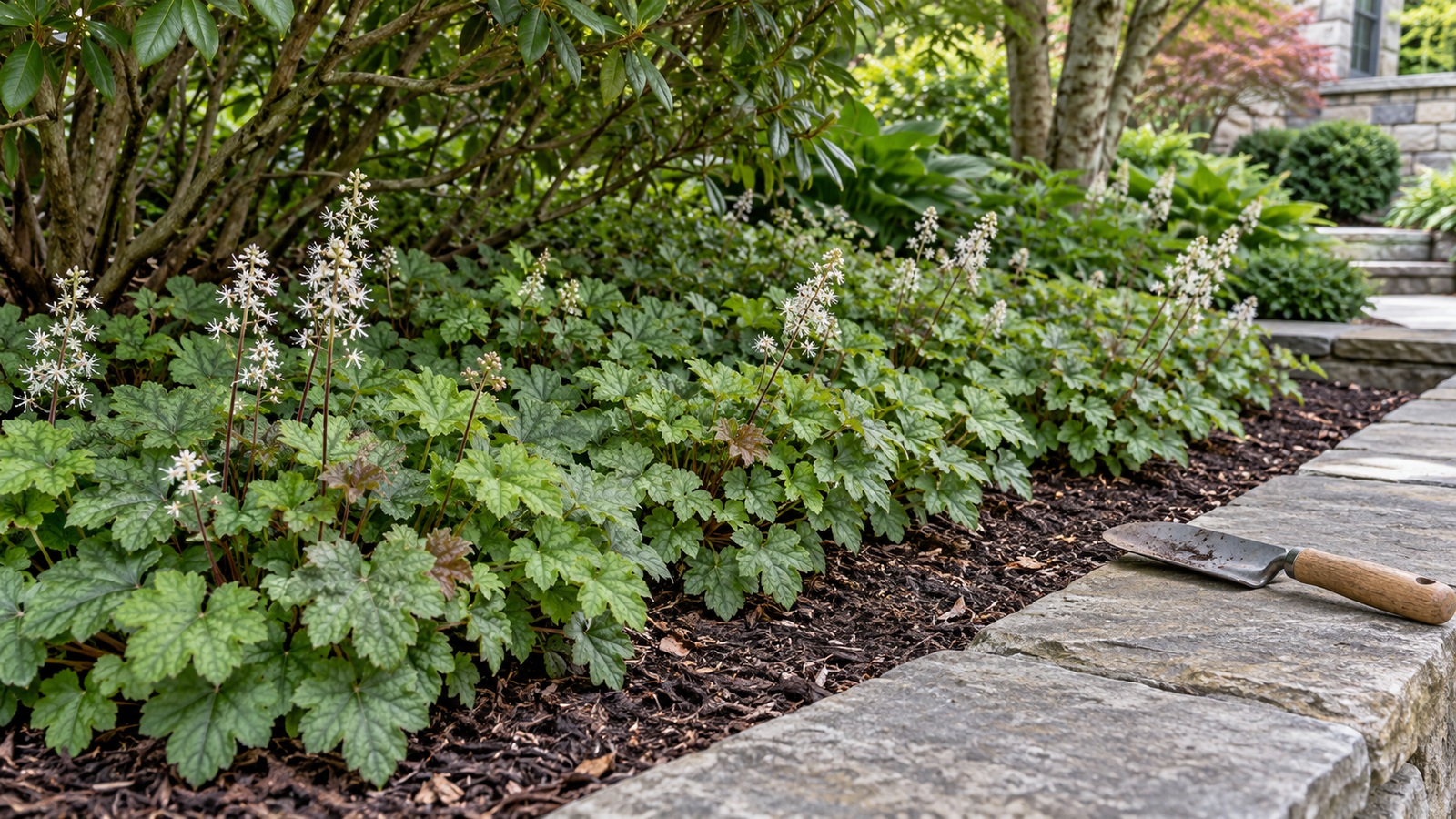
A ground layer can contribute far more than a green surface between larger plants. Cream edges, silver centers, pale stripes, and darker veins let individual leaves catch the eye even when the garden has few flowers. Variegated foliage is especially useful where you want a small shaded bed to feel brighter or a planting's lower level to remain visible beneath shrubs. The best choice, however, is not simply the brightest leaf in the nursery. It is a plant whose growth habit, light preference, moisture needs, and regional behavior fit the space you need to cover. Some attractive candidates spread into a mat, while others form neighboring clumps that gradually create a continuous visual layer. Understanding that distinction prevents disappointment and helps you design with texture deliberately. Begin with the site and the desired pattern, then select foliage that can remain healthy and manageable there across the seasons.
A: No, variegation describes leaf color; check the plant's growth habit separately before expecting continuous dense coverage.
A: It creates a repeated clumping layer, so plan mature spacing and temporary gap care instead of expecting rapid creeping.
A: It is a sedge, so follow its cultivar-specific growing guidance rather than assuming ordinary ornamental-grass requirements.
A: Dry soil and tree-root competition can undermine brunnera even where the available shade appears appropriate.
A: No, verify local suitability and invasive guidance before choosing a spreading silver lamium for your garden.
A: Yes, scattered light markings offer a different texture that can stand out beside simpler compatible foliage.
A: Reduce competing patterns and place quieter green foliage between the strongest markings so individual textures remain clear.
A: A full-season trial reveals actual spread and leaf quality before you commit a larger garden area.
A: No, pale markings do not remove aggressive growth; follow regional guidance and consider manageable alternatives for the site.
A: Investigate persistent differences after comparing normal cultivar growth, seasonal changes, and possible stress affecting the leaves.
Separate Leaf Pattern From the Way a Plant Covers Soil
Variegation describes differences of color within a leaf, but it does not tell you how quickly a plant spreads. A silver-centered ground cover may creep between neighboring plants, while a cream-striped sedge remains a tuft that expands more gradually. Both can provide a low visual layer when used appropriately. They need different spacing and different expectations, however. If your aim is a dense living carpet, do not assume that a few isolated clumps will fill the entire bed without additional plants or time.
Leaf size changes the texture as much as the color does. Large heart-shaped leaves make broad surfaces that read clearly from a distance, whereas narrow striped blades create a finer, more linear effect. Small paired leaves on trailing stems can soften an edge and link larger clumps. View nursery plants from several feet away before selecting them solely from a close photograph. A delicate pattern that looks dramatic in your hand may disappear against paving or a busy background when planted outdoors.
Decide whether the ground layer should act as a focal point or support something above it. Strong white or cream markings can draw attention away from a flowering shrub, while quieter silver veins may connect several green plants without dominating the scene. The same cultivar can work very differently in a narrow entrance bed and a broad woodland border. Sketch the intended area and identify the main view before buying. A specific role makes choosing among attractive leaves much easier. Include the background in that assessment: pale paving can reduce the contrast of cream leaves, while a darker hedge may reveal them clearly. Look at the bed during the hours when you usually enjoy it, since dappled sunlight and evening shade change what stands out. Choosing for that real view prevents a collection of individually beautiful plants from becoming an indistinct mass in the finished garden.
Use Silver Brunnera for Broad Texture in Suitable Shade
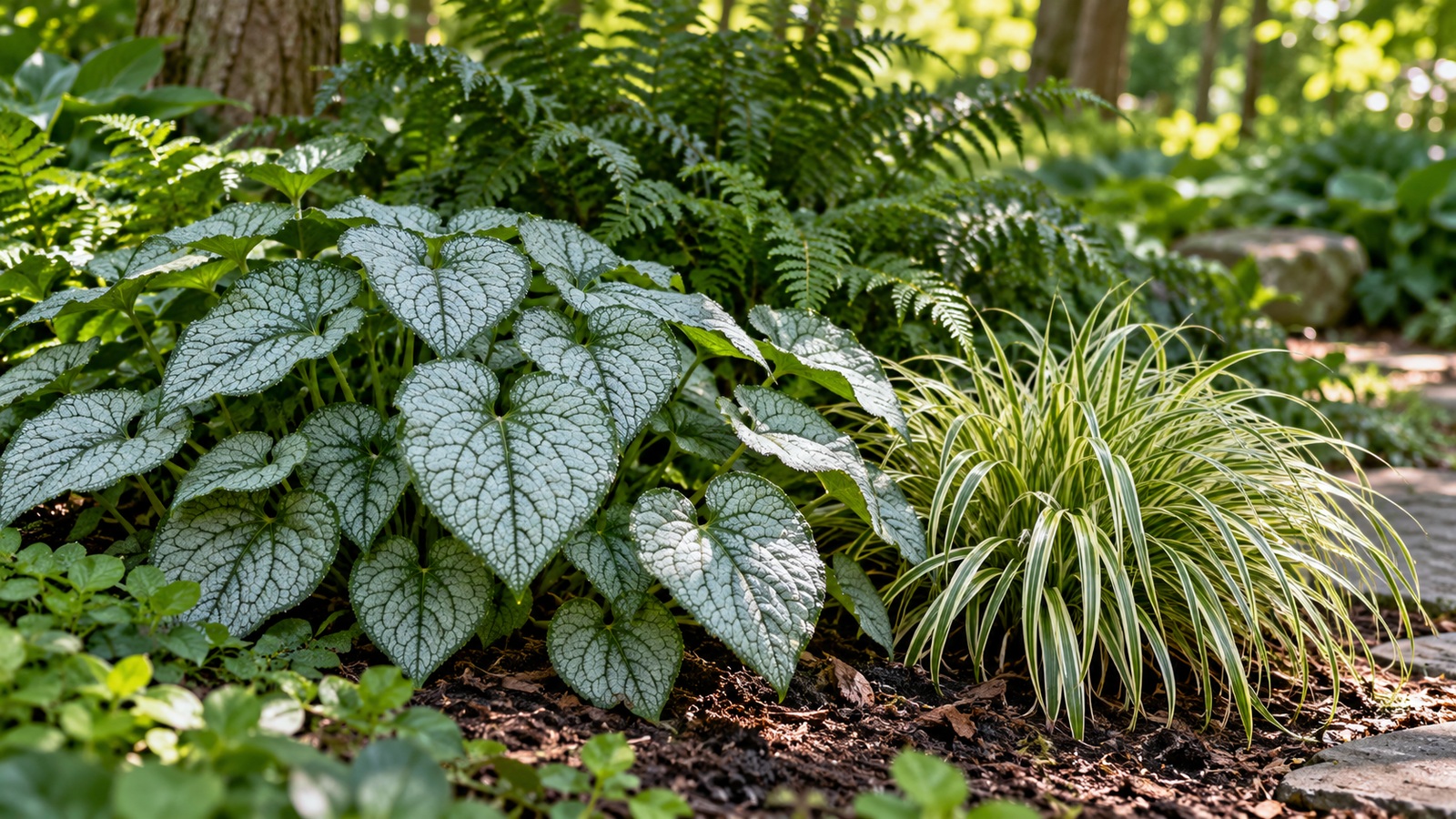
Silver-leaved cultivars of Brunnera macrophylla, including 'Jack Frost', provide a broad-leaved option for suitable shaded gardens. Their heart-shaped leaves with contrasting green veins can make a clear visual layer among finer foliage. Brunnera forms clumps rather than racing across every bare patch as a vigorous creeping mat. Use repeated plants at appropriate mature spacing when you want a coherent ground-level display. This approach rewards patience and makes the mature leaf size part of the design from the start.
A site with suitable shade, moisture, and drainage helps keep the leaves attractive. Hot exposed conditions or an unsuitable dry root zone can undermine the effect you selected it for. Check regional hardiness and growing guidance before treating a cultivar as a universal solution beneath any tree. Established tree roots may compete strongly for water, so a bed that looks shaded is not necessarily hospitable. Judge the actual root-zone conditions and be prepared to choose a different plant where brunnera's needs cannot be met.
Consider Striped Sedges as a Clumping Ground Layer
Variegated sedges can supply a very different kind of texture from broad-leaved perennials. Carex oshimensis 'Evergold', for example, has arching narrow leaves with a pale central stripe and green margins. Repeated tufts can define a small bed, frame a quiet focal point, or soften the base of a shrub where regional conditions suit it. It is a sedge rather than a true ornamental grass. That distinction matters when comparing growing requirements instead of assuming that every grasslike plant belongs in a hot dry border.
Plant sedges with their mature spread in mind so the grouping develops as intended. A tightly crowded installation can become awkward to maintain, while widely isolated tufts may never deliver the connected layer you imagined. Observe whether the selected cultivar remains mostly clumping or spreads more actively, and do not generalize from one Carex species to the whole genus. There are many sedges with very different habits and site preferences. A cultivar-specific description is more useful than a generic promise that sedges are easy.
Fine striped blades look particularly clear beside simple broad green leaves or an uncluttered stone edge. Too many neighboring narrow-leaved plants can blur that contrast, especially when all of them carry strong markings. Repeat the sedge enough to establish a readable rhythm, then leave quieter areas around it. Make room for maintenance without stepping onto the crowns. A small accessible planting of healthy tufts often creates a stronger impression than an overfilled bed that continually needs rescuing.
Evaluate Silver Lamium for Both Coverage and Containment
Selected cultivars of Lamium maculatum can provide low spreading growth with silver-patterned leaves in suitable shade or partial shade. Unlike brunnera's distinct clumps, trailing stems can help connect a larger patch, but that capacity also requires attention to regional behavior and boundaries. Check local invasive-plant guidance before buying and avoid using a vigorous spreader beside sensitive habitat or a bed where removal would be difficult. A plant sold as ornamental is not automatically appropriate everywhere. If the selection is locally acceptable, assess its moisture and drainage needs and plan how you will keep it within the intended area. Its value as a linking ground layer depends on healthy foliage and manageable spread together.
Treat Spotted Foliage as Texture Without Mislabeling Every Pattern
Pulmonaria cultivars with spotted or silver-marked leaves can contribute a low patterned layer in appropriate shaded gardens. They are useful when you want a different leaf shape or a more scattered light-and-dark effect than a clean cream border provides. Not every pale pattern is described botanically in exactly the same way, and not every patterned plant behaves as a spreading ground cover. Focus on what the cultivar actually contributes to the bed. Repeated clumps can supply visual coverage even when they do not create a tightly woven mat.
Compare mature leaf appearance through the season instead of selecting solely for spring flowers. A candidate may be especially attractive early and require different expectations later, depending on climate and care. Look for regional information about summer foliage quality, moisture needs, and common problems. A ground layer occupies a prominent surface that you will see repeatedly, so its least attractive period deserves consideration. You may prefer one consistent green plant around a smaller patterned accent rather than making the whole bed depend on a seasonal peak.
Patterned foliage also benefits from deliberate restraint in the surrounding palette. If every plant has white edges, silver centers, or bright speckles, individual effects become harder to distinguish. Use a plain green neighbor to reveal the selected markings and a clear edge to define the grouping. This does not require a colorless garden; it simply gives the eye somewhere quiet to settle. You can add flowers above the layer while keeping the foliage arrangement readable after those blooms fade.
Reject Aggressive Candidates Before They Enter the Garden
Some familiar variegated plants have a history of escaping gardens or spreading beyond convenient control. Variegated goutweed, wintercreeper, and certain other widely sold ground covers deserve particular scrutiny in regions where they are problematic. A pale marking does not make an aggressive plant ecologically harmless. Consult current local invasive lists and extension advice rather than relying on an old catalog description. Removing a small questionable plant before installation is much easier than extracting established roots from a mixed border.
Containment also has practical limits within the garden. A plant may remain within a paving boundary above ground yet spread through gaps, produce seedlings, or travel with divided material. Containers can help manage some habits, but they do not turn every unsuitable species into a responsible choice. Select a locally acceptable alternative that performs the visual role without creating an ongoing control problem. The strongest design decision may be choosing a slower plant and covering less area initially.
Arrange Repetition, Edges, and Light Before Buying in Quantity
Map the light across the bed during the growing season. Morning sun, filtered afternoon shade, and reflected heat from paving can produce different conditions within a few feet. Place a suitable cultivar where its leaves can remain sound rather than forcing one uniform choice over every microclimate. If two plants are needed, group each clearly instead of mixing them into a random patchwork. A deliberate transition looks more coherent and is easier to care for than alternating incompatible plants one by one.
Spacing should follow the mature dimensions of the actual cultivar. Planting too densely can hide the individual leaf shapes and create unnecessary competition, while sparse placement requires patience and temporary weed control between plants. Keep crowns at appropriate depth and water the new planting consistently while roots establish. Mulch suitable gaps without burying stems or crowns. The installation period has its own workload, even if the mature ground layer is intended to simplify the bed later.
Use the edge to clarify the foliage effect. A simple border line can make an irregular leaf pattern look intentional, especially beside a path or open lawn. Leave a practical margin where leaves will not be routinely crushed or catch on garden equipment. Repetition does not require covering every inch with the same cultivar. A few connected groups with space for access can provide the same visual rhythm while keeping the planting easier to inspect and maintain.
Keep the Pattern Healthy and the Composition Legible
Inspect the ground layer as it matures rather than assuming that its appearance will remain fixed. Remove damaged material appropriately and monitor spread into neighboring crowns or paths. Some variegated selections may produce plain green shoots; determine the cultivar's recommended response and remove unwanted reversions carefully when appropriate. Do not confuse every change in leaf color with reversion, because seasonal growth, light, stress, and disease can also affect appearance. A useful diagnosis comes before a drastic trim or removal.
The best variegated ground cover is the one that delivers the texture you want under conditions you can maintain. A broad silver brunnera grouping, fine striped sedges, locally suitable lamium, or spotted pulmonaria each offers a different solution. Keep the selection small enough to evaluate before expanding it throughout the garden. Observe its growth, seasonal quality, and relationship with neighbors for a full cycle when practical. Healthy plants arranged with restraint provide a lasting visual effect more convincingly than an assortment chosen only for bright nursery leaves.
Check Habit as Carefully as Leaf Color
Use University of Maryland Extension’s groundcover guidance alongside local invasive-plant information when planning a new layer. For planting and maintenance supplies, browse Garden Product Reviews after the site and cultivar choices are settled.