Replace Repeated Garden Chores With a Better Ground Layer
A bed that needs constant weeding or repeated mulch repairs can quietly consume more gardening time than its flowers. Ground covers can change that workload by occupying the lower layer with plants suited to the site, but the saving develops through planning and establishment rather than arriving with the first tray of plugs. You are exchanging some recurring tasks for a period of preparation, watering, weeding, and observation. A good choice eventually leaves less open ground for unwanted plants and can make the bed's appearance more consistent. A poor choice may add spreading control, difficult cleanup, or continual replacements instead. Start by identifying the chore you want to reduce and the conditions causing it. Then design a ground layer that performs that job while preserving access to the rest of the garden. The aim is a manageable planting whose long-term care fits your routine, with realistic expectations about the work needed to get there.
A: No, new coverage needs preparation, moisture checks, and weed removal before its developing foliage can reduce some chores.
A: No, control entrenched weeds before planting because dense new leaves can conceal competitors without eliminating their roots.
A: No, rapid spread may create containment work, especially when stems enter neighboring plants and become difficult to remove.
A: Use the selected species or cultivar's mature dimensions, allowing for temporary gap care while the planting establishes.
A: No, new plugs need appropriate establishment moisture even when mature plants can tolerate some periods of dryness.
A: Access lets you inspect utilities, tend shrubs, and remove occasional weeds without repeatedly damaging the ground layer.
A: Not necessarily; assess accumulation and plant needs, removing harmful coverings while retaining suitable natural litter around woodland foliage.
A: It reveals seasonal leaf quality, spread, and actual care demands before the same approach covers a larger area.
A: Compare total visits, watering, replacements, containment, and chore time with the workload recorded before installation began.
A: Expand after a full-cycle trial demonstrates manageable care, checking that the next bed offers compatible growing conditions.
Identify the Work You Want the Planting to Replace
Walk through the garden and record which areas demand repeated attention. An open shrub bed may collect weed seedlings, a shaded lawn corner may resist mowing and reseeding, or a sloping patch may lose loose mulch after rain. These are different problems, and a single ground cover may not solve them all. Describe the actual task in practical terms: pulling weeds between shrubs, replacing washed material, or maintaining grass where light is insufficient. A clear target lets you judge whether the eventual planting has improved your garden routine.
Separate a cosmetic concern from a functional one. Bare ground may look unfinished without necessarily causing heavy maintenance, while a densely planted bed can still harbor established perennial weeds. If the main issue is access to a valve or a narrow working route, adding plants could make the situation worse. Consider whether a modest mulch layer, a better edge, or a path would address the chore more directly. Ground covers work best when living coverage is a suitable solution to a defined problem.
Set a realistic standard for the finished bed. A completely weed-free surface may require more intervention than a healthy planting with occasional seasonal cleanup. Decide how often you can inspect the area and how much spread you are willing to control. The maintenance goal should describe a routine you can sustain, rather than an ideal photograph taken immediately after installation. A slightly less formal ground layer can still look intentional when its boundaries and main structure remain clear.
Read the Site Before Selecting a Spreading Plant
Measure or observe sunlight, soil moisture, drainage, and exposure across the intended area. A shaded bed can be dry because of competing tree roots, while a sunny hollow may remain wet after storms. Select for those root-zone conditions rather than the simplest label on a garden sketch. A plant that survives only with frequent corrective watering will not deliver the reduced workload you hoped for. Regional hardiness and summer heat tolerance also matter when deciding what can remain dependable through the year.
Examine nearby plants and practical boundaries. Young shrubs need room to develop, and a ground cover should not engulf crowns or prevent you from inspecting trunks. Roots, paving gaps, fences, and adjoining natural areas affect how easy future containment will be. Verify the selected plant's mature height and spreading method before purchase. A low-growing plant can still become difficult to manage if it travels aggressively into places where you cannot remove it easily.
Choose Coverage That Will Not Become a New Control Job
Prefer locally suitable plants with a growth habit you understand. Native candidates can be useful where they fit the site, but native status alone does not describe mature size, moisture needs, or the way a species expands. Likewise, a nonnative ornamental sold widely is not automatically invasive, yet it deserves a regional check before installation. Consult current local guidance and avoid plants known to escape or dominate surrounding habitats. A slower appropriate cover is often a better maintenance investment than a fast problematic one.
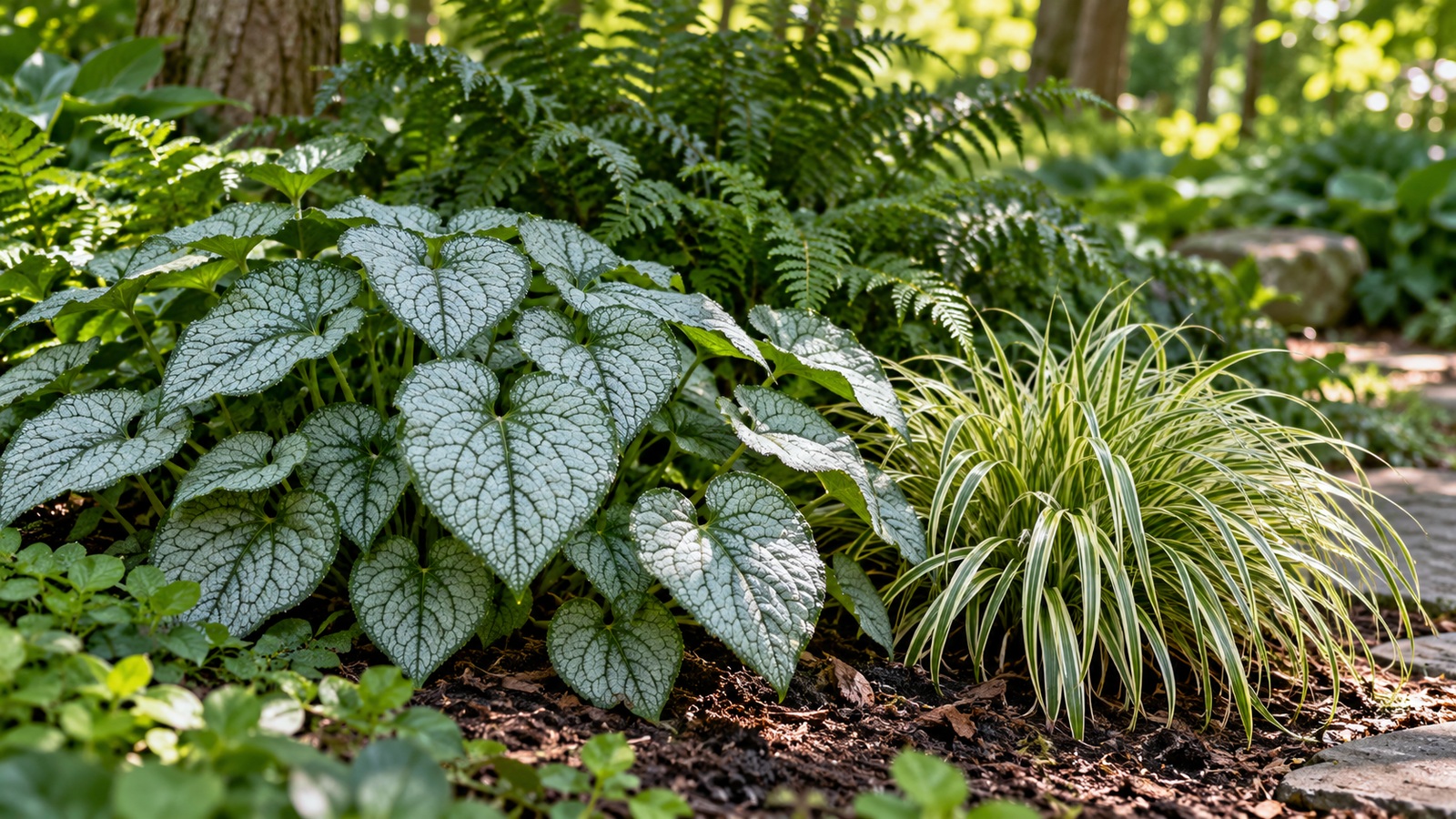
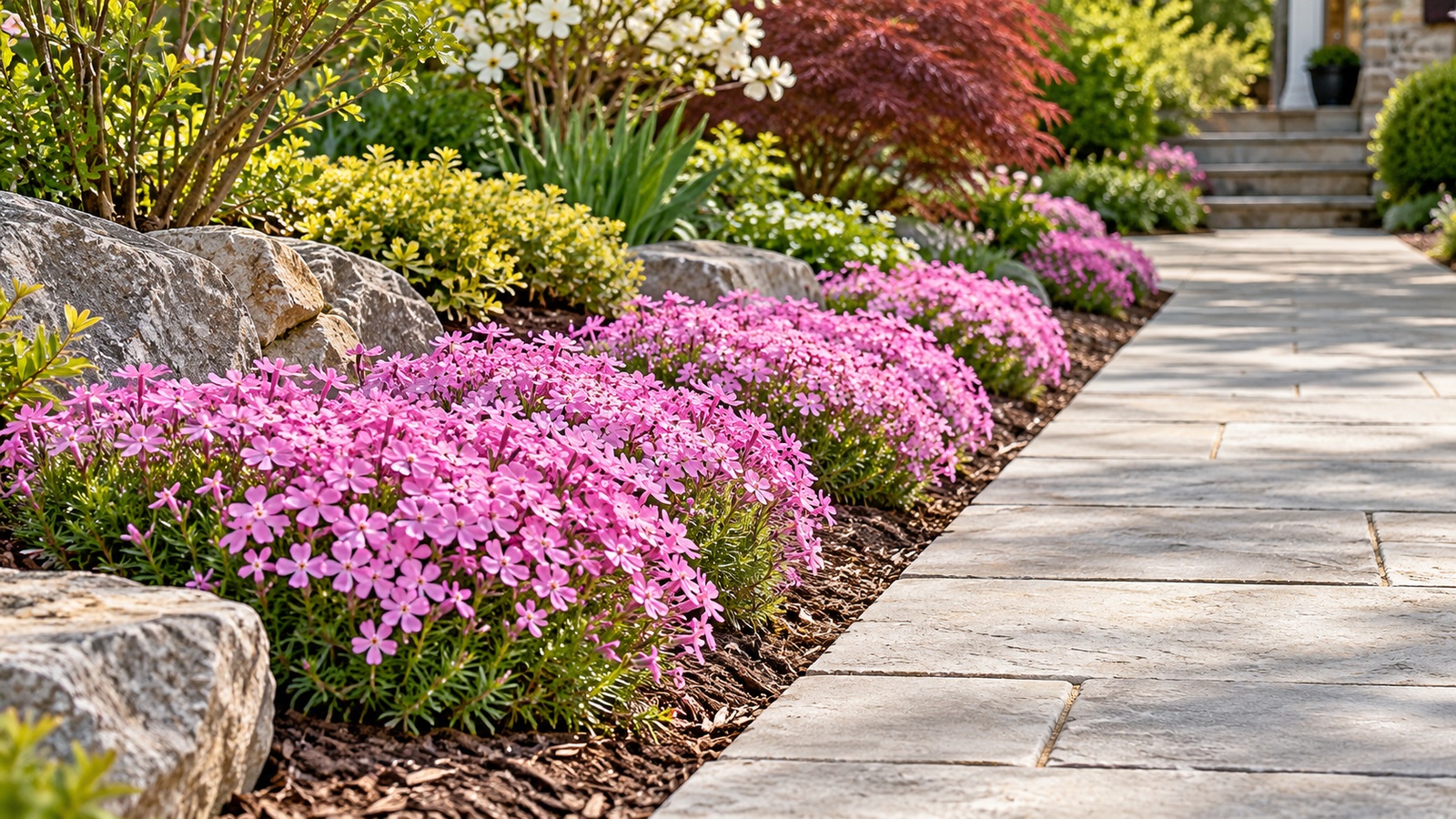
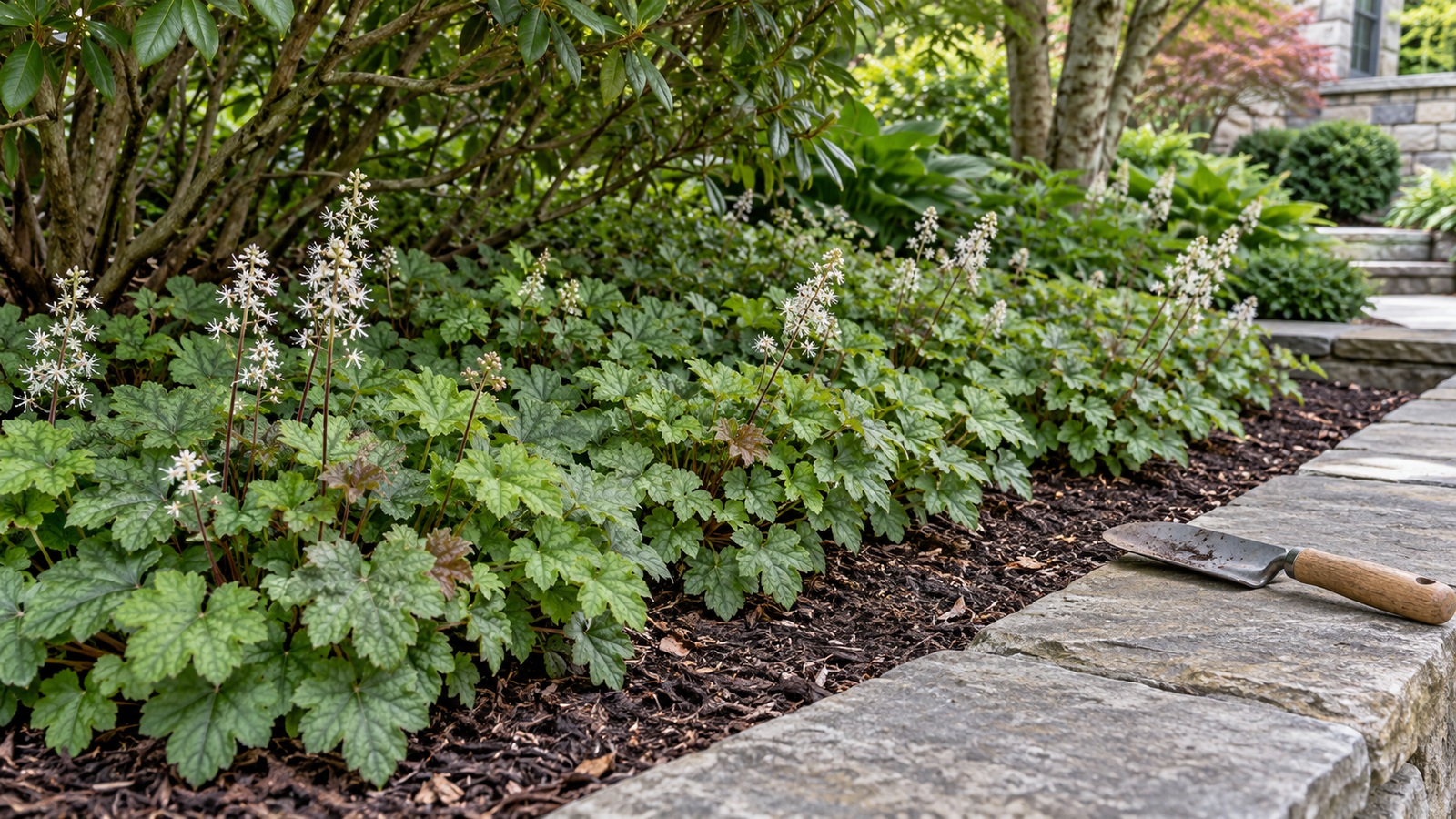
Match clumping and creeping habits to the area. Repeated clumps can form a visual layer while remaining easier to distinguish and divide, whereas spreading stems may knit open soil together more quickly. The latter can also move among desirable plants and complicate removal. For a moist shaded site in its suitable region, a plant such as foamflower may contribute an attractive low layer; a dry sunny bed requires different candidates. Choose the actual species or cultivar for the conditions rather than collecting a general list of easy ground covers.
Try a manageable section if the plant is unfamiliar in your garden. Observe its seasonal appearance, spreading behavior, and relationship with neighboring roots before extending it across a large bed. A nursery description may not reveal how the plant behaves in your particular soil and rainfall pattern. Keep records of the work the trial requires. This small test gives you a chance to change course before the maintenance problem becomes distributed throughout the whole landscape.
Prepare the Area Before New Plants Hide Existing Weeds
Remove or control established weeds before planting, using methods appropriate to the species and the site. A living cover cannot be expected to erase a perennial weed that already has a substantial root system beneath it. Avoid leaving fragments of a troublesome spreading weed where they can regrow among the new plants. Where suitable, a planned no-till preparation period may reduce disturbance and help manage unwanted growth, but it still requires species-specific judgment. Identify the weeds and choose a workable preparation method before covering the area with new foliage. Starting with a clean accessible surface makes later spot removal far easier than searching through an established mat for a problem that was present from the beginning.
Install for Mature Coverage Rather Than Immediate Crowding
Use spacing based on the selected plant's mature dimensions and growth habit. Buying extra plants to force instant closure can create competition, disease-prone crowding, or unnecessary division later. Spacing too widely, on the other hand, leaves large gaps that need longer interim care. Balance the budget with the period you can spend weeding and watering while the planting fills. The appropriate number comes from the bed's usable area and the chosen cultivar, not from a universal plants-per-square-foot promise.
Set plants at appropriate depth and protect crowns or stems from being buried by surrounding mulch. Water the root zone thoroughly after planting and monitor it during establishment. A plant advertised as drought tolerant generally still needs suitable moisture while its roots are developing. Adjust care to rainfall and soil conditions instead of applying the same schedule to every new bed. The first season often determines whether the future ground layer becomes dense and healthy or remains a collection of weak scattered plants.
Keep the Establishment Period Short, Regular, and Observable
Inspect the new area frequently enough to catch weeds while they are small. Open gaps are still receiving light and can support unwanted seedlings even when the intended plants are growing well. Remove competitors carefully without disturbing the developing roots. A brief regular visit usually requires less effort than a long rescue session after the bed has been neglected. The planting may look attractive from the house while still needing attention close to the soil surface.
Track moisture at the roots rather than relying only on the appearance of the leaves. Different parts of a bed can dry at different rates, especially near tree roots or reflective paving. Water where needed and investigate persistent wetness or repeated wilting. Replacing a failed plant without correcting the conditions can restart the same problem. Establishment care should teach you how the site behaves, helping you refine the planting rather than simply repeat an unsuccessful action.
Maintain temporary suitable coverage between plants when needed, using mulch in a way that does not bury crowns or prevent intended spreading. Keep the bed edge and access routes clear so inspection remains easy. As the plants connect, reassess which temporary measures are still useful. The routine should gradually change with the planting, rather than continuing every installation task indefinitely. The point at which coverage improves is also the point to check that the chosen plant is staying inside its planned role.
Design Access and Boundaries That Save Future Effort
Leave paths, stepping locations, or reachable margins for pruning shrubs, checking irrigation, and removing occasional weeds. A continuous ground layer can become inconvenient if every routine job requires stepping onto it. Keep utility covers and frequently used routes clear. Access is part of a lower-maintenance design, not an afterthought added when the plants are already mature. A modest unplanted strip can save repeated damage and awkward work within the bed.
Adopt a Seasonal Routine Instead of Expecting No Care
Once established, inspect the planting at useful seasonal intervals and after unusual weather. Remove unwanted seedlings, monitor spread, and address damaged or declining patches before they become large gaps. Some ground layers need occasional division or trimming, while others benefit from leaving healthy foliage largely undisturbed. Follow the selected plant's needs instead of cutting every species to a uniform surface. A clear routine prevents small maintenance needs from becoming a reason to remove the entire planting later.
Leaf litter and spent foliage should be managed according to the planting and the site. A light seasonal layer may be compatible with some woodland plants, whereas a heavy compacted blanket can smother small crowns. Avoid stripping the whole bed simply because a few areas need attention. Inspect what is happening below the accumulated material and remove selectively when appropriate. Thoughtful cleanup can preserve both plant health and the reduced disturbance you wanted from a living ground layer.
Measure the Saving Before Expanding the Project
Compare the mature bed's care with the original chore you identified. Count visits, time spent weeding, replacements, watering demands, and any new containment work. A planting can look successful while shifting effort into a task you find even less convenient. Record what improved and what remains difficult. This practical comparison gives you evidence for whether to repeat the design in another area or choose a different solution there.
Allow for seasonal variation when making that judgment. A dense summer surface may open during dormancy, and a particularly wet or dry year can reveal limits that were invisible in the first season. Keep the scale of expansion proportional to what you have learned. Lower maintenance usually results from a plant and a site working well together over time, not from choosing the fastest spreader available. Patience at the beginning can reduce repeated correction later.
A successful ground-cover project leaves the garden easier to use as well as easier to look at. You can reach what needs attention, recognize unwanted growth, and manage the selected plants within a reasonable seasonal routine. The bed still has living processes and occasional demands, but they no longer compete so heavily with the rest of your gardening. That is a useful outcome even if the surface is never perfectly uniform. Expand the idea where the same practical advantages can be achieved, while preserving flexibility elsewhere.
Plan the Weed-Management Transition
Review University of Maryland Extension’s nonchemical weed-management guidance when preparing the site. Choose accessible maintenance tools through Garden Product Reviews after defining the planting’s seasonal routine.