Choose a Living Edge That Keeps the Path Clear
A low planting beside a walkway can soften stone, connect a path to the garden, and make its route feel intentional. The effect works best when the plants stay within a role the space can support. Their height, mature spread, seasonal appearance, and response to nearby heat or shade matter as much as flower color. Edging is also different from planting between stepping stones or creating a walking surface: a plant can look beautiful along a path while being unsuitable for repeated footsteps. Start with the usable width of the route and the conditions on its garden side, then choose a ground layer that leaves comfortable passage. A sunny stone edge might suit creeping thyme or moss phlox, while a shaded moist border calls for a different plant. The best choice gives the path definition without turning every walk into a brush through foliage or every maintenance visit into a trimming job.
A: Edging grows beside the route; between-stone planting requires a separate plan for foot placement and traffic exposure.
A: No, give thyme freely draining conditions rather than expecting it to thrive in a persistently wet concrete-side strip.
A: No, its spring flowering peak is seasonal, so consider the needlelike foliage that remains afterward along the walkway.
A: No, verify the particular stonecrop's mature spread, hardiness, and growing requirements before assigning it a narrow edge.
A: Suitable shade and moisture-retentive draining soil favor foamflower, with the specific cultivar and regional conditions also checked.
A: Exposure, runoff, reflected heat, and root competition can vary substantially between different sections of the same pathway.
A: Set plants back far enough for mature leaf reach while keeping the step edge visible and passage clear.
A: A smaller suitable plant or relocation usually reduces work more effectively than repeatedly trimming oversized foliage from passage.
A: Examine compaction, fill, drainage, root space, light, and traffic damage before replacing plants in the same margin.
A: Check during normal use with mature foliage, after rain, and outside peak flowering to assess lasting practicality.
Measure the Path Before Choosing the Plant
Determine how much clear width the route needs for the way it is used. A garden stroll, a wheelbarrow route, and a frequently used entrance have different demands. Account for mature leaves and flowering stems, not just the small nursery pot you see today. Place the planting far enough back that its expected spread does not narrow the route uncomfortably. If the bed is too shallow for a suitable mature plant, a restrained hard edge may be more practical than forcing foliage into the passage.
Look at turns, steps, gates, and points where people need to see ahead. A low ground cover can still conceal a step edge or spill across a narrow corner. Keep those areas readable and leave room to open gates fully. Consider whether maintenance equipment or mobility needs make a clear surface especially important. A living edge should support the path's function, and the planting can become richer in wider areas where extra spread is less likely to interfere.
Observe the Microclimate Along the Paving
Paving can create conditions that differ from the rest of the bed. Stone and concrete may reflect heat, nearby walls may intensify exposure, and a roof or tree canopy can create dry strips beside otherwise moist soil. Water can also collect along a low edge after rain.
Observe several points rather than assuming that the whole route offers one uniform site. A plant chosen for sun and drainage will behave differently where the path enters shade or a persistently wet hollow.
Divide the edging into coherent sections if those conditions change substantially, using compatible transitions instead of asking one species to tolerate every extreme. Note the way the route is cleaned as well: repeated sweeping, edging equipment, and winter maintenance can affect plants at the boundary. Place vulnerable growth where routine work will not continually abrade it.
If the margin receives deicing runoff, seek local advice about appropriate plants and site management rather than assuming that an ordinary border selection will tolerate it. A small setback or different material at a frequently worked section can protect the overall design without making the whole path feel harsh.
Choose Creeping Thyme for a Suitable Sunny Edge
Low creeping thyme selections can provide small leaves, seasonal flowers, and a fine-textured edge in sunny well-drained conditions. Thymus praecox is one commonly used low ground-cover option, but cultivar details still matter. Some plants make denser or differently colored patches than others, and their mature dimensions should guide placement. Use the nursery's full name to confirm the expected habit. A general label saying thyme is less informative than a named selection whose role and regional performance you can evaluate.
Keep thyme out of continuously wet soil and away from neighbors that will overwhelm it with shade. The attractive low canopy depends on healthy growth at the roots, rather than repeated trimming to compensate for a poor site. A path margin with adequate sun can be useful, but reflected heat and a thin dry strip may demand establishment care. Water new plants appropriately until roots develop. A mature tolerance description should not be interpreted as permission to abandon freshly planted plugs.
Do not rely on thyme edging as a heavily traveled surface. Occasional incidental contact and routine foot traffic are different pressures, and the plant's low height does not establish universal durability. Keep the main route on paving and allow the thyme to occupy the soil beside it. If you want plants between stones, choose that separate design intentionally and provide solid stepping locations. The goal is a soft visual margin with enough protected space for the foliage to remain attractive.
Use Moss Phlox for a Flowering Mound Beside the Walk
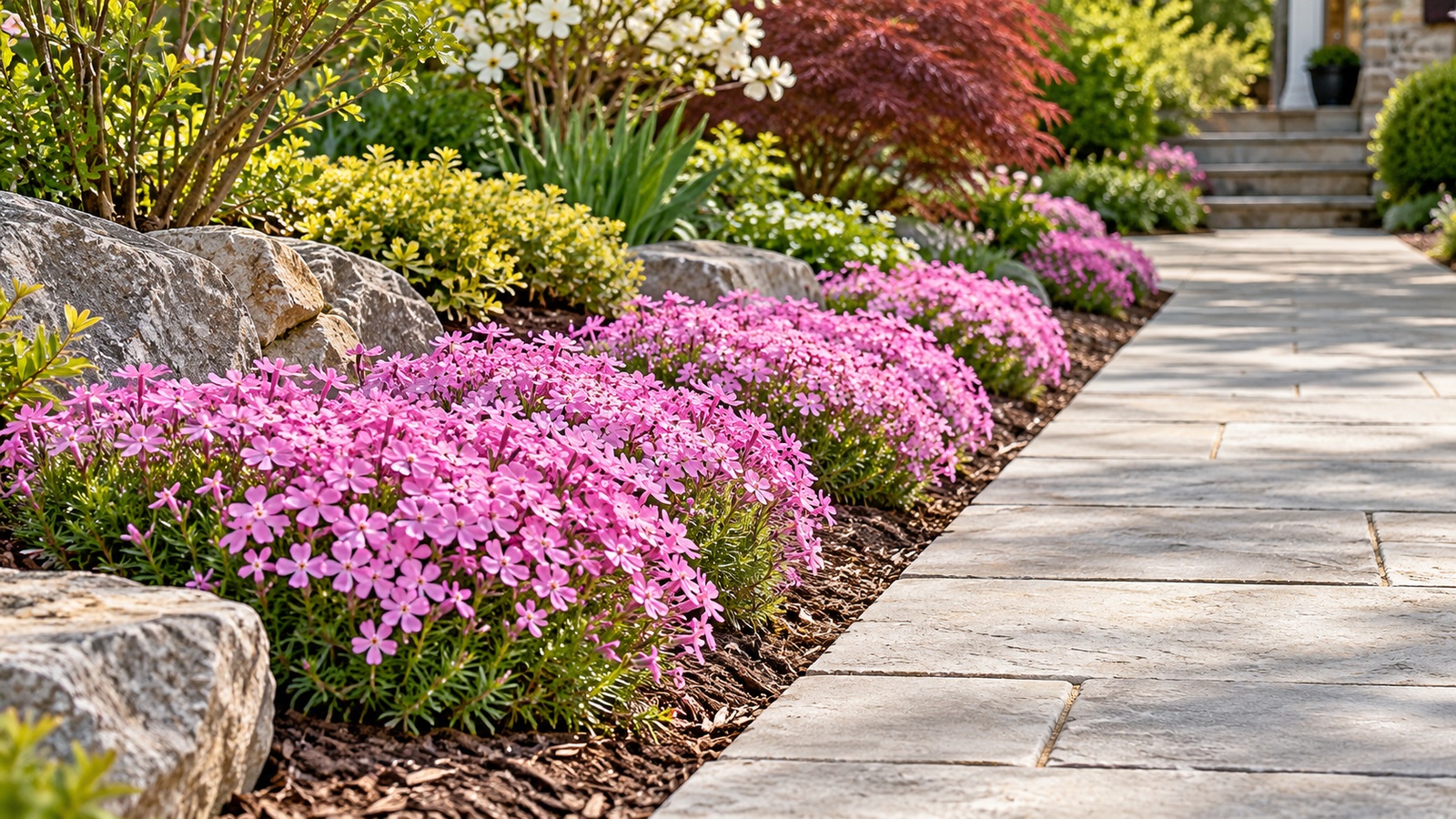
Moss phlox, Phlox subulata, offers low needlelike foliage and a conspicuous spring flowering display in suitable sunny conditions. It can create a soft mound at the side of a walkway, on a slope, or near a rock edge. Leave room for its mature spread instead of installing it flush against a narrow walking surface. The spring color may dominate the scene briefly, while foliage carries the edging afterward. Plan the plant's role across that longer period rather than judging it only from a photograph of peak bloom.
Choose a draining site and check regional growing guidance before planting in quantity. The plant's low habit can tempt gardeners to put it wherever a gap exists, even when that gap is shaded or wet. Match the actual conditions and allow access for occasional care. If foliage or stems extend onto the route, respond appropriately before the path becomes awkward. A defined planting margin helps keep the flowering effect deliberate while preserving the line of the walkway.
Compare Low Stonecrops by the Actual Selection
Low stonecrops can supply succulent foliage and seasonal flowers for sunny well-drained edging, but the group includes a wide range of habits. Some spread rapidly, others remain smaller, and foliage can differ in color and texture. Confirm the species or cultivar, regional hardiness, and mature dimensions before choosing one for a narrow strip. A plant described as sedum may belong to a renamed genus on a botanical label, making the full identity useful. Select for the space rather than assuming that every succulent sold together is interchangeable.
The fleshy leaves contrast with a rough stone path, yet they can be damaged by repeated contact and trampling. Keep the plant outside the primary traffic area and avoid a spot that stays saturated. A shallow hot edge may look well drained while offering too little root space, so inspect the soil beneath the surface. Establish new plants appropriately and monitor for gaps or stress. Decorative foliage does not remove the need for a usable growing zone.
Check local invasive or nuisance-spreading guidance as part of the selection. A fast stonecrop that escapes into neighboring cracks can add more cleanup than a slower plant would. Do not choose speed simply to hide the edge immediately. A short trial section lets you observe the selected plant beside the actual paving and nearby vegetation. Its performance there is more useful than an assumption based on another species with a similar common name.
Give Shaded Paths a Different Ground-Layer Palette
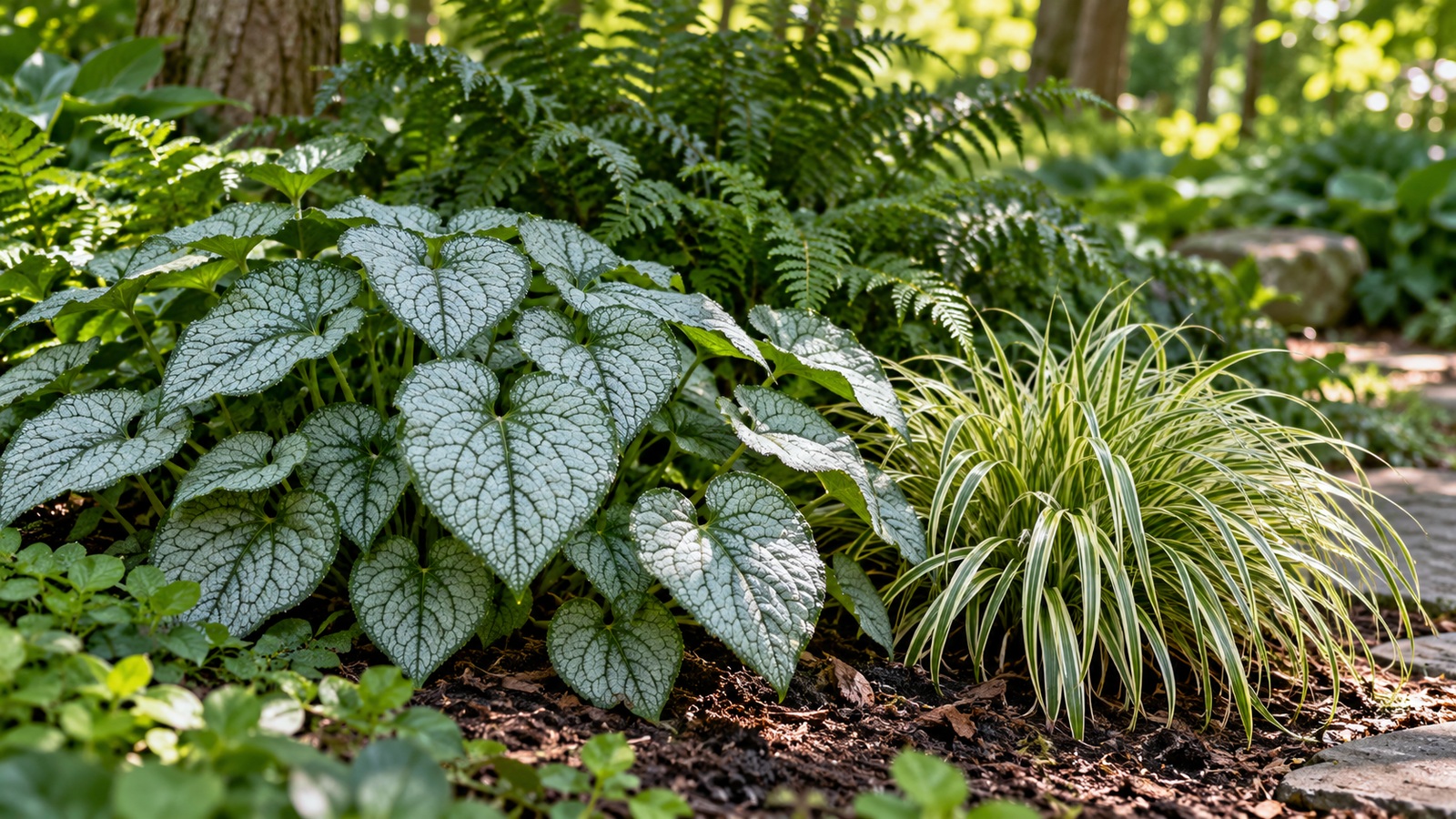
Where a path passes through suitable shade, foamflower can offer low foliage and delicate seasonal flower stems. Tiarella species and cultivars vary in clumping or spreading habit, so select for the intended coverage rather than using the name alone. A moist, draining woodland-style bed may support it more naturally than a hot exposed strip. Verify local suitability and the conditions of the root zone. Shade beneath thirsty tree roots can require a different candidate from shade in a consistently moist garden.
Appropriate low sedges can provide another shaded-path option, especially where fine arching leaves suit the design. They are grasslike in appearance, but the requirements and mature spread differ among species. Choose a regionally suitable sedge that fits the available width and moisture. Leave the leaf tips enough room without letting them obscure the route. A repeated clumping edge may be easier to manage than a vigorous mat when the path passes through a mixed perennial bed.
Create an Edge With Repetition and Breathing Room
Use a small number of compatible plants and repeat them clearly along the route. A single appropriate ground cover can give a short path continuity, while a longer walk may benefit from a deliberate change where the light changes. Avoid alternating many unrelated plants merely to include every attractive nursery choice. Leave openings where access, drainage, or a step needs to remain visible. The eye can follow a coherent planting even when it is not an unbroken ribbon. These breaks often make the edging more practical and prevent a visually soft margin from becoming a physical obstruction.
Plant and Maintain the Margin Without Losing Its Line
Prepare the soil-side strip by addressing existing weeds and evaluating compaction or drainage. A narrow bed beside construction can contain poor fill, shallow soil, or buried debris that affects establishment. Correct practical problems before adding plants, and keep new crowns at appropriate depth. Space for mature growth rather than an instant tightly packed border. Suitable temporary mulch can help manage gaps while leaving the plants' stems or crowns clear.
Inspect the edging through its first growing season and after unusual weather. Water according to the selected plant and the actual root conditions, then remove small weeds before they become embedded in the new layer. Check whether rain washes soil onto the path or whether nearby traffic is repeatedly damaging foliage. Those observations may call for a planting setback or a clearer physical boundary. The best adjustment addresses the cause instead of continually replacing the same damaged plant.
As the edge matures, tidy it according to the species and season rather than shearing every plant into one identical shape. Some ground covers tolerate appropriate trimming, while others are better managed by selective removal or division. Keep flowers, leaves, and spreading stems off the necessary walking surface. A clear path line makes a looser natural planting look intentional. It also gives you a simple reference for noticing when the border needs attention.
Judge the Best Choice During Ordinary Use
Walk the route when plants are mature, after rain, and outside the main flowering period. Notice whether passage remains comfortable and whether the edge still looks coherent. A plant that performs beautifully in spring but constantly blocks a gate in summer may need relocation. Keep records of the care each section requires and use that experience before expanding the same planting elsewhere. The best pathway ground cover is a reliable partner to the route, not merely the prettiest bloom at purchase time.
Successful edging brings the garden close enough to enjoy without asking people to push through it. Creeping thyme, moss phlox, suitable low stonecrops, foamflower, or selected sedges can each accomplish that in the right place. Their differences are useful because paths pass through different conditions. Choose for mature fit, protect the growing space, and preserve the route's function as the planting develops. The resulting edge can feel both softer and clearer, making the walkway a comfortable part of the garden throughout the year.
Match the Edge to Its Growing Conditions
Review University of Maryland Extension’s moss-phlox guidance for one sunny edging option. For installation and trimming tools, visit Garden Product Reviews with the selected plant’s maintenance needs in mind.