Make the Ground Layer Useful to Both Garden and Kitchen
Picking a berry or a few herb sprigs from a low planting can make an ordinary garden edge feel more useful. Edible ground covers offer that pleasure while also contributing foliage, flowers, and some coverage of exposed soil. They are not interchangeable with every ornamental mat, however, and their food value changes the way you choose and manage the site. You need a positively identified edible plant, appropriate growing conditions, clean access, and a realistic expectation of the harvest. A strawberry patch, a culinary thyme grouping, and a seasonal spread of nasturtiums each cover ground differently and ask for different care. None becomes a productive crop simply because it stays low. Plan the planting around the food you will actually use and the garden conditions you can provide, then give it enough space and attention to remain healthy rather than treating the harvest as an automatic extra.
A: No, identify the species or cultivar and confirm culinary suitability because creeping thyme selections differ in flavor and use.
A: Yes, the leaves provide interest between crops, while runner control, moisture checks, and harvest access still require attention.
A: No, some selections remain clumping; verify the named cultivar before expecting runners to fill the surrounding gaps.
A: Not necessarily, because cultivar and flowering height affect path clearance beyond the low foliage visible early in growth.
A: No, frost ends their annual coverage, so plan another use for the space after the summer foliage disappears.
A: No, they need suitable acidic soil and climate; test the site and follow regional growing advice before planting.
A: No, investigate suspected contamination in the growing site rather than assuming washing makes its harvested produce suitable.
A: Only use products labeled for that edible crop and purpose, following all directions and required harvest intervals.
A: Use separate paths or stepping stones because repeated trampling can damage food plants and complicate clean harvesting.
A: Compare useful harvest, seasonal appearance, and maintenance over a complete growing cycle before increasing its planted area.
Define What You Mean by Edible Coverage
A ground cover usually refers to a low plant or grouping that occupies the soil surface, but edible candidates do not all form the same kind of carpet. Strawberries can spread by runners, low herbs may develop woody or branching patches, and trailing annuals can cover space for one growing season. Some selections remain distinct clumps even when repeated closely enough to create a continuous visual layer. Decide whether you need permanent foliage, seasonal filling, or a narrow harvestable edge. The answer helps prevent choosing a plant for a job it cannot perform.
Food production also ranges from occasional seasoning to a meaningful fruit harvest. A small thyme patch may provide useful sprigs without becoming a large supply, while strawberries need a more deliberate crop-care routine if berries are the main goal. Do not equate rapid leaf coverage with high yield. Light, cultivar, pollination, water, and pest pressure can influence the food available from the same attractive planting. Set an expectation that suits the area rather than promising that every low plant will replace a vegetable bed.
Use Strawberries Where Fruit and Access Can Work Together
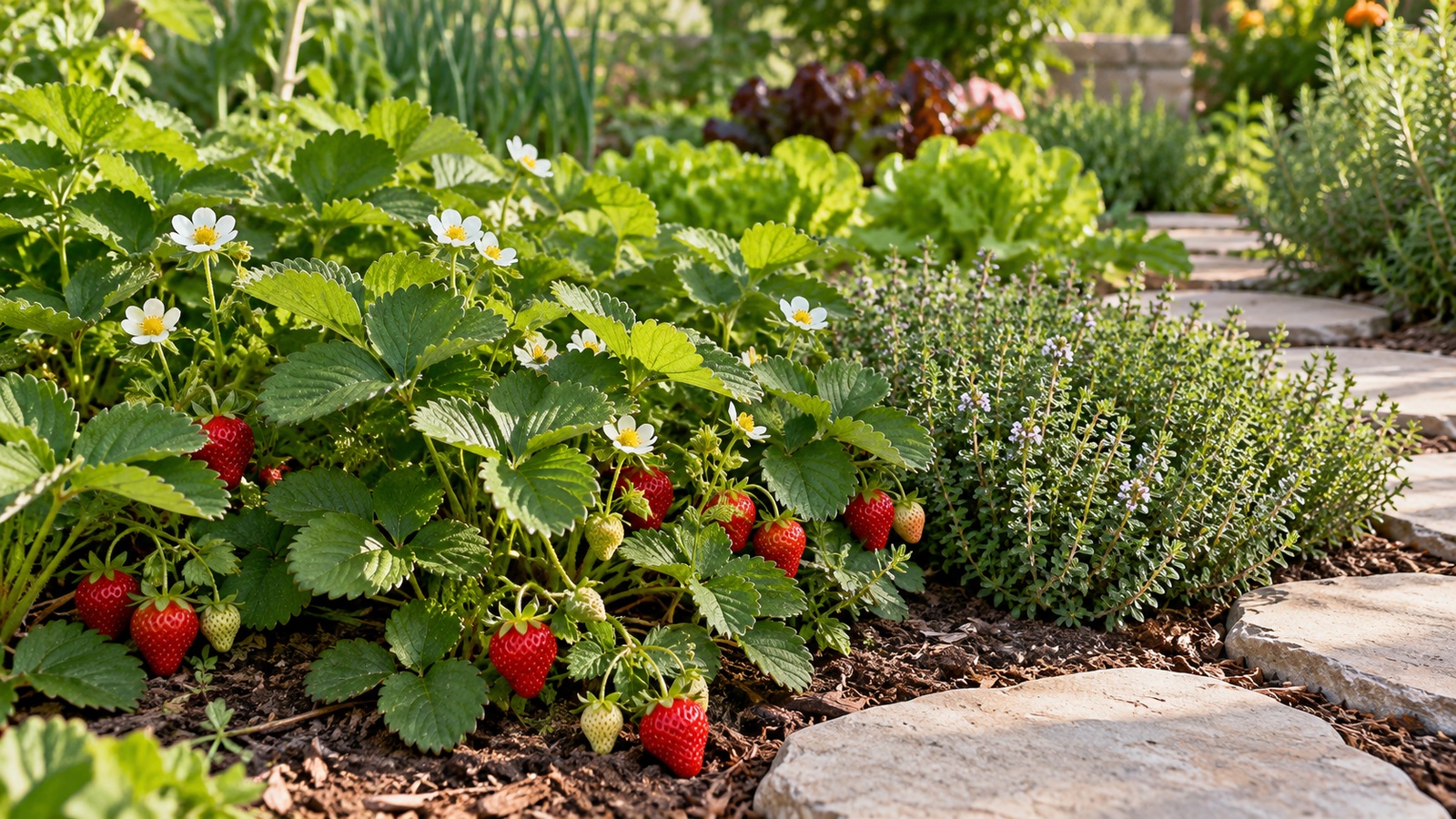
Cultivated strawberries are familiar edible plants that can provide attractive low foliage as well as fruit. Choose a known variety suited to the region and the harvest pattern you want. June-bearing and day-neutral types differ in seasonal production and management, so their names carry practical information beyond flavor. Alpine strawberries offer another option, with small fruits and a growth habit that varies by selection. Some alpine cultivars remain clumping rather than sending out the vigorous runners associated with other strawberry types.
Give a fruiting strawberry planting enough sun, appropriate moisture, and drainage. A low shaded corner may look like an ideal place for green coverage while producing disappointing berries. Follow local recommendations for crown placement, spacing, and first-season flower management instead of borrowing an ornamental planting routine. The plants' shallow root system makes competition and irregular water particularly relevant. A healthy patch needs attention even if the leaves appear to have filled the space attractively.
Keep the patch reachable from a path or stepping stones so fruit can be harvested without crushing plants. Manage runners according to the selected production system and prevent the bed from becoming an inaccessible tangle. Suitable mulch can help keep fruit off bare soil and reduce some maintenance, but it does not eliminate weeds or pest monitoring. Examine berries before harvest and leave damaged or deteriorating material out of the kitchen. A tidy small patch that you visit often is usually more practical than a sprawling food planting you rarely enter.
Select Culinary Thyme for a Low Herb Layer
Thyme can provide low aromatic foliage in a sunny, well-drained site, but choose a known culinary species or cultivar from a reliable supplier. Thymus vulgaris is familiar common culinary thyme; low creeping selections vary in habit, flavor, and suitability. A plant sold merely as decorative creeping thyme should not be assumed to offer the same kitchen qualities as identified culinary stock. Check the label and the supplier's intended use before tasting. The strongest choice connects botanical identity, growing conditions, and the seasoning you want.
Well-drained soil is especially important when using thyme as a ground layer. A persistently wet depression that supports moisture-loving plants is a poor place to force a Mediterranean herb simply because its height looks right. Keep competing larger foliage from shading the patch heavily and allow the plant's mature form to remain visible. Harvest modestly from healthy growth rather than stripping the entire low canopy. A useful kitchen supply depends on retaining enough foliage for the plant to continue growing.
Let Oregano Spread Where Its Habit Is Welcome
Known culinary oregano, including appropriate Origanum vulgare selections, can contribute low spreading growth and useful leaves in a suitable sunny garden. Its height and vigor vary, so verify the actual cultivar before assigning it a narrow edging role. Some plants become taller when flowering and may need a different place from a very flat ground cover. Plan room for that seasonal change instead of repeatedly cutting the plant simply to make it behave like something else. A harvestable herb grouping can remain attractive without becoming a perfectly level carpet.
Flavor and identity deserve attention when shopping for oregano. Ornamental relatives and similarly named herbs may be selected for flowers or habit rather than the culinary character you expect. Buy specifically identified kitchen stock and keep it separate from unidentified ornamentals if the garden contains both. A nursery label is a useful starting point, but preserve the full plant name in your own records. Clear identification keeps harvesting decisions straightforward after several herbs have grown together.
Give spreading oregano a boundary where its expansion remains manageable. A defined bed, substantial pot, or accessible herb strip may work better than allowing it to mingle freely among small slow-growing perennials. Clip usable sprigs at an appropriate stage and monitor the plant's reach through the season. Harvesting can contribute to maintenance, but it should not be treated as a guaranteed containment system. When food and ornament share the same patch, both roles still need a deliberate plan.
Use Trailing Nasturtiums as Seasonal Edible Fill
Nasturtiums, Tropaeolum majus, can supply edible leaves and flowers along with seasonal coverage when a suitable trailing variety is grown. Their round leaves and bright blooms offer a very different appearance from a perennial herb patch. Choose the habit deliberately because compact and trailing selections do not occupy the same space. In frost-prone climates, expect a seasonal display rather than permanent winter coverage. A bed that relies on them also needs a plan for the period after the plants finish. Keep trailing stems from obscuring the path that lets you reach other crops, and inspect the foliage before gathering a small kitchen harvest. Pick from clean healthy growth and wash edible material appropriately before use. Their value may be a few peppery leaves or flowers for a meal rather than a bulk food supply. That modest role works well when the surrounding design still allows easy access and enough room for neighboring plants to develop.
Consider Lowbush Blueberries Only Where the Soil Fits
Lowbush blueberries, such as Vaccinium angustifolium, can form a low fruiting colony where climate and acidic soil conditions suit them. They are not a universal substitute for ordinary ground covers, and a plant's attractive height does not overcome an unsuitable soil pH. Test the soil and consult regional fruit-growing guidance before investing in a large planting. Establishment, pollination, and cultivar selection influence fruit production. The site should serve the crop's actual biology rather than merely the outline you want on a planting sketch.
Think of this choice as a small fruit planting with ornamental benefits. Leave access for care and harvest, and anticipate wildlife interest in the berries. A colony may take time to establish and should not be judged against a fast-growing annual's first-season coverage. Avoid assuming that adding a little acidic amendment will permanently correct every soil. Where the underlying site is unsuitable, a different edible plant or a separate managed growing system may be the more workable decision.
Separate Food-Growing Areas From Avoidable Contamination
Choose a harvest site that is away from routine pet toileting, contaminated runoff, and other obvious sources of unwanted exposure. A narrow strip beside a busy driveway may be convenient ornamentally but less appealing for low berries and leaves that you intend to eat. Consider how irrigation water reaches the crop and what soil history is known. If contamination is suspected, seek appropriate local guidance and testing rather than relying on an attractive surface appearance. Washing produce is useful food handling, but it does not correct every unsuitable growing-site condition.
Manage treatments as you would for a food crop. A pesticide or other product suitable for an ornamental bed is not automatically labeled for use on an edible plant. Follow the label for the crop, application, and harvest interval when any such product is used. Keep fertilizers and maintenance materials from being applied casually across mixed beds without checking their intended use. A clear food-growing area makes these decisions easier for everyone who helps in the garden.
Harvest only plants you can positively identify and only the appropriate edible parts. Similar-looking weeds and ornamentals can grow through a low patch, so do not gather leaves simply because they occur near the intended herb. Retain plant labels or records and remove unwanted growth carefully. This article describes cultivated known food plants, rather than providing a shortcut to identifying wild lookalikes. If identity is uncertain, leave the material out of the kitchen until a reliable identification is available.
Design for Harvesting Instead of Foot Traffic
A ground cover's low stature does not make it a walking surface. Repeated trampling can damage foliage, compact the soil, and leave an edible patch less productive or less clean. Place stepping stones or adjacent paths so routine travel stays off the plants. Leave enough reach to collect food without stretching across the bed or standing on its crowns. An accessible layout encourages frequent observation and harvest, which can improve the usefulness of a modest planting.
Plan neighboring plants around shared conditions rather than combining every edible candidate in one decorative mosaic. Thyme's preference for drainage and sun differs from the conditions needed by some fruiting ground layers. Separate compatible groups and leave space to maintain each one. A few clear patches are easier to identify, water, and harvest than a mixed tangle of leaves. The design can remain attractive while acknowledging that these are crops with distinct seasonal routines.
Evaluate the Planting by Usefulness Across the Year
Keep track of what you actually harvest, how much care the patch requires, and when its appearance is strongest. The best edible ground layer may supply a handful of berries, regular herb sprigs, or a short seasonal run of flowers rather than a large pantry reserve. That contribution can still justify the space if it fits your kitchen and garden. Adjust the planting after observing a complete growing cycle instead of expanding every promising newcomer immediately. A small successful food layer is a better foundation than a large planting chosen only for the idea of free produce.
Treat the Ground Layer as a Food Crop
For strawberry management, consult University of Maryland Extension’s home-garden strawberry guidance and local recommendations. Explore access and care supplies through Garden Product Reviews after selecting a clearly identified crop and suitable site.