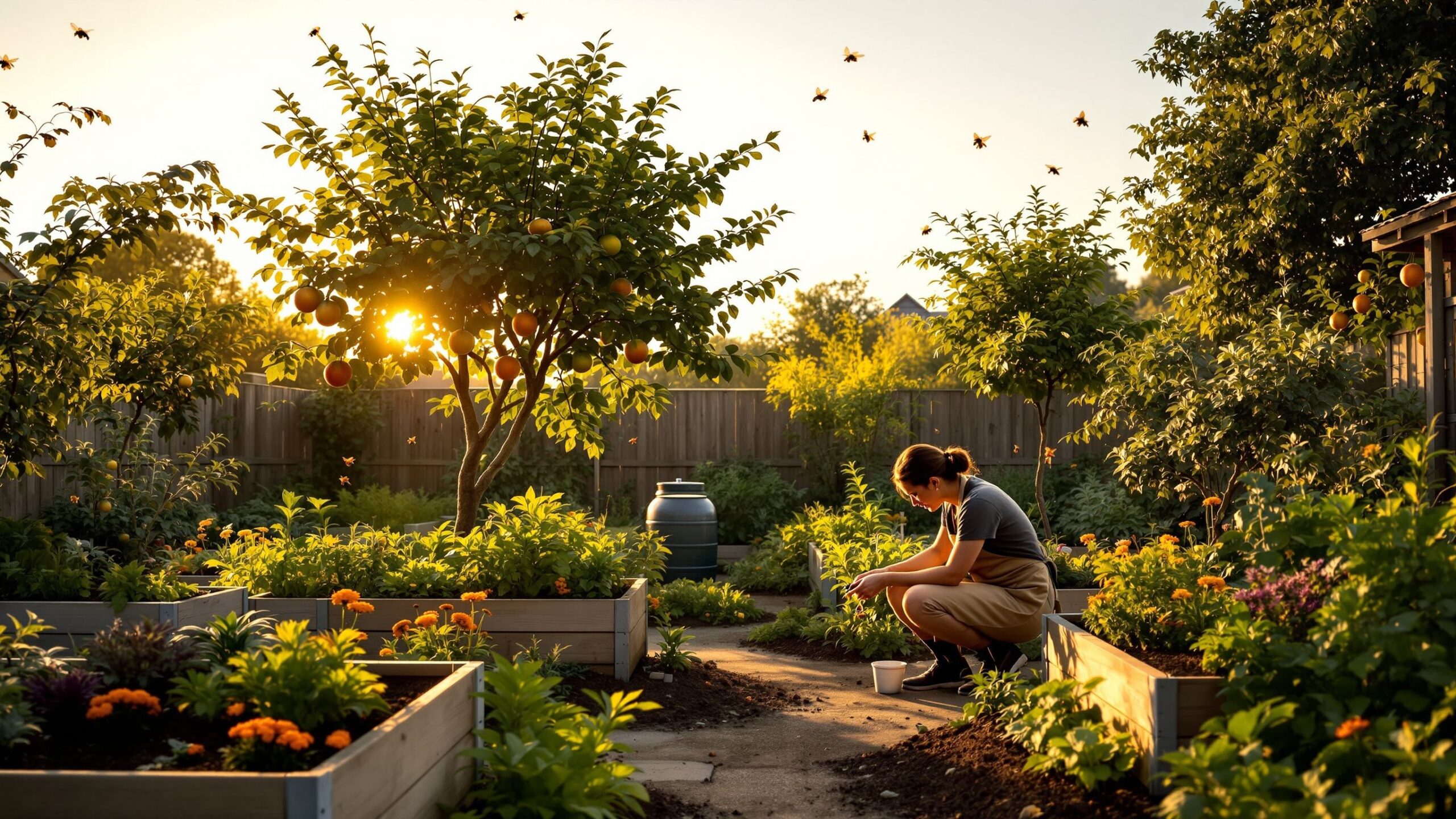
Permaculture is more than a gardening method—it’s a way of thinking, designing, and living that works with nature instead of against it. Short for “permanent agriculture” and “permanent culture,” permaculture offers a sustainable approach to food production, land management, and everyday life. At its core, it teaches us how to create systems that are efficient, regenerative, and deeply connected to the natural world. In a time when environmental challenges are growing and resources feel increasingly limited, permaculture provides a hopeful and practical path forward. Whether you have a backyard, a balcony, or simply a desire to live more sustainably, understanding permaculture principles can transform how you interact with the world around you.
A: It is a way of designing gardens and spaces so they work like healthy natural ecosystems.
A: No, it can be used in small yards, community gardens, and even container spaces.
A: Not exactly, but it aims to reduce long-term labor by designing smarter systems.
A: Watching sunlight, water, wind, and soil conditions helps you make better design decisions.
A: A mix of native plants, useful perennials, support species, and climate-suited edibles usually works well.
A: Yes, composting is a major way to recycle nutrients and reduce waste.
A: Yes, it often uses mulch, smart planting, and water-harvesting methods to conserve moisture.
A: It means choosing elements that do several jobs at once, like a hedge that offers food, privacy, and habitat.
A: No, permaculture can include annuals while also adding long-term perennial systems.
A: Yes, starting with simple steps like mulching, composting, and planting diverse species makes it very approachable.
What Is Permaculture and Why It Matters
Permaculture was developed in the 1970s by Australian ecologists Bill Mollison and David Holmgren, who sought to design agricultural systems modeled after natural ecosystems. Their vision centered on creating environments that could sustain themselves without constant human intervention. Unlike conventional agriculture, which often relies on chemicals, monocropping, and heavy resource inputs, permaculture emphasizes diversity, cooperation, and long-term ecological balance. It encourages people to observe natural systems and replicate their patterns in ways that support both productivity and environmental health. The importance of permaculture lies in its ability to provide solutions to modern challenges such as soil degradation, water scarcity, and food insecurity while promoting a deeper connection between humans and nature.
The Ethics of Permaculture
At the heart of permaculture are three guiding ethics that shape every design and decision. Earth Care focuses on protecting and restoring natural ecosystems, ensuring that soil, water, and biodiversity are preserved for future generations. People Care emphasizes the importance of supporting human well-being by creating systems that provide food, shelter, and community. Fair Share encourages responsible consumption and the redistribution of surplus, promoting balance and equity within both human and natural systems. Together, these ethics form a foundation that ensures permaculture practices remain sustainable, ethical, and beneficial on a global scale.
Observe and Interact
One of the most fundamental principles of permaculture is to observe and interact with the environment before making changes. Careful observation allows you to understand patterns such as sunlight movement, water flow, wind direction, and existing plant and animal life. By taking the time to study these natural elements, you can design systems that align with the landscape rather than working against it. Interaction involves responding thoughtfully to what you observe, adapting your approach based on real conditions. This principle highlights the importance of patience and awareness, encouraging designs that are both efficient and harmonious with nature.
Catch and Store Energy
Nature constantly generates energy through sunlight, rainfall, and organic processes, and permaculture emphasizes capturing and storing this energy for future use. Plants convert sunlight into food, rainwater can be collected and stored for irrigation, and organic waste can be transformed into compost. By harnessing these resources, you reduce dependence on external inputs and create systems that sustain themselves over time. This principle is about making the most of what is naturally available, ensuring that nothing is wasted and everything contributes to the overall health of the system.
Obtain a Yield
A key goal of permaculture is to produce meaningful results from your efforts. Whether it is food, herbs, materials, or even intangible benefits like knowledge and satisfaction, every system should provide value. Designing for yield ensures that your work is rewarding and encourages ongoing care and improvement. A well-planned garden, for example, can provide fresh produce while also enhancing soil fertility and supporting wildlife. This principle reinforces the idea that sustainable systems should not only survive but thrive and provide abundance.
Apply Self-Regulation and Accept Feedback
Permaculture systems are designed to be balanced, and this principle emphasizes the importance of monitoring and adjusting them over time. When something goes wrong, such as pest outbreaks or poor plant growth, it often indicates an imbalance that needs to be addressed. By paying attention to feedback from the system, you can make informed decisions and improve outcomes. This approach fosters resilience and adaptability, allowing systems to evolve and become more effective over time.
Use and Value Renewable Resources
Permaculture prioritizes resources that can be naturally replenished, such as sunlight, wind, water, and biological processes. By relying on renewable resources, you reduce environmental impact and create systems that are sustainable in the long term. This principle also encourages careful management of these resources to ensure they remain available for future use. Incorporating renewable energy sources and natural materials into your designs supports both ecological health and economic efficiency.
Produce No Waste
In natural ecosystems, waste is essentially nonexistent because every output serves a purpose. Permaculture adopts this philosophy by designing systems where materials are reused, recycled, or repurposed. Kitchen scraps can become compost, garden waste can enrich soil, and water runoff can be redirected for irrigation. By minimizing waste, you create more efficient systems and reduce environmental impact. This principle encourages creativity and innovation, turning potential waste into valuable resources.
Design From Patterns to Details
Effective permaculture design begins with understanding large-scale patterns before focusing on smaller details. Observing how water flows across a landscape or how sunlight moves throughout the day provides a framework for decision-making. Once these patterns are understood, you can refine your design by adding specific elements such as plant placement and structural features. This approach ensures that systems are cohesive and efficient, avoiding unnecessary complications and maximizing productivity.
Integrate Rather Than Segregate
Permaculture emphasizes the importance of connections within a system, encouraging elements to work together rather than in isolation. Plants, animals, and microorganisms can support one another when placed strategically. For example, companion planting can enhance growth and reduce pests, while animals can contribute to soil fertility. By integrating different components, you create systems that are more resilient, productive, and self-sustaining.
Use Small and Slow Solutions
Large, rapid changes can be difficult to manage and often lead to unintended consequences. Permaculture encourages starting with small, manageable solutions that can be gradually expanded over time. This approach allows you to learn from experience, make adjustments, and build confidence. Small and slow solutions are more sustainable and easier to maintain, ensuring long-term success.
Value Diversity
Diversity is essential for creating resilient systems, as it reduces vulnerability to pests, diseases, and environmental changes. A variety of plants and animals can fulfill different roles, supporting overall ecosystem health. In permaculture, diversity is not only practical but also enhances beauty and productivity. By incorporating multiple species and functions, you create systems that are dynamic and adaptable.
Use Edges and Value the Marginal
Edges, where different environments meet, are often the most productive areas in nature. Permaculture takes advantage of these spaces by maximizing their potential. Curved garden beds, for example, increase edge space and provide more opportunities for planting. This principle also encourages recognizing the value of overlooked or underutilized areas, turning them into productive parts of the system.
Creatively Use and Respond to Change
Change is a natural part of life, and permaculture embraces it as an opportunity for growth and innovation. By designing flexible systems, you can adapt to changing conditions and even benefit from them. Whether it is shifting weather patterns or evolving personal needs, responding creatively allows systems to remain effective and resilient. This principle encourages continuous learning and improvement.
Applying Permaculture in Everyday Life
Permaculture extends beyond gardening into all aspects of daily living. Simple practices such as reducing waste, conserving water, and growing your own food can have a significant impact. Over time, these actions contribute to a more sustainable lifestyle and a deeper connection with the environment. Permaculture also promotes community building, encouraging collaboration and shared resources.
Building a Permaculture Garden
Creating a permaculture garden begins with careful observation and thoughtful planning. Understanding your environment allows you to design a space that works in harmony with natural conditions. A successful garden might include a mix of vegetables, herbs, fruit trees, and beneficial plants, along with features like compost systems and water collection. The goal is to create a self-sustaining ecosystem that requires minimal external inputs while producing abundant yields.
The Future of Permaculture
As environmental challenges continue to grow, permaculture offers a practical and hopeful approach to sustainability. Its principles can be applied on a small scale in home gardens or on a larger scale in agricultural systems and communities. By adopting permaculture practices, individuals and organizations can contribute to ecological restoration and long-term resilience. The adaptability of permaculture ensures that it will remain relevant in addressing future challenges.
Final Thoughts on Permaculture Principles
Permaculture provides a framework for designing systems that are both productive and sustainable. By working with nature rather than against it, we can create environments that support life in all its forms. Understanding and applying these principles allows us to make meaningful changes, whether in our gardens, homes, or communities. Each step toward sustainability contributes to a healthier planet and a more balanced way of living.
Garden Product Reviews
Step into Mossy Streets’ Garden Product Reviews — your go-to guide for the best tools, gear, gifts, books, and garden gadgets rooted in nature. From blooming backyard beauties to lush indoor jungles, from heirloom seeds to high-tech composters, we dig into top-rated products for green thumbs, beginners, educators, and plant lovers alike. Whether you’re planting, pruning, decorating, or simply enjoying your green space, we’ve unearthed the best so you can grow, bloom, and thrive — all in one vibrant place!