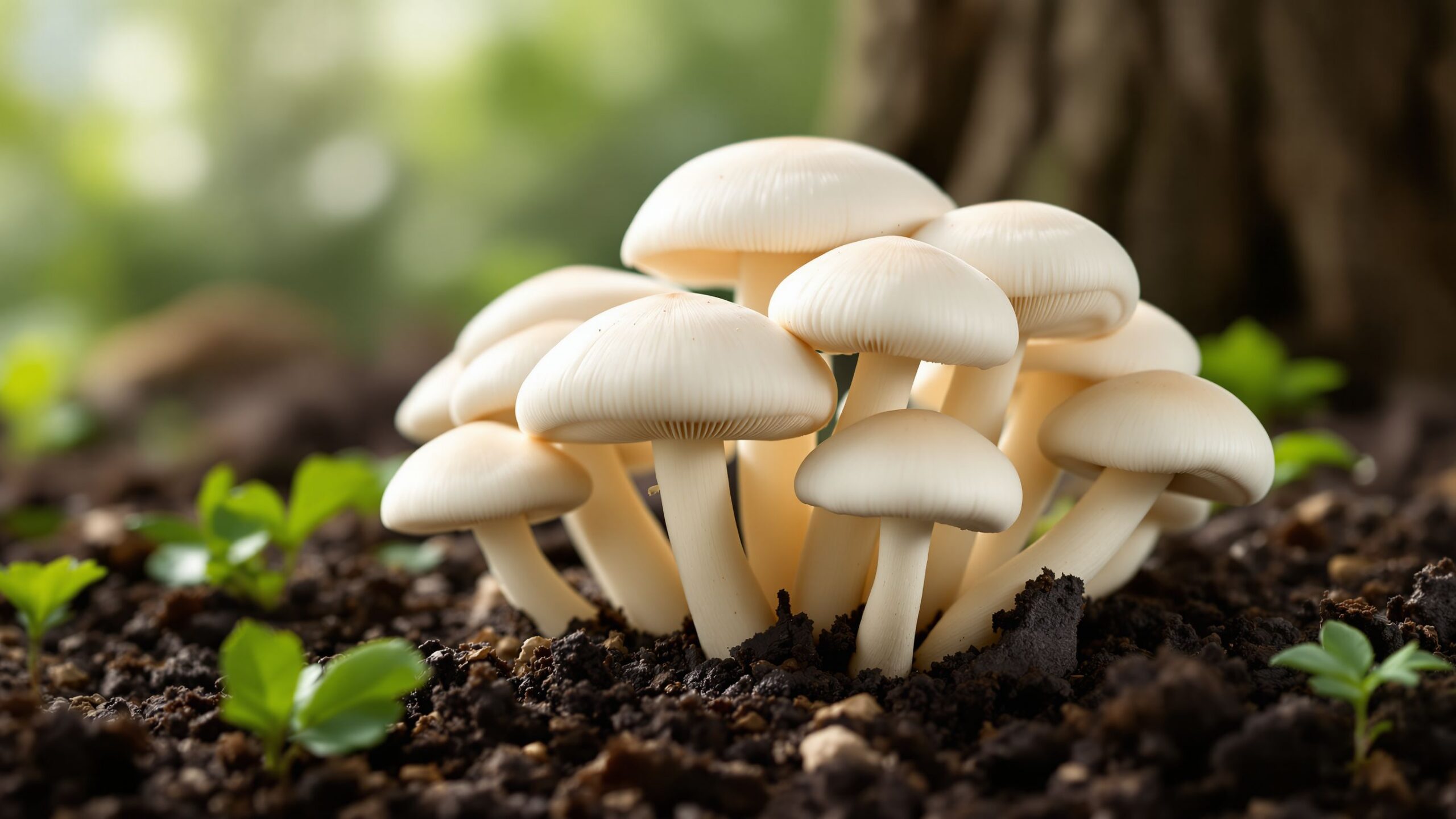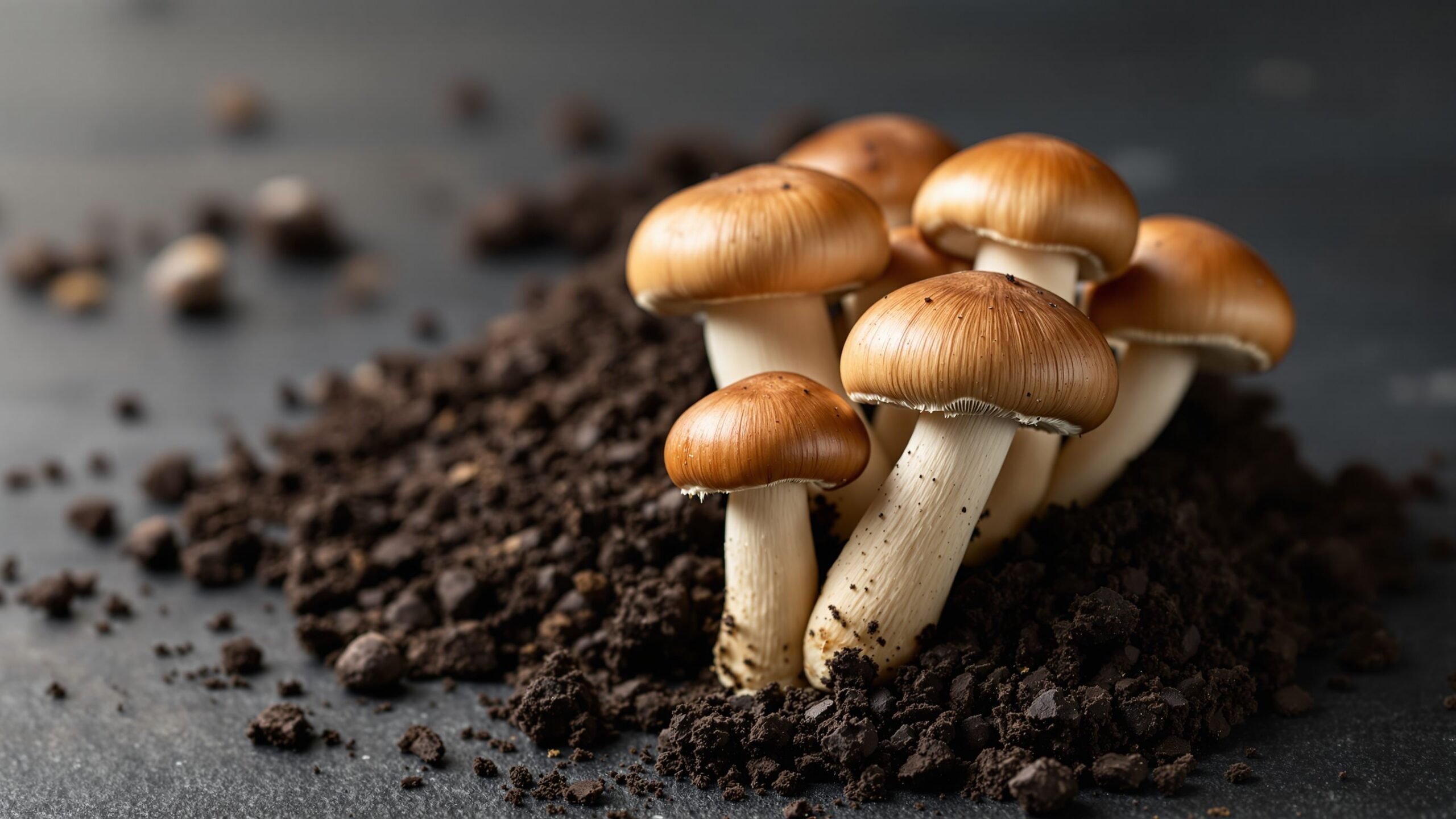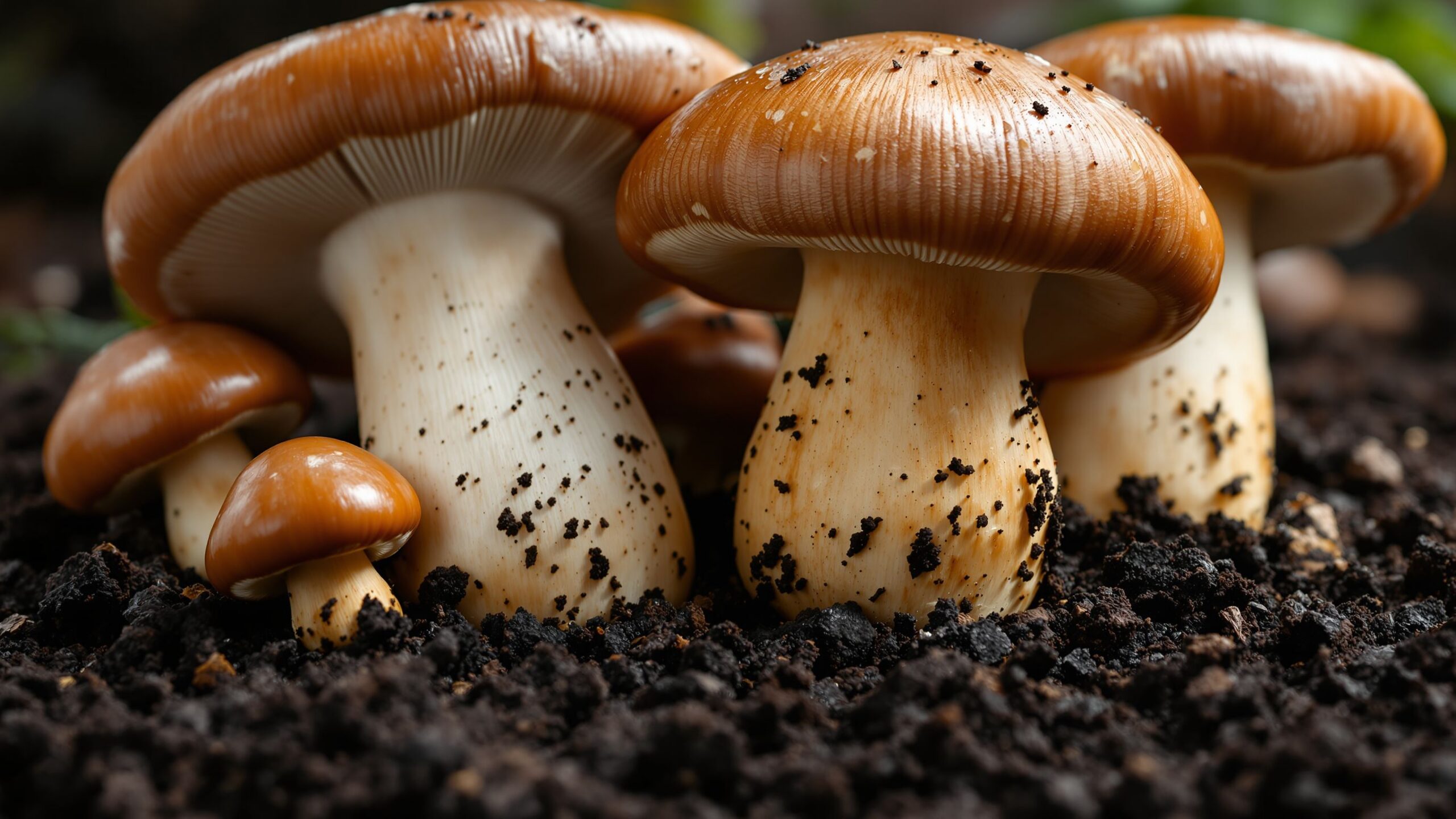
Portobello mushrooms are known for their broad brown caps, exposed dark gills, substantial texture, and rich savory flavor, but they are not a completely different species from the smaller mushrooms commonly sold beside them. Portobellos are mature brown forms of Agaricus bisporus, the same species that includes cremini, baby bella, and white button mushrooms. A brown mushroom harvested while young is generally sold as a cremini; when it is allowed to continue developing until the cap expands and opens, it becomes a portobello. This later stage of maturity gives the mushroom its larger size, stronger flavor, darker gills, and firm texture, making it useful for grilling, roasting, stuffing, sandwiches, pasta, and many other dishes.
A: They are the same species. Portobellos are harvested at a more mature stage, when their caps have expanded and opened.
A: Yes. They can be grown indoors with mushroom spawn, prepared compost, suitable casing material, and controlled moisture and temperature.
A: No. Mushrooms do not photosynthesize, so they do not require direct sunlight like garden plants.
A: They are typically cultivated in specially prepared, nutrient-rich mushroom compost.
A: Maintain consistent moisture with gentle misting while avoiding overly saturated growing material.
A: They are generally harvested once their caps have grown large and opened, exposing the dark gills underneath.
A: They can be grown in suitable protected conditions, but controlling temperature, moisture, pests, and contamination is usually easier indoors.
A: The gills darken as the mushroom matures and develops its spore-producing structures.
A: You don't have to. They are edible, although removing them can prevent their dark color from affecting certain dishes.
A: They can be, especially when using a prepared growing kit that simplifies compost, spawn, moisture, and environmental management.
What Portobello Mushrooms Look Like
A mature portobello has a large rounded or flattened cap that can reach several inches across. The surface ranges from tan and chestnut to deeper earthy brown, while the underside is lined with dark chocolate-brown gills radiating from a thick central stem. These gills are exposed because the protective veil present on younger mushrooms has already broken as the cap expanded. The stem is edible but can become tougher and more fibrous with age. Portobello, portabella, and portobella are all commercial spellings for the same mushroom; regardless of the label, the scientific species remains Agaricus bisporus.
Portobellos, Cremini, and White Button Mushrooms
Portobellos and cremini mushrooms are essentially different maturity stages of brown Agaricus bisporus. Creminis are harvested young while their caps are smaller and more compact, whereas portobellos remain in the growing bed long enough for their caps to expand and their gills to become exposed. White button mushrooms also belong to the same species but are typically pale cultivars harvested at an immature stage. The relationship explains why all three share similar cultivation methods even though they can look and taste surprisingly different.
Maturity also changes the culinary experience. White buttons are mild and compact, creminis offer a somewhat deeper flavor, and portobellos are larger, earthier, and more substantial. Their broad caps can remain intact during grilling or roasting, which allows a single mushroom to serve as the centerpiece of a meal rather than simply an ingredient.
Mushrooms, Mycelium, and How Portobellos Grow
Portobellos are fungi rather than vegetables. They do not photosynthesize or use sunlight to create energy. Instead, the fungus obtains nutrients by breaking down organic material. The mushroom visible above the growing medium is only a temporary fruiting body. Most of the organism exists as mycelium, a network of microscopic fungal filaments called hyphae that spreads throughout the substrate.
Commercial portobellos are usually grown on specially prepared mushroom compost inoculated with Agaricus bisporus spawn. Spawn is material already colonized by healthy mycelium and provides growers with a reliable starting culture. After the mycelium spreads through the compost, a moist casing layer is applied over the surface. The casing is not primarily food for the fungus; instead, it helps regulate moisture and creates conditions that encourage mushroom formation. With appropriate temperature, humidity, moisture, and fresh-air exchange, tiny pins appear and begin developing. Those harvested early can become creminis, while selected mushrooms left to mature develop into portobellos.
Temperature, Humidity, and Fresh Air
Successful portobello cultivation depends on balancing several environmental conditions. The mycelium generally colonizes substrate under somewhat warmer conditions than those used during fruiting, while cooler conditions help encourage mushroom development. Exact temperature requirements vary by strain and growing stage, which is why home growers using kits or commercial spawn should follow the instructions supplied with the product.
Humidity is particularly important because mushrooms contain a large amount of water and mature portobello caps have a broad surface that can dry quickly. Low humidity may slow development or cause cracking, while excessive surface moisture combined with poor ventilation can encourage bacterial problems. Fresh air is equally important because fungal growth releases carbon dioxide. Excessive carbon dioxide during fruiting can produce unusually long stems and smaller caps. Good cultivation therefore requires enough ventilation to control carbon dioxide and surface moisture without creating dry airflow that dehydrates the mushrooms or casing layer.
Growing Portobello Mushrooms at Home
Portobellos can be grown at home, although they are generally more demanding than beginner-friendly mushrooms such as oysters. They require suitable compost, healthy spawn, a casing layer, consistent moisture, appropriate temperatures, humidity, and ventilation. A prepared Agaricus bisporus mushroom kit is often the simplest option because much of the substrate preparation and colonization work has already been completed.
Once small brown mushrooms begin forming, growers who want portobellos must resist harvesting them at the cremini stage. Allow selected mushrooms to continue developing until the caps become broad and the dark gills are exposed. Portobellos commonly emerge in waves known as flushes, so a well-maintained bed or kit may produce additional mushrooms after the first harvest. Simply burying a store-bought portobello in soil or compost is unlikely to create a new crop because the cap is only the fruiting body, not the main fungal organism. Experienced cultivators can clone internal mushroom tissue under sterile conditions, but established spawn or a prepared kit is much more practical for most home growers.
Harvesting Portobello Mushrooms
Portobellos are harvested later than creminis, usually after the cap has expanded significantly and the veil beneath it has broken. Some are picked while the cap is still gently curved, while others are allowed to become broad and nearly flat. Once mushrooms approach full size, they should be checked frequently because development can happen quickly.
Harvesting is typically done by gently twisting and lifting the mushroom from the casing, then trimming the base of the stem to remove attached material. Careful handling helps prevent bruising and damage to the large cap. The dark gills underneath are completely normal and become darker as brown spores develop. They are edible, although cooks sometimes remove them because they can darken sauces or fillings and because scraping them away creates more room for stuffing.
Common Portobello Growing Problems
Poor environmental balance can produce several cultivation problems. Caps may crack when humidity is too low or dry air moves across them too aggressively. Mushrooms that grow tall instead of developing broad caps may be responding to excessive carbon dioxide and inadequate fresh-air exchange. Tiny developing mushrooms sometimes stop growing and darken; these aborted pins can occur naturally, but environmental stress such as dry casing, temperature swings, poor ventilation, or competition may increase their number.
Excess moisture can cause problems of its own. Bacterial blotch may create discolored lesions when mushroom surfaces remain wet and evaporation is poor. Contaminating molds such as Trichoderma can compete with cultivated mycelium and may eventually produce obvious green growth. Moist organic growing areas can also attract fungus gnats and other small flies. Clean equipment, quality substrate, stable conditions, good ventilation, and prompt removal of deteriorating mushrooms help reduce these risks. A home kit that develops extensive unfamiliar mold or foul odors should not be treated as a normal crop.
Portobellos Are Not Wild-Mushroom Identification Guides
A wild brown mushroom should never be assumed to be a portobello simply because its cap looks similar. Many unrelated mushrooms are brown, and some edible species have dangerous look-alikes. Reliable wild identification can require examination of gills, spores, veil structures, stem bases, bruising, odor, habitat, and other features. Cultivated portobellos sold commercially are known Agaricus bisporus, but appearance alone is not enough to identify an unknown mushroom outdoors.
Cleaning and Storing Fresh Portobellos
Fresh portobellos should be refrigerated and protected from excess condensation. Paper packaging can help absorb moisture while still allowing some air circulation. They are best cleaned shortly before cooking rather than washed before long storage. A soft brush, damp cloth, or quick rinse can remove growing material, but prolonged soaking is unnecessary. Drying the surface before grilling or sautéing also encourages better browning.
Some darkening is natural as portobellos mature, especially around the gills, and minor discoloration after harvest can result from bruising or oxidation. Spoilage should be judged by the mushroom’s overall condition rather than color alone. Heavy slime, mushiness, or an unpleasant odor indicates declining quality. The stems are edible and can be chopped into soups, sauces, fillings, stocks, pasta, or other dishes even when a recipe calls for removing them from the cap.
Flavor and Cooking With Portobello Mushrooms
Portobellos have a rich, earthy flavor and a firm texture that becomes tender and deeply savory when cooked. Browning concentrates their natural umami character, which is why grilling, roasting, sautéing, and baking work particularly well. Garlic, herbs, balsamic vinegar, soy sauce, onions, cheese, tomatoes, and peppers all complement their flavor.
A whole grilled cap can fit naturally onto a sandwich or burger bun, while thick slices work well in fajitas and stir-fries. Portobellos can also be roasted, added to pasta, used on pizza, browned for soups and stews, or chopped into sauces and gravies. Their broad caps make natural edible bowls for stuffing with vegetables, grains, cheese, breadcrumbs, herbs, or other fillings. Because mushrooms release moisture as they cook, pre-cooking them for pizza or avoiding overly wet stuffing can improve the finished texture.
Why Portobellos Are Called “Meaty” Mushrooms
The description “meaty” refers mainly to the portobello’s physical texture and savory flavor. A mature cap is dense enough to remain intact on a grill and substantial enough to be sliced into thick strips or served whole. Its umami character can also provide some of the deep savory qualities associated with browned meat.
That comparison is culinary rather than nutritional. Portobello mushrooms contain far less protein than meat, so using a cap in place of a burger patty does not make the two nutritionally equivalent. In plant-focused meals, portobellos can be combined with beans, lentils, tofu, grains, dairy, or other foods depending on the desired nutritional balance.
Portobello Mushroom Nutrition
Portobellos are relatively low in calories and provide nutrients including B vitamins, selenium, copper, potassium, modest amounts of protein, and fiber. Mushrooms also contain ergosterol, which can be converted to vitamin D2 through ultraviolet exposure. Some commercially produced mushrooms are intentionally exposed to UV light to increase vitamin D content, so packaging can be checked when that nutrient is of particular interest.
Their nutritional profile can vary with growing conditions, size, and preparation. Portobellos are fungi rather than vegetables, and their biology is fundamentally different from that of green plants. This unusual biology is part of what makes mushrooms nutritionally and agriculturally distinctive.
Freezing, Drying, and Preserving Portobellos
Portobellos can be frozen, although cooking them first generally produces a better texture after thawing. Sautéed or roasted mushrooms can be cooled and frozen for later use in pasta, soups, sauces, and casseroles. They can also be sliced and dried until all moisture has been removed. Dried portobellos develop concentrated flavor and can be rehydrated in warm water before cooking; the strained soaking liquid can add additional mushroom flavor to soups and sauces.
Home canning requires more care because mushrooms are low-acid foods. Shelf-stable preservation must use an appropriate tested pressure-canning method rather than ordinary boiling-water canning. For many home kitchens, freezing or drying is the simpler option.
Why Portobello Mushrooms Are So Interesting
The portobello demonstrates how dramatically maturity can change a mushroom. A compact brown cremini can continue growing until its veil breaks, its gills become exposed, and its cap spreads into the large mushroom recognized as a portobello. Yet the visible mushroom is only a short-lived reproductive structure produced by a much larger network of mycelium hidden in the substrate.
That combination of biology and culinary versatility is what makes portobellos so distinctive. They can become a grilled centerpiece, a stuffed entrée, thick fajita strips, a rich pasta ingredient, or a deeply savory addition to soups and sauces. At the same time, growing them reveals a completely different form of food production from ordinary vegetable gardening. Instead of seeds, roots, and sunlight, portobello cultivation depends on mycelium, compost, casing, humidity, temperature, and fresh air. A mushroom that seems ordinary in the produce aisle is therefore an excellent example of how complex and fascinating everyday fungi can be.
Garden Product Reviews
Step into Mossy Streets’ Garden Product Reviews — your go-to guide for the best tools, gear, gifts, books, and garden gadgets rooted in nature. From blooming backyard beauties to lush indoor jungles, from heirloom seeds to high-tech composters, we dig into top-rated products for green thumbs, beginners, educators, and plant lovers alike. Whether you’re planting, pruning, decorating, or simply enjoying your green space, we’ve unearthed the best so you can grow, bloom, and thrive — all in one vibrant place!